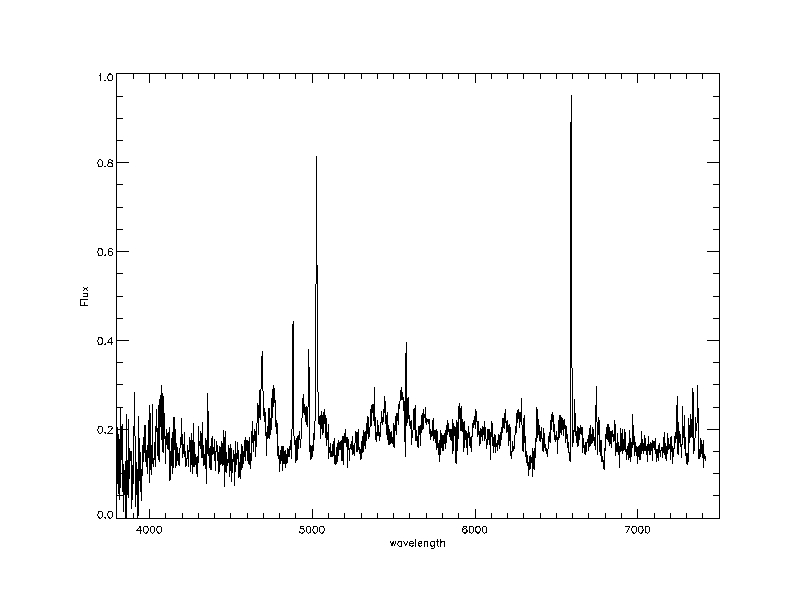
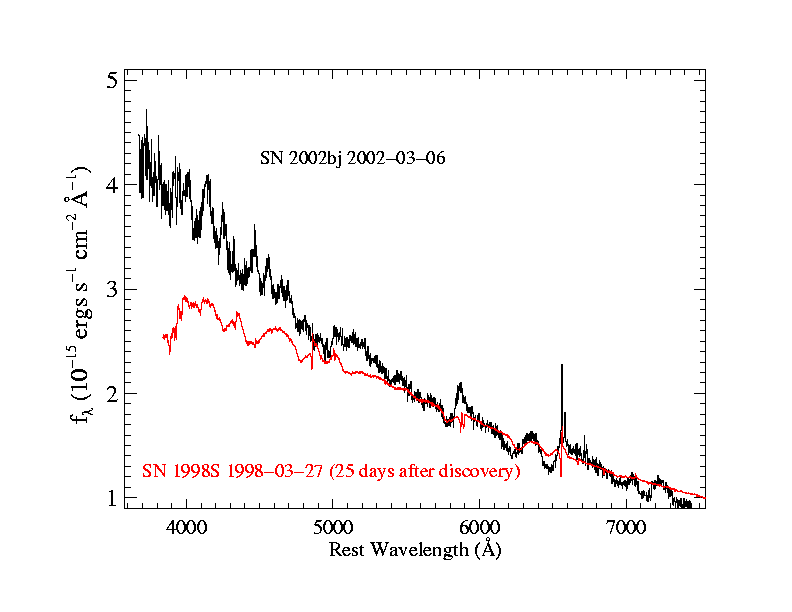
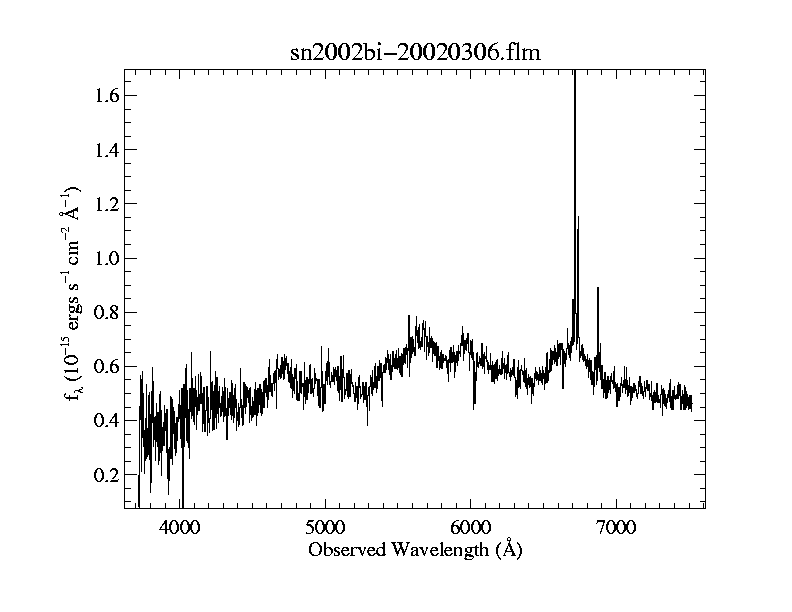
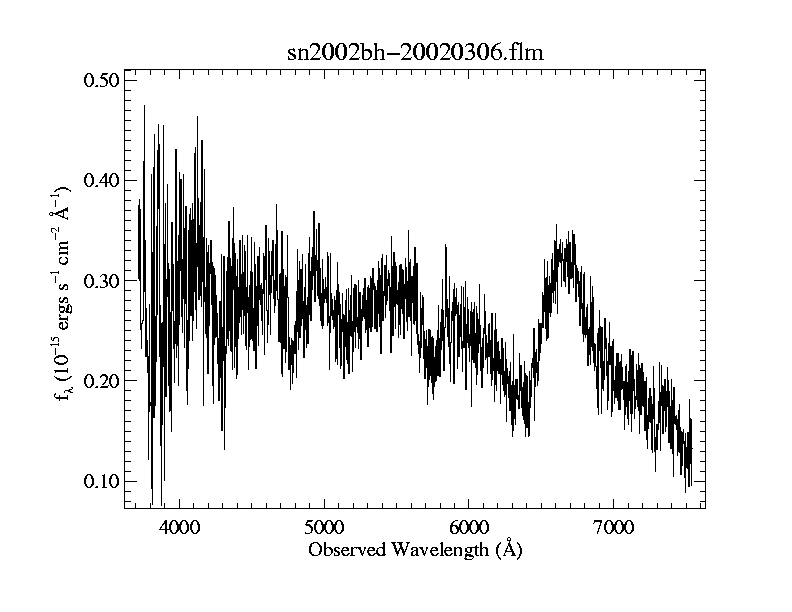
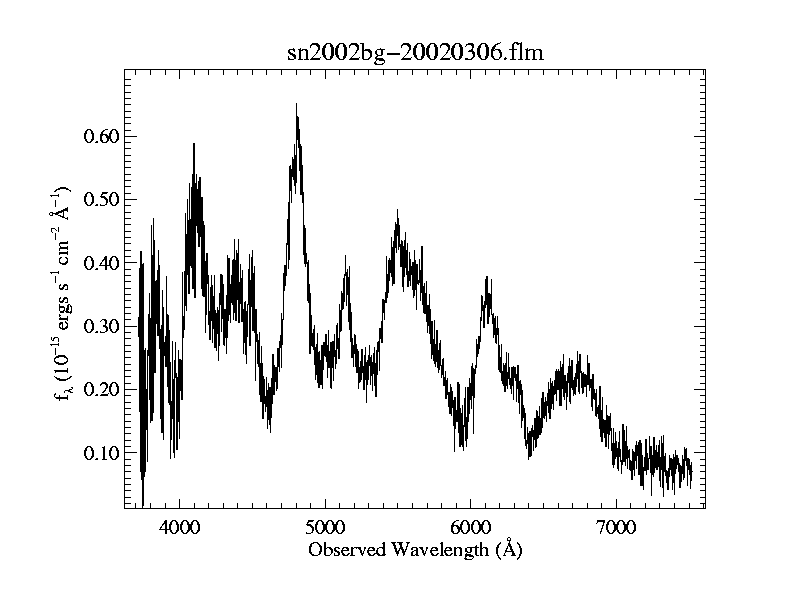
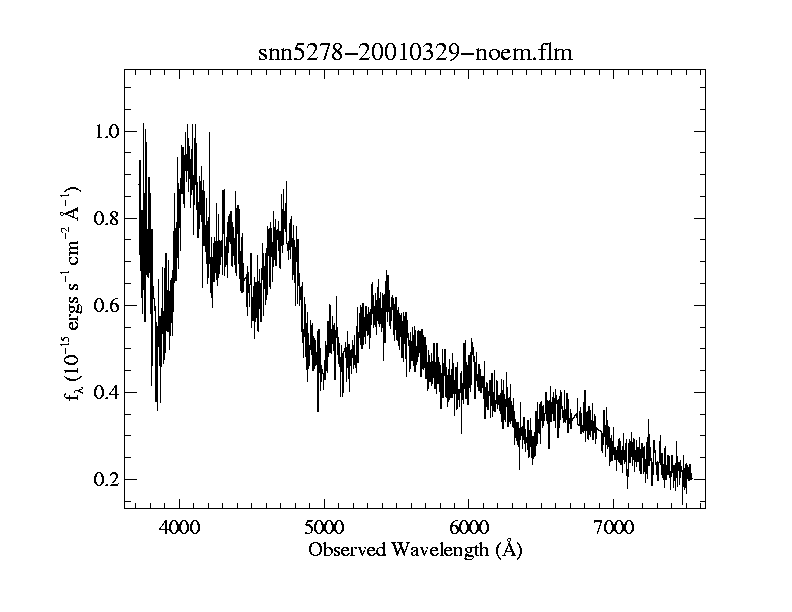
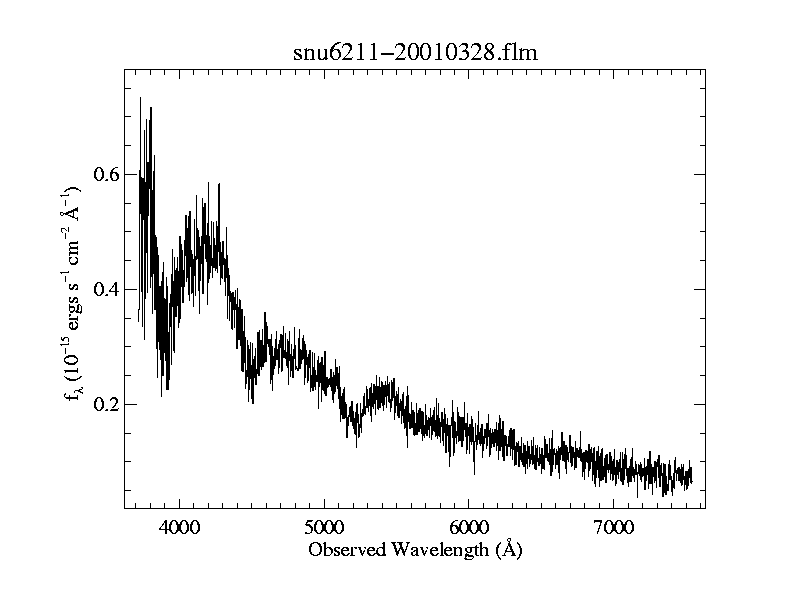
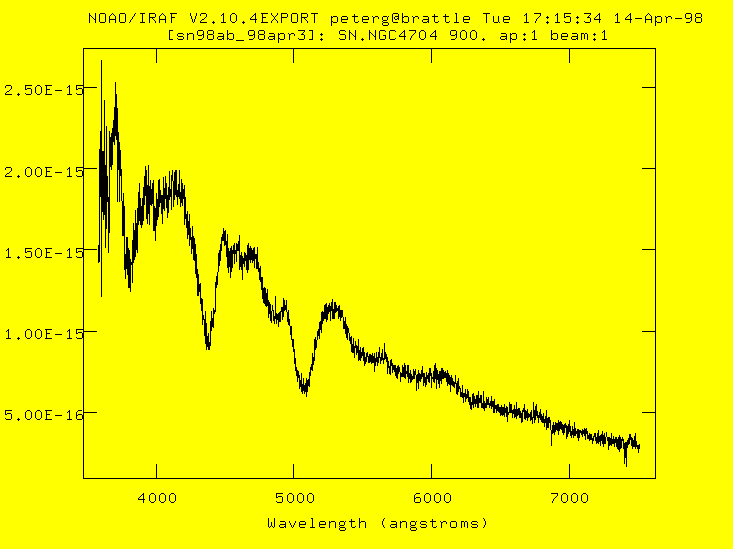
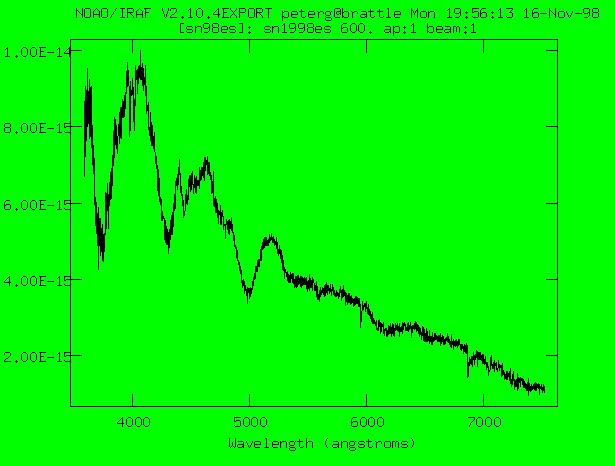
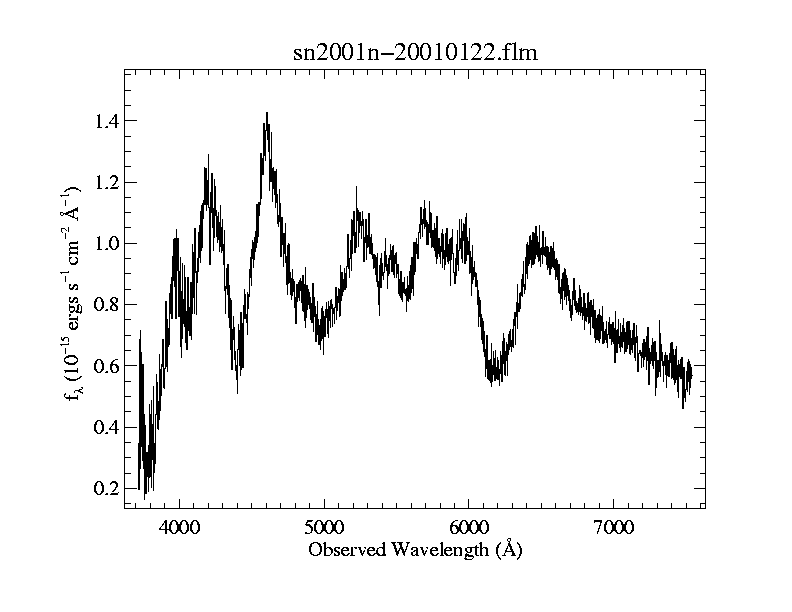
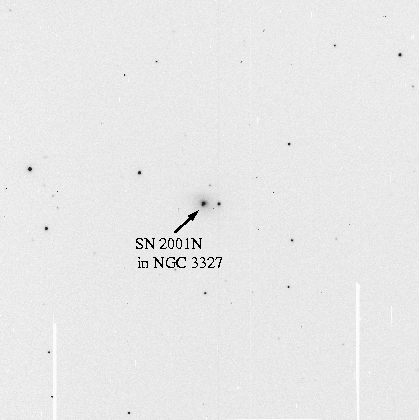
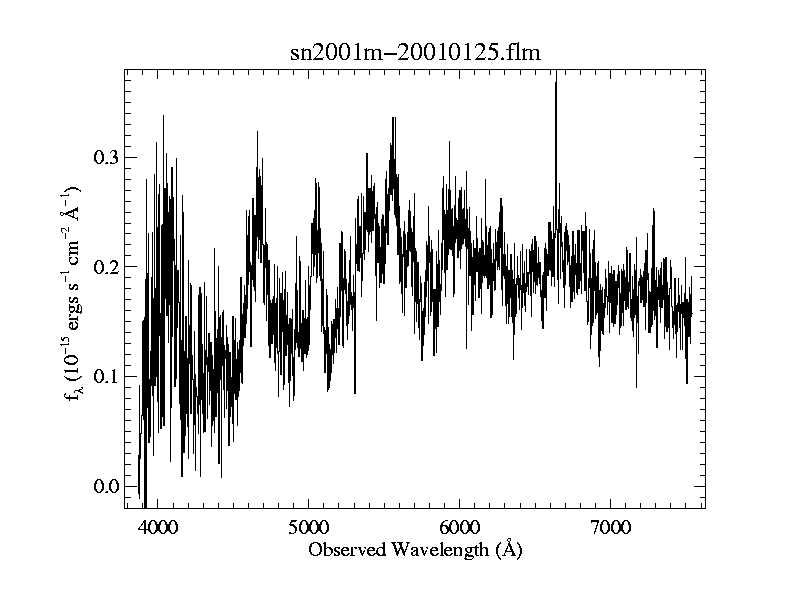
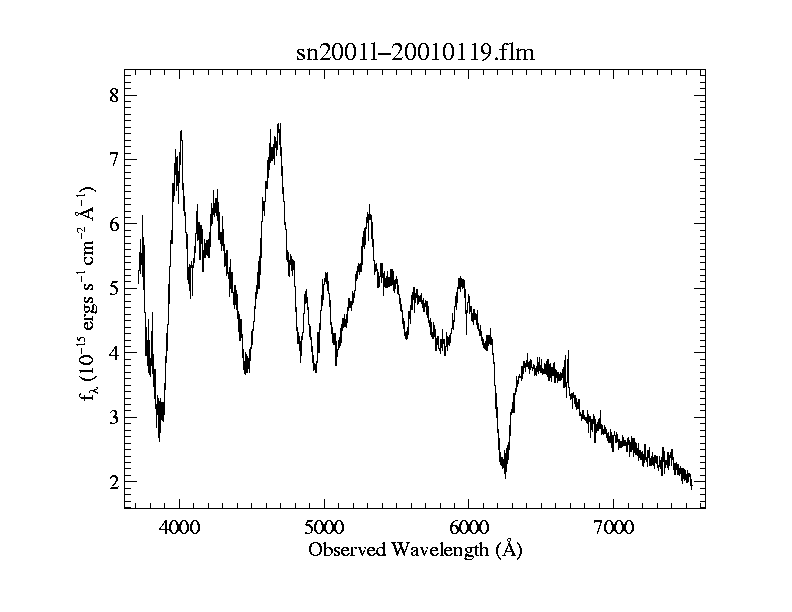
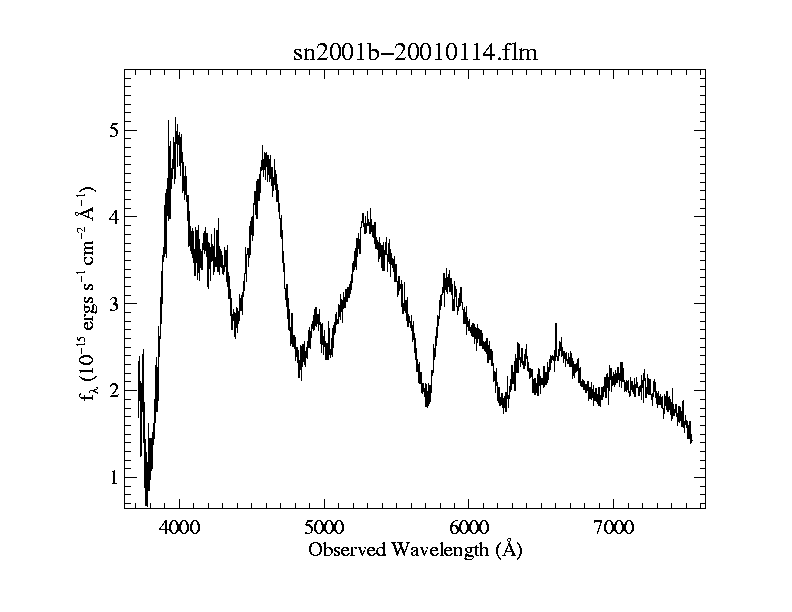
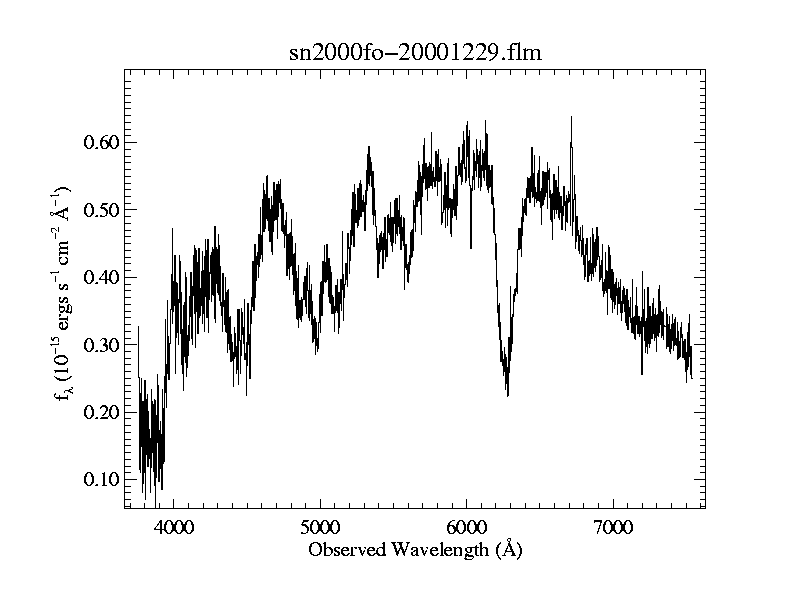
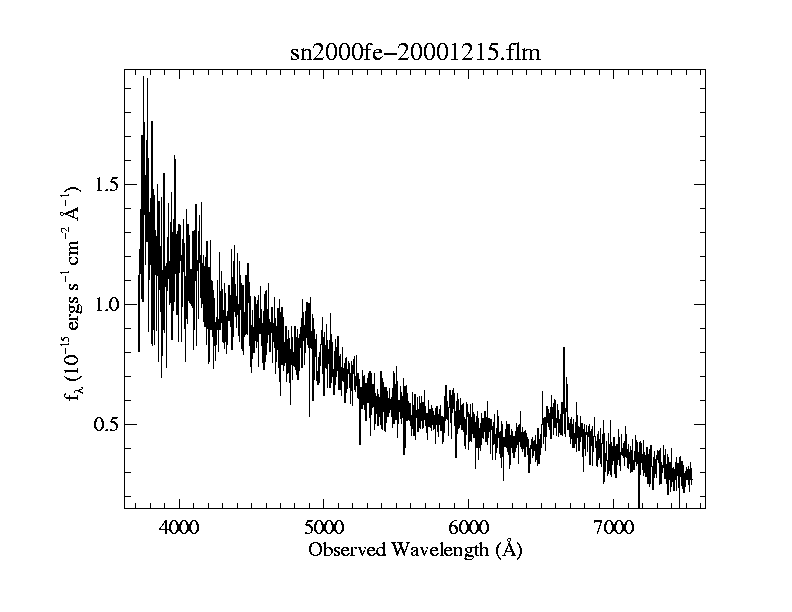
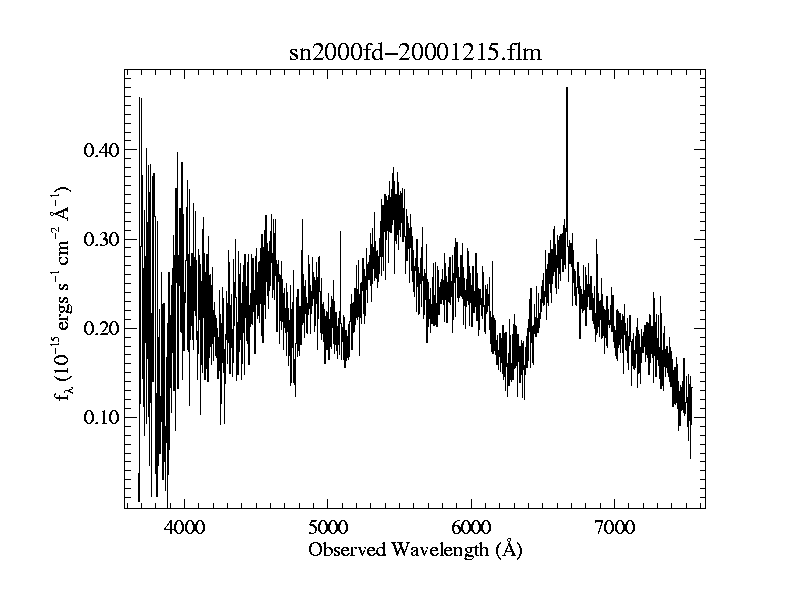
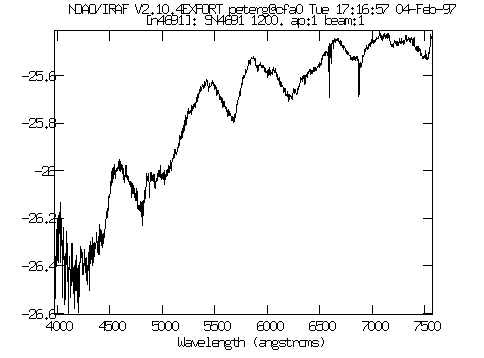
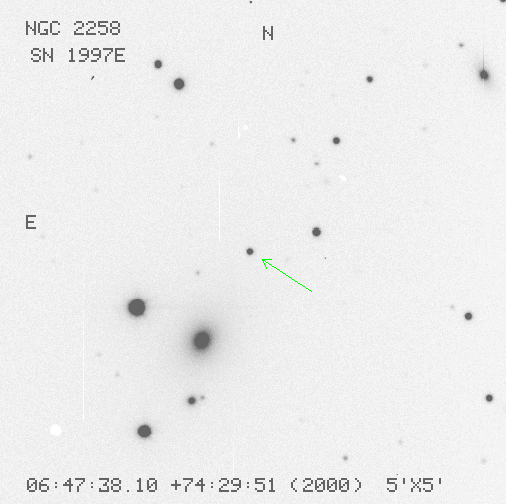
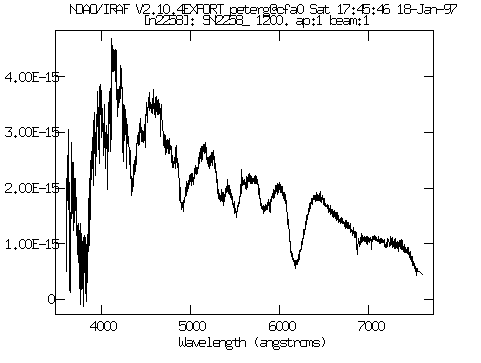
This page lists supernovae discovered between 1996 & 2009
and classified by the CfA SN Group
More recent classifications can be found here:
[SN from 2010]
All supernovae are classified using the SuperNova IDentification code (SNID)
[Blondin & Tonry (2007)]
To learn more and to [Download SNID]
If you would like to receive announcements for supernovae classified by the CfA SN group, or
if you want to discuss specific data, please contact:
Peter Challis or
Howie Marion
Quick links to CfA classified supernovae from:
2009
2008
2007
2006
2005
2004
2003
2002
2001
2000
1999
1998
1997
before 1997
SN 2009
-
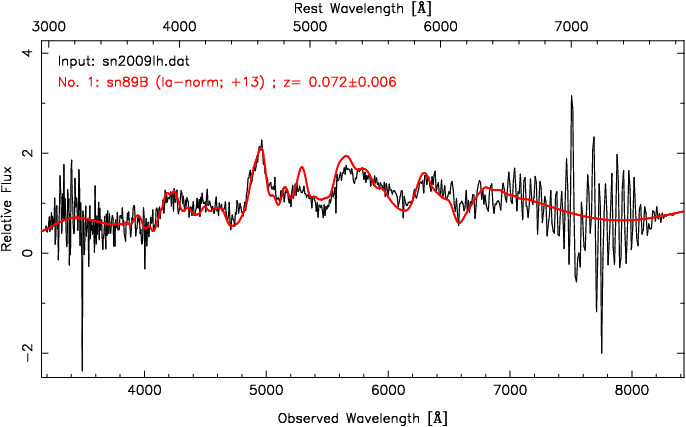
SN 2009lh(Ia)
-
Nov 23 2009 UT, MMT Blue Channel
spectrum
with a comparison to type Ia spectrum of sn1989B at 13 days past maximum
brightness.
-
SN 2009lm(IIP)
-
Nov 23 2009 UT, MMT Blue Channel
spectrum
with a comparison to type IIP spectrum of sn2004dj at maximum brightness.
-
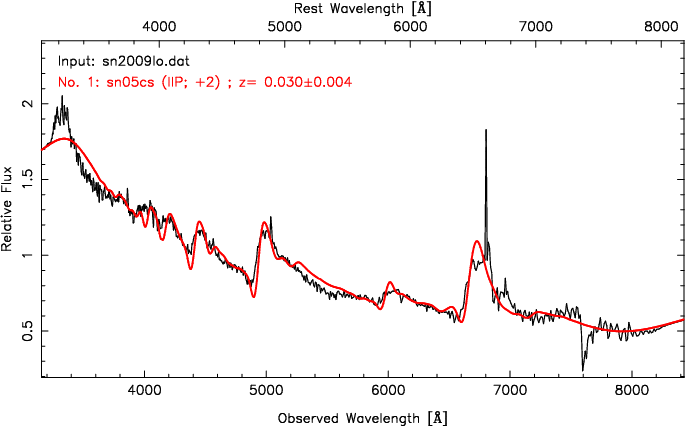
SN 2009lo(IIP)
-
Nov 23 2009 UT, MMT Blue Channel spectrum
with a comparison to type IIP spectrum of sn2005cs at 2 days after
maximum brightness.
-
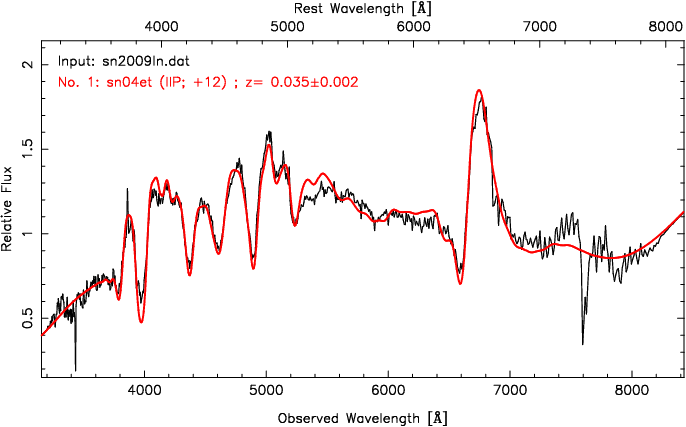
SN 2009ln(IIP)
-
Nov 23 2009 UT, MMT
Blue Channel spectrum
with a comparison to type IIP spectrum of sn2003et at +12 days after
maximum brightness.
-
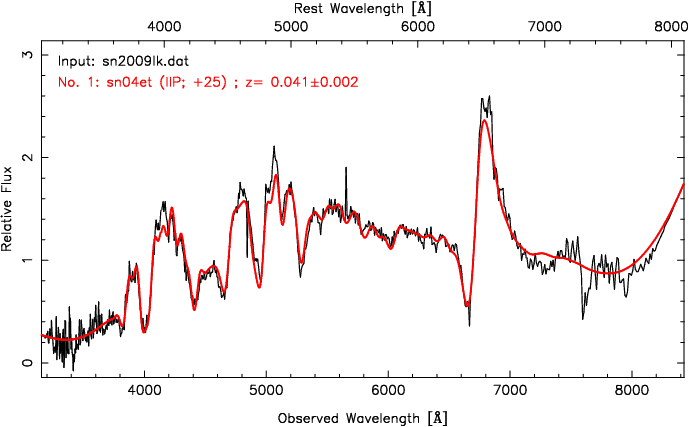
SN 2009lk(IIp)
-
Nov 23 2009 UT, MMT
Blue Channel spectrum
with a comparison to type IIP spectrum of sn2003et at +25 days after
maximum brightness.
-
SN 2009li(Ia) - CBET 2029
-
November 18 UT, FAST spectrum shows SN 2009li is similar to sub-luminous type-Ia supernova
1986G at a phase of two days before maximum.
-
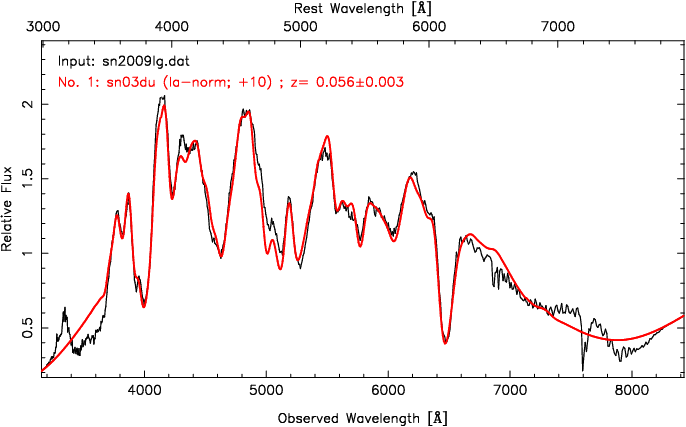
SN 2009lg(Ia)
-
Nov 23 2009 UT, MMT
Blue Channel spectrum
with a comparison to type Ia spectrum of sn2003du at +10 days after
maximum brightness.
-
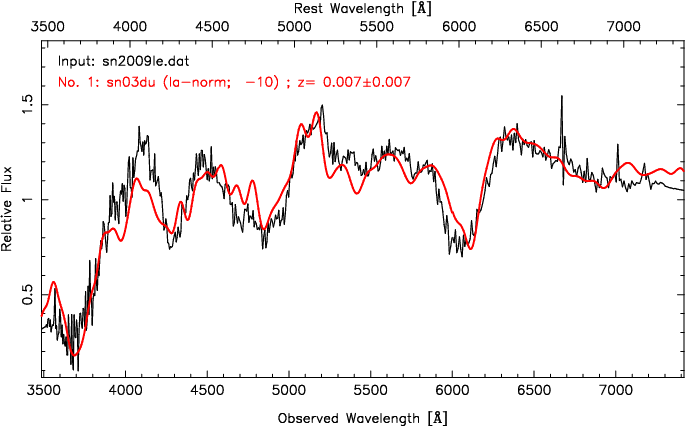
SN 2009le(Ia)
-
Nov 15 2009 UT,
FAST Spectrum
with a comparison to type Ia spectrum of sn2003du at -10 days before
maximum brightness.
-
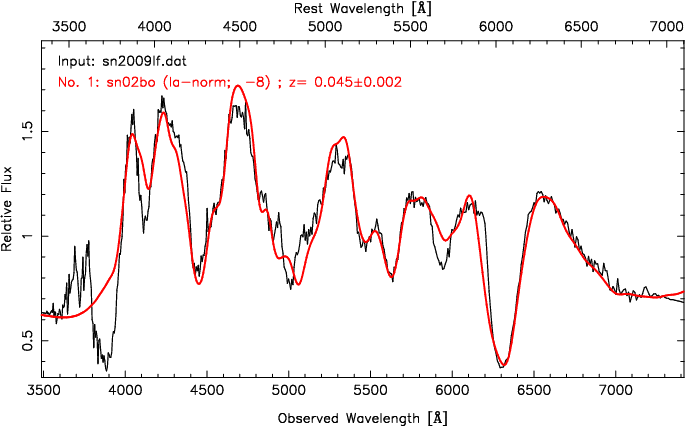
SN 2009lf(Ia)
-
Nov 15 2009 UT, FAST spectrum
with a comparison to type Ia spectrum of sn2005bo at -8 days before
maximum brightness.
-
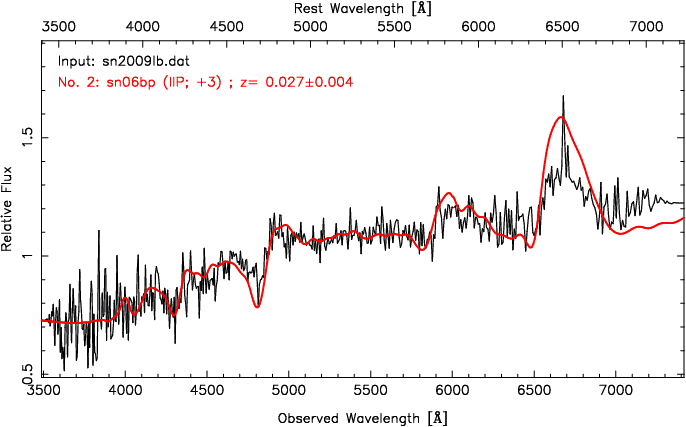
SN 2009lb(IIP)
-
Nov 11 2009 UT,
FAST spectrum
with a comparison to type IIP spectrum of sn2006bp at +3 days after
maximum brightness.
-
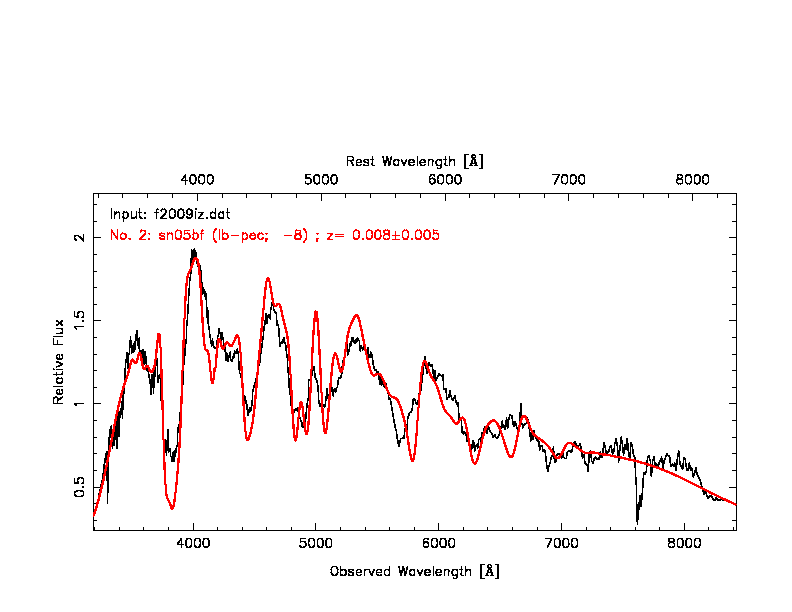
SN 2009iz(Ib)
-
Sept 20 2009 UT, MMT
Blue Channel spectrum
with a comparison to type Ib-pec spectrum of sn2005bf at -8 days before
maximum brightness.
-
SN 2009ks-Kz (Ia) - CBET 2012
-
September 18 - October 18 UT, A. Rest et al. report the discovery of eight confirmed type-Ia
supernovae and four additional possible supernovae via the Pan-STARRS
Telescope 1 (PS1) sky survey.
-
SN 2009ka (IIb) - CBET 1992
-
October 21 UT, FAST spectrum shows SN 2009ka is a Type IIb.
-
SN 2009hp (Ia) - CBET 1889
-
July 29 UT, FAST spectrum shows SN 2009hp is a Type Ia about a week before
maximum brightness.
-
SN 2009gh (IIp) - CBET 1854
-
June 20 UT, FAST spectrum shows SN 2009gh resembles the type-IIP
supernova 2004et at two weeks after maximum brightness.
-
SN 2009ga (IIp) - CBET 1851
-
June 17 UT, FAST spectrum shows SN 2009ga resembles the type-IIP
supernova 2004et at maximum brightness.
-
SN 2009fs (IIn) - CBET 1833
-
June 4 UT, FAST spectrum shows SN 2009fs resembles the type-IIn
supernova 1998S at a phase of 13 days before maximum brightness.
-
SN 2009fl (Ia) - CBET 1826
-
June 1 UT, FAST spectrum shows SN 2009fl is a subluminous type-Ia
supernova around maximum light.
-
SN 2009fi (IIb) - CBET 1826
-
June 1 UT, FAST spectrum shows SN 2009fi resembles the type-IIb supernova
1997dd around maximum light.
-
SN 2009er (Ib) - CBET 1818
-
May 27 UT, FAST spectrum shows SN 2009er is a a type-Ib supernova a few days
past explosion.
-
SN 2009eq (Ia) - CBET 1818
-
May 25 UT, FAST spectrum shows SN 2009eq is subluminous and about one week after maximum
brightness.
-
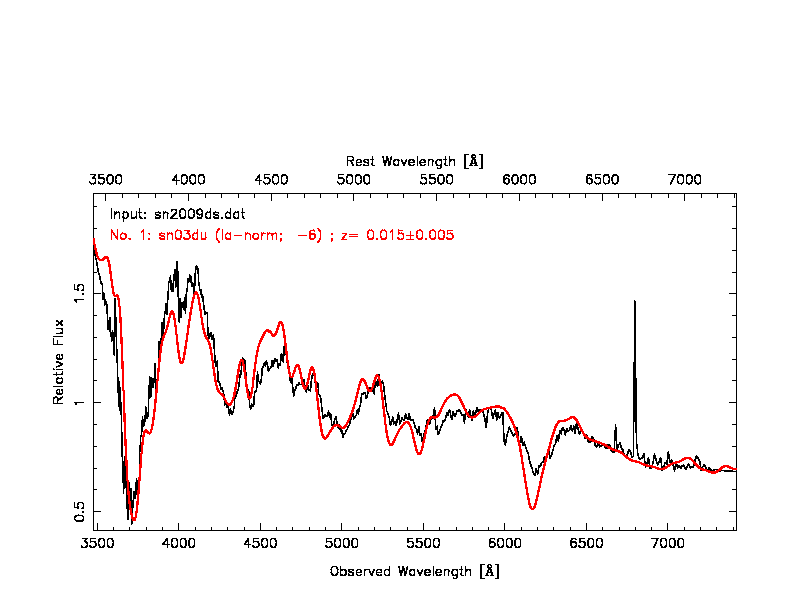
SN 2009ds (Ia)
CBET
1784]
-
Apr 30, 2009 UT, FAST spectrum
with a comparison to type Ia spectrum of sn2009du at -6 days before
maximum brightness.
-
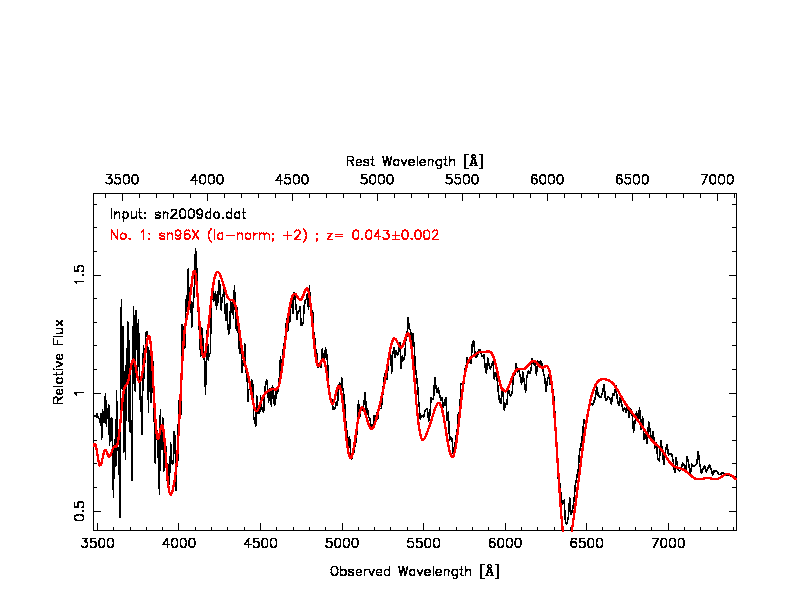
SN 2009do (Ia)
[CBET
1778]
-
Apr 27, 2009 UT, FAST spectrum
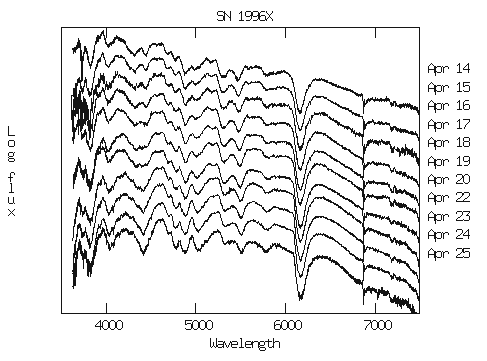
with a comparison to type Ia spectrum of sn1996X at 2 days After
maximum brightness.
-
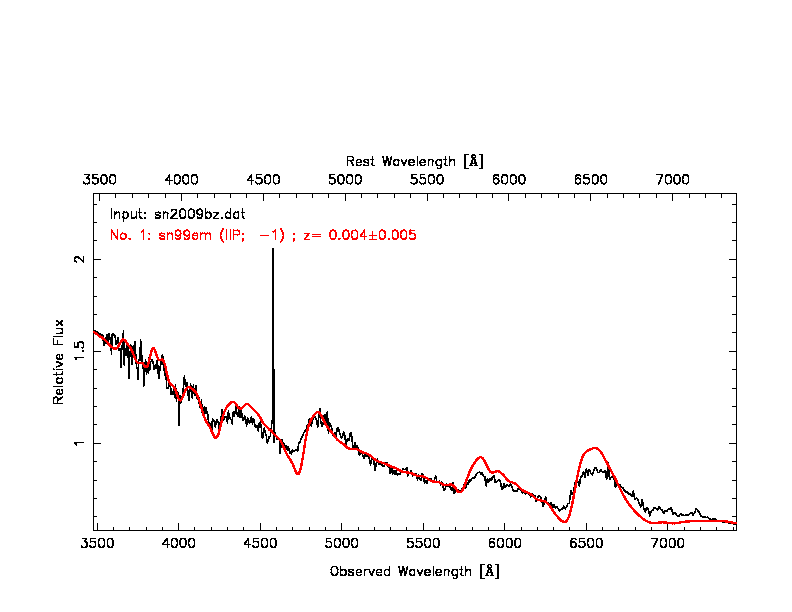
SN 2009bz (II)
[CBET
1748]
-
Mar 30, 2009 UT, FAST spectrum
with a comparison to type IIP spectrum of sn1999em at -1 days before
maximum brightness.
-
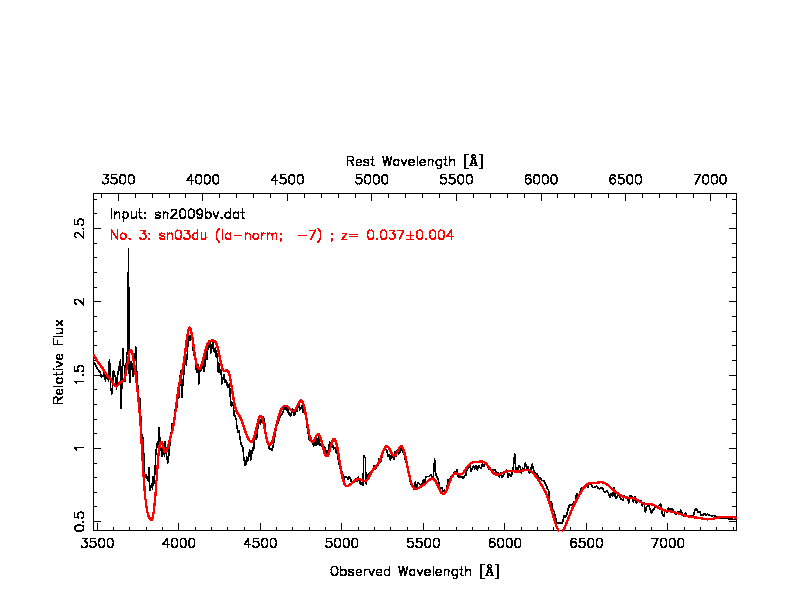
SN 2009bv (Ia) in IC 4199
[CBET
1742]
-
Mar 28, 2009 UT, FAST spectrum
with a comparison to type Ia spectrum of sn2003du at -7 days before
maximum brightness. Note: sn1991T @ max is also a good match
-
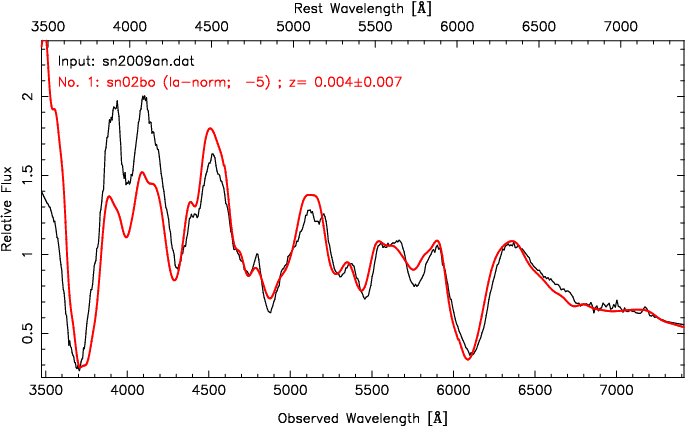
SN 2009an (Ia) in NGC 4332
[CBET
1707]
-
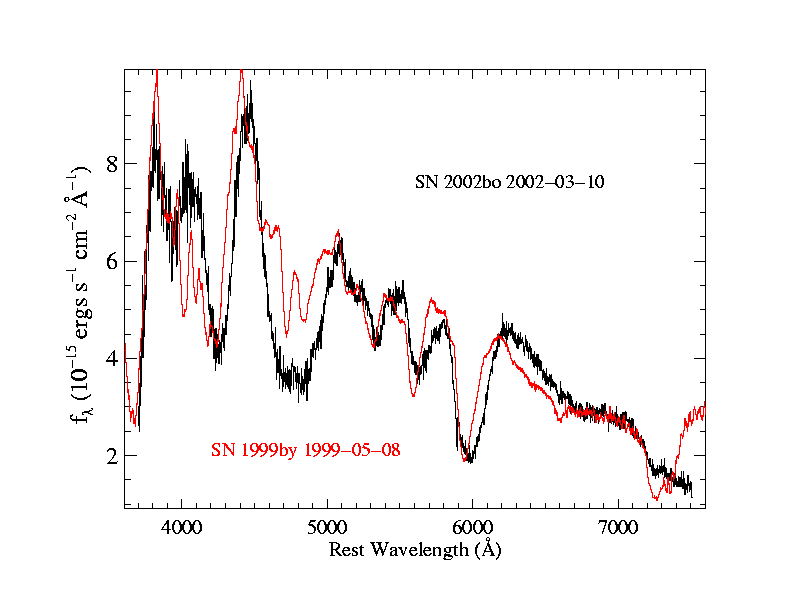
Feb 28, 2009 UT, FAST spectrum
with a comparison to type Ia spectrum of sn2002bo at -5 days before
maximum brightness.
-
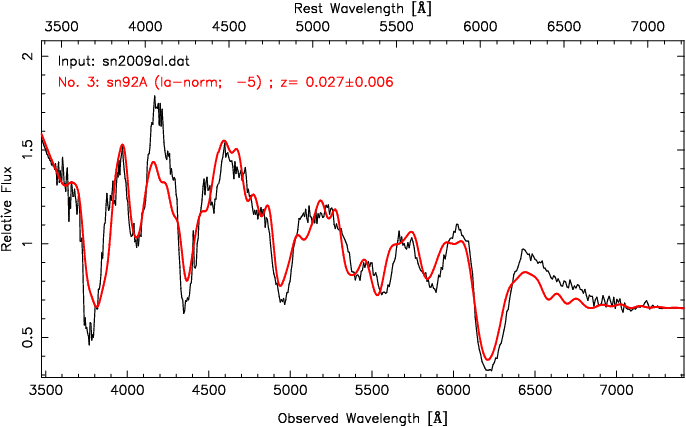
SN 2009al (Ia)
[CBET
1705]
-
Feb 27, 2009 UT, FAST spectrum
with a comparison to type Ia spectrum of sn1992A at -5 days before
maximum brightness.
-
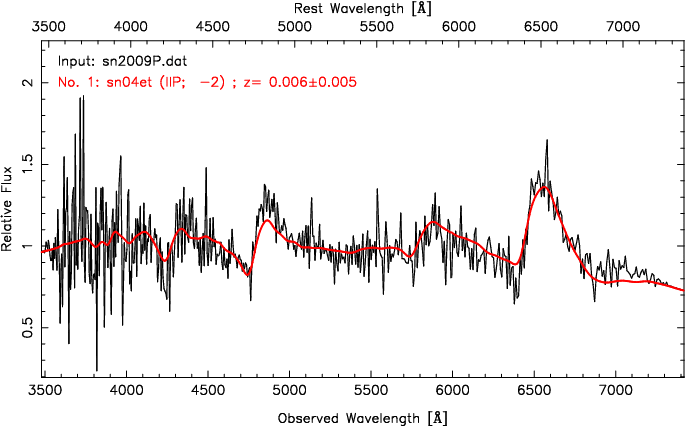
SN 2009P (II) in PGC 34730
[CBET
????]
-
Jan 31, 2009 UT, FAST spectrum
with a comparison to type IIP spectrum of sn2004et at -2 days before
maximum brightness.
-
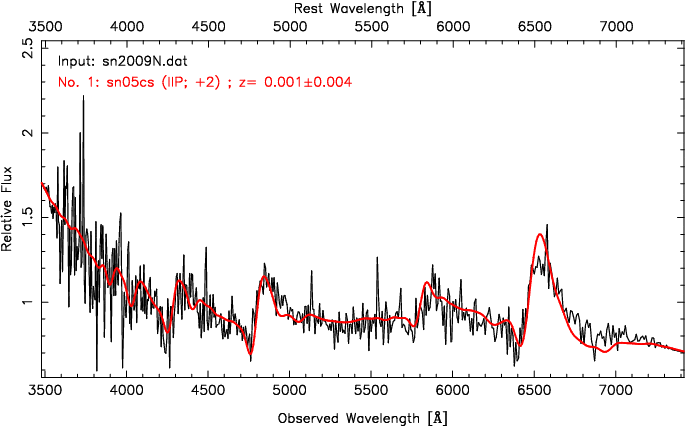
SN 2009N (II) in NGC 4487 z=0.001
[CBET
????]
-
Jan 25, 2009 UT, FAST spectrum
with a comparison to type IIP spectrum of sn2005cs at +2 days after
maximum.
-
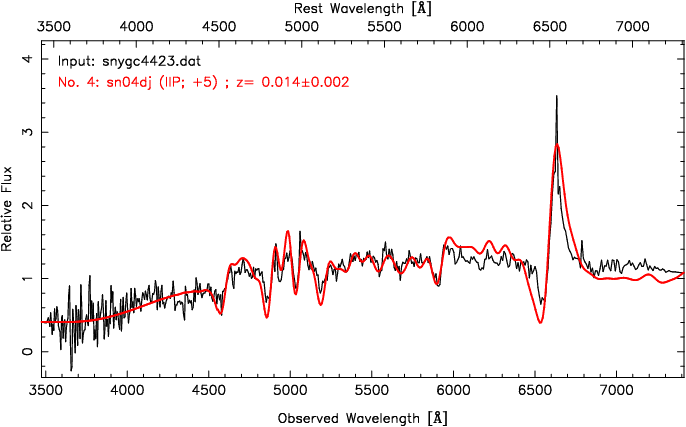
SN 2009B (II) in UGC 4423 z=0.011
[CBET
????]
-
Jan 02, 2009 UT, FAST spectrum
with a comparison to type II spectrum at +5 days after explosion.
-
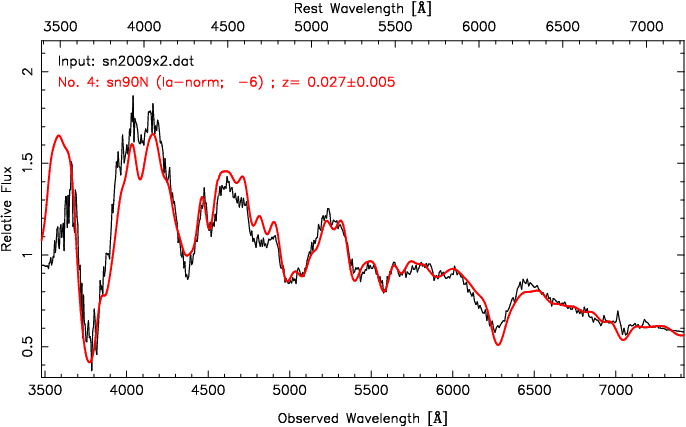
SN 2009D (Ia) in MCG -03-10-052 z=0.025
[CBET
????]
-
Jan 02, 2009 UT, FAST spectrum
with a comparison to type Ia spectrum at -7 days after explosion.
-
SN 2009C (IIb) in UGC 12433
[CBET
????]
-
Jan 02, 2009 UT, FAST spectrum
with a comparison to type IIb spectrum at 7 days after explosion.
Back to top
SN 2008
-
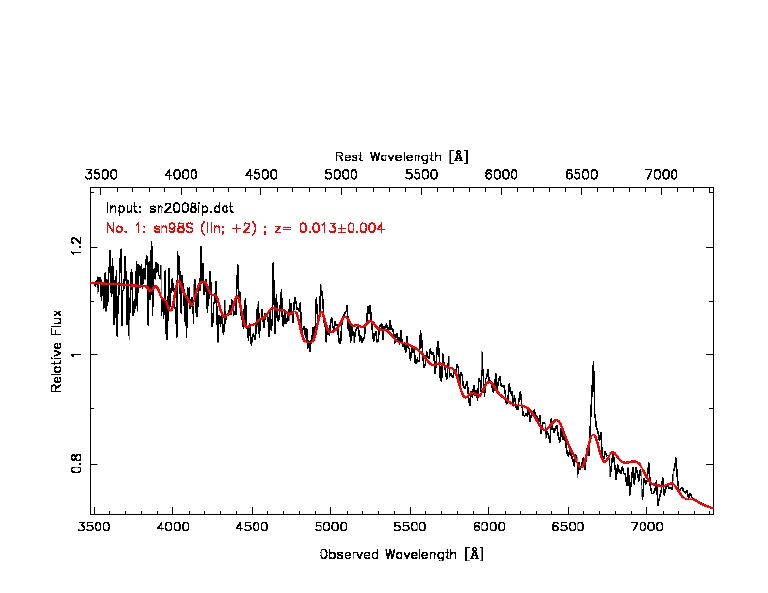
SN 2008ip (IIn) in NGC 4846 z=0.015
[CBET
1641]
-
Jan 01, 2009 UT, FAST spectrum
with a comparison to sn1998S (IIn) spectrum at 2 days after explosion.
-
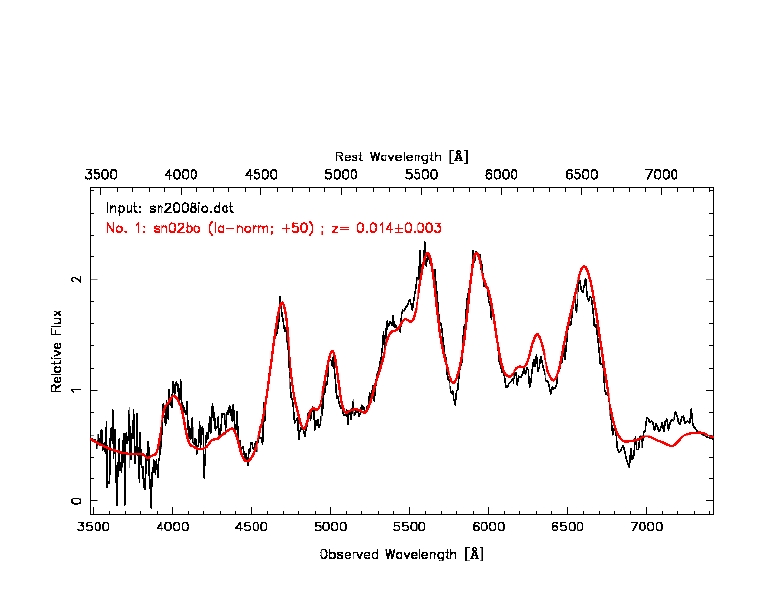
SN 2008io in MCG -02-33-17
[CBET
1640]
-
Dec 30, 2008 UT, FAST spectrum
with a comparison to a Ia spectrum at 50 days after explosion.
-
SN 2008im (Ib??) in PNG 014286 z=0.0083
[CBET
1635]
-
Dec 29, 2008 UT, FAST spectrum
with a comparison to a sn1983V (Ib) spectrum.
Dec 29, 2008 UT, FAST spectrum
with a comparison to a sn1999dn (Ib) spectrum.
-
SN 2008ij (II) in NGC 6643
[CBET
1627]
-
Dec 19, 2008 UT, MMT spectrum shows a
type-II very early after explosion.
-
SN 2008if (II) in MCG -01-24-10
[CBET
1624]
-
Dec 19, 2008 UT, FLWO 1.5m spectrum shows a
type-II very early after explosion.
-
SN 2008ie (IIb) in NGC 1070
[CBET
1623]
-
Dec 19, 2008 UT, FLWO 1.5m spectrum shows a
type-IIb about a week after max.
-
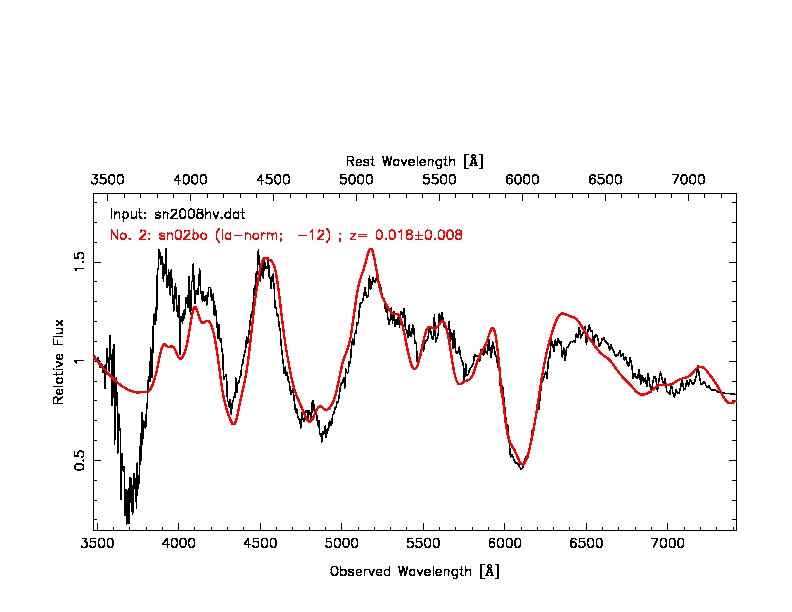
SN 2008hv (Ia) NGC 2765
[CBET
1604]
-
Dec 3, 2008 UT, FLWO 1.5m spectrum shows a
type-Ia about 14 to 9 days before max.
-
SN 2008hs (Ia) NGC 910
[CBET
1599]
-
Dec 1, 2008 UT, FLWO 1.5m spectrum shows a
type-Ia most likely a SN 1991bg type or normal Ia -8 days
-
SN 2008hm (Ia) UGC 12682
[CBET
1594]
-
Nov 30, 2008 UT, FLWO 1.5m spectrum shows a
type-Ia about a week before maximum light.
-
SN 2008hh (Ic) UGC 12682
[CBET
1580]
-
Nov 23, 2008 UT, FLWO 1.5m spectrum shows a
type-Ic about maximum light.
-
SN 2008ha (Ia?) UGC 12682
[CBET
1576]
-
Nov 18, 2008 UT, FLWO 1.5m spectrum shows a
type-Ia similar to the peculiar supernova 2002cx.
The spectrum is
similar to SN 2002cx (Li et al. 2003, PASP 115, 453) at 10 days past maximum
light -- but with a velocity about 3000 km/s lower.
Considering the extremely low absolute magnitude and low ejecta velocity,
which imply a very low total energy release, Foley et al. wonder if 2008ha is
a true supernova that destroyed the progenitor star; if it is, then 2008ha is
possibly the least luminous supernova ever observed.
-
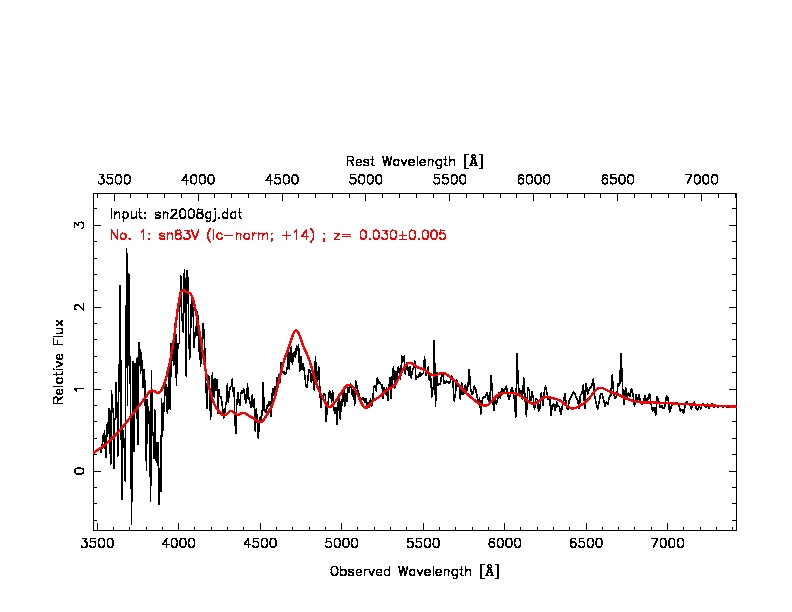
SN 2008gj (Ic) NGC 7321
[CBET
1546]
-
Oct 20, 2008 UT, FLWO 1.5m spectrum shows a
type-Ic supernova at about +12 days after maximum light.
-
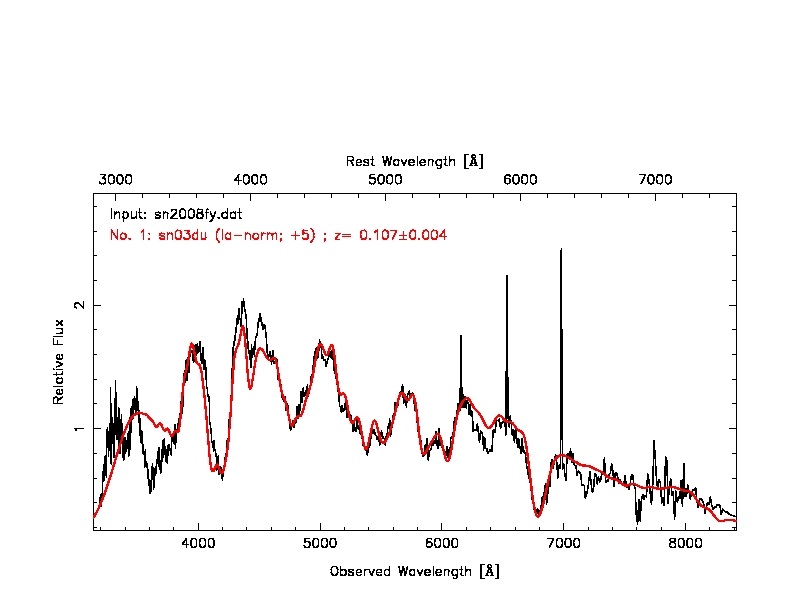
SN 2008fy (Ia)
[CBET
1525]
-
Oct 1, 2008 UT, MMT Blue channel shows a
type-Ia supernova at about maximum light
-
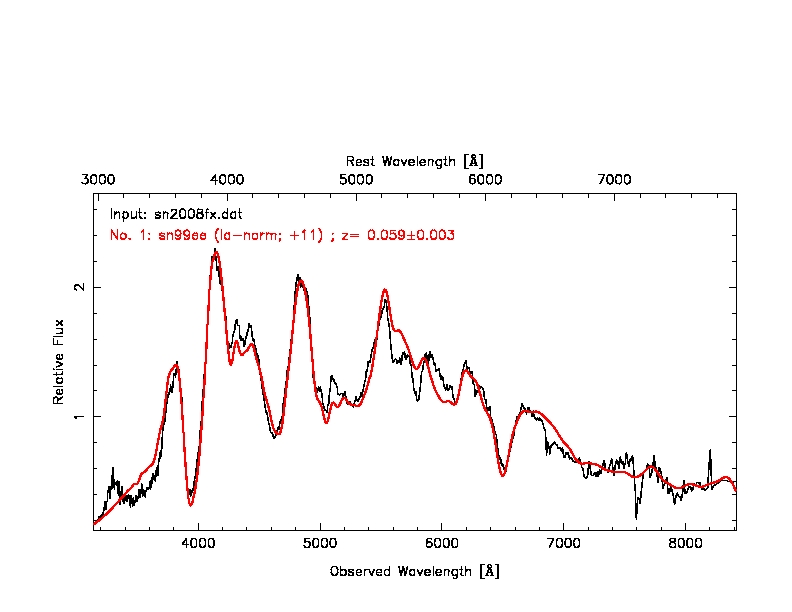
SN 2008fx (Ia)
[CBET
1525]
-
Oct 1, 2008 UT, MMT Blue Channel shows a
type-Ia supernova at about 10 days after max.
-
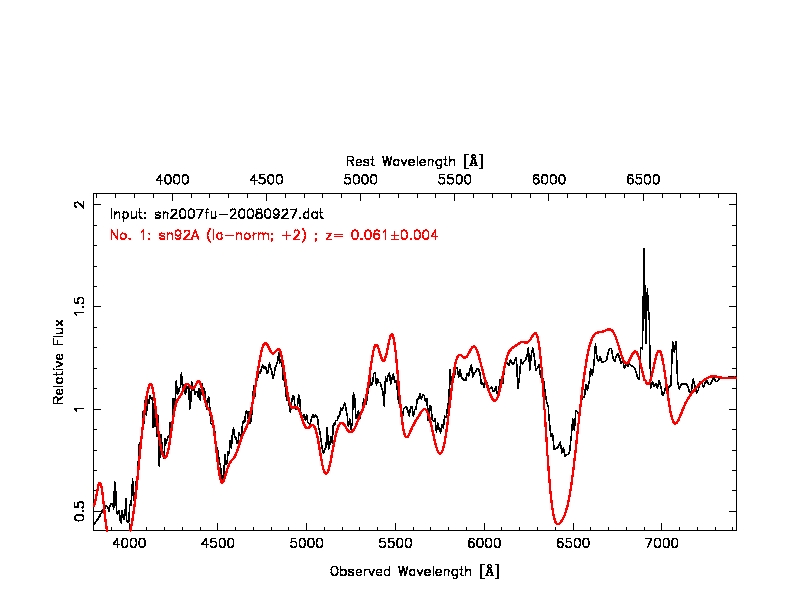
SN 2008fu (Ia)
[CBET
1519]
-
Sept 26, 2008 UT, FLWO 1.5m spectrum shows a
type-Ia supernova at about maximum light. z=0.052
-
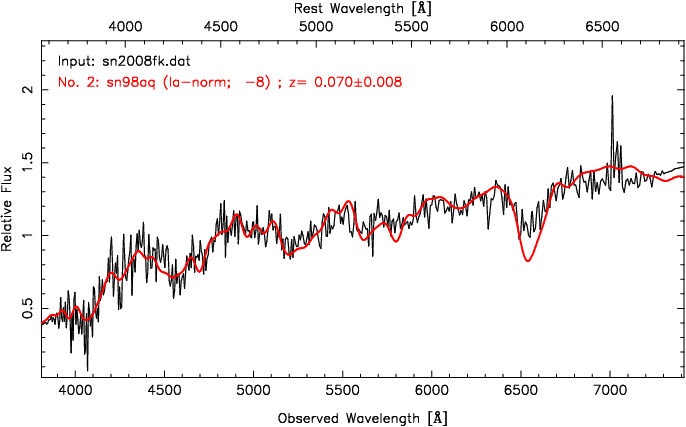
SN 2008fk (Ia)
[CBET
1499]
-
Sept 4, 2008 UT, FLWO 1.5m spectrum shows a
type-Ia supernova at about maximum light.
-
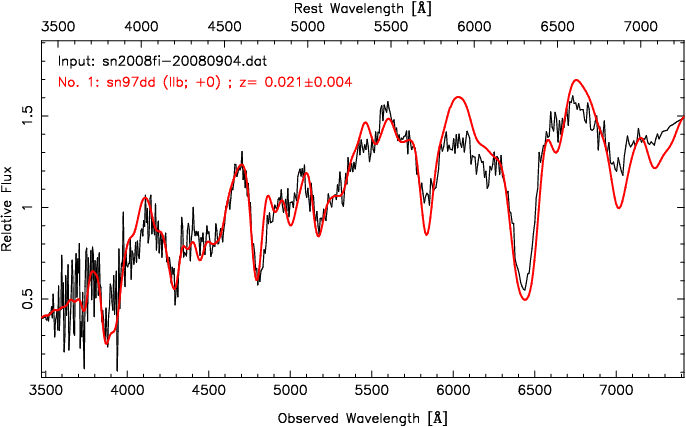
SN 2008fi (IIb)
[CBET
1499]
-
Sept 4, 2008 UT, FLWO 1.5m spectrum shows a
type-IIb supernova at about maximum light.
-
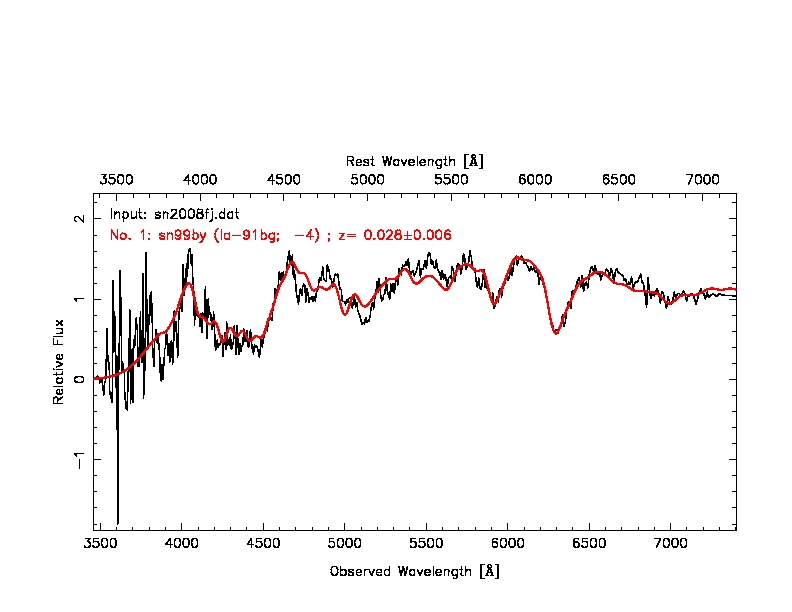
SN 2008fj (UGC10759) (Ia)
[CBET
1495]
-
Sept 4, 2008 UT, FLWO 1.5m spectrum shows a
type-Ia supernova at about maximum light.
SNID indicates
that 2008fj is most similar to the subluminous type-Ia supernova 1991bg at
2 days past maximum. UGC 10759 is at a redshift of 0.02714 (Marzke et al.
1996, A.J. 112, 1803).
-
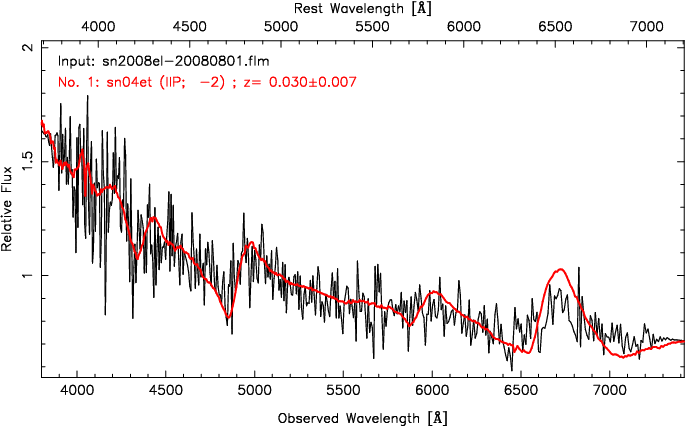
SN 2008el (PGC 70567) (II)
[CBET 1458]
-
August 1, 2008 UT, FLWO 1.5m spectrum shows this
type-II supernova around maximum light, compared with
2004et at a similar age.
-
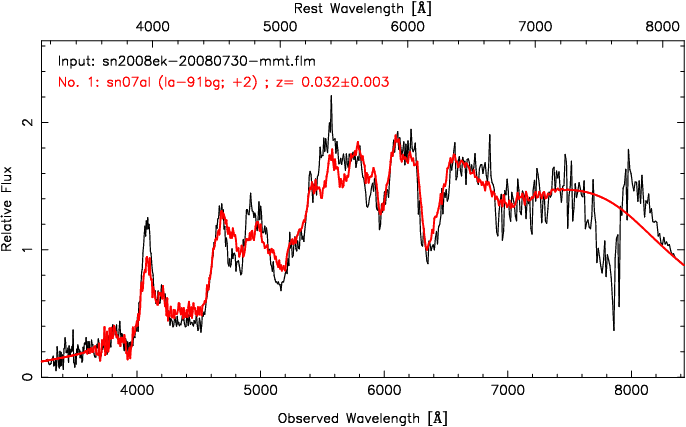
SN 2008ek (IC 1181) (Ia-91bg)
[CBET 1454]
-
July 30, 2008 UT, MMT 6.5m spectrum shows this
subluminous type-Ia supernova around maximum light, compared with
2007al at a similar age.
-
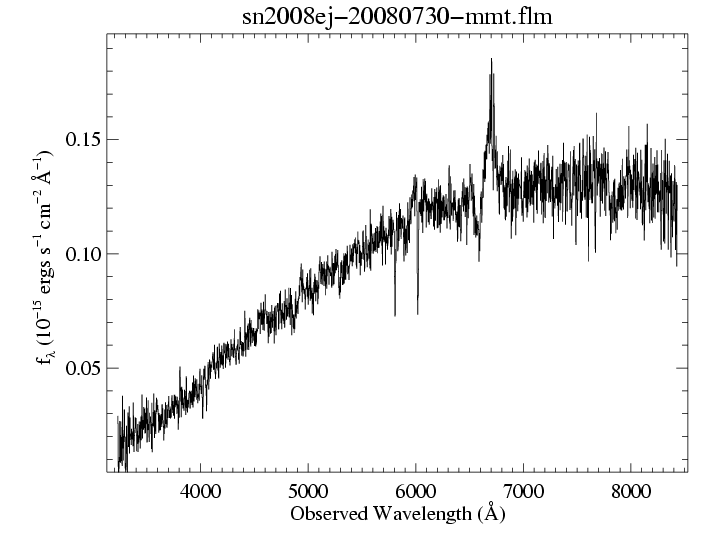
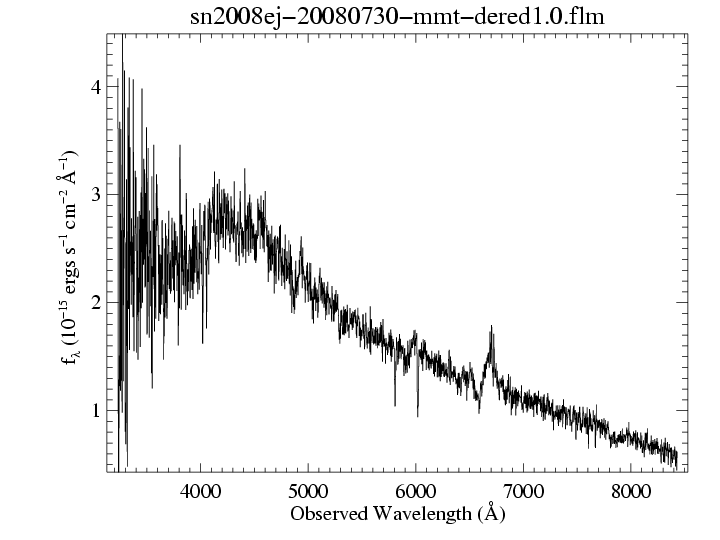
SN 2008ej (UGC 276) (II)
[CBET 1455]
-
July 30, 2008 UT, MMT 6.5m spectrum shows this
highly-reddened type-II supernova.
Here is the
same spectrum dereddened by 1 mag.
-
SN 2008dx (Anon. galaxy) (Ia)
[CBET 1427]
-
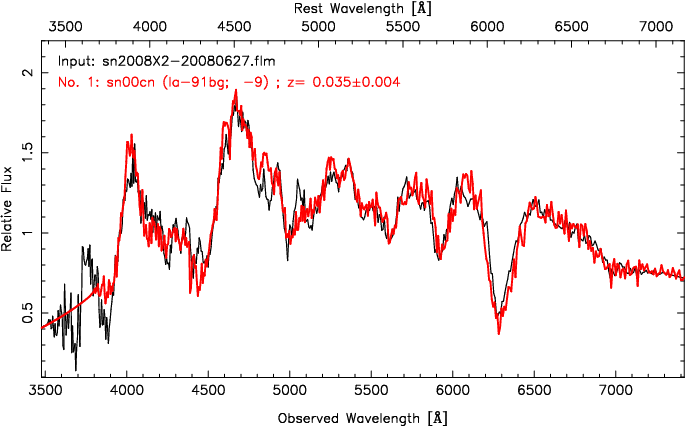
June 12, 2008 UT, FLWO 1.5m spectrum shows this
subluminous type-Ia supernova around one week before maximum light, compared with
2000cn at a 9 days before maximum.
-
SN 2008dt (NGC 6261) (Ia)
[CBET 1424]
-
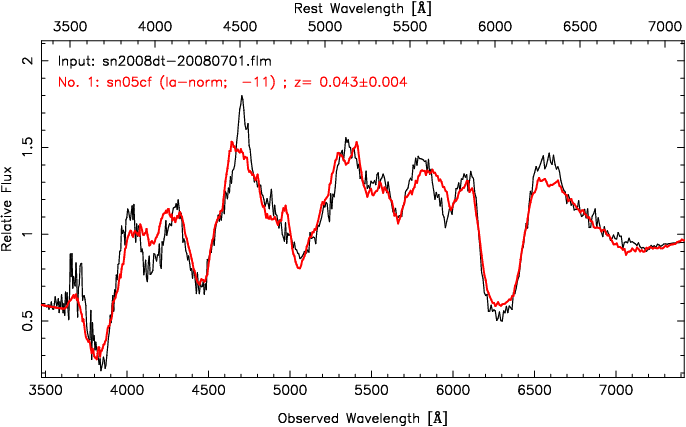
July 1, 2008 UT, FLWO 1.5m spectrum shows this type-Ia supernova around
one week before maximum light, compared with SN 2005cf at 11 days before maximum.
-
SN 2008do (UGC 8179) (II)
[CBET 1414]
-
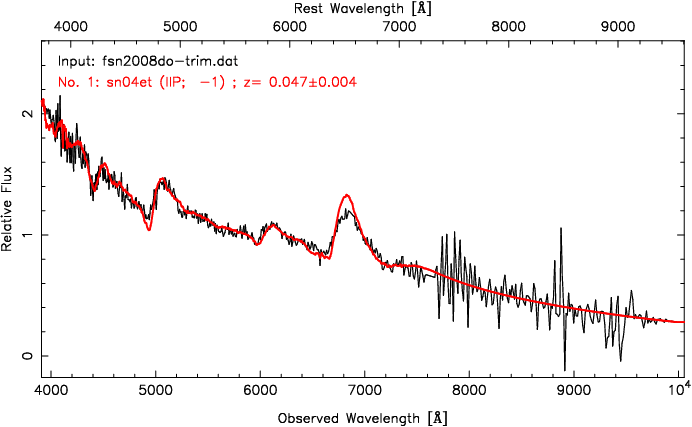
June 24, 2008 UT, Magellan Clay 6.5m spectrum shows this
young type-II supernova at two weeks past explosion, compared with
2004et at a similar age.
-
SN 2008dn (UGC 11946) (II)
[CBET 1418]
-
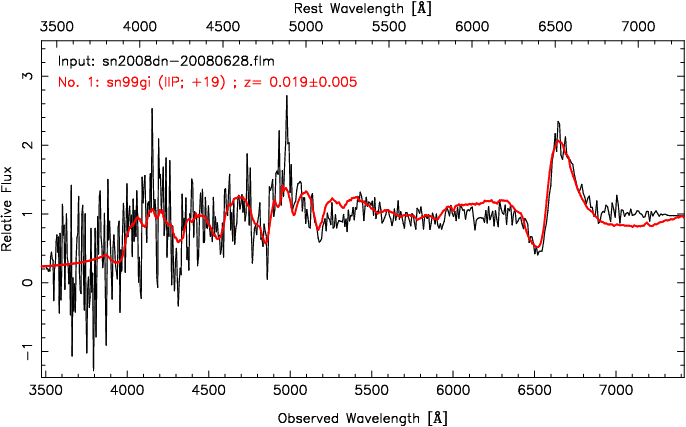
June 28, 2008 UT, FLWO 1.5m spectrum shows this
type-II supernova at one month past explosion, compared with
1999gi at a similar age.
-
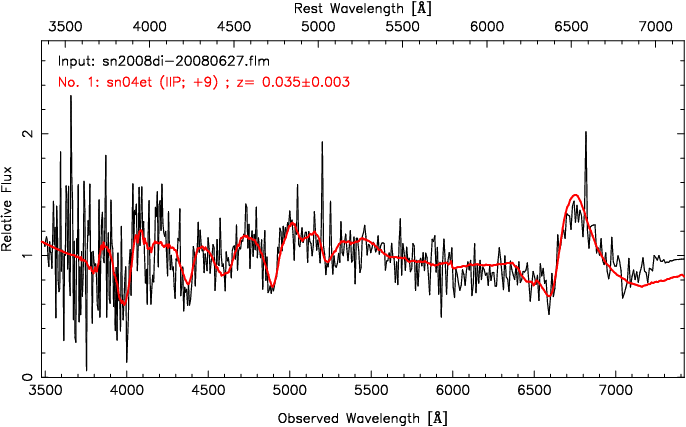
SN 2008di (SDSS J121642.18+410223.7) (II)
[CBET 1422]
-
June 27, 2008 UT, FLWO 1.5m spectrum shows this
type-II supernova at 3-4 weeks past explosion, compared with
2004et at a similar age.
-
SN 2008dh (Anon. galaxy) (Ia)
[CBET 1409]
-
June 12, 2008 UT, FLWO 1.5m spectrum shows this
type-Ia supernova around maximum light, compared with
1994D at a one week past maximum.
-
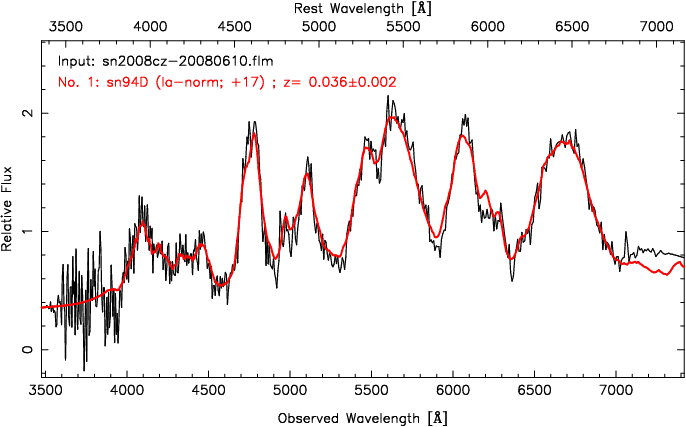
SN 2008cz (AGC 211492) (Ia)
[CBET 1404]
-
June 10, 2008 UT, FLWO 1.5m spectrum shows this
type-Ia supernova around 2-3 weeks past maximum light, compared with
1994D at a similar age.
-
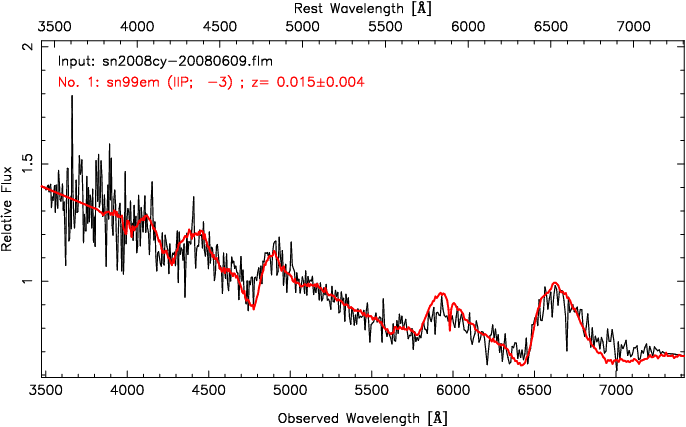
SN 2008cy (MCG -02-39-016) (II)
[CBET 1403]
-
June 9, 2008 UT, FLWO 1.5m spectrum shows this
young type-II supernova at one week past explosion, compared with
1999em at a similar age.
-
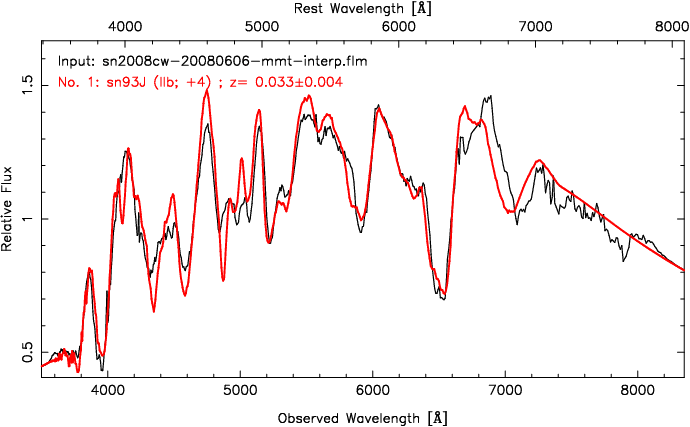
SN 2008cw (Anon. galaxy) (IIb)
[CBET 1408]
-
June 6, 2008 UT, MMT 6.5m spectrum shows this
type-IIb supernova around one week past maximum light, compared with
1993J at a similar age. SN 2008cw was originally classified as a
peculiar type-Ib supernova similar to SN 2005bf by Yuan et al. in
CBET 1395
-
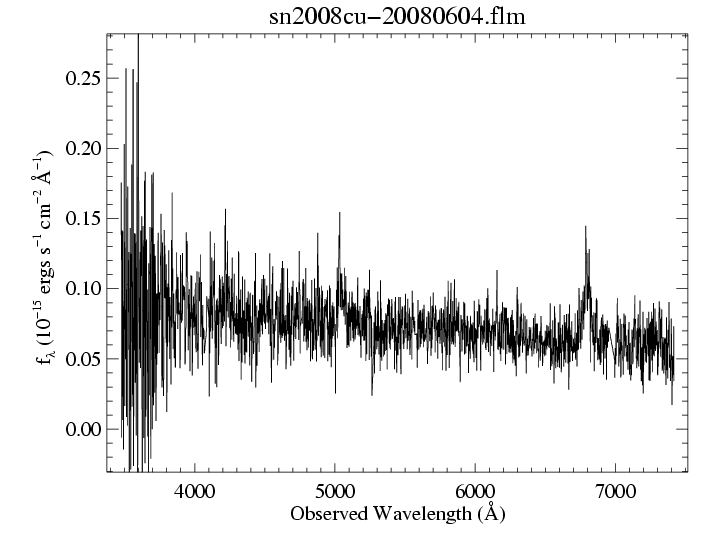
SN 2008cu (UGC 11419) (IIn)
[CBET 1396]
-
June 4, 2008 UT, FLWO 1.5m spectrum shows this
type-IIn supernova past maximum light.
-
SN 2008cg (FGC 1965) (IIn)
[CBET 1368]
-
May 8, 2008 UT, FLWO 1.5m spectrum shows this
type-IIn supernova, compared with a spectrum of 1999Z taken on UT 1999
Feb. 9. Filippenko et al. (CBET 1420)
report that 2008cg could be the result of a type-Ia supernova exploding within a dense circumstellar
envelope, such as 2002ic and 2005gj.
-
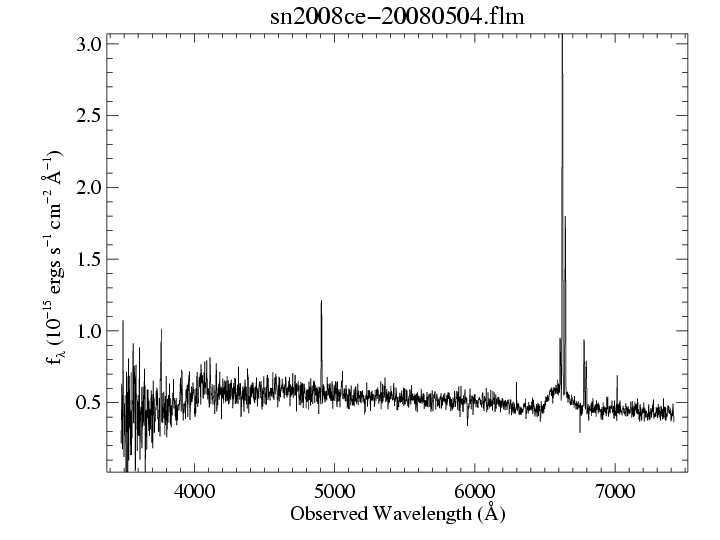
SN 2008ce (NGC 4428) (II)
[CBET 1364]
-
May 4, 2008 UT, FLWO 1.5m spectrum shows this
type-II supernova several weeks past explosion.
-
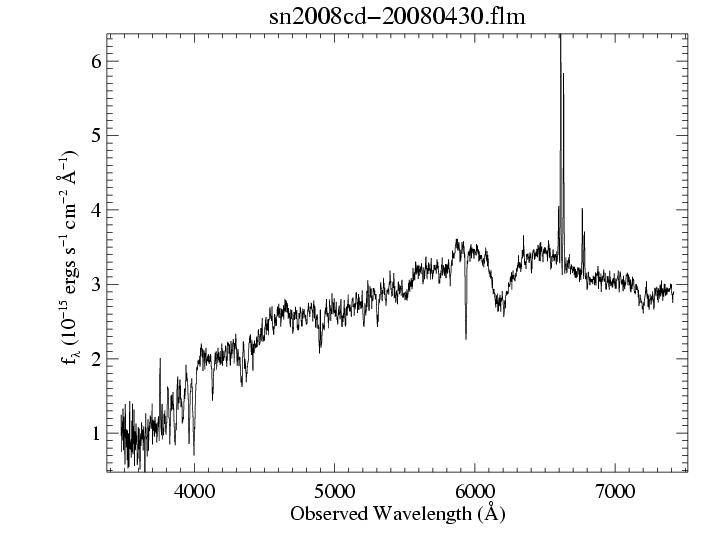
SN 2008cd (NGC 5038) (Ia)
[CBET 1362]
-
April 30, 2008 UT, FLWO 1.5m spectrum shows this
reddened type-Ia supernova around maximum light. The spectrum
is heavily contaminated by the underlying host galaxy.
-
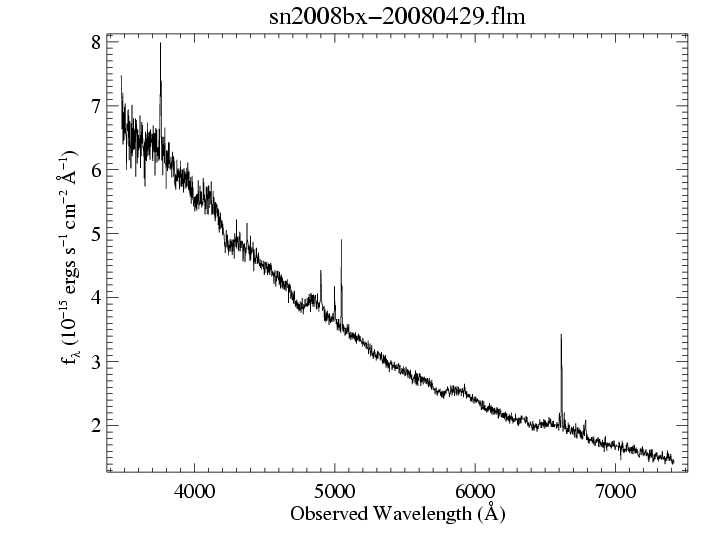
SN 2008bx (MCG +07-31-004) (II)
[CBET 1359]
-
April 29, 2008 UT, FLWO 1.5m spectrum shows this
young type-II supernova.
-
SN 2008bt (NGC 3404) (Ia-91bg)
[CBET 1337]
-
April 15, 2008 UT, FLWO 1.5m spectrum shows this
subluminous type-Ia supernova around maximum light, compared with
1991bg at a similar age.
-
SN 2008bl (UGC 9317) (II)
[CBET 1318]
-
March 29, 2008 UT, FLWO 1.5m spectrum shows this
young type-II supernova.
-
SN 2008bg (Anon. galaxy) (Ia)
[CBET 1308]
-
March 15, 2008 UT, FLWO 1.5m spectrum shows this
type-Ia supernova around maximum light, compared with 1994ae
at a similar age.
-
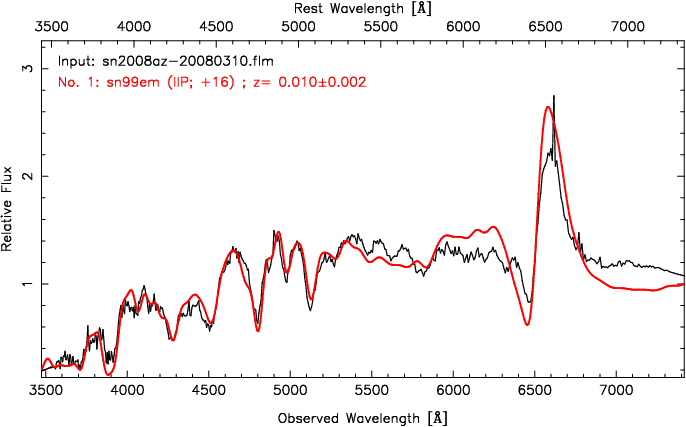
SN 2008az (UGC 10721) (II)
[CBET 1295]
-
March 10, 2008 UT, FLWO 1.5m spectrum shows this
type-IIP supernova around 3-4 weeks past explosion, compared with
1999em at a similar age.
-
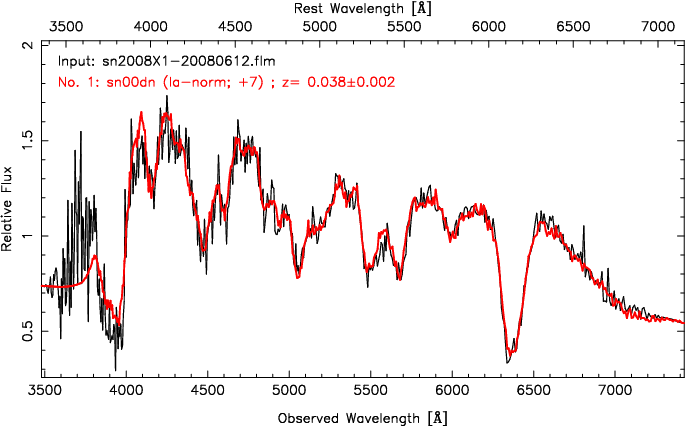
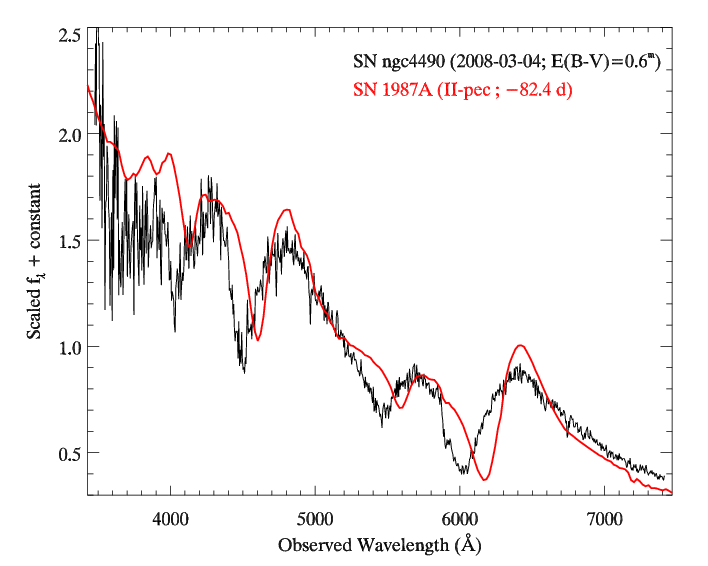
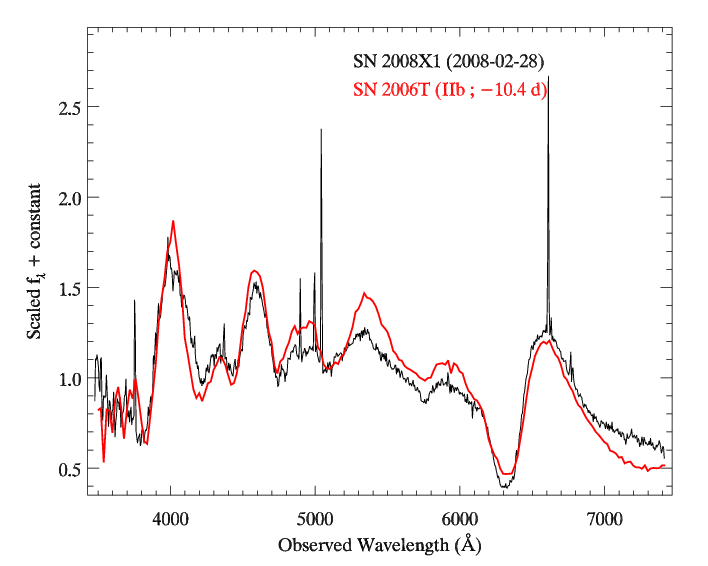
SN 2008ax (NGC 4990) (II-pec -> IIb)
[CBET 1285]
-
March 4, 2008 UT, FLWO 1.5m spectrum shows this
young peculiar type-II supernova, compared with 1987A at 2 days past explosion.
Note that 2008X1 has been dereddened by 0.6 mag in this plot.
NEW: He lines have developped in the optical spectrum,
hence a new IIb classification.
-
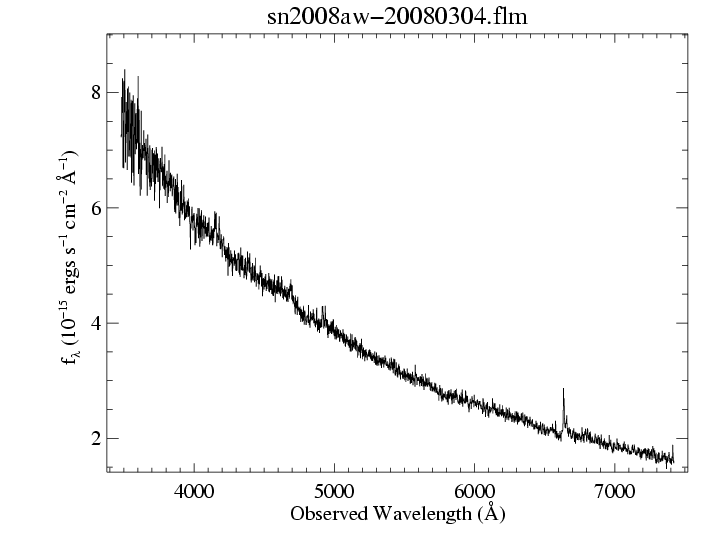
SN 2008aw (NGC 4939) (II)
[CBET 1282]
-
March 4, 2008 UT, FLWO 1.5m spectrum shows this
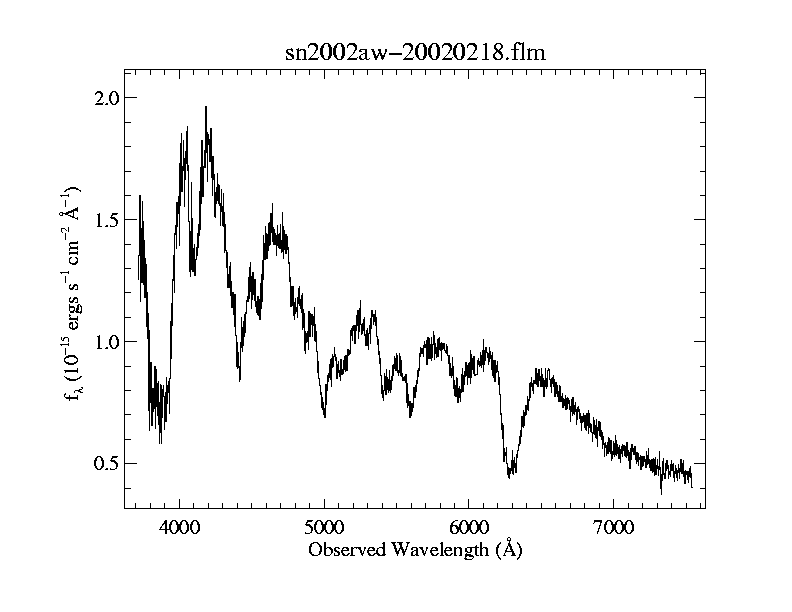
young type-II supernova.
-
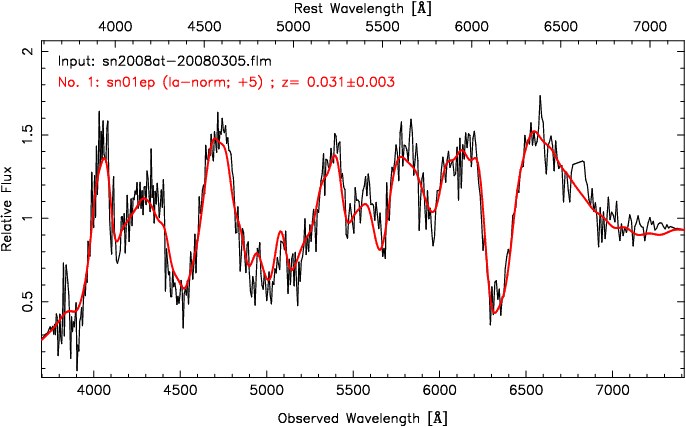
SN 2008at (UGC 5645) (Ia)
[CBET 1287]
-
March 5, 2008 UT, FLWO 1.5m spectrum shows this
type-Ia supernova around one week past maximum, compared with 2001ep
at a similar age.
-
SN 2008as (ESO 567- G057) (Ia)
[CBET 1276]
-
March 1, 2008 UT, Magellan Clay 6.5m spectrum shows this
type-Ia supernova around one month past maximum light, compared with 1996X
at a similar age.
-
SN 2008aq (MCG -02-33-020) (II/IIb?)
[CBET 1271]
-
February 28, 2008 UT, FLWO 1.5m spectrum shows this
type-II/IIb supernova around one week before maximum, compared with 2006T
at a similar age.
-
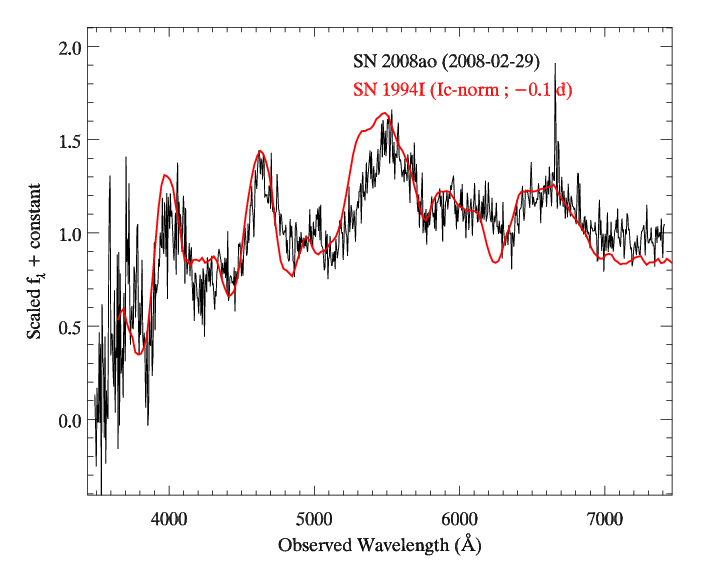
SN 2008ao (CGCG 524-054) (Ic)
[CBET 1274]
-
February 29, 2008 UT, FLWO 1.5m spectrum shows this
type-Ic supernova around maximum, compared with 1994I
at a similar age.
-
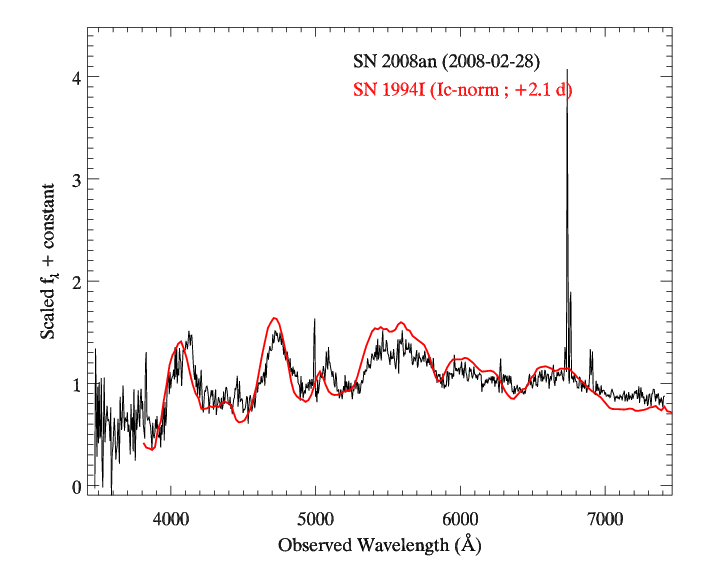
SN 2008an (UGC 10936) (Ic)
[CBET 1271]
-
February 28, 2008 UT, FLWO 1.5m spectrum shows this
type-Ic supernova around maximum, compared with 1994I
at a similar age.
-
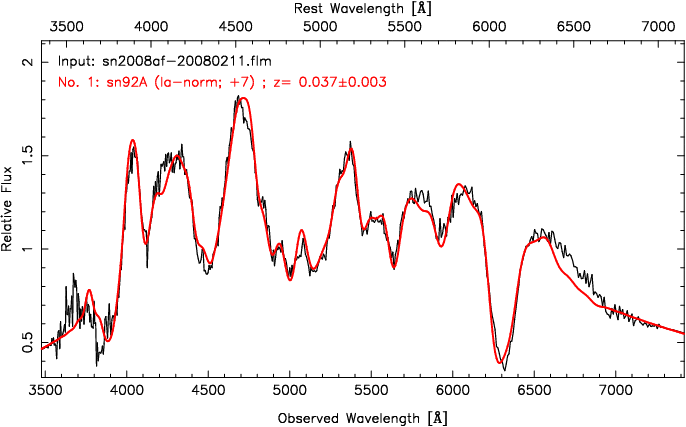
SN 2008af (UGC 9640) (Ia)
[CBET 1253]
-
February 11, 2008 UT, FLWO 1.5m spectrum shows this
type-Ia supernova around one week past maximum, compared with 1992A
at a similar age.
-
SN 2008ae (IC 577) (Ia-pec)
[CBET 1250]
-
February 10, 2008 UT, FLWO 1.5m spectrum shows this
peculiar type-Ia supernova around one week before maximum, compared with 2005hk
at a similar age.
-
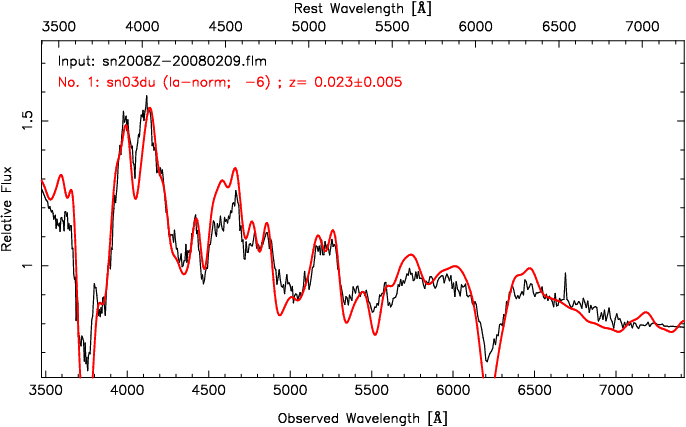
SN 2008Z (Anon. galaxy) (Ia)
[CBET 1246]
-
February 9, 2008 UT, FLWO 1.5m spectrum shows this
type-Ia supernova before maximum light, compared with 2003du at 6 days before maximum.
-
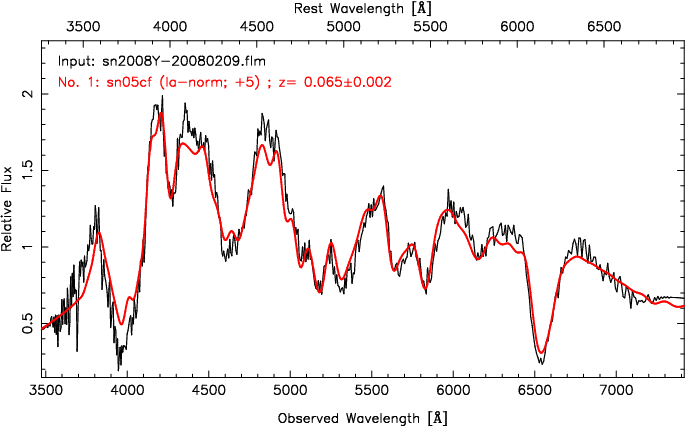
SN 2008Y (MCG +9-19-39) (Ia)
[CBET 1246]
-
February 9, 2008 UT, FLWO 1.5m spectrum shows this
type-Ia supernova around maximum light, compared with 2005cf at 5 days past maximum.
-
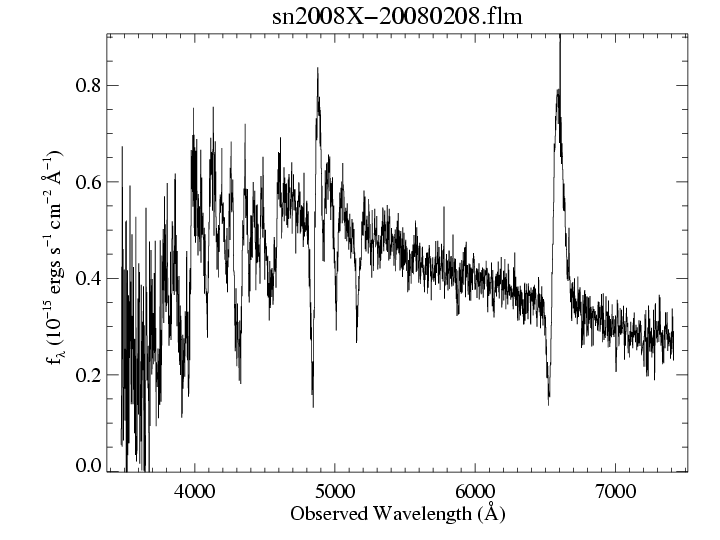
SN 2008X (NGC 4141) (IIP)
[CBET 1242,
CBET 1300]
-
February 8, 2008 UT, FLWO 1.5m spectrum shows this
type-IIP supernova around 3-4 weeks past explosion.
-
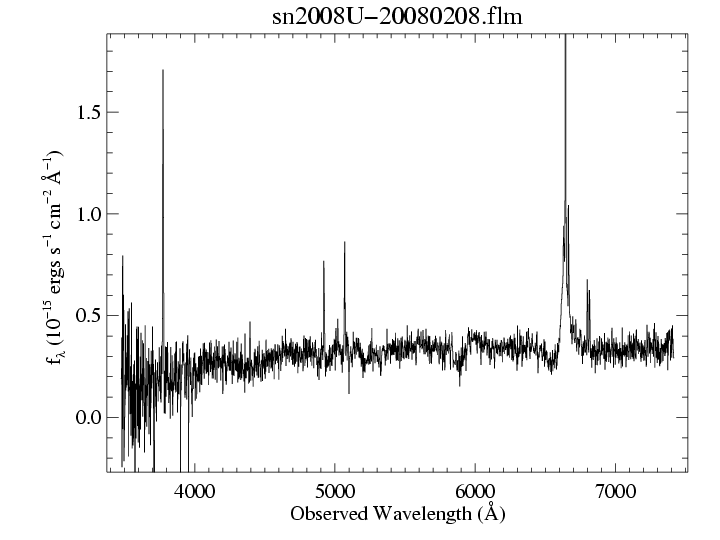
SN 2008U (UGC 8917) (II)
[CBET 1242,
CBET 1300]
-
February 8, 2008 UT, FLWO 1.5m spectrum shows this
possible "supernova impostor" (LBV). It could also be a type-IIn in its early stages
or a low-luminosity type-IIP past the recombination phase (A. Pastorello, priv. comm.)
NEW: Re-analysis of the same data show that 2008U is in fact a type-II during the
hydrogen recombination phase (see CBET 1300).
-
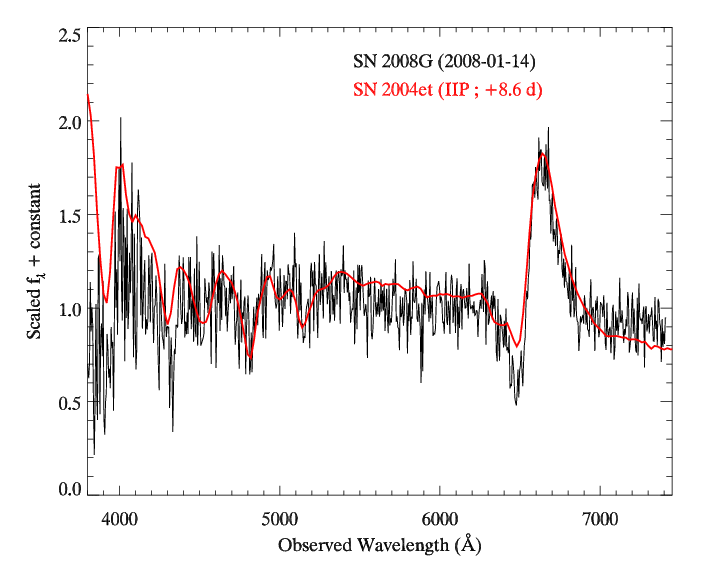
SN 2008G (UGC 2851) (IIP)
[CBET 1209]
-
January 14, 2008 UT, FLWO 1.5m spectrum shows this
type-II supernova around three weeks past explosion, compared with 2004et.
-
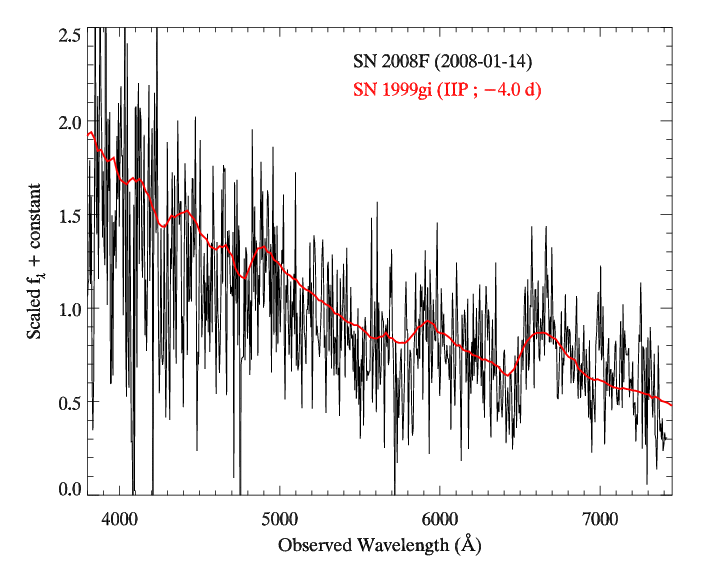
SN 2008F (MCG -01-8-15) (IIP)
[CBET 1209]
-
January 14, 2008 UT, FLWO 1.5m spectrum shows this
type-II supernova around one week past explosion, compared with 1999gi.
-
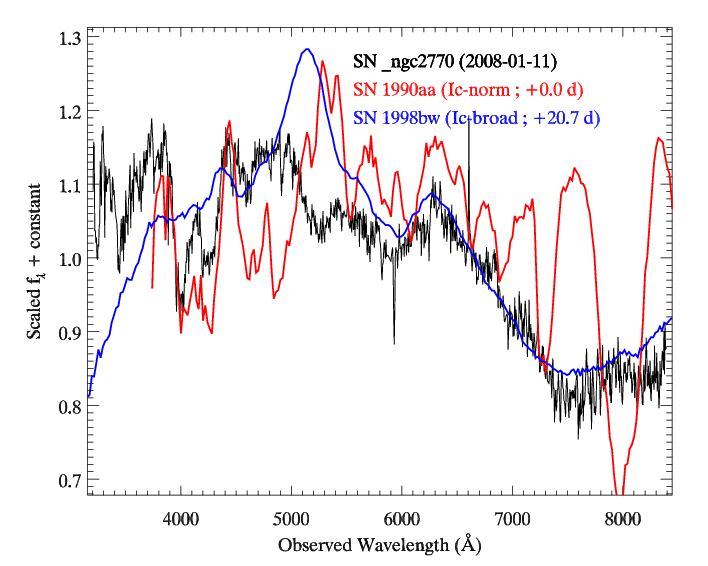
SN 2008D (NGC 2770) (Ic-broad)
[CBET 1204,
CBET 1205]
-
January 11, 2008 UT, MMT 6.5m spectrum shows this
peculiar type-Ic supernova around maximum light, compared with
1990aa and 1998bw.
-
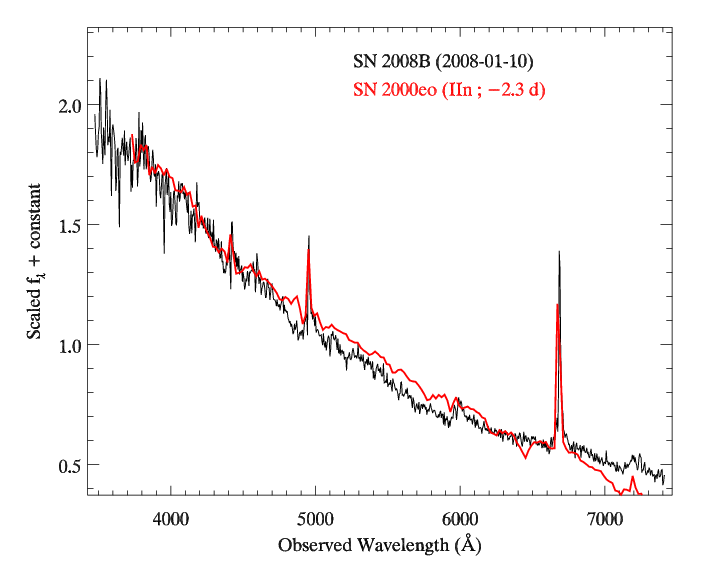
SN 2008B (NGC 5829) (IIn)
[CBET 1201]
-
January 10, 2008 UT, FLWO 1.5m spectrum shows this
type-IIn supernova around maximum light, compared with 2000eo
at a similar age.
-
SN 2008A (NGC 634) (Ia-pec)
[CBET 1198]
-
January 5, 2008 UT, FLWO 1.5m spectrum shows this
peculiar type-Ia supernova around one week before maximum, compared with 2005hk
at a similar age.
Back to top
SN 2007
-
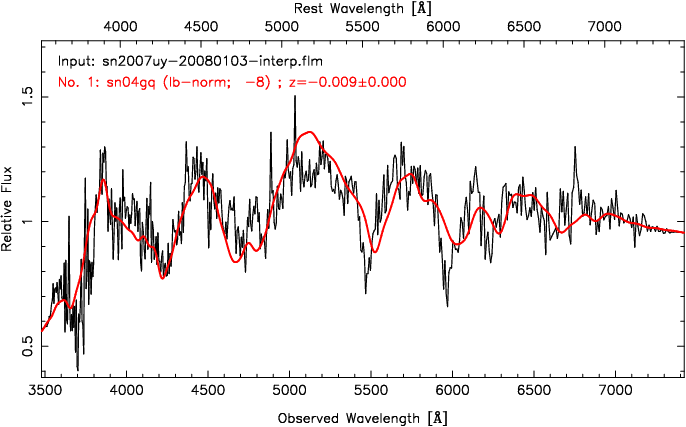
SN 2007uy (NGC 2770) (Ib)
[CBET 1191]
-
January 3, 2008 UT, FLWO 1.5m spectrum shows this
type-Ib supernova around one week before maximum, compared with 2004gq.
-
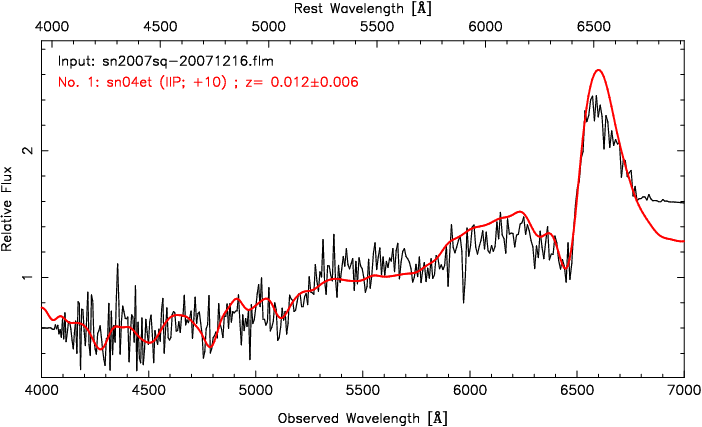
SN 2007sq (MCG -03-23-5) (IIP)
[CBET 1171]
-
December 16, 2007 UT, FLWO 1.5m spectrum shows this
type-IIP supernova around two weeks past maximum, compared with 2004et at 10
days past maximum.
-
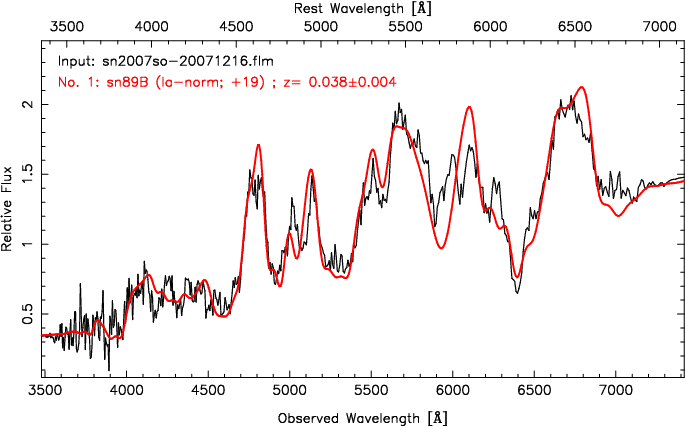
SN 2007so (NGC 1109) (Ia)
[CBET 1171]
-
December 16, 2007 UT, FLWO 1.5m spectrum shows this
type-Ia supernova around three weeks past maximum, compared with 1989B at 19
days past maximum.
-
SN 2007rw (UGC 7798) (IIb)
[CBET 1155]
-
December 4, 2007 UT, FLWO 1.5m spectrum shows this
type-IIb supernova around three weeks past explosion, compared with 1993J at 18
days from explosion.
-
SN 2007rt (UGC 6109) (IIn)
[CBET 1156]
-
December 5, 2007 UT, FLWO 1.5m spectrum shows this
type-IIn supernova around 2-3 months past maximum, compared with
1998S and 1996L at 81 and 58 days past maximum, respectively.
-
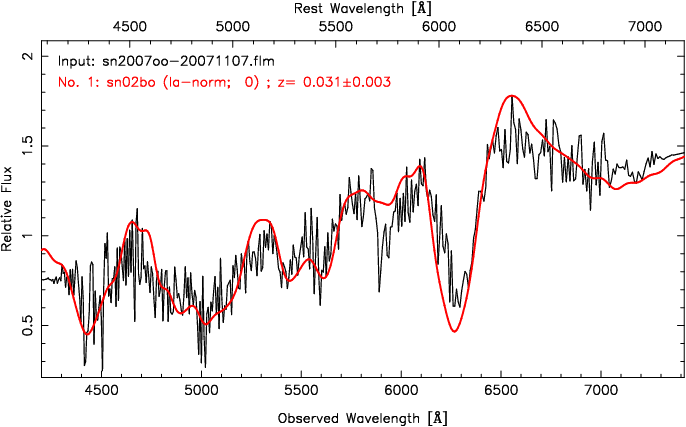
SN 2007oo (UGC 12558) (Ia)
[CBET 1125]
-
November 7, 2007 UT, FLWO 1.5m spectrum shows this highly reddened
type-Ia supernova around maximum light, compared with 2002bo at maximum.
-
SN 2007od (UGC 12846) (II)
[CBET 1119]
-
November 4, 2007 UT, FLWO 1.5m spectrum shows this type-II supernova around
two weeks past explosion.
-
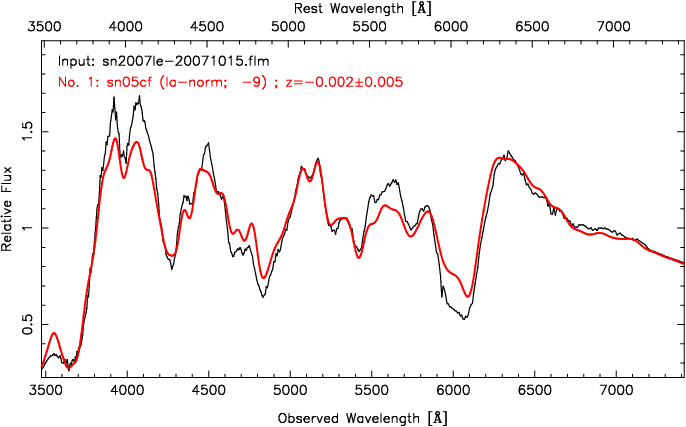
SN 2007le (NGC 7721) (Ia)
[CBET 1101]
-
October 15, 2007 UT, FLWO 1.5m spectrum shows this type-Ia supernova around
one week before maximum light, compared with SN 2005cf at 9 days before maximum.
-
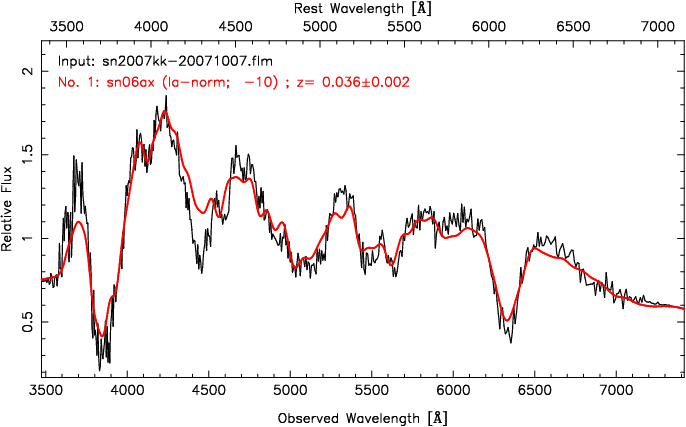
SN 2007kk (UGC 2828) (Ia)
[CBET 1097]
-
October 7, 2007 UT, FLWO 1.5m spectrum shows this type-Ia supernova around
one week before maximum light, compared with SN 2006ax at 10 days before maximum.
-
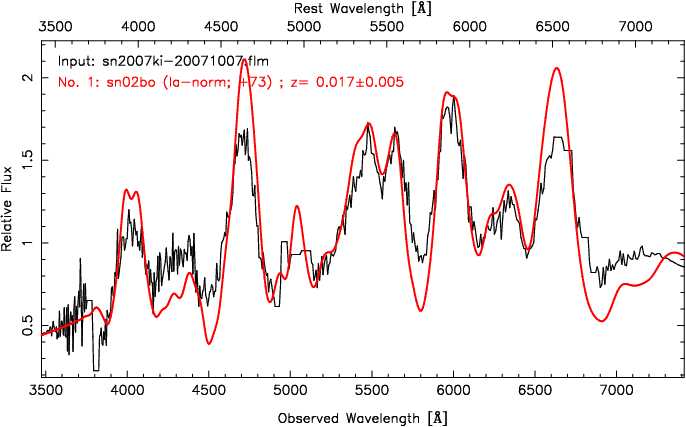
SN 2007ki (MCG +05-17-010) (Ia)
[CBET 1097]
-
October 7, 2007 UT, FLWO 1.5m spectrum shows this type-Ia supernova around
2 months past maximum light, compared with SN 2002bo at 73 days past maximum.
-
SN 2007kg (Anon. galaxy) (Ia)
[CBET 1095]
-
October 6, 2007 UT, FLWO 1.5m spectrum shows this type-Ia supernova around
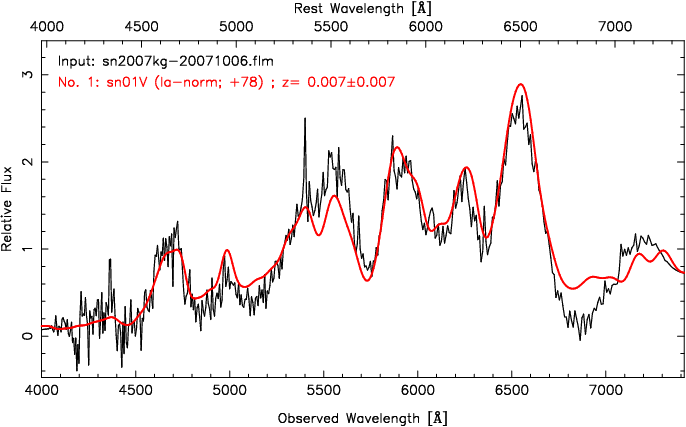
3 months past maximum light, compared with SN 2001V at 78 days past maximum.
-
SN 2007kf (Anon. galaxy) (Ia)
[CBET 1097]
-
October 7, 2007 UT, FLWO 1.5m spectrum shows this type-Ia supernova around
one month past maximum light, compared with SN 2006lf at 37 days past maximum.
-
SN 2007kd (MCG +06-21-036) (Ia)
[CBET 1094]
-
October 6, 2007 UT, FLWO 1.5m spectrum shows this type-Ia supernova around
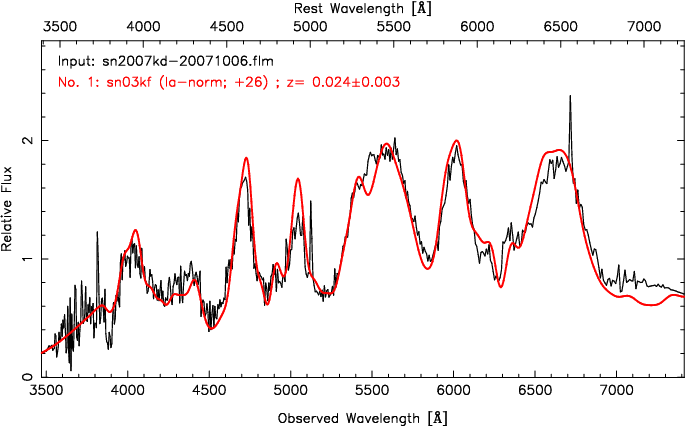
3-4 weeks past maximum light, compared with SN 2003kf at 26 days past maximum.
-
SN 2007il (IC 1704) (II)
[CBET 1062]
-
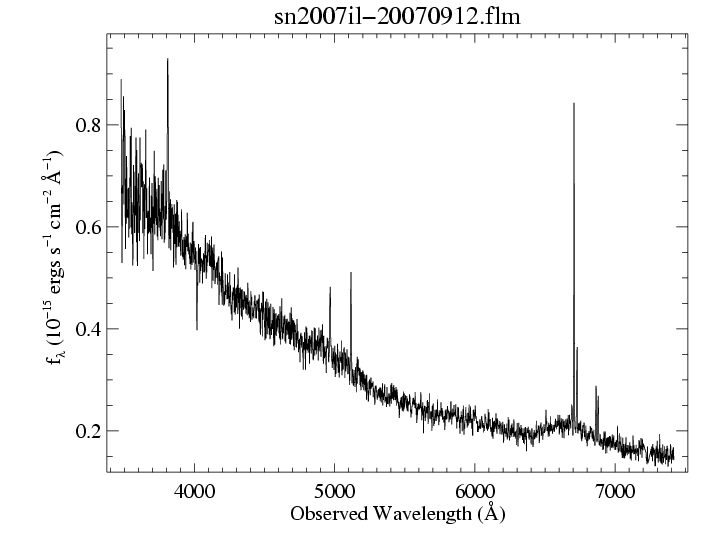
September 12, 2007 UT, FLWO 1.5m spectrum shows this young type-IIP supernova.
-
SN 2007hv (UGC 2858) (II)
[CBET 1058]
-
September 11, 2007 UT, FLWO 1.5m spectrum shows this type-IIP supernova around
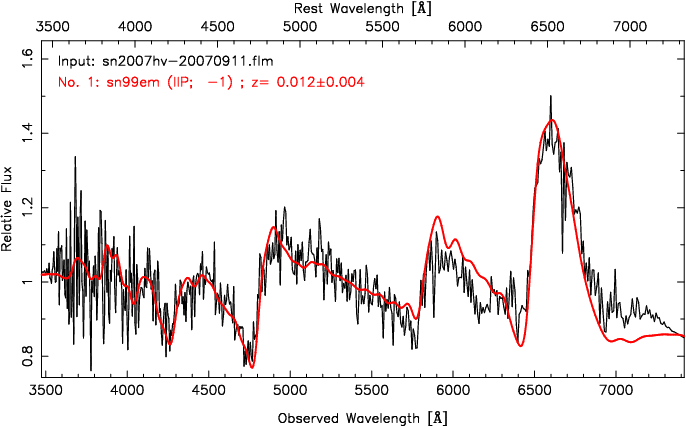
1-2 weeks past explosion, compared with SN 1999em at 9 days past explosion.
-
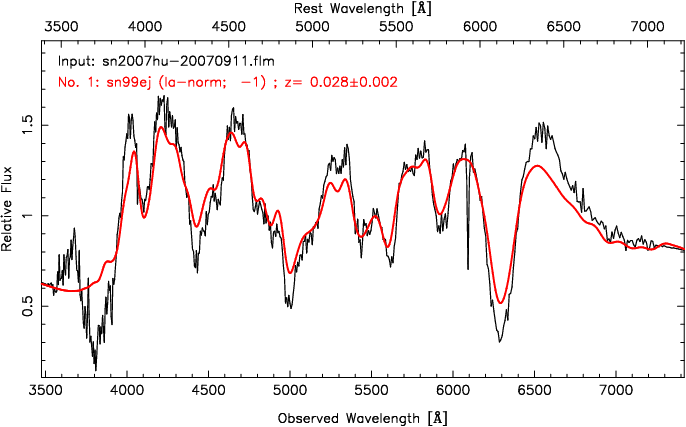
SN 2007hu (NGC 6261) (Ia)
[CBET 1058]
-
September 11, 2007 UT, FLWO 1.5m spectrum shows this type-Ia supernova around
maximum light, compared with SN 1999ej at 1 day before maximum.
-
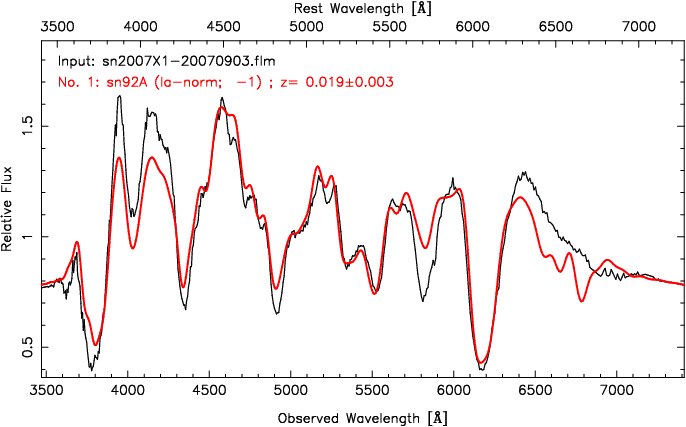
SN 2007hj (NGC 7461) (Ia)
[CBET 1048]
-
September 3, 2007 UT, FLWO 1.5m spectrum shows this type-Ia supernova around
maximum light, compared with SN 1992A at 1 day before maximum. This SN Ia is
also similar to some sub-luminous events, characterized by a strong absorption
feature at 580 nm due to Si II.
-
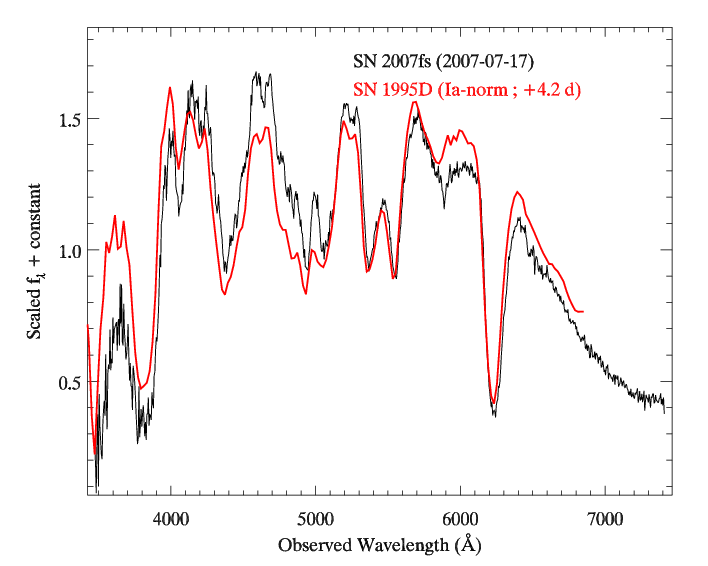
SN 2007fs (ESO 601-G5) (Ia)
[CBET 1003]
-
July 17, 2007 UT, FLWO 1.5m spectrum shows this reddened type-Ia supernova around
maximum light, compared with SN 1995D at 4 days past maximum. In this plot,
SN 1995D has been artificially reddened by 0.5 mag.
-
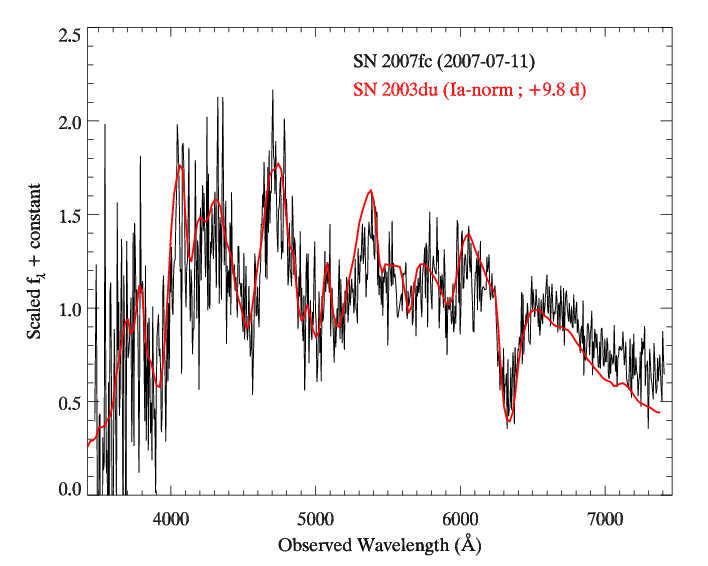
SN 2007fc (ESO 538-G8) (Ia)
[CBET 998]
-
June 8, 2007 UT, FLWO 1.5m spectrum shows this type-Ia supernova around
one week past maximum light, compared with SN 2003du at 10 days past maximum.
-
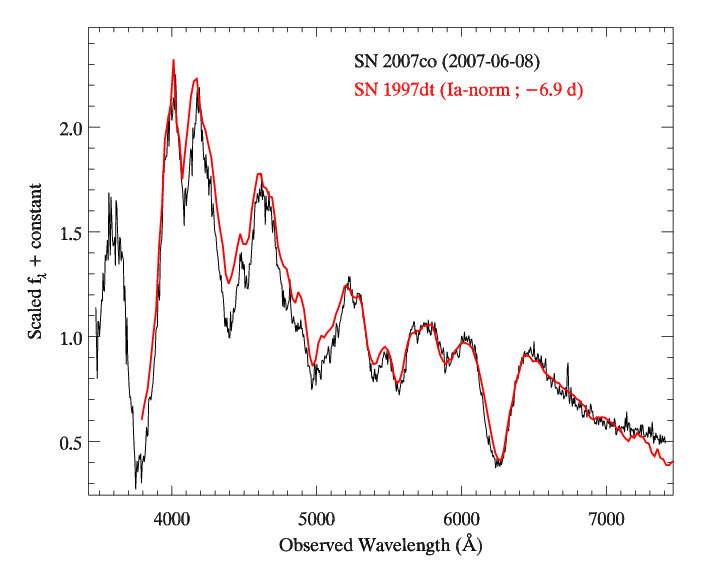
SN 2007co (MCG +05-43-16) (Ia)
[CBET 978]
-
June 8, 2007 UT, FLWO 1.5m spectrum shows this type-Ia supernova around
one week before maximum light, compared with SN 1997dt at one week before maximum. Note that SM 2007co occured in the same galaxy as SN 2007ck (see below)!
-
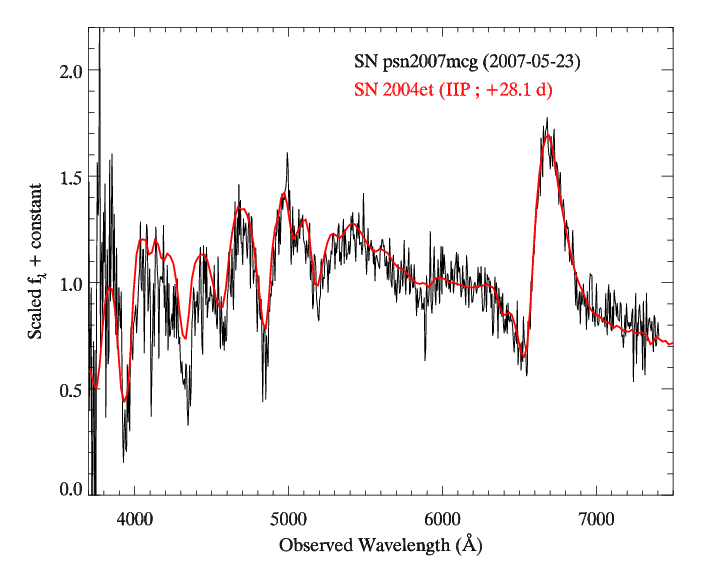
SN 2007ck (MCG +05-43-16) (II)
[CBET 971]
-
May 23, 2007 UT, FLWO 1.5m spectrum shows this type-II supernova around
one month past explosion, compared with SN 1999em at 28 days past explosion.
-
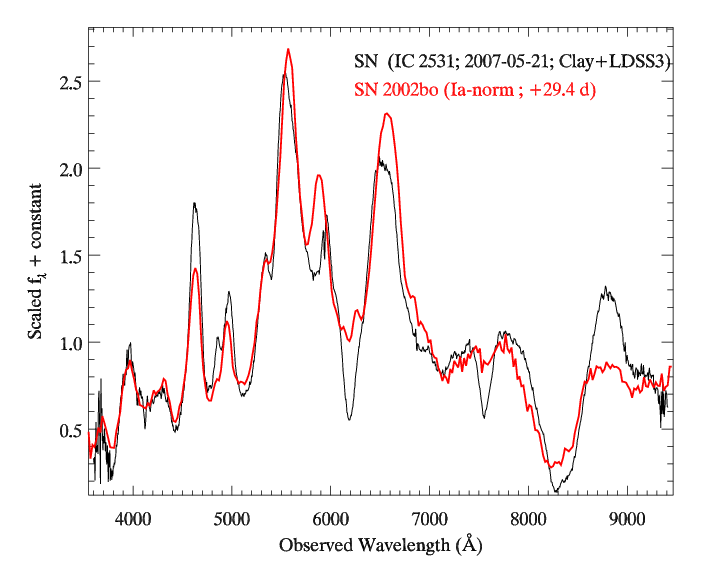
SN 2007cj (IC 2531) (Ia)
[CBET 969]
-
May 21, 2007 UT, Magellan Clay+LDSS3 spectrum shows this type-Ia supernova around
one month past maximum light, compared with SN 2002bo at +29 days past maximum.
-
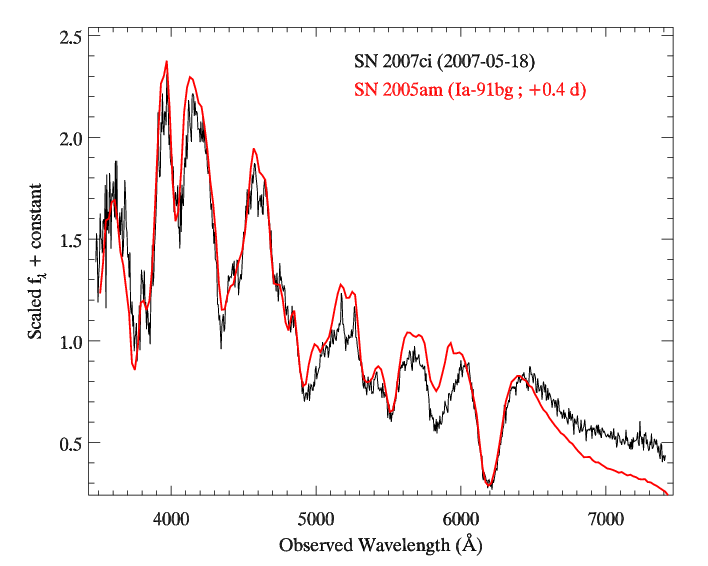
SN 2007ci (NGC 3873) (Ia-91bg)
[CBET 967]
-
May 18, 2007 UT, FLWO 1.5m spectrum shows this type-Ia supernova around
maximum light, compared with the subluminous SN 2005am at maximum.
-
SN 2007ch (NGC 6000) (IIP)
[CBET 963]
-
May 15, 2007 UT, FLWO 1.5m spectrum shows this type-II supernova around
2-3 weeks after explosion, compared with SN 2005cs at 17 days past explosion.
-
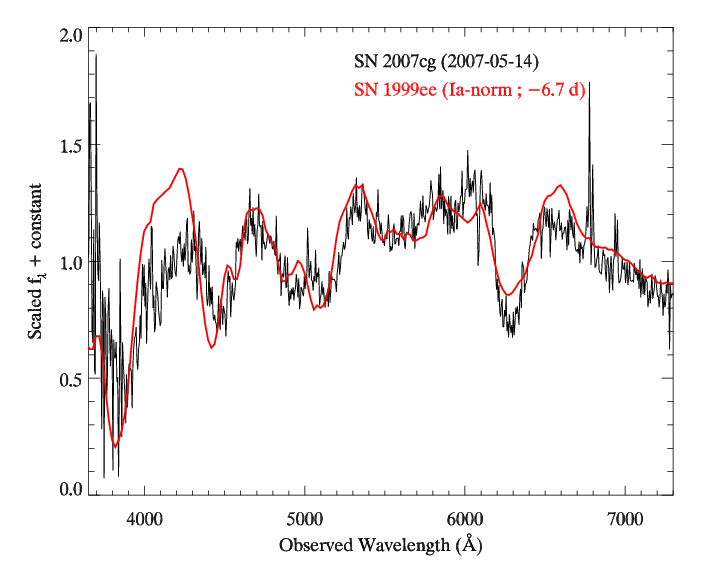
SN 2007cg (ESO 508-G75) (Ia)
[CBET 962]
-
May 14, 2007 UT, FLWO 1.5m spectrum shows this type-Ia supernova around
one week before maximum light, compared with SN 1999ee at one week before maximum.
-
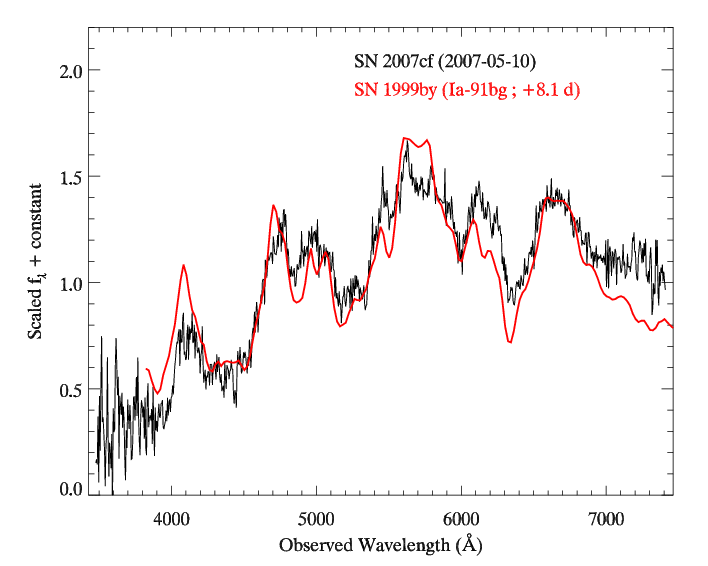
SN 2007cf (MCG +02-39-21) (Ia-91bg)
[CBET 958]
-
May 10, 2007 UT, FLWO 1.5m spectrum shows this type-Ia supernova around
one week past maximum light, compared with the subluminous SN 1999by at 8 days past maximum.
-
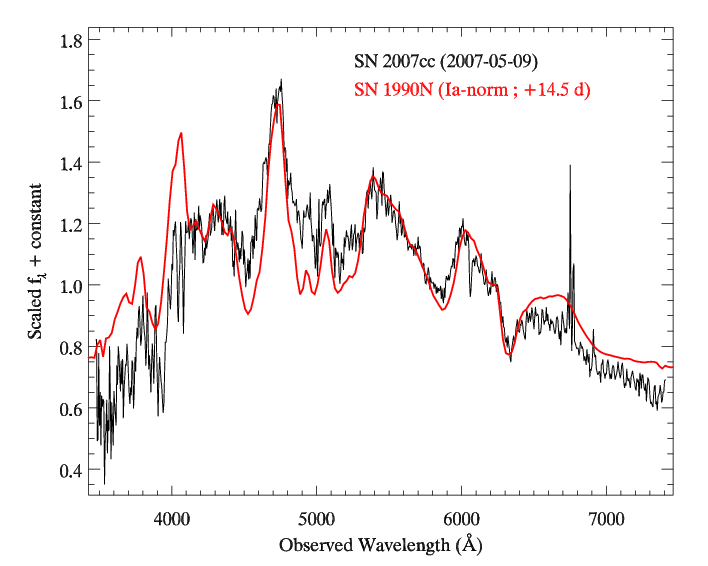
SN 2007cc (ESO 578-G26) (Ia-norm)
[CBET 956]
-
May 9, 2007 UT, FLWO 1.5m spectrum shows this type-Ia supernova around
2 weeks past maximum light, compared with SN 1990N at 15 days past maximum.
-
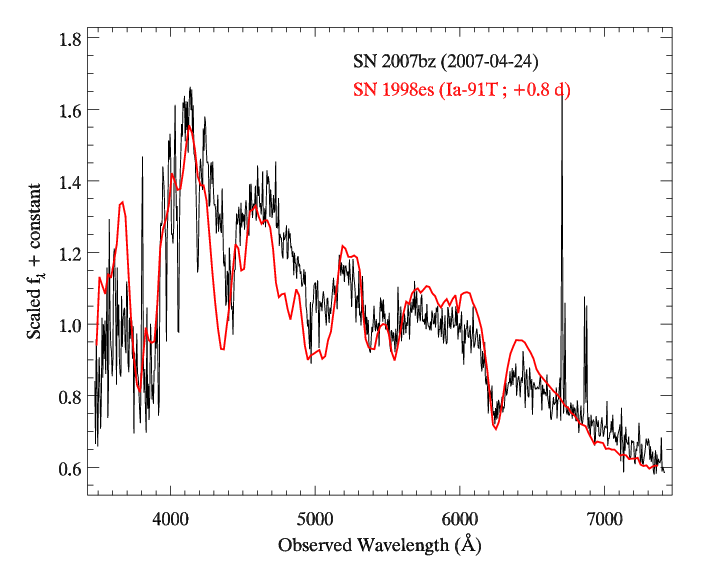
SN 2007bz (IC 3918) (Ia-91T)
[CBET 943]
-
April 24, 2007 UT, FLWO 1.5m spectrum shows this type-Ia supernova around
maximum light, compared with the 1991T-like SN 1998es at 1 day past maximum.
-
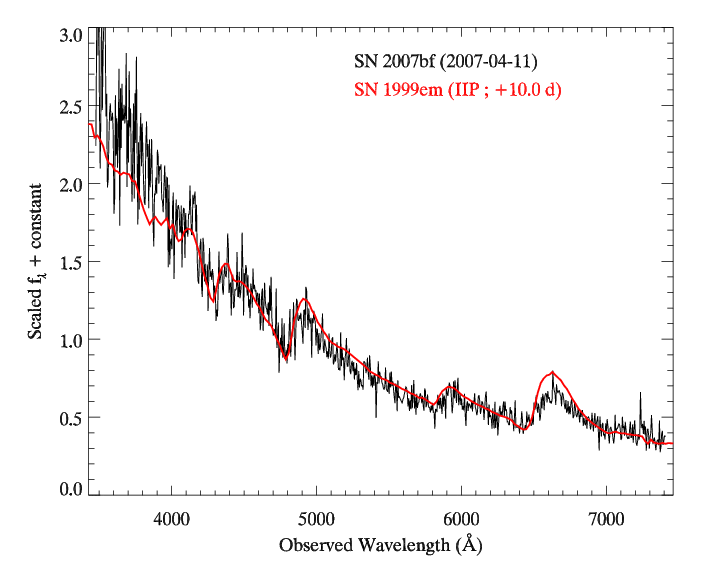
SN 2007bf (UGC 9121) (II)
[CBET 921]
-
April 11, 2007 UT, FLWO 1.5m spectrum shows this type-II supernova around
one week past explosion, compared with SN 1999em at 10 days past explosion.
-
SN 2007bd (UGC 4455) (Ia)
[CBET 915]
-
April 7, 2007 UT, FLWO 1.5m spectrum shows this type-Ia supernova around
one week before maximum light, compared with SN 1992A at 5 days before maximum.
-
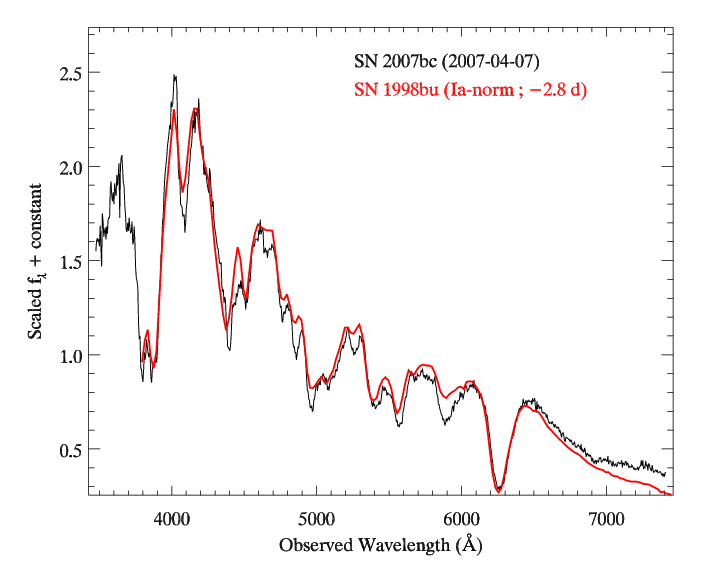
SN 2007bc (UGC 6332) (Ia)
[CBET 915]
-
April 7, 2007 UT, FLWO 1.5m spectrum shows this type-Ia supernova around
maximum light, compared with SN 1998bu at 3 days before maximum.
-
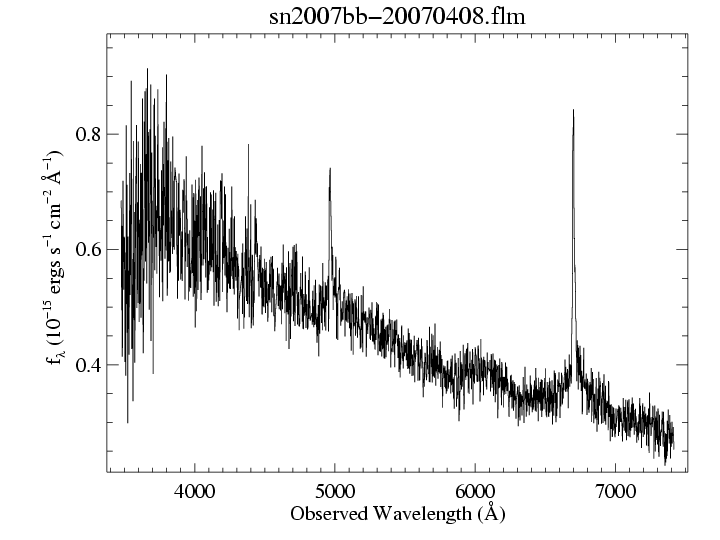
SN 2007bb (UGC 3627) (IIn)
[CBET 916]
-
April 8, 2007 UT, FLWO 1.5m spectrum shows this type-IIn supernova around
one week past explosion.
-
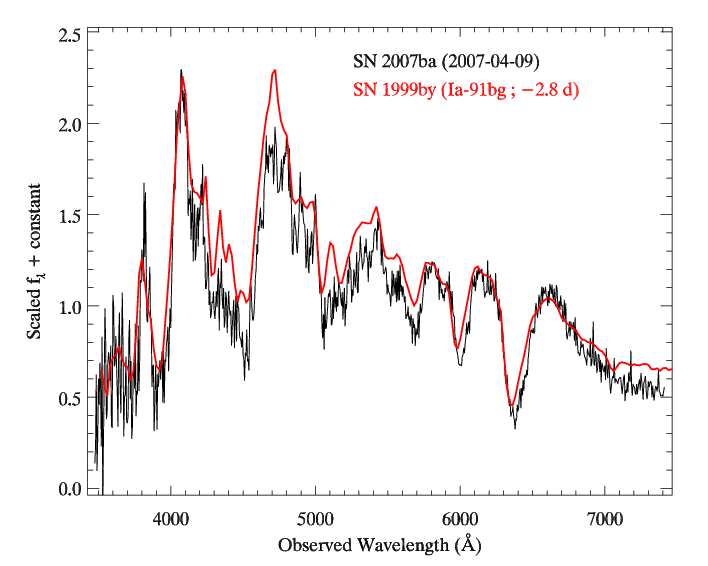
SN 2007ba (UGC 9798) (Ia-91bg)
[CBET 918]
-
April 9, 2007 UT, FLWO 1.5m spectrum shows this type-Ia supernova around
maximum light, compared with the 1991bg-like SN 1999by at 3 days before maximum.
-
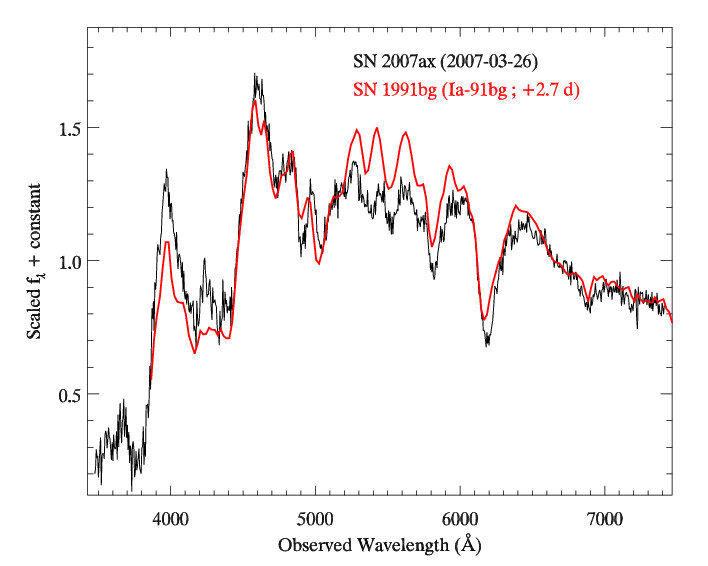
SN 2007ax (UGC 3725) (Ia)
[CBET 907]
-
March 26, 2007 UT, FLWO 1.5m spectrum shows this 1991bg-like type-Ia supernova around
maximum light, compared with SN 1991bg at 3 days past maximum.
-
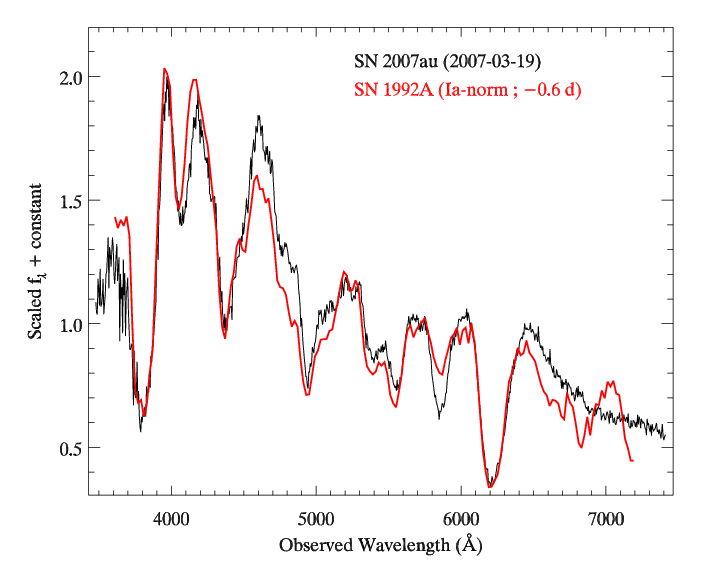
SN 2007au (UGC 3725) (Ia)
[CBET 898]
-
March 19, 2007 UT, FLWO 1.5m spectrum shows this type-Ia supernova around
maximum light, compared with SN 1992A at one day before maximum.
-
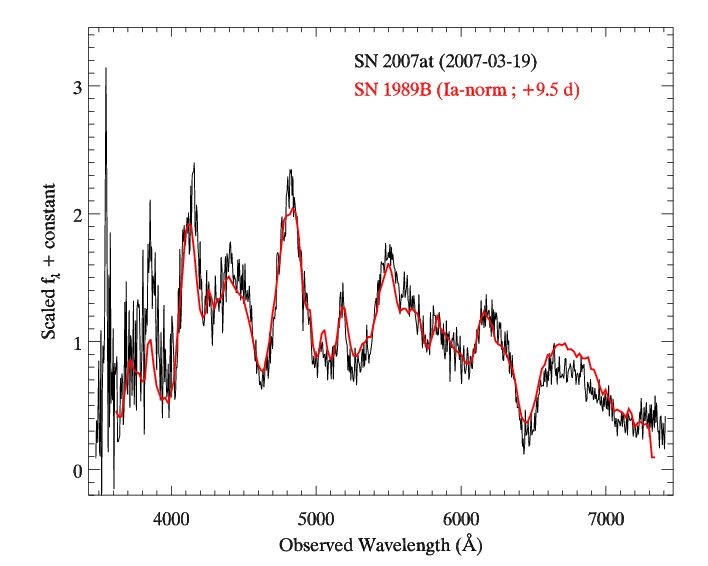
SN 2007at (ESO 580-G44) (Ia)
[CBET 898]
-
March 19, 2007 UT, FLWO 1.5m spectrum shows this type-Ia supernova around
one week past maximum light, compared with SN 1989B at 10 days past maximum.
-
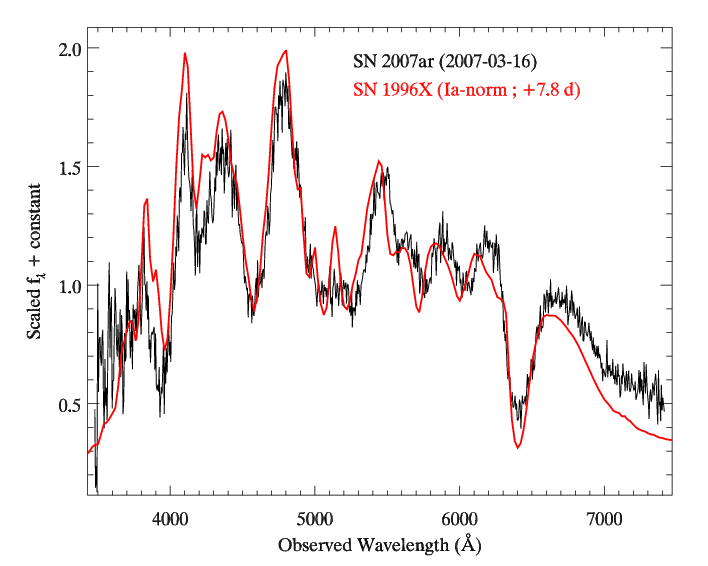
SN 2007ar (MCG +10-19-62) (Ia)
[CBET 889]
-
March 16, 2007 UT, FLWO 1.5m spectrum shows this type-Ia supernova around
one week past maximum light, compared with SN 1996X at 8 days past maximum.
-
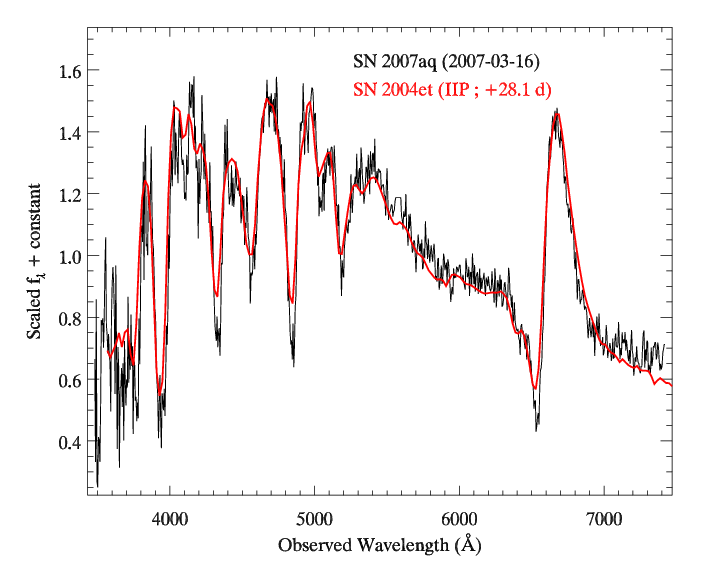
SN 2007aq (IC 2409) (IIP)
[CBET 889]
-
March 16, 2007 UT, FLWO 1.5m spectrum shows this type-IIP supernova around
one month past explosion, compared with SN 2004et at 28 days past explosion.
-
SN 2007am (NGC 3367) (IIP)
[CBET 884]
-
March 14, 2007 UT, FLWO 1.5m spectrum shows this type-II supernova around
two weeks past explosion. The relative shape of the spectrum and apparent weakness
of spectral lines are due to a strong host-galaxy background.
Here is a comparison with SN 1999em at 16 days
past explosion. The spectrum of SN 2007am in this plot has been de-reddened by 1 mag.
-
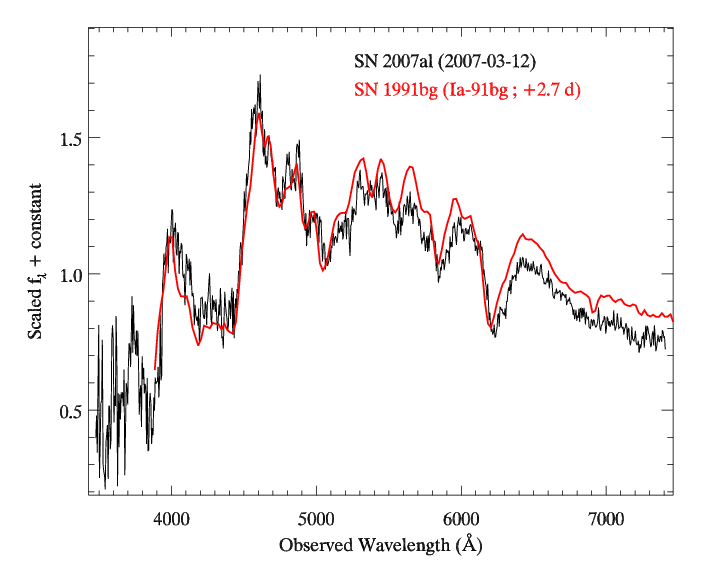
SN 2007al (Anon. galaxy) (Ia-91bg)
[CBET 878]
-
March 12, 2007 UT, FLWO 1.5m spectrum shows this 1991bg-like type-Ia supernova around
maximum light, compared with SN 1991bg at 3 days past maximum.
-
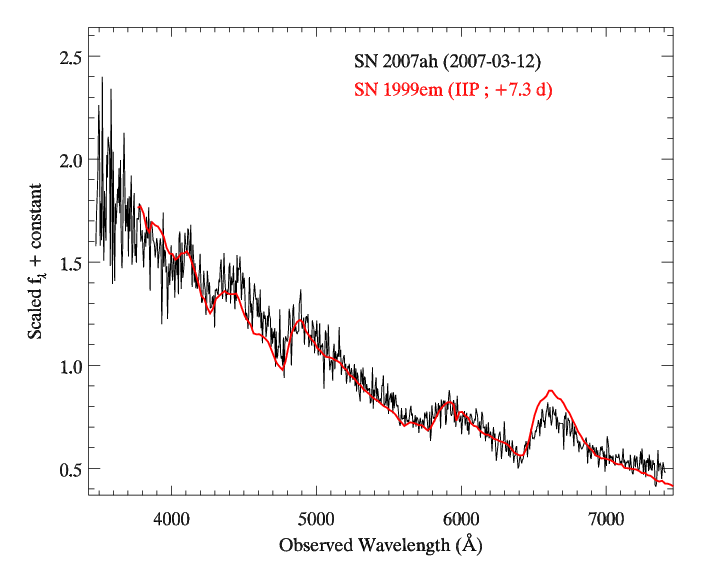
SN 2007ah (UGC 2931) (II)
[CBET 878]
-
March 12, 2007 UT, FLWO 1.5m spectrum shows this type-II supernova around
one week past explosion, compared with SN 1999em at one week past explosion.
-
SN 2007ag (UGC 5392) (Ib)
[CBET 874]
-
March 10, 2007 UT, FLWO 1.5m spectrum shows this type-Ib supernova around
maximum light, compared with SN 2005hg at one day before maximum.
-
SN 2007ae (UGC 10704) (Ia)
[CBET 859]
-
February 25, 2007 UT, FLWO 1.5m spectrum shows this type-Ia supernova around
maximum light, compared with SN 1999ee at maximum.
-
SN 2007ad (UGC 10845) (IIP)
[CBET 857]
-
February 23, 2007 UT, FLWO 1.5m spectrum shows this type-IIP supernova around
1 week past explosion, compared with SN 1999em at 7 days past explosion.
-
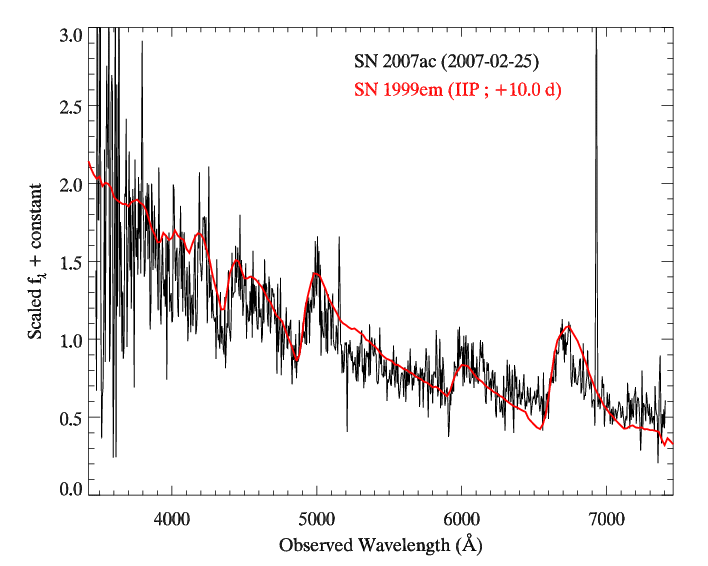
SN 2007ac (UGC 10550) (IIP)
[CBET 859]
-
February 25, 2007 UT, FLWO 1.5m spectrum shows this type-IIP supernova around
10 days past explosion, compared with SN 1999em at 10 days past explosion.
-
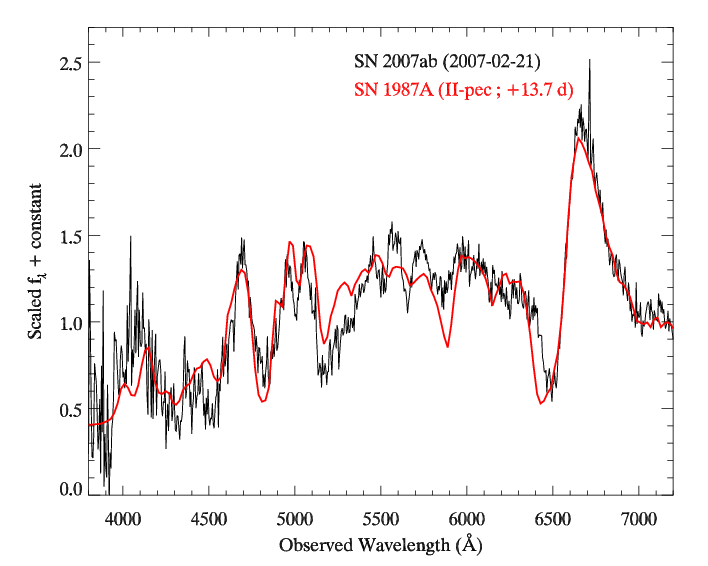
SN 2007ab (MCG -01-43-2) (II)
[CBET 853]
-
February 21, 2007 UT, FLWO 1.5m spectrum shows this type-II supernova around
2 weeks past explosion, compared with SN 1987A at 14 days past explosion.
-
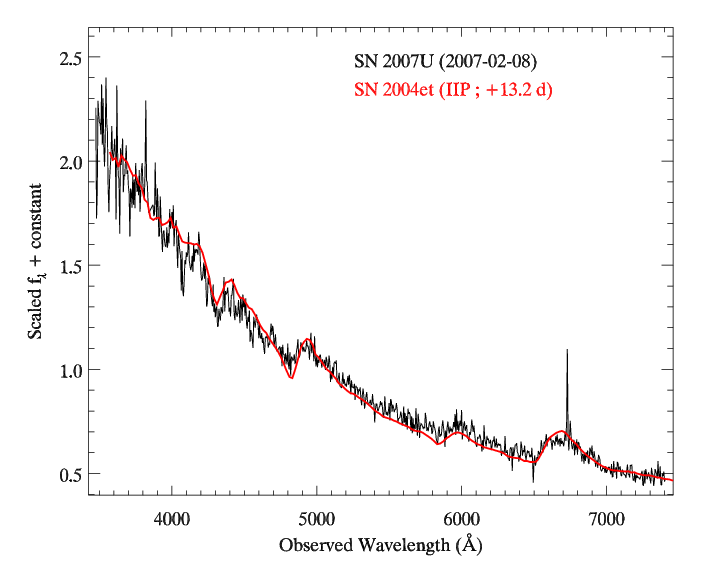
SN 2007U (ESO 552-65) (IIP)
[CBET 838]
-
February 8, 2007 UT, FLWO 1.5m spectrum shows this type-IIP supernova around
2 weeks past explosion, compared with SN 2004et at 13 days past explosion.
-
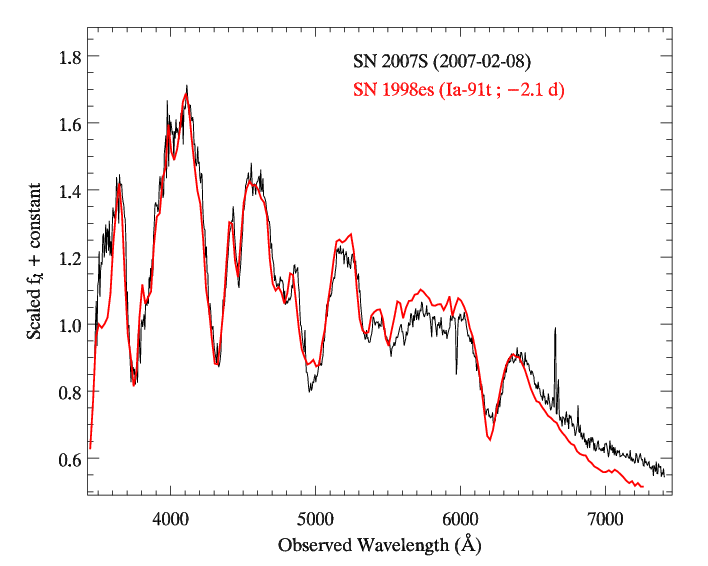
SN 2007S (UGC 5378) (Ia-91T)
[CBET 839]
-
February 8, 2007 UT, FLWO 1.5m spectrum shows this type-Ia supernova around
maximum light, compared with the 1991T-like SN 1998es at 2 days before maximum.
-
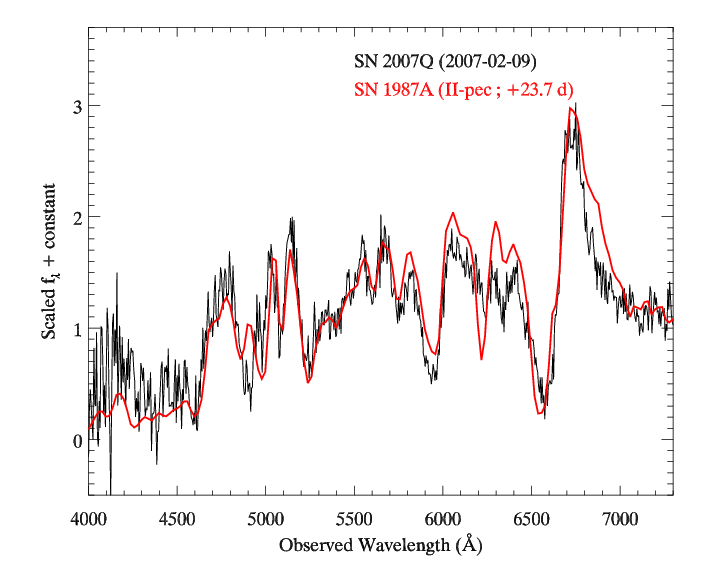
SN 2007Q (NGC 5888) (II)
[CBET 840]
-
February 9, 2007 UT, FLWO 1.5m spectrum shows this type-II supernova around
3-4 weeks past explosion, compared with SN 1987A at 24 days past explosion.
-
SN 2007P (ESO 566-G36) (II)
[CBET 822]
-
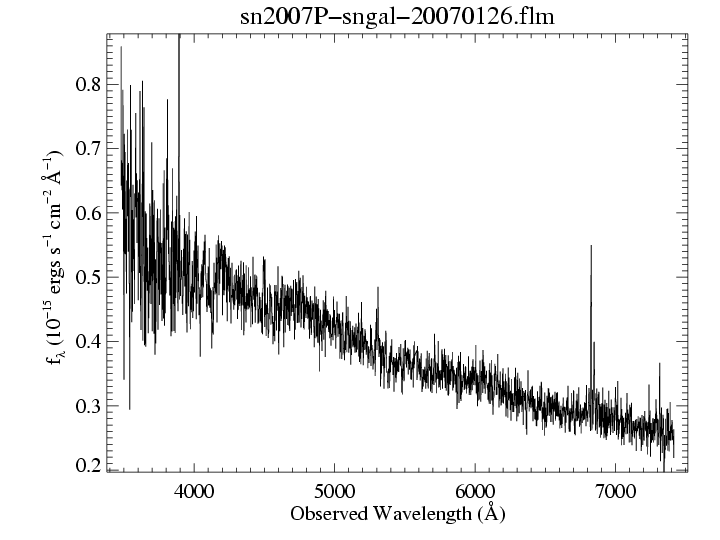
January 26, 2007 UT, FLWO 1.5m spectrum shows this young type-II supernova.
-
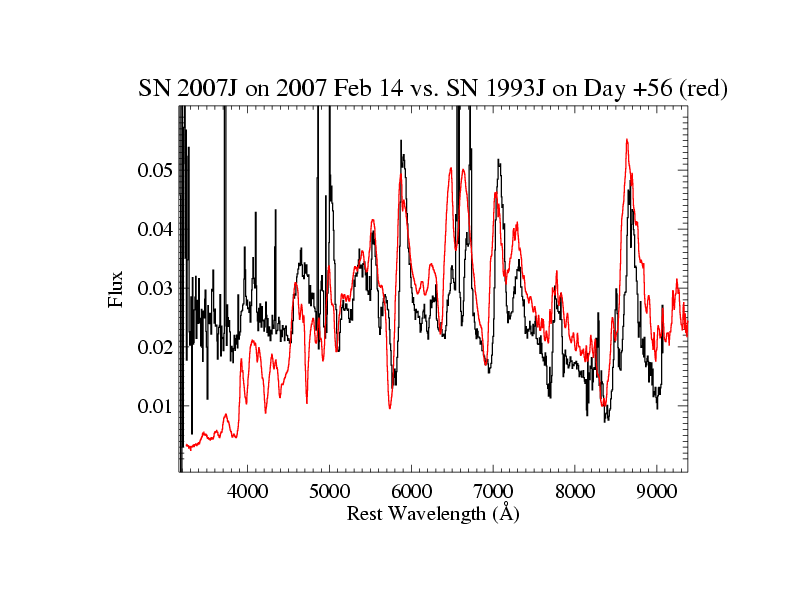
SN 2007J (UGC 1778) (Ib-pec)
[CBET 817,
CBET 926]
-
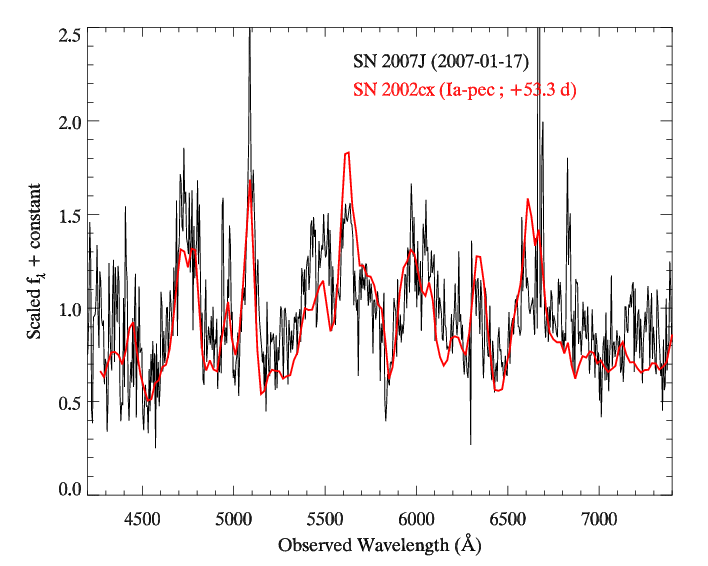
January 17, 2007 UT, FLWO 1.5m spectrum shows this peculiar type-Ia supernova around
2 months past maximum light, compared with SN 2002cx at +53 days past
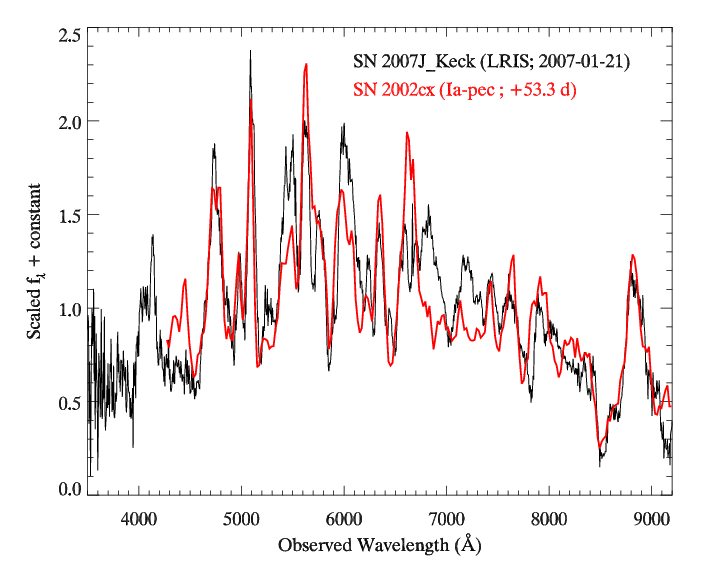
maximum. This tentative identification was confirmed on Jan. 21
UT with Keck+LRIS. Here is
the spectrum, again compared with SN 2002cx at +53 days past maximum.
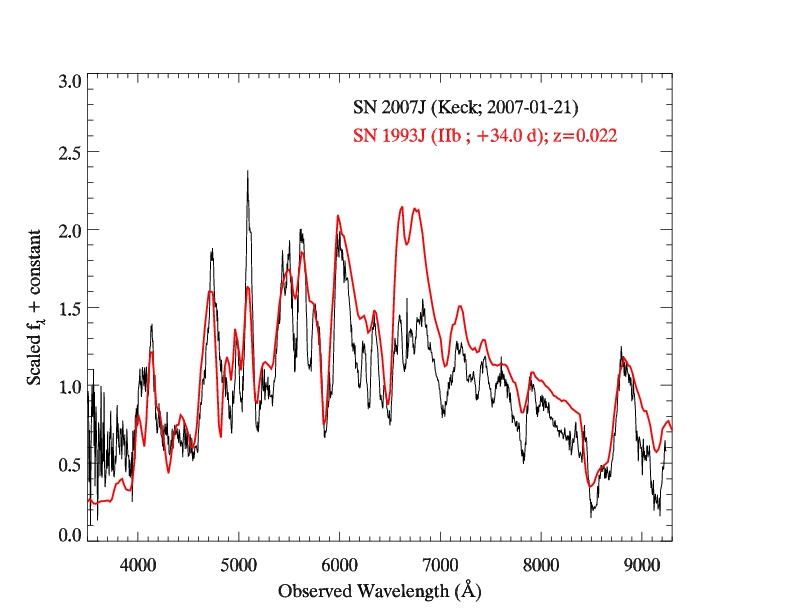
NEW CLASSIFICATION (Ib-pec): the
Keck Jan 21 spectrum also compared
somewhat well with SN 1993J (IIb). The
Keck Feb 14 spectrum confirmed the presence of He lines in the spectrum, hence
suggesting a type-Ib classification. The
Keck Mar 18 spectrum confirmed the presence of He I lines and the similarity with
the peculiar type-Ib SN 2006jc.
-
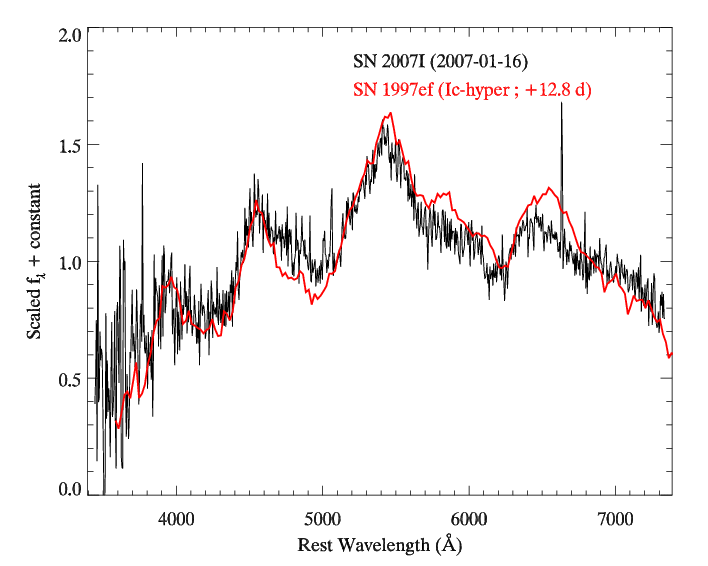
SN 2007I (Anon. galaxy) (Ic-broad)
[CBET 808]
-
January 16, 2007 UT, FLWO 1.5m spectrum shows this broad-line type-Ic supernova around
2 weeks past maximum light, compared with SN 1997ef at +13 days past maximum.
-
SN 2007H (LEDA 3081460) (Ia)
[CBET 811]
-
January 17, 2007 UT, FLWO 1.5m spectrum shows this type-Ia supernova around
2 weeks past maximum light, compared with SN 1989B at +12 days past maximum.
-
SN 2007C (NGC 4981) (Ib)
[CBET 800]
-
January 9, 2007 UT, FLWO 1.5m spectrum shows this type-Ib supernova around
maximum light, compared with SN 1998dt at +4 days past maximum.
Back to top
SN 2006
-
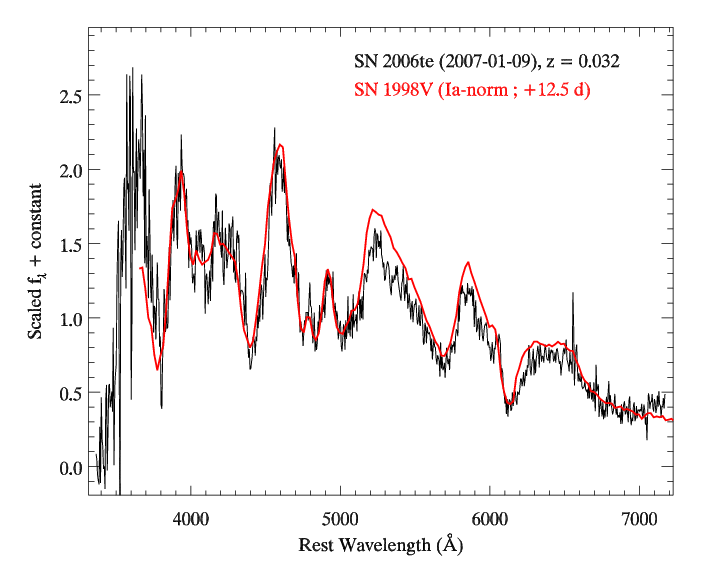
SN 2006te (CGCG 207-42) (Ia)
[CBET 800]
-
January 9, 2007 UT, FLWO 1.5m spectrum shows this type-Ia supernova around
2 weeks past maximum light, compared with SN 1998V at +13 days past maximum.
-
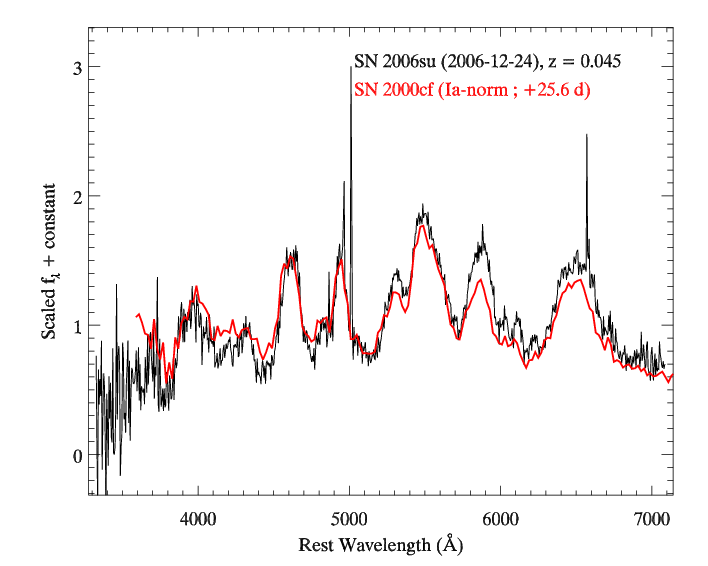
SN 2006su (IC 3772) (Ia)
[CBET 784]
-
December 24, 2006 UT, FLWO 1.5m spectrum shows this type-Ia supernova around
3-4 weeks past maximum light, compared with SN 2000cf at +26 days past maximum.
-
SN 2006ss (NGC 5579) (IIb)
[CBET 781]
-
December 21, 2006 UT, FLWO 1.5m spectrum shows this type-IIb supernova around
three weeks past explosion, compared with SN 1993J at +19 days past explosion.
-
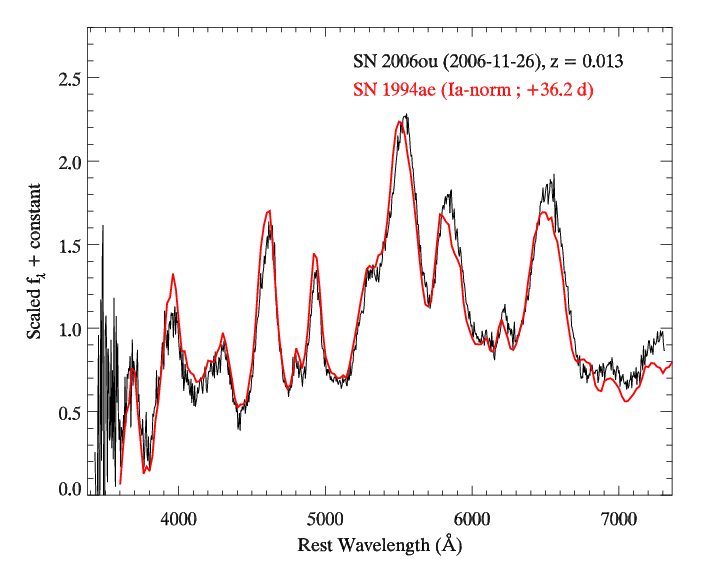
SN 2006ou (UGC 6588) (Ia)
[CBET 758]
-
November 26, 2006 UT, FLWO 1.5m spectrum shows this type-Ia supernova around
one month past maximum light, compared with SN 1994ae at 36 days past maximum.
-
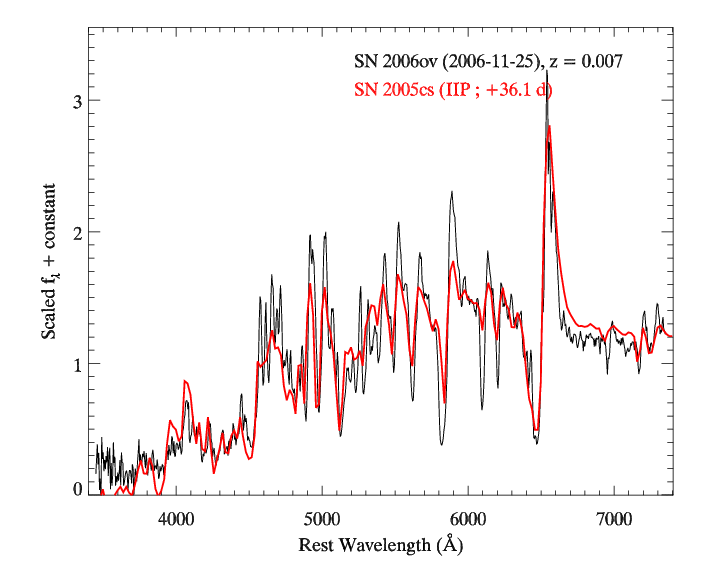
SN 2006ov (M61) (II)
[CBET 757]
-
November 25, 2006 UT, FLWO 1.5m spectrum shows this type-II supernova around
one month past explosion, compared with SN 2005cs at 36 days past explosion.
-
SN 2006or (NGC 3891) (Ia)
[CBET 750]
-
November 22, 2006 UT, FLWO 1.5m spectrum shows this type-Ia supernova around
maximum light, compared with SN 1998eg at 4.9 days past maximum.
-
SN 2006oq (Anon. galaxy) (Ia)
[CBET 748]
-
November 21, 2006 UT, FLWO 1.5m spectrum shows this type-Ia supernova around
two weeks past maximum light, compared with SN 1989B at 2 weeks past maximum.
-
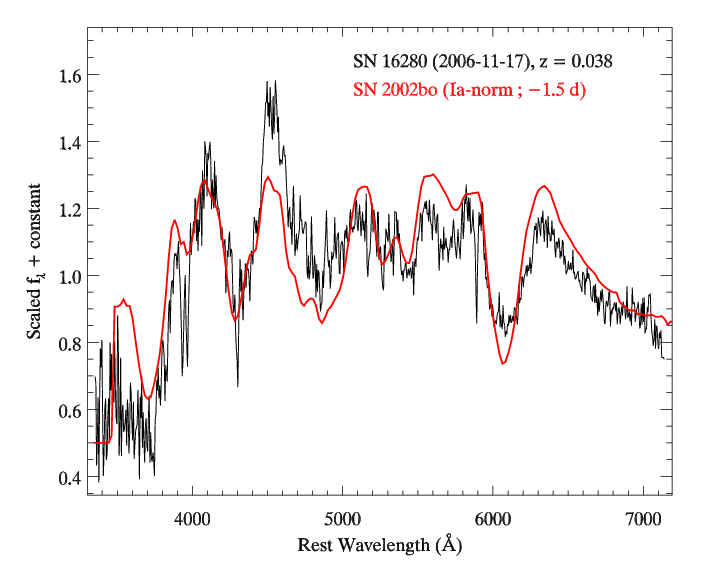
SN 2006nz [SDSS II candidate #16280] (Anon. galaxy) (Ia)
[CBET 743]
-
November 17, 2006 UT, FLWO 1.5m spectrum shows this type-Ia supernova around
maximum light, compared with SN 2002bo at -2 days from maximum.
-
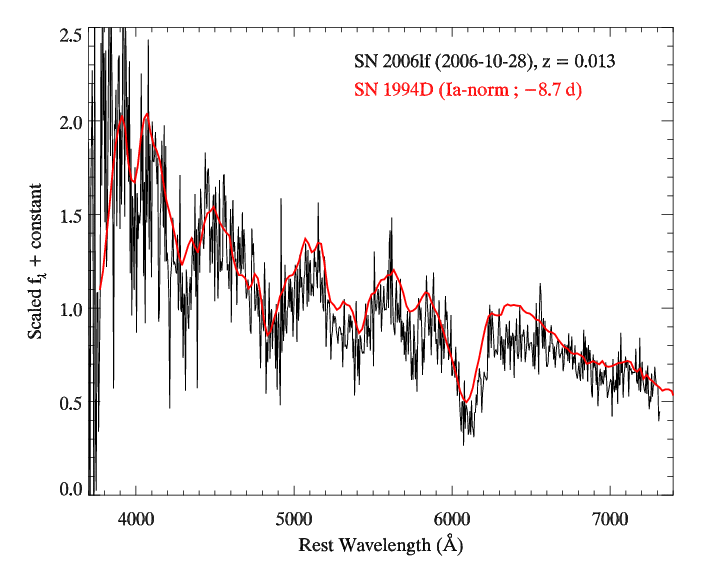
SN 2006lf (UGC 3108) (Ia)
[CBET 705]
-
October 27, 2006 UT, FLWO 1.5m spectrum shows this very young type-Ia supernova around
1 week before maximum light, compared with SN 1994D at -9 days from maximum.
-
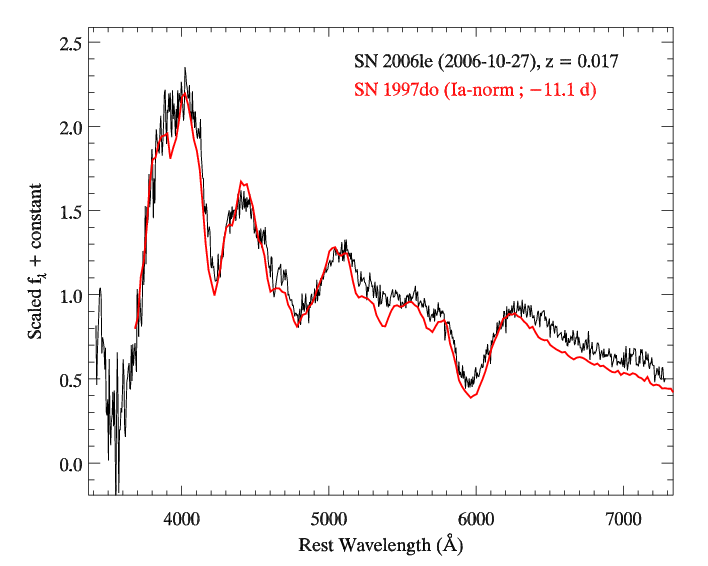
SN 2006le (UGC 3218) (Ia)
[CBET 702]
-
October 27, 2006 UT, FLWO 1.5m spectrum shows this very young type-Ia supernova around
10 days before maximum light, compared with SN 1997do at -11 days from maximum.
-
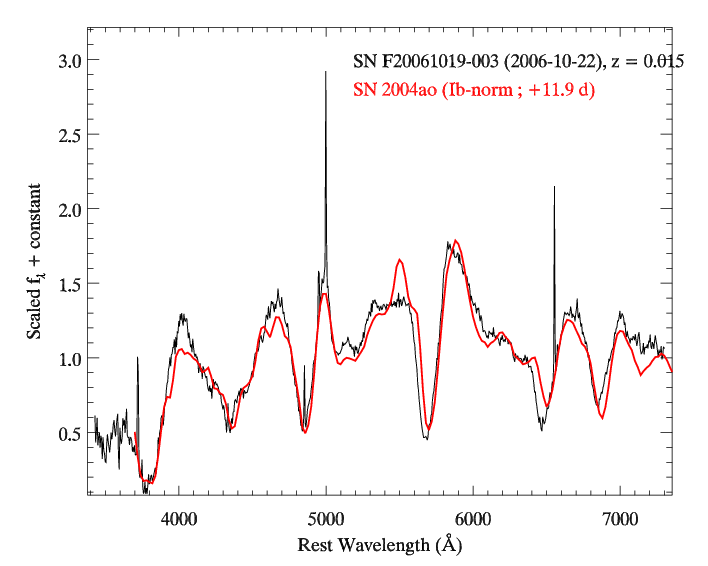
SN 2006ld (SNF20061019-003) (UGC 348) (Ib)
[CBET 689]
-
October 22, 2006 UT, FLWO 1.5m spectrum shows this type-Ib supernova around
1-2 weeks past maximum light, compared with SN 2004ao at +12 days from maximum.
-
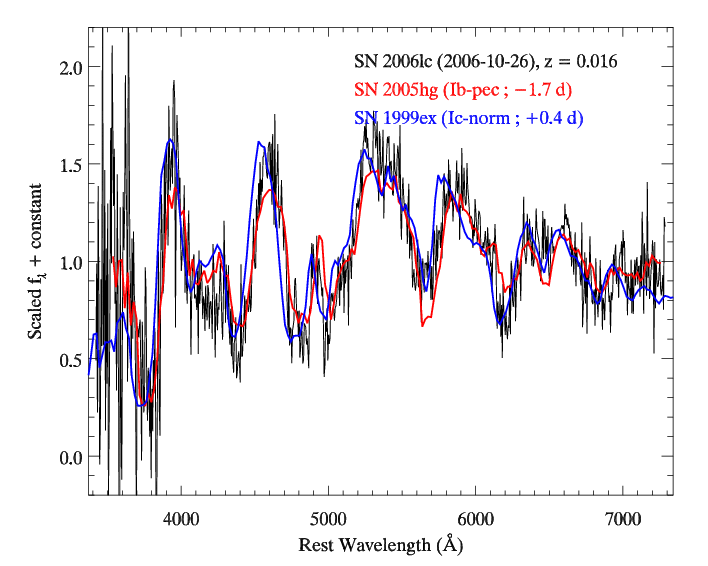
SN 2006lc (NGC 7364) (Ib/c)
[CBET 699]
-
October 26, 2006 UT, FLWO 1.5m spectrum shows this type-Ib/c supernova around
maximum light, compared with the type-Ib SN 2005hg at +2 days and the type-Ib/c SN 1999ex at maximum.
-
SN 2006ke (UGC 3365) (Ia-91bg)
[CBET 684]
-
October 21, 2006 UT, FLWO 1.5m spectrum shows this subluminous type-Ia supernova around
maximum light, compared with SN 1999by at -3 days from maximum.
-
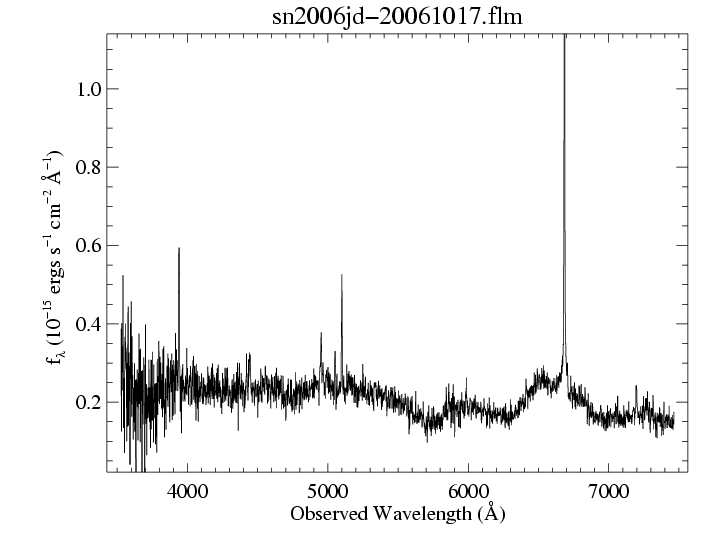
SN 2006jd (UGC 4179) (IIb)
[CBET 679]
-
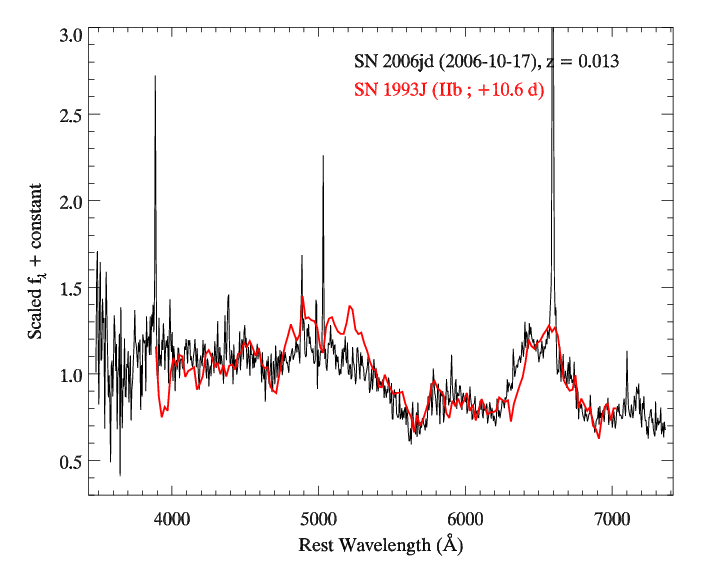
October 17, 2006 UT, FLWO 1.5m spectrum shows this type-IIb supernova around two weeks past explosion.
Here is a comparison with SN 1993J at 11 days past explosion.
-
SN 2006jc (UGC 4904) (Ib/c)
[CBET 677]
-
October 17, 2006 UT, FLWO 1.5m spectrum shows this peculiar object,
similar to SN 1999cq. Here is a comparison with SN 1999cq, at t=20 days after max.
-
SN 2006hb (MCG -04-12-034) (Ia-91bg)
[CBET 652]
-
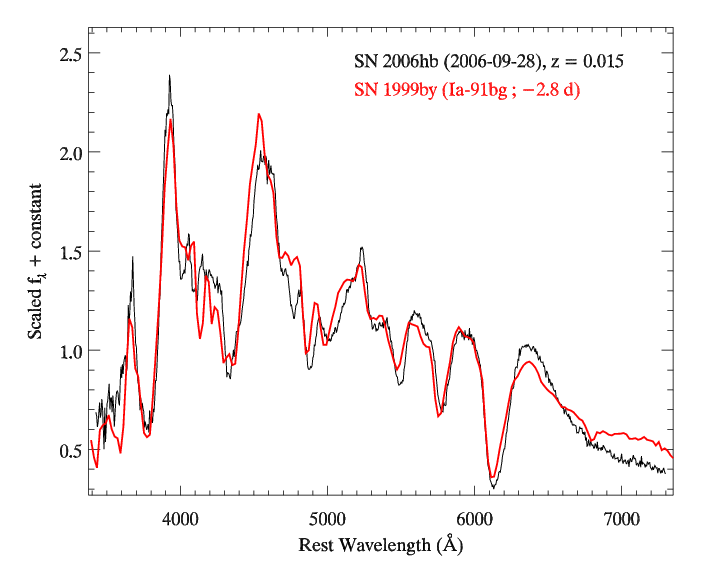
September 28, 2006 UT, FLWO 1.5m spectrum shows this subluminous
Type Ia supernova around maximum light, compared with SN 1999by at -3
days from maximum light.
-
SN 2006gt (Anon. galaxy) (Ia-91bg)
[CBET 645]
-
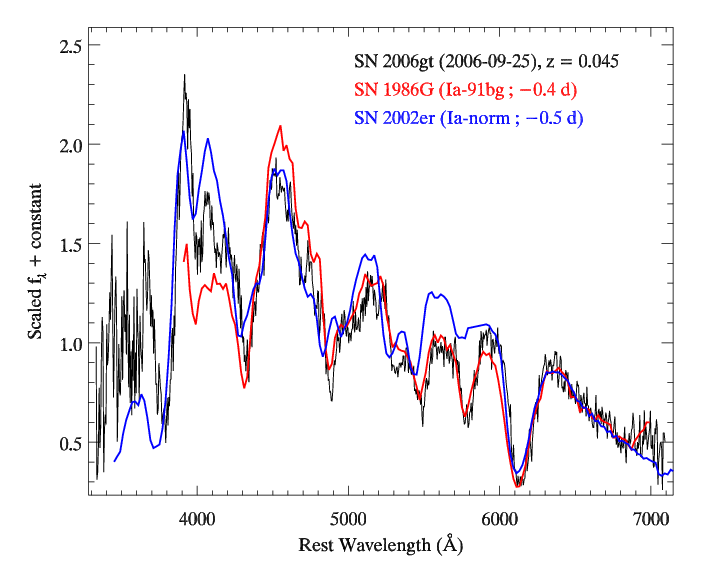
September 25, 2006 UT, FLWO 1.5m spectrum shows this 1991bg-like Type Ia supernova around maximum light.
Here is a comparison with the normal SN 2002er and the
subluminous 1986G around maximum light.
-
SN 2006gr (UGC 12071) (Ia)
[CBET 642]
-
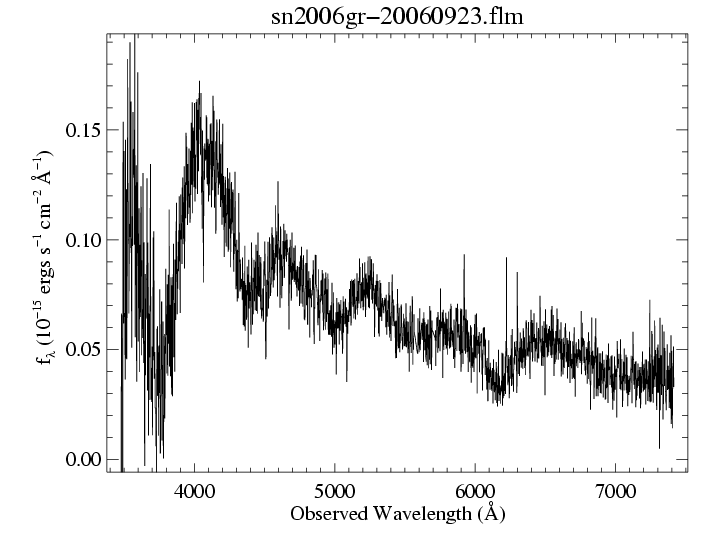
September 23, 2006 UT, FLWO 1.5m spectrum shows this Type Ia supernova around 10 days before maximum light.
-
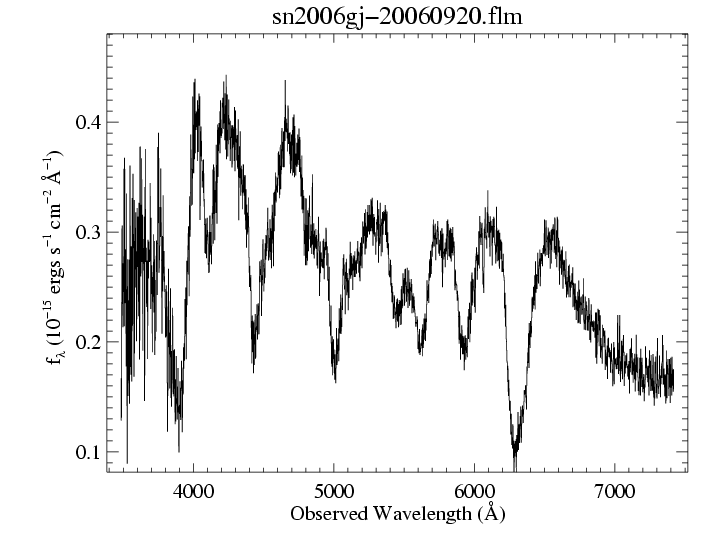
SN 2006gj (UGC 2650) (Ia)
[CBET 634]
-
September 20, 2006 UT, FLWO 1.5m spectrum shows this Type Ia supernova around maximum light.
-
SN 2006gc (UGC 3219) (IIP)
[CBET 632]
-
September 19, 2006 UT, FLWO 1.5m spectrum shows this Type II supernova around one month past explosion.
-
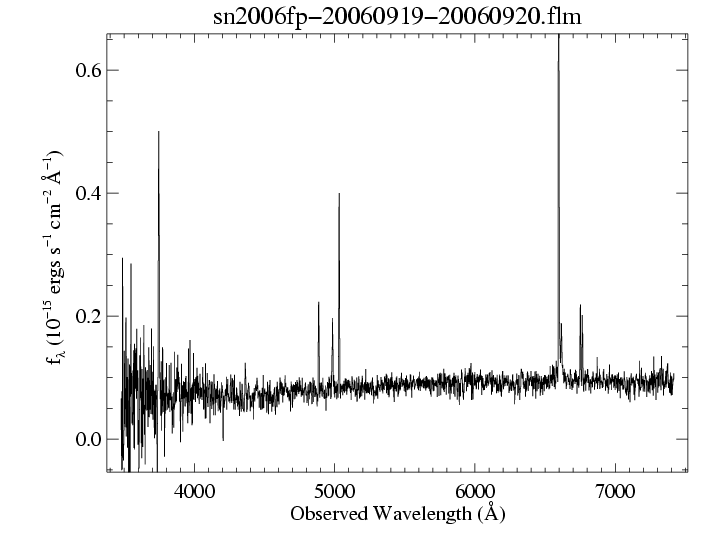
2006fp (UGC 12182) (LBV)
[CBET 636]
-
Combined September 19 & 20, 2006 UT, FLWO 1.5m spectrum shows
this event, most likely corresponding to an outburst in a luminous
blue variable (LBV), rather than a true supernova.
-
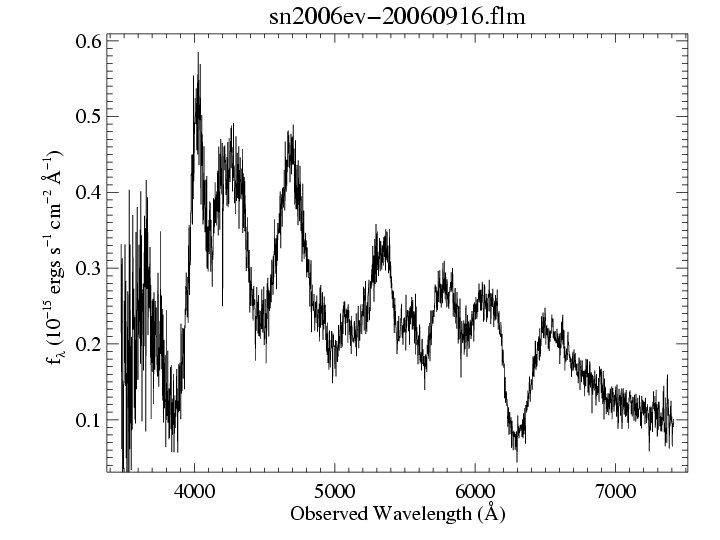
SN 2006ev (UGC 11758) (Ia)
[CBET 622]
-
September 16, 2006 UT, FLWO 1.5m spectrum shows this Type Ia supernova around maximum light.
-
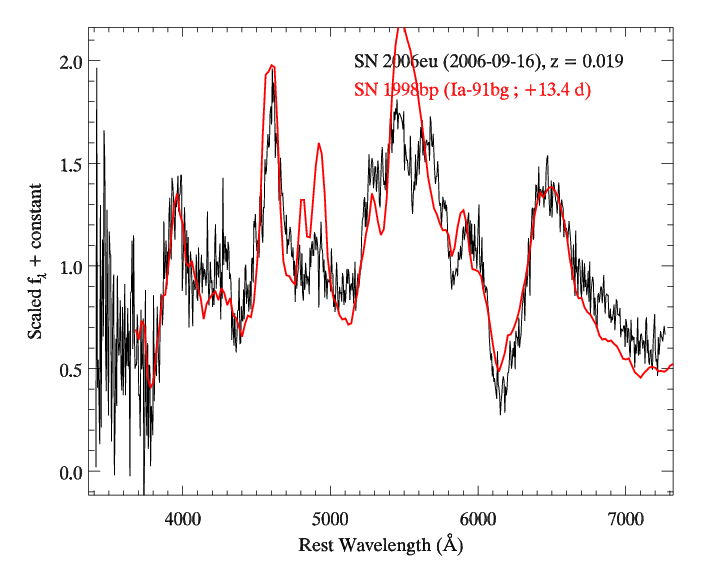
SN 2006eu (MCG +08-36-16) (Ia-91bg)
[CBET 622]
-
September 16, 2006 UT, FLWO 1.5m spectrum shows this Type Ia supernova around two weeks past maximum light,
compared with the 1991bg-like SN 1998bp at +13.4 days.
-
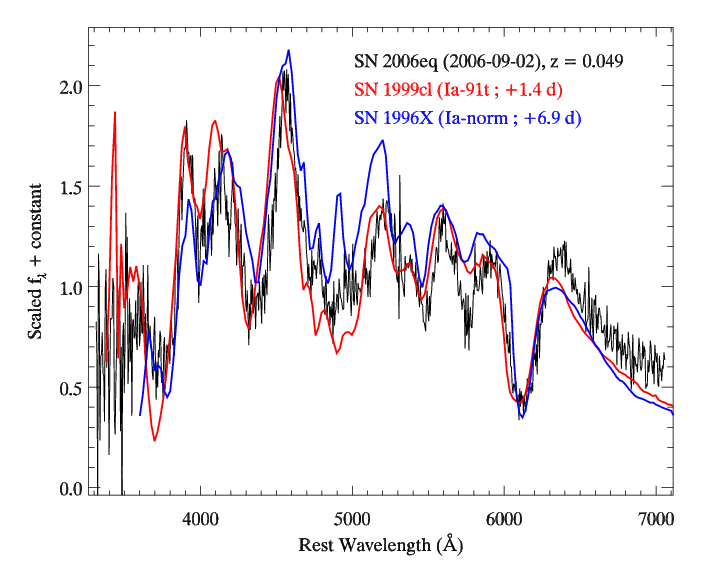
SN 2006eq (Anon. galaxy) (Ia)
[CBET 612]
-
September 2, 2006 UT, FLWO 1.5m spectrum shows this Type Ia supernova around maximum light,
compared with the 1991T-like SN 1999cl at +1.4 days and the normal SN 1996X at +6.9 days.
-
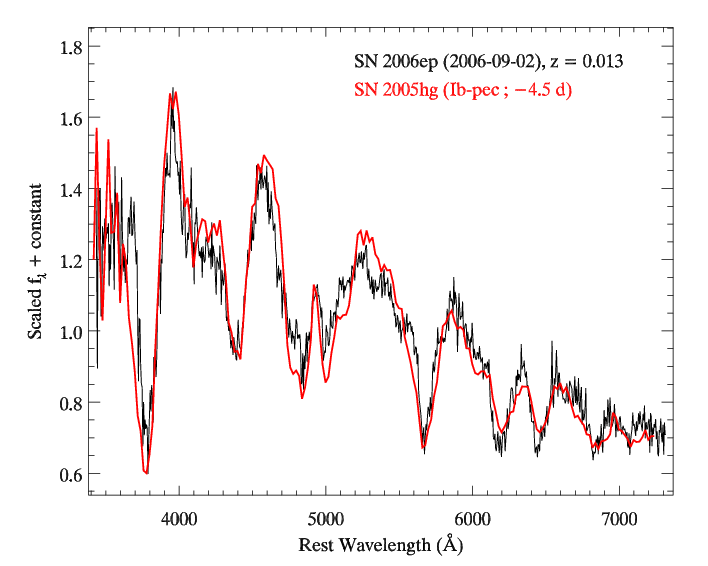
SN 2006ep (NGC 214) (Ib)
[CBET 612]
-
September 2, 2006 UT, FLWO 1.5m spectrum shows this Type Ib supernova around maximum light,
compared with SN 2005hg at -4.5 days.
-
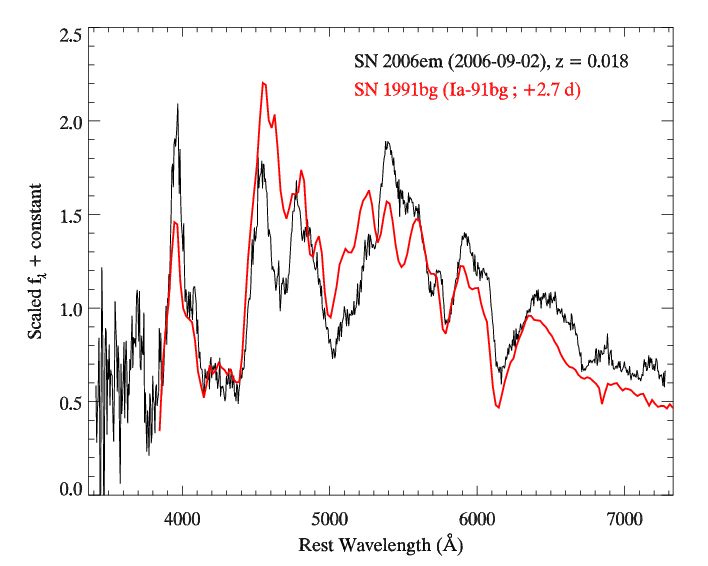
SN 2006em (NGC 911) (Ia-91bg)
[CBET 612]
-
September 2, 2006 UT, FLWO 1.5m spectrum shows this 1991bg-like Type Ia supernova around maximum light,
compared with SN 1991bg at +2.7 days.
-
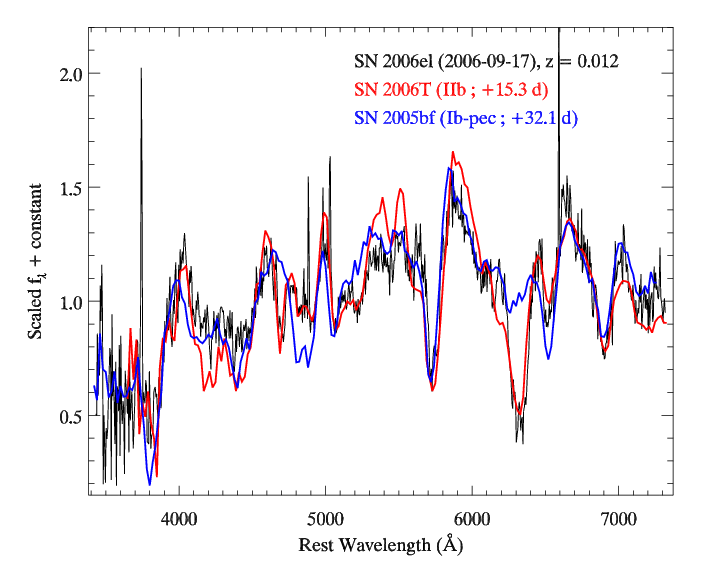
SN 2006el (UGC 12188) (IIb)
[CBET 612,CBET 626]
-
September 2, 2006 UT, FLWO 1.5m spectrum shows this Type IIb supernova
(originally classified by us as a peculiar type-Ib) around maximum light,
compared with the peculiar type-Ib SN 2005bf at -4 days.
September 17, 2006 UT, FLWO 1.5m spectrum
shows that SN 2006el is indeed a type-IIb event, based on the comparison with SN 2006T.
-
SN 2006dv (UGC 12461) (Ia)
[CBET 585]
-
July 25, 2006 UT, FLWO 1.5m spectrum shows this Type Ia supernova around maximum light.
-
SN 2006dt (NGC 5681) (Ia)
[CBET 582]
-
July 21, 2006 UT, FLWO 1.5m spectrum shows this Type Ia supernova around maximum light.
-
SN 2006dq (UGC 11089) (IIP)
[CBET 579]
-
July 18, 2006 UT, FLWO 1.5m spectrum shows this Type IIP supernova around three weeks past explosion.
-
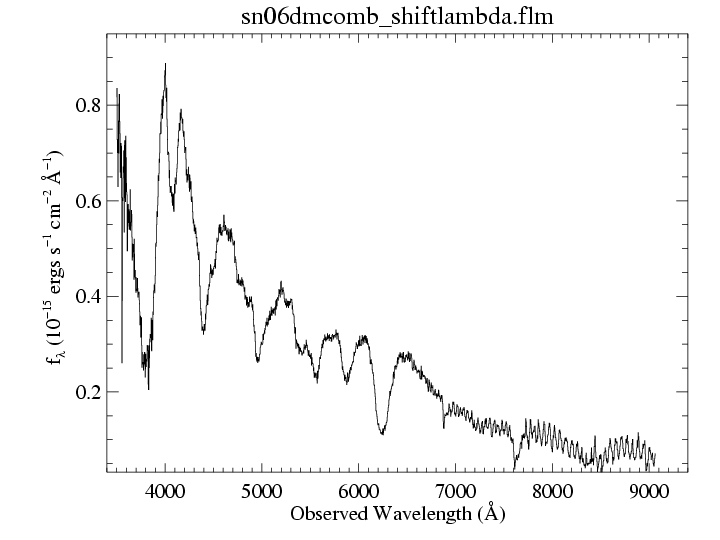
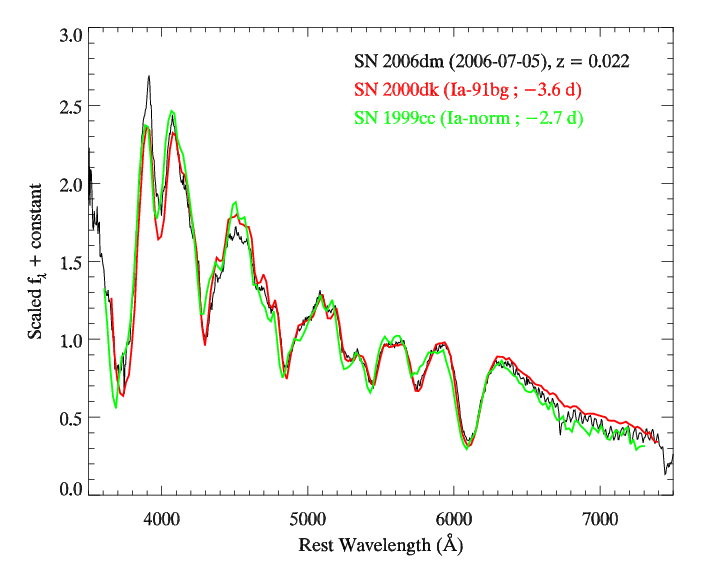
SN 2006dm (MCG -01-60-21) (Ia-91bg)
[CBET 570]
-
July 5, 2006 UT, Nordic Optical Telescope (+ ALFOSC) spectrum
shows this 91bg-like Type Ia supernova before maximum light.
Here
is a comparison with the 91bg-like SN 2000dk at -4 days and
with the normal SN Ia 1999cc at -3 days.
Notice how the strength of the Si II absorption at 5800 A
is well reproduced in the spectrum of SN 2000dk but not in that of SN 1999cc.
-
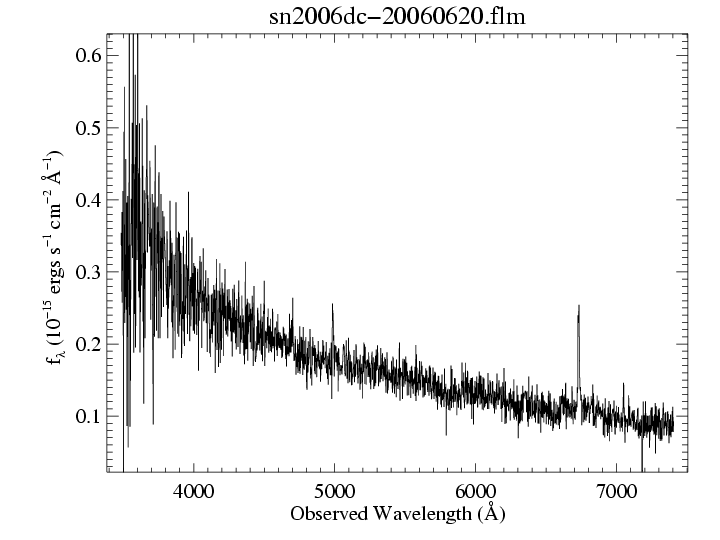
SN 2006dc (IC 4596) (IIn)
[CBET 552]
-
June 20, 2006 UT, FLWO 1.5m spectrum shows this young Type IIn supernova.
-
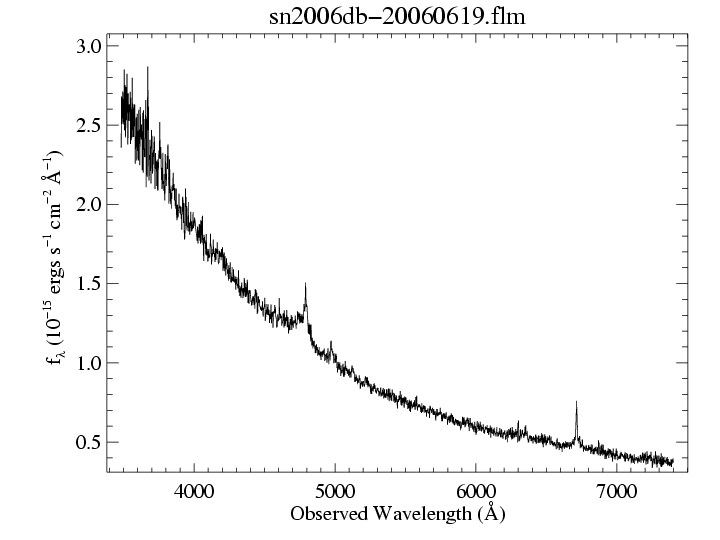
SN 2006db (Anon. galaxy) (IIn)
[CBET 551]
-
June 19, 2006 UT, FLWO 1.5m spectrum shows this Type IIn supernova around one week past explosion.
-
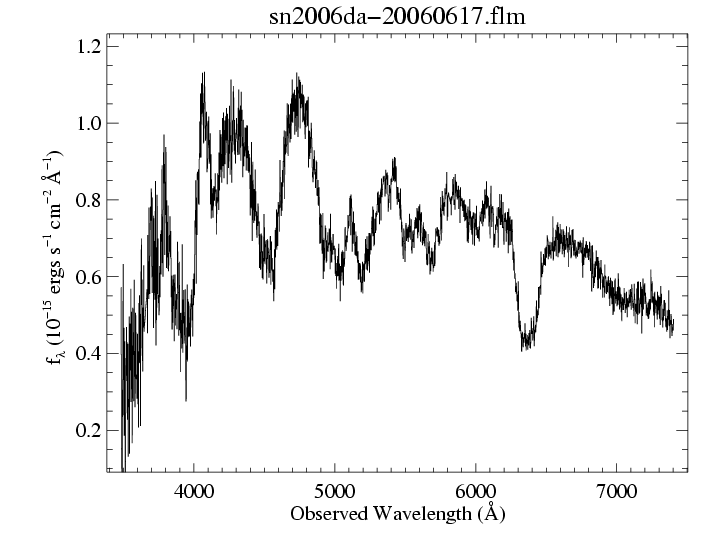
SN 2006da (Anon. galaxy) (Ia)
[CBET 550]
-
June 17, 2006 UT, FLWO 1.5m spectrum shows this Type Ia supernova around one week past maximum light.
-
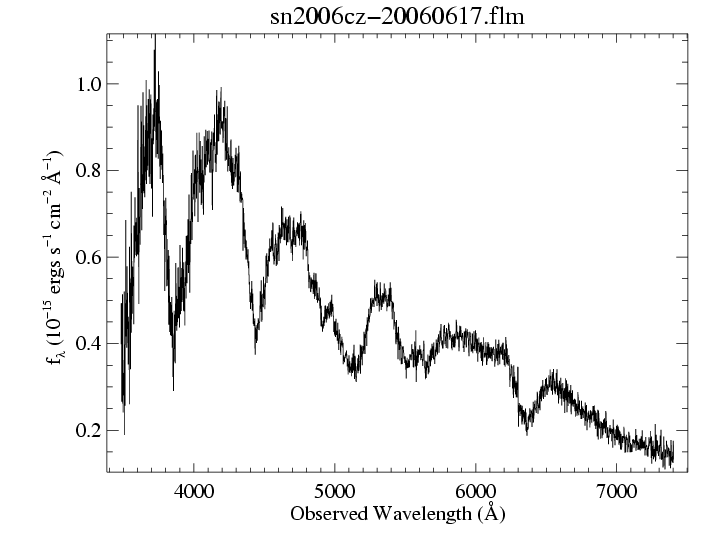
SN 2006cz (MCG -01-38-2) (Ia-91T)
[CBET 550]
-
June 17, 2006 UT, FLWO 1.5m spectrum shows this 91T-like Type Ia supernova around maximum light.
Here is a comparison with SN 1998es at +1 day.
-
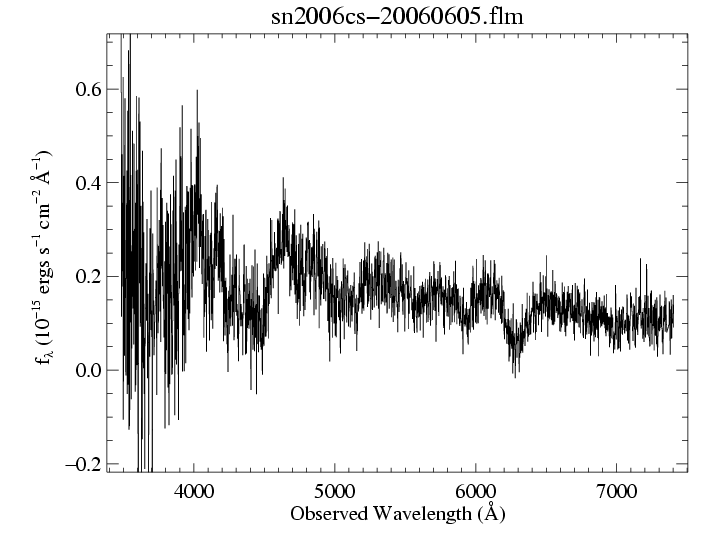
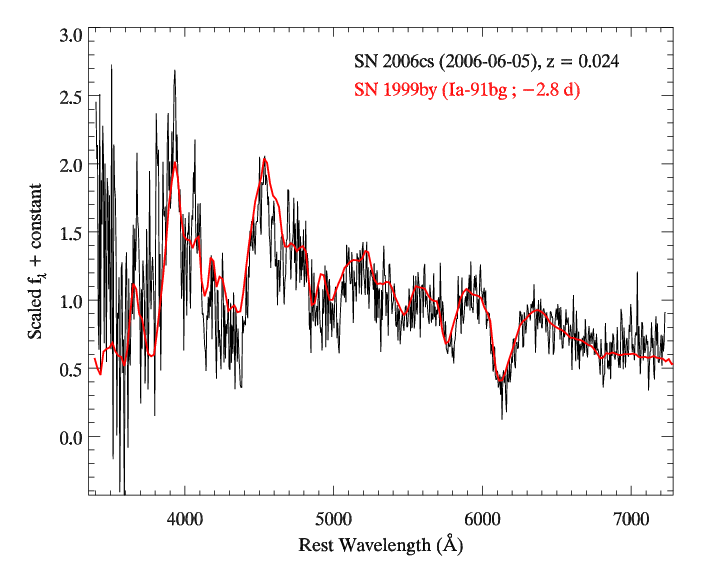
SN 2006cs (MCG +06-30-79) (Ia-91bg)
[CBET 539]
-
June 05, 2006 UT, FLWO 1.5m spectrum shows this 91bg-like Type Ia supernova around maximum light.
Here is a comparison with SN 1999by at -3 days.
-
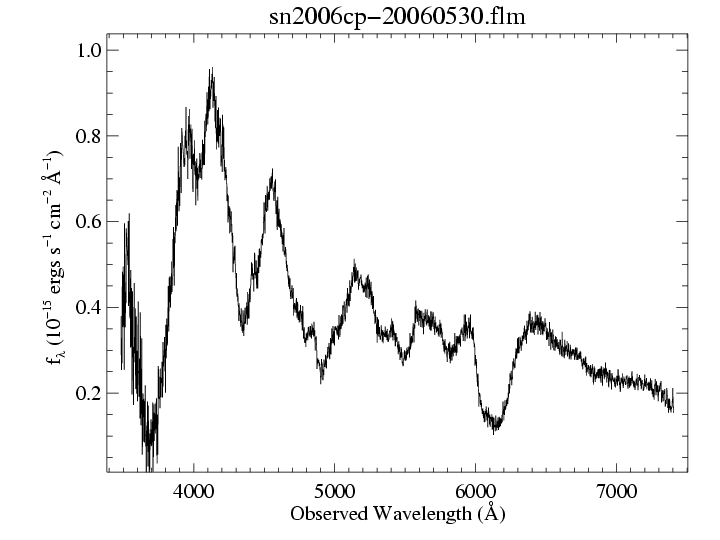
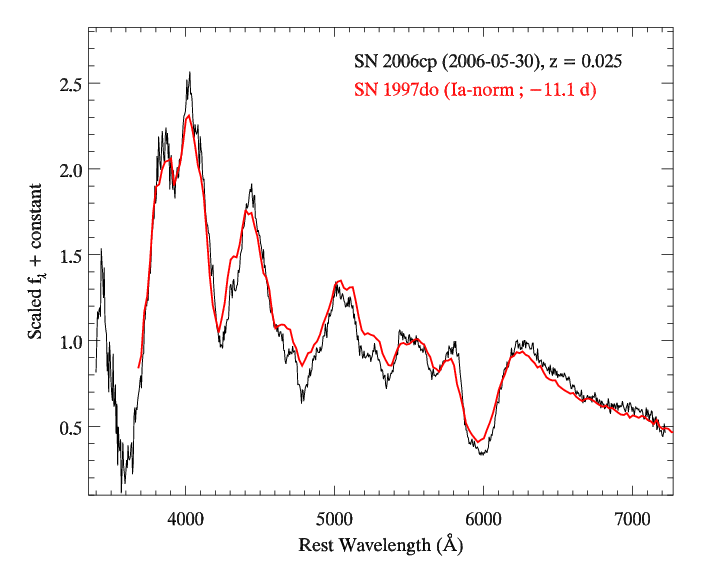
SN 2006cp (UGC 7357) (Ia)
[CBET 528]
-
May 30, 2006 UT, FLWO 1.5m spectrum shows this Type Ia supernova around one week before maximum light.
Here is a comparison with SN 1997do at -11 days.
-
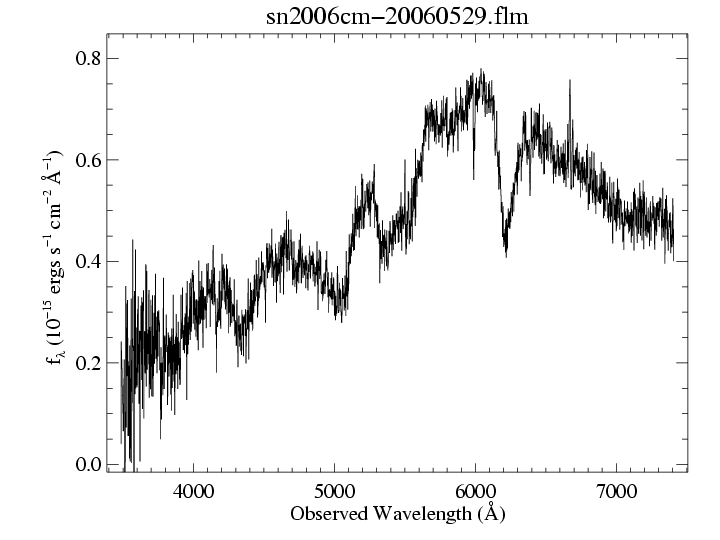
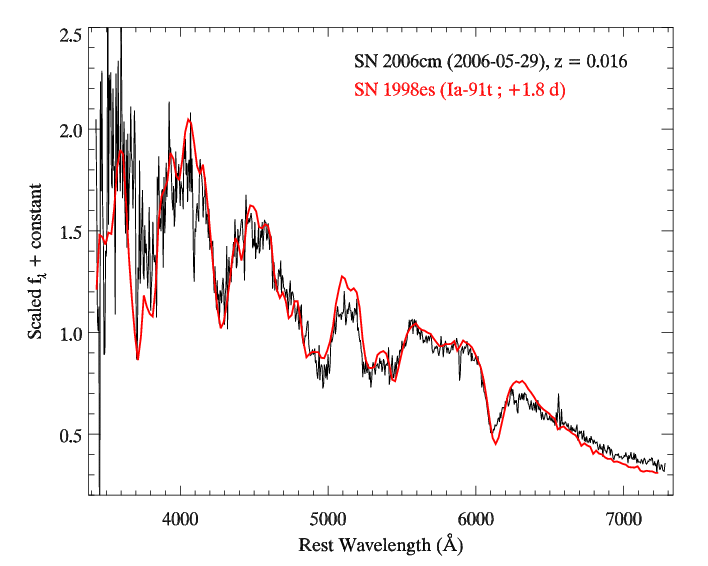
SN 2006cm (UGC 11723) (Ia-91T)
[CBET 526]
-
May 29, 2006 UT, FLWO 1.5m spectrum shows this Type Ia supernova around maximum light.
Here is a comparison with the 91T-like SN 1998es at 2 days past maximum
(where the spectrum of SN 2006cm has been dereddened by 1 mag).
-
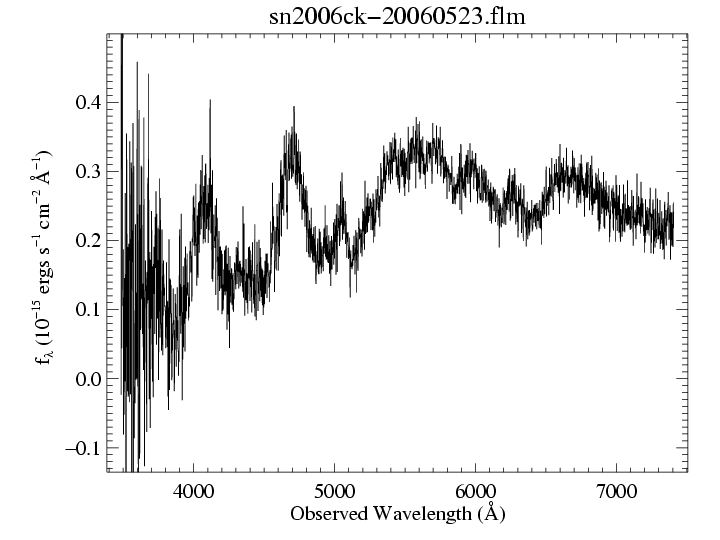
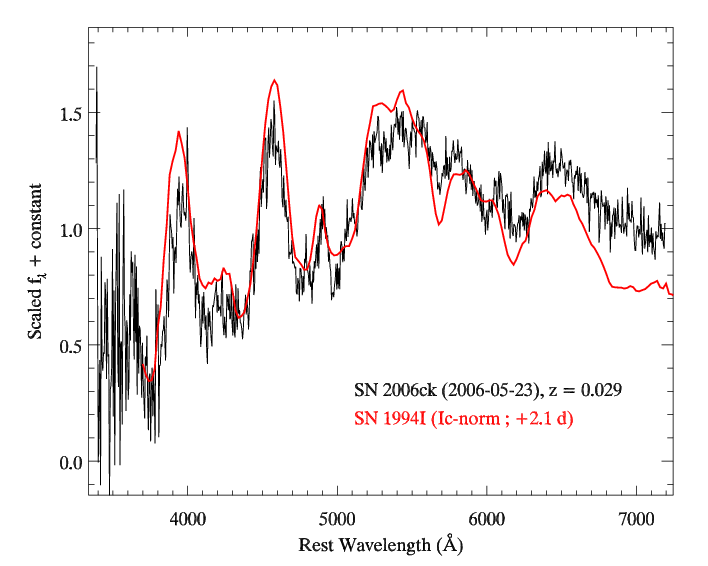
SN 2006ck (UGC 8238) (Ic)
[CBET 519]
-
May 23, 2006 UT, FLWO 1.5m spectrum shows this Type Ic supernova around maximum light.
Here is a comparison with SN 1994I at 2 days past V-band maximum.
-
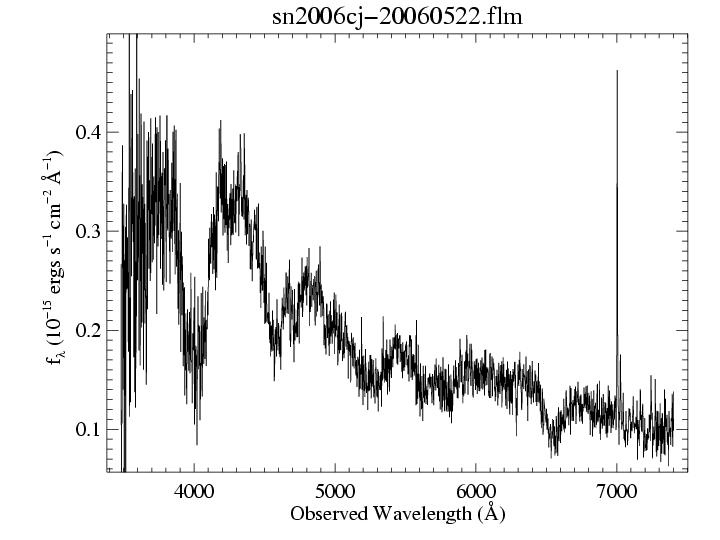
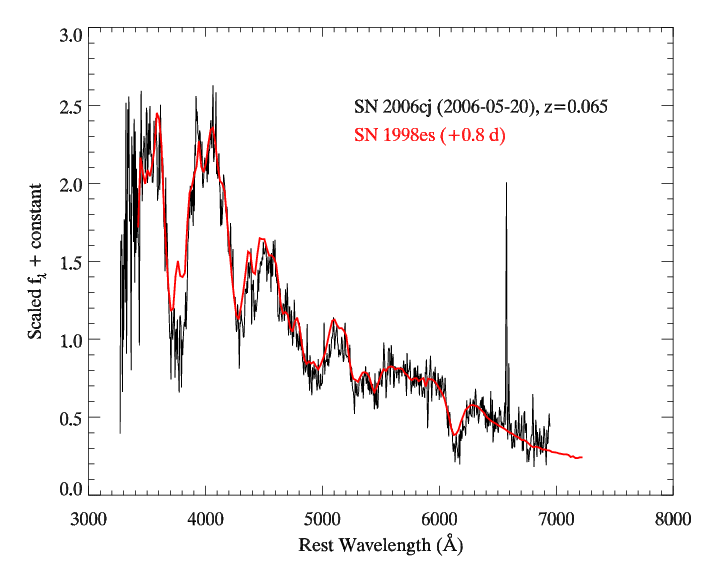
SN 2006cj (Anon. galaxy) (Ia-91T)
[CBET 517]
-
May 22, 2006 UT, FLWO 1.5m spectrum shows this Type Ia supernova around maximum light.
Here is a comparison with the 91T-like SN 1998es at 1 day past maximum.
-
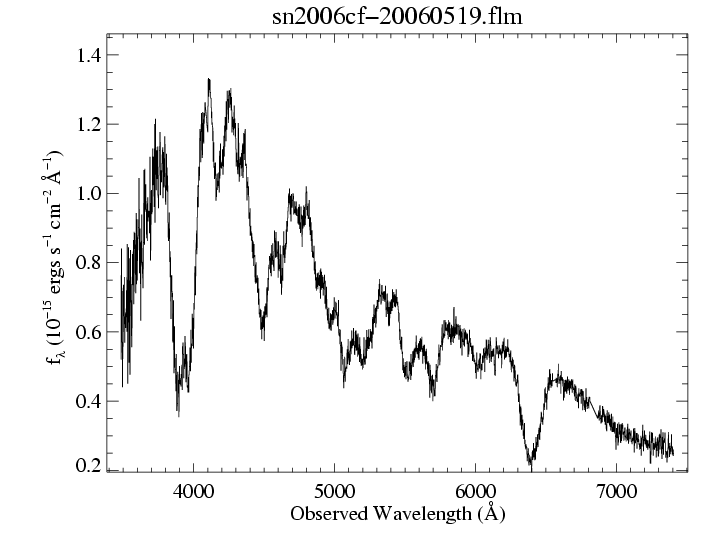
SN 2006cf (UGC 6015) (Ia)
[CBET 514]
-
May 19, 2006 UT, FLWO 1.5m spectrum shows this normal Type Ia supernova around maximum light.
-
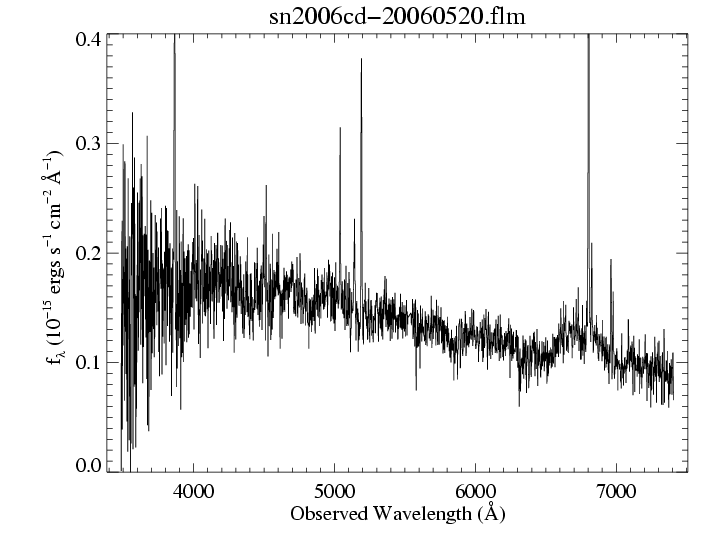
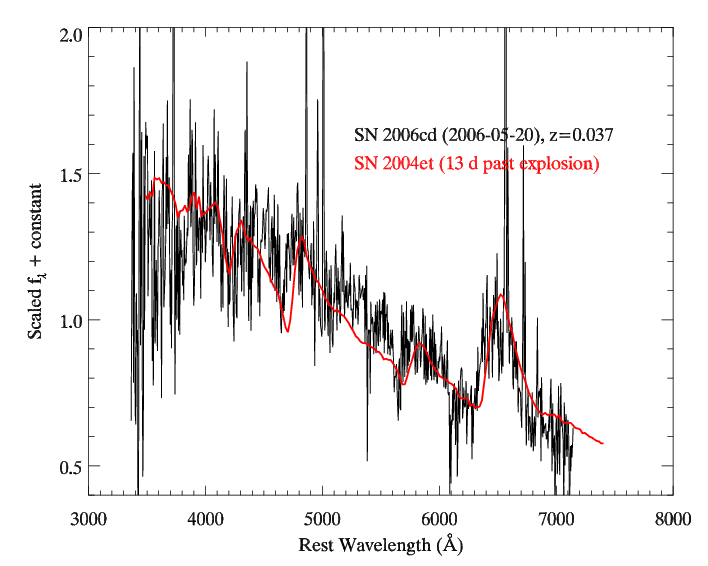
SN 2006cd (IC 1179) (IIP)
[CBET 516]
-
May 20, 2006 UT, FLWO 1.5m spectrum shows this Type IIP supernova around
2 weeks past explosion. Here is a
comparison with SN 2004et (IIP) at 13 days past explosion.
-
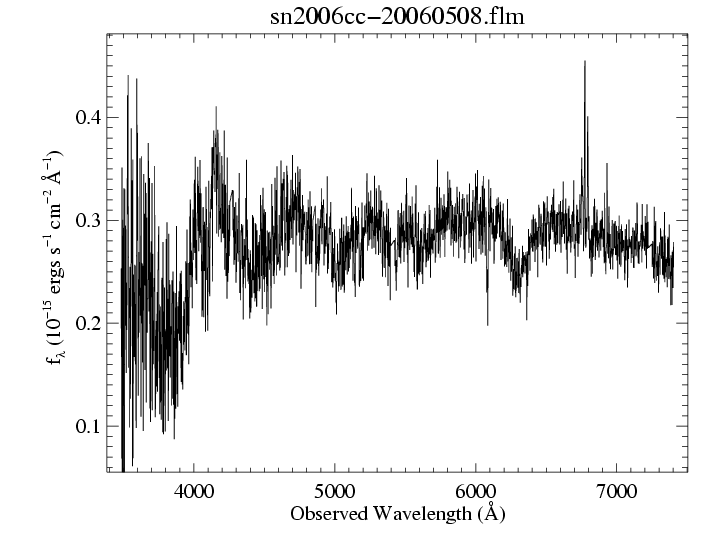
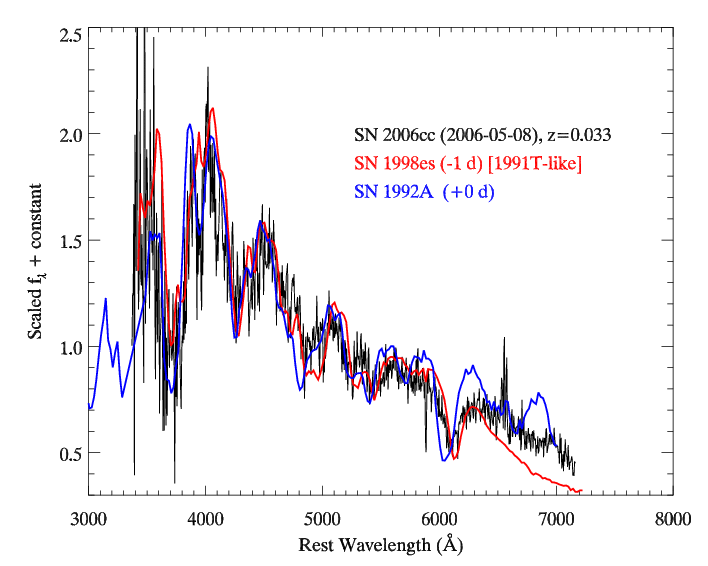
SN 2006cc (UGC 10244) (Ia-91T)
[CBET 506]
-
May 08, 2006 UT, FLWO 1.5m spectrum shows this reddened
1991T-like Type Ia supernova around maximum light.
Here
is a comparison with the 1991T-like SN 1998es (cf.
IAUC 7054)
at -1 d and with SN 1992A at maximum.
-
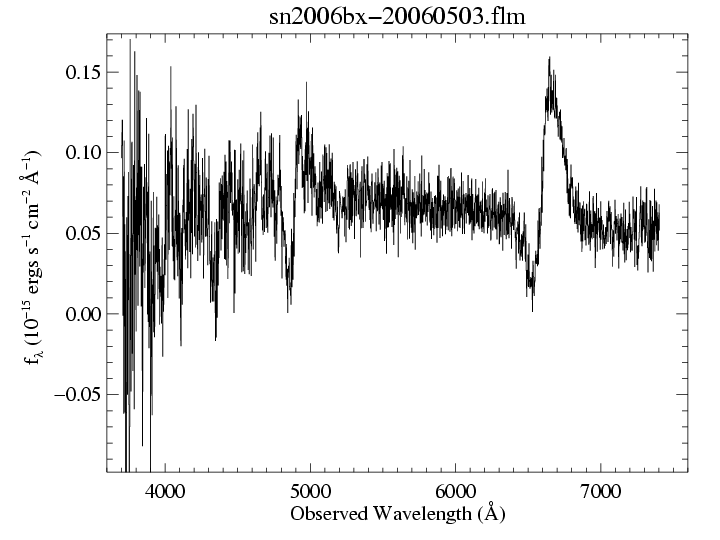
SN 2006bx (UGC 5434) (IIP)
[CBET 500]
-
May 03, 2006 UT, FLWO 1.5m spectrum shows this Type IIP supernova
2-3 weeks past explosion.
-
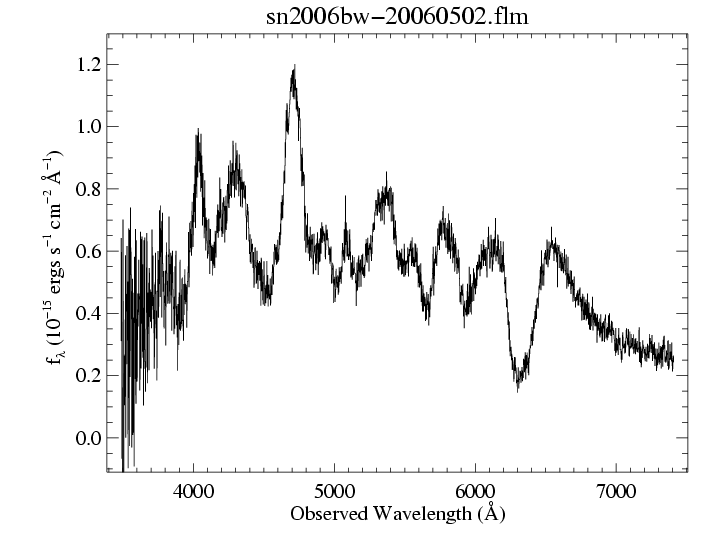
SN 2006bw (Anon. galaxy) (Ia)
[CBET 499]
-
May 02, 2006 UT, FLWO 1.5m spectrum shows this Type Ia supernova
around maximum light.
-
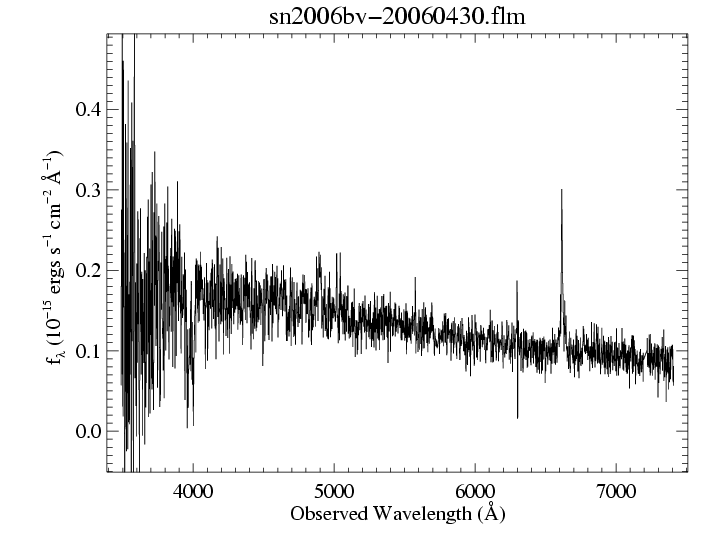
SN 2006bv (UGC 7848) (IIn)
[CBET 494]
-
April 26, 2006 UT, FLWO 1.5m spectrum shows this Type IIn supernova
around maximum light.
-
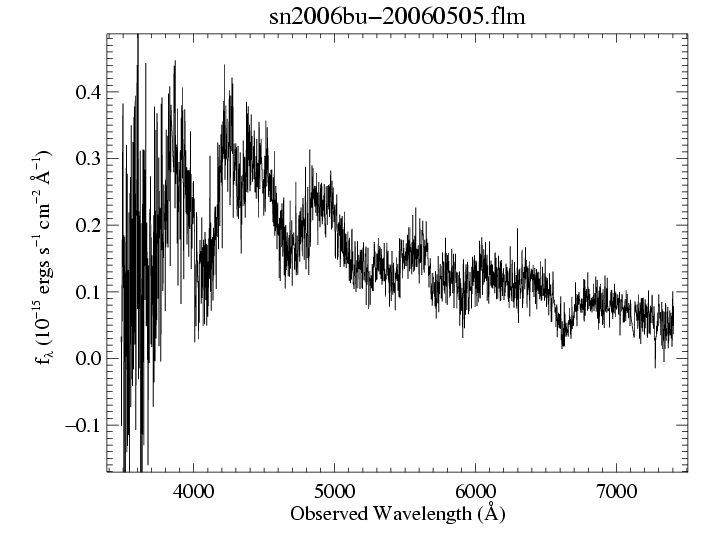
SN 2006bu (Anon. galaxy) (Ia)
[IAUC 8707]
-
May 05, 2006 UT, FLWO 1.5m spectrum shows this Type Ia supernova
around maximum light. Based on the SN spectrum, we estimate its redshift to be
z = 0.084 +/- 0.006.
-
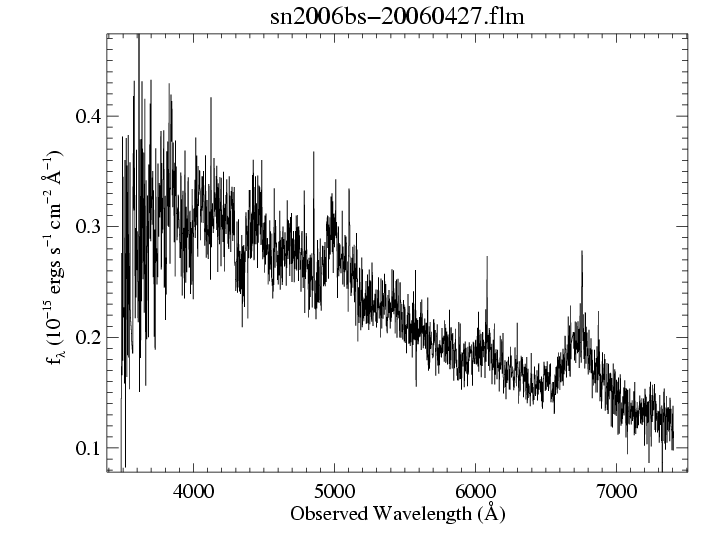
SN 2006bs (MCG +00-27-14) (IIp)
[CBET 487]
-
April 26, 2006 UT, FLWO 1.5m spectrum shows this Type IIp supernova
around 2-3 weeks past maximum light.
-
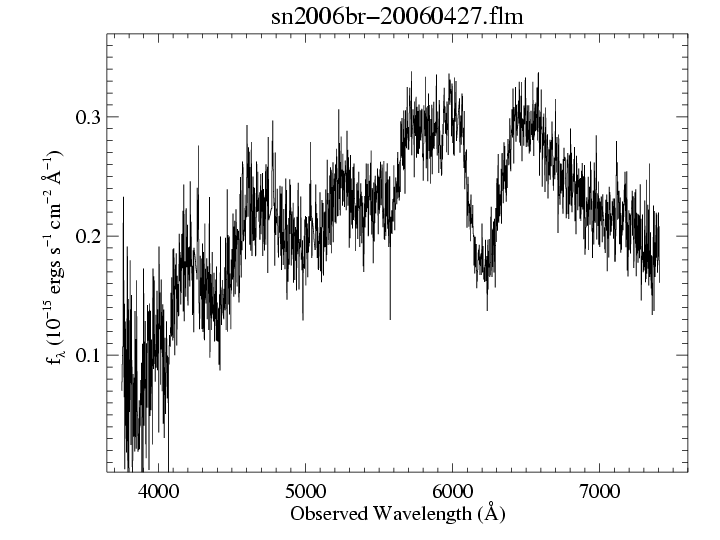
SN 2006br (NGC 5185) (Ia)
[CBET 487]
-
April 26, 2006 UT, FLWO 1.5m spectrum shows this reddened Type Ia
supernova around one week before maximum light.
-
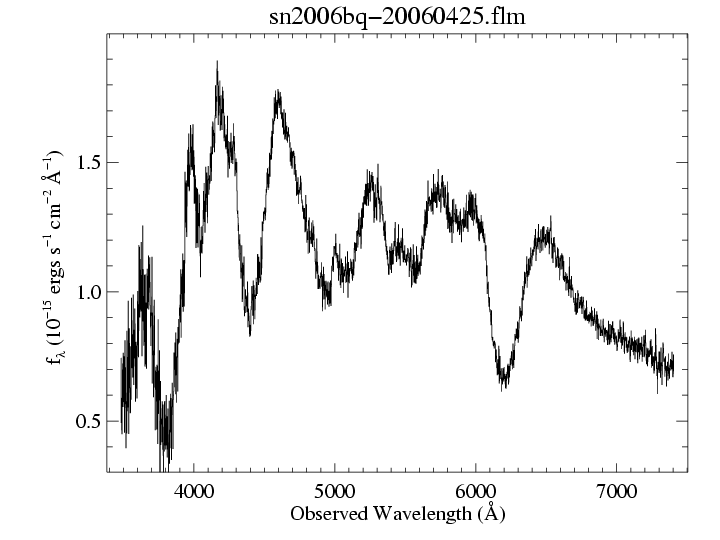
SN 2006bq (NGC 6685) (Ia)
[CBET 481]
-
April 25, 2006 UT, FLWO 1.5m spectrum shows this Type Ia supernova
around maximum light.
-
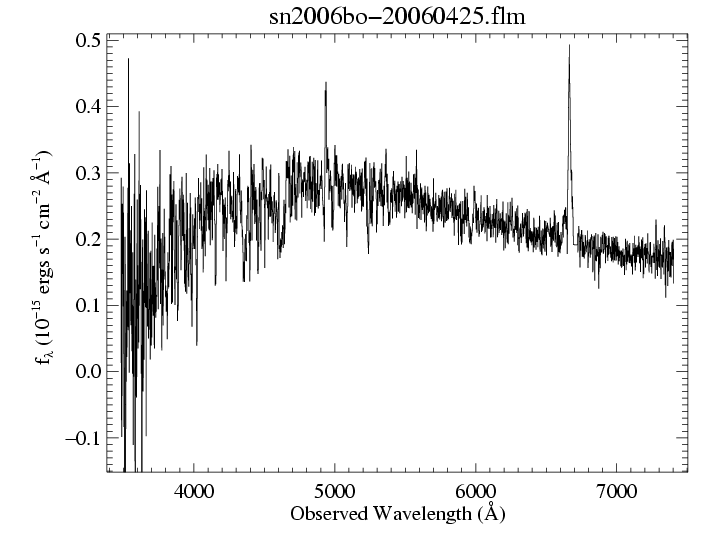
SN 2006bo (UGC 11578) (IIn)
[CBET 481]
-
April 25, 2006 UT, FLWO 1.5m spectrum shows this Type IIn supernova
around one week past maximum light.
-
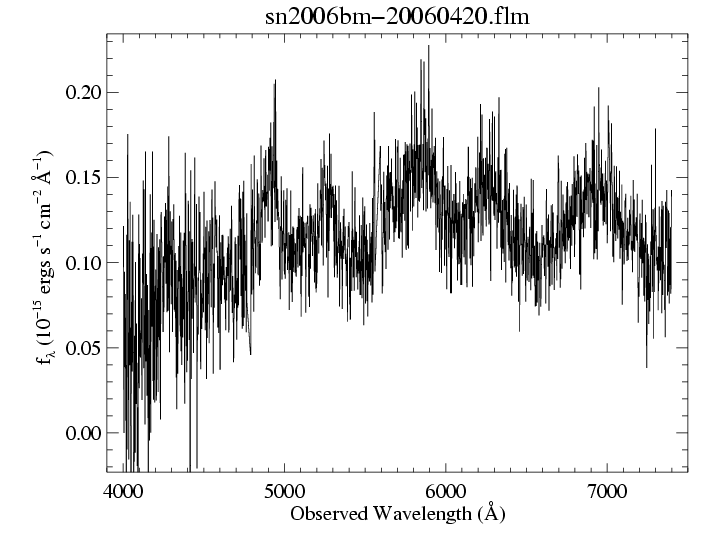
SN 2006bm (Anon. galaxy) (Ia)
[CBET 478]
-
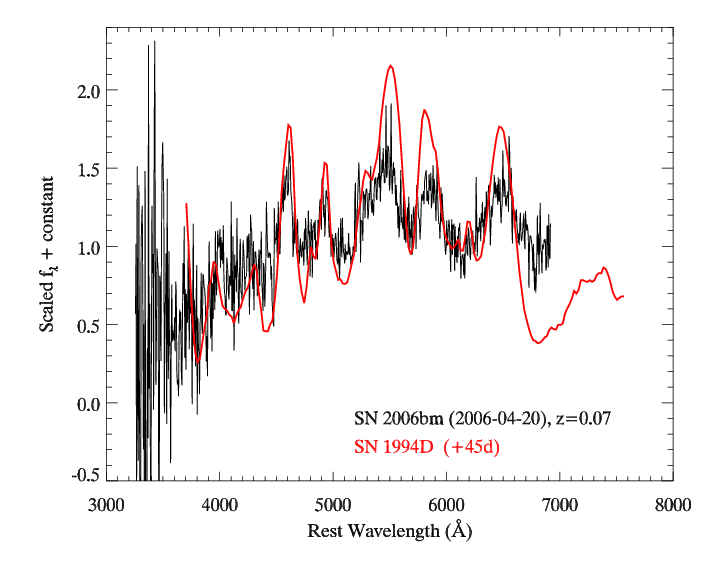
April 20, 2006 UT, FLWO 1.5m spectrum shows this Type Ia supernova
several weeks past maximum.
Here is a comparison
with the standard Type Ia SN 1994D, at +45 days past maximum light.
-
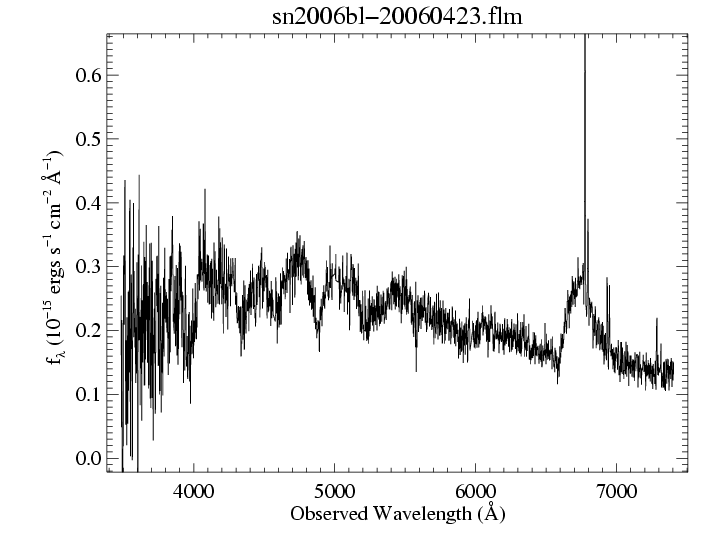
SN 2006bl (MCG +02-40-009) (II)
[CBET 480]
-
April 23, 2006 UT, FLWO 1.5m spectrum shows this Type II supernova
around maximum light.
-
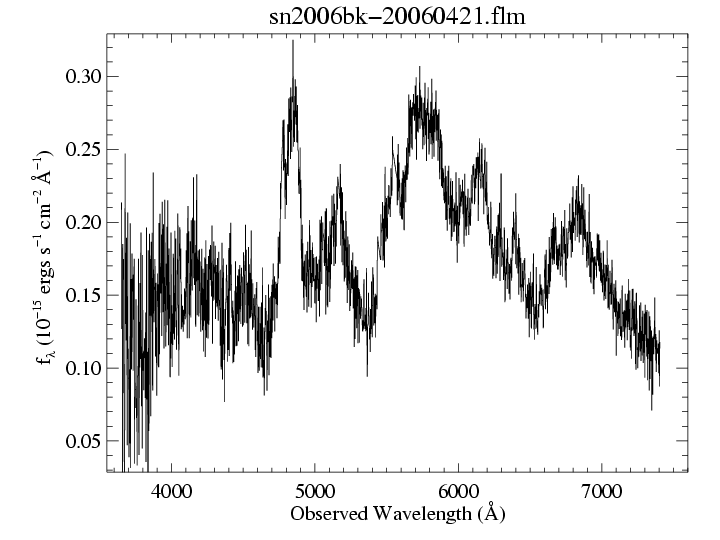
SN 2006bk (MCG +06-33-20) (Ia)
[CBET 488]
-
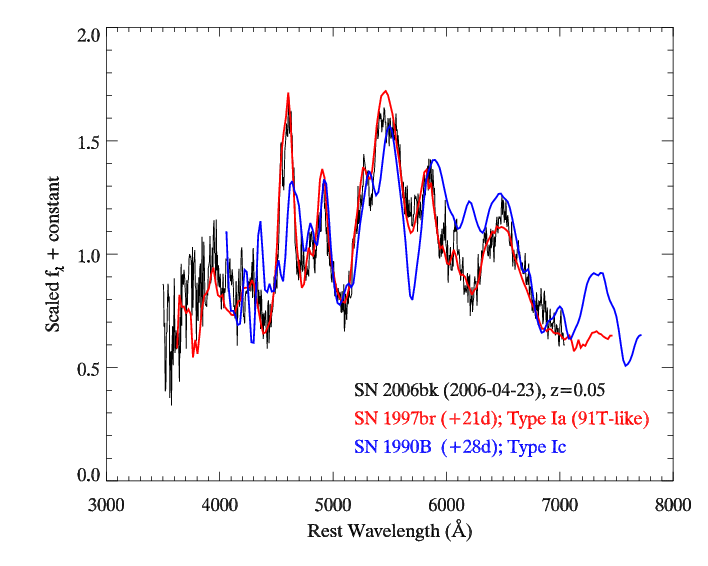
April 21, 2006 UT, FLWO 1.5m spectrum shows this Type Ia supernova
around three weeks past maximum, originally classified as a Type Ic
SN.
Here is a comparison with the
Type Ia SN 1997br (91T-like) at +21 days past maximum and with the
Type Ic SN 1990B at +28 days past maximum. Clearly the former is a
better match than the latter.
-
SN 2006bf (UGC 8093) (Ib/IIb)
[CBET 455]
-
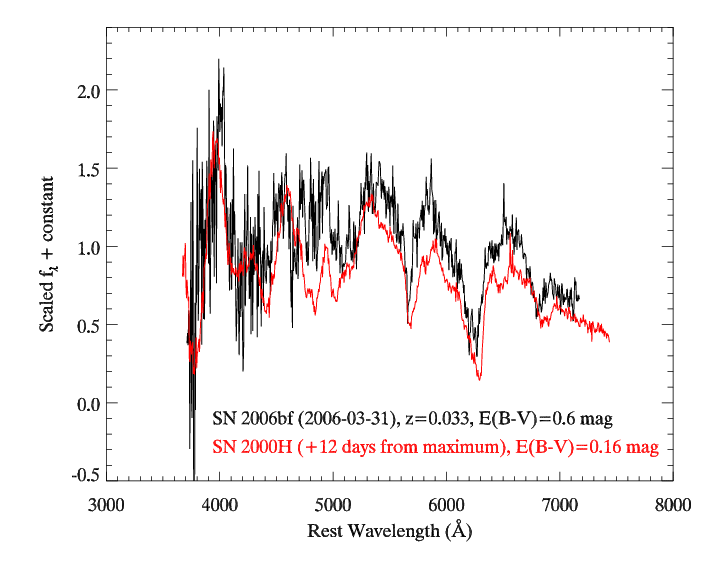
March 31, 2006 UT, FLWO 1.5m spectrum shows this reddened Type
Ib/IIb supernova.
Here is a comparison
with SN 2000H, another supernova whose classification was challenging,
at +12 days from maximum light.
-
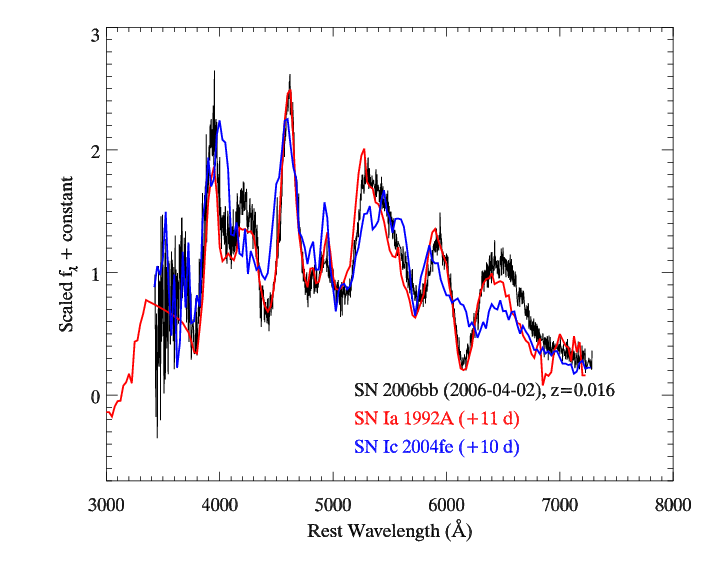
SN 2006bb (UGC 4468) (Ia)
[CBET 461]
-
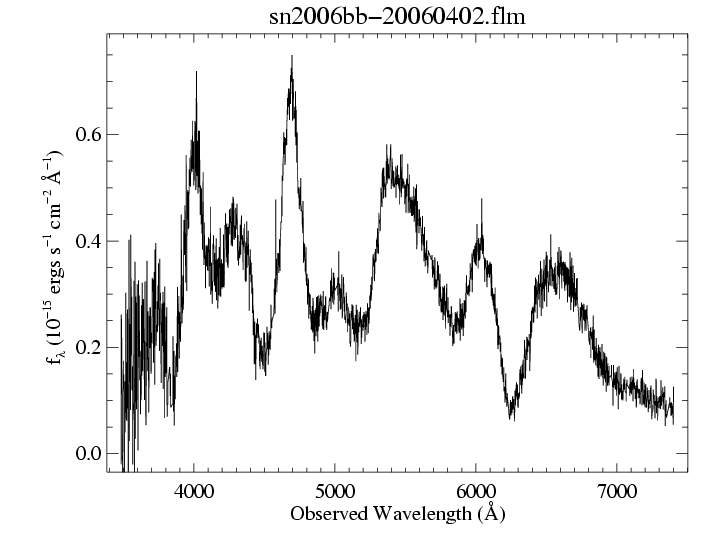
April 02, 2006 UT, FLWO 1.5m spectrum shows this Type Ia supernova around
two weeks past maximum, originally classified as a Type Ic SN.
Here is a comparison
with the Type Ia SN 1992A at +11 days from maximum and with the Type Ic SN 2004fe
at +10 days past maximum. Clearly the former is a better match than the latter.
-
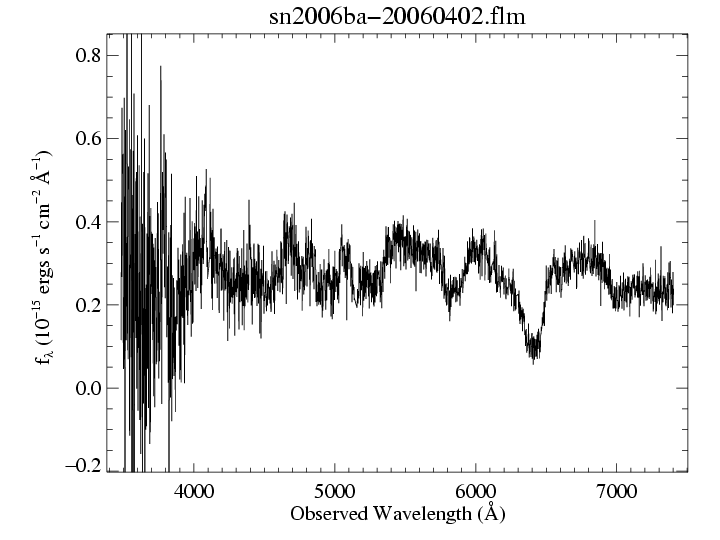
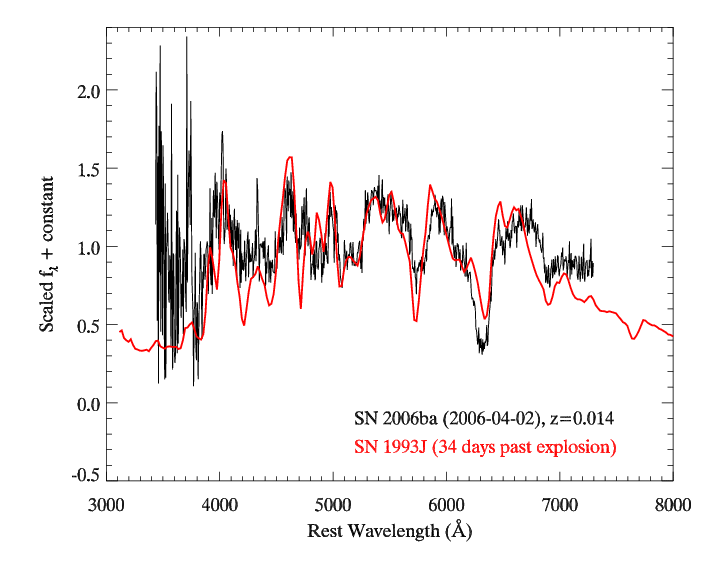
SN 2006ba (NGC 2980) (IIb)
[CBET 458]
-
April 02, 2006 UT, FLWO 1.5m spectrum shows this Type IIb supernova.
Here is a comparison
with the Type IIb SN 1993J at 34 days past explosion.
-
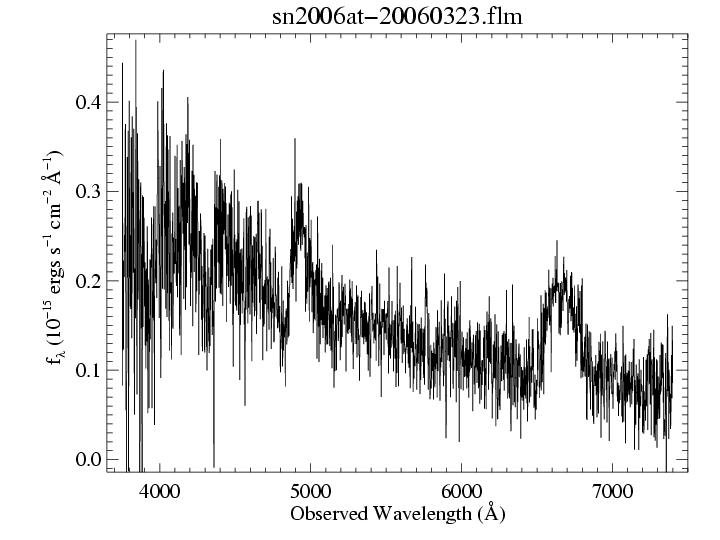
SN 2006at (Anon. galaxy) (II)
[CBET 440]
-
March 23, 2006 UT, FLWO 1.5m spectrum shows this young Type II
supernova. Cross-correlation with a library of Type II spectra yields
an approximate redshift z=0.015.
-
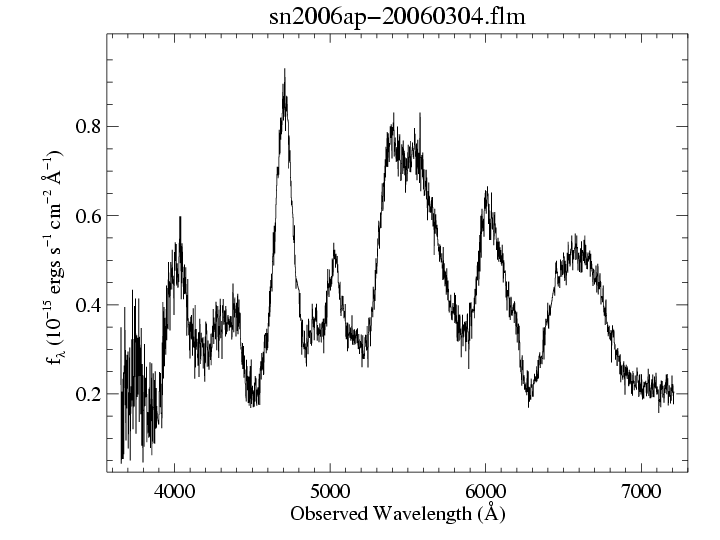
SN 2006ap (NGC 6378) (Ia)
[CBET 418]
-
March 04, 2006 UT, FLWO 1.5m spectrum shows this Type Ia SN around 2 weeks past maximum light.
-
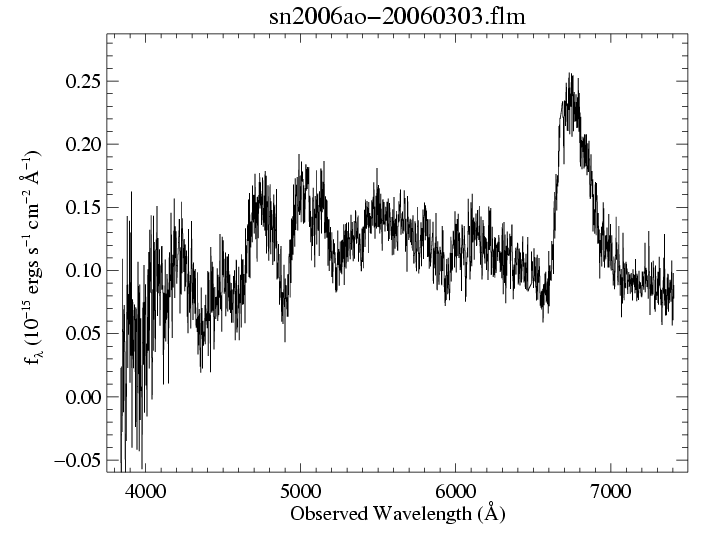
SN 2006ao (Anon. galaxy) (II)
[CBET 417]
-
March 03, 2006 UT, FLWO 1.5m spectrum shows this young, reddened, Type II SN.
-
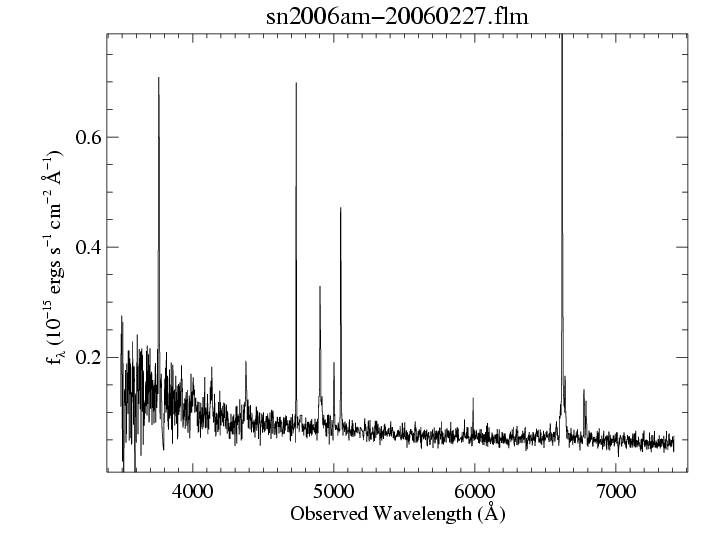
SN 2006am (NGC 5630) (IIn)
[IAUC 8680]
-
February 27, 2006 UT, FLWO 1.5m spectrum shows this Type IIn SN.
-
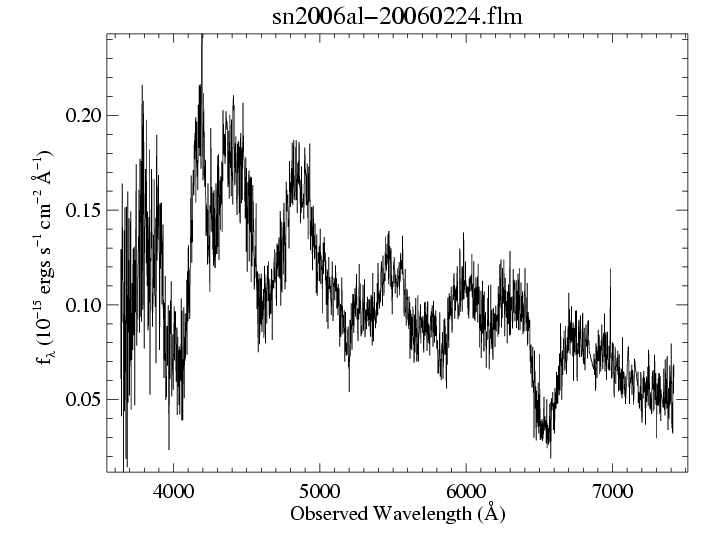
SN 2006al (Anon. galaxy) (Ia)
[CBET 411]
-
February 24, 2006 UT, FLWO 1.5m spectrum shows this Type Ia SN around
maximum light.
-
SN 2006ak (Anon. galaxy) (Ia)
[CBET 408]
-
February 21, 2006 UT, FLWO 1.5m spectrum shows this Type Ia SN around
maximum light.
-
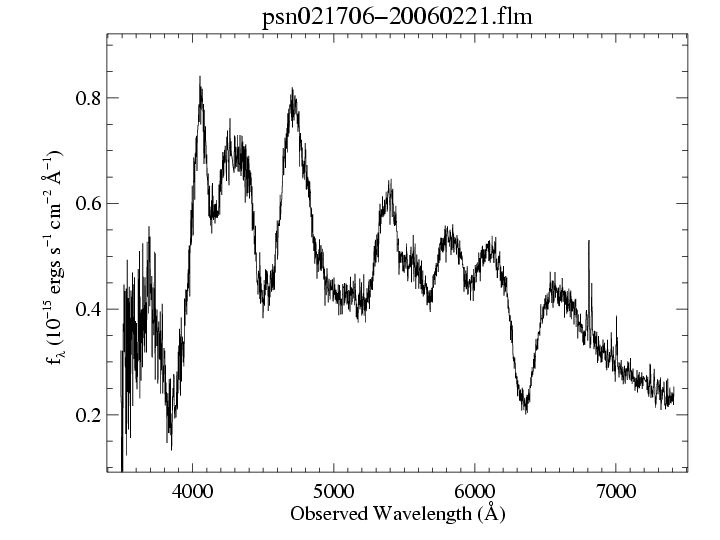
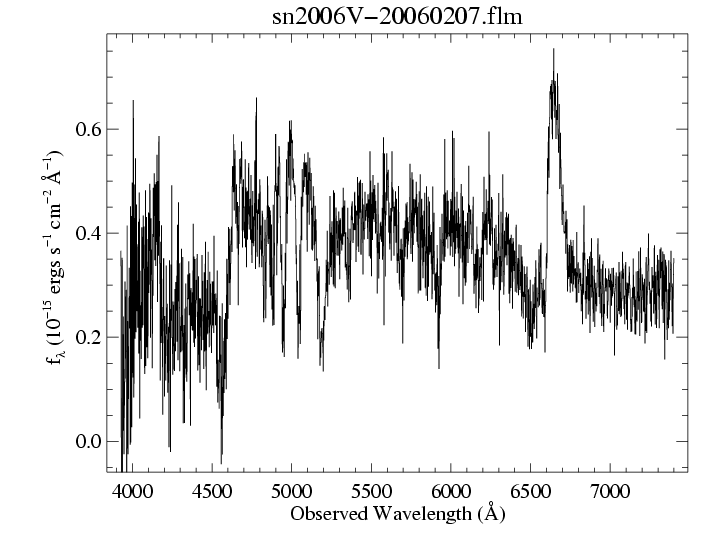
SN 2006V (UGC 6510) (II)
[CBET 392]
-
February 7, 2006 UT, FLWO 1.5m spectrum shows this Type II SN past
maximum light
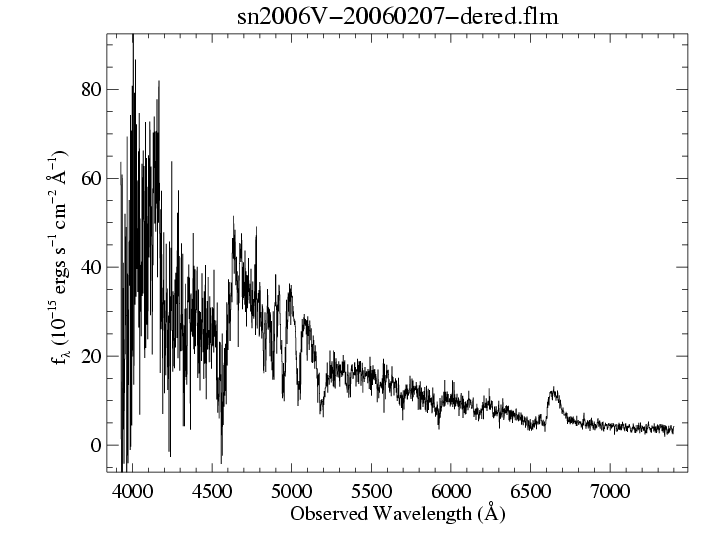
Here is a version
of this spectrum dereddened by 1.25 mag.
-
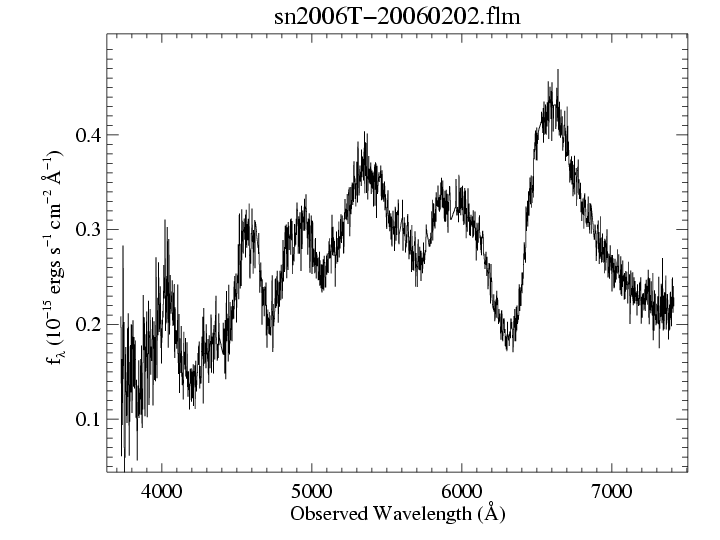
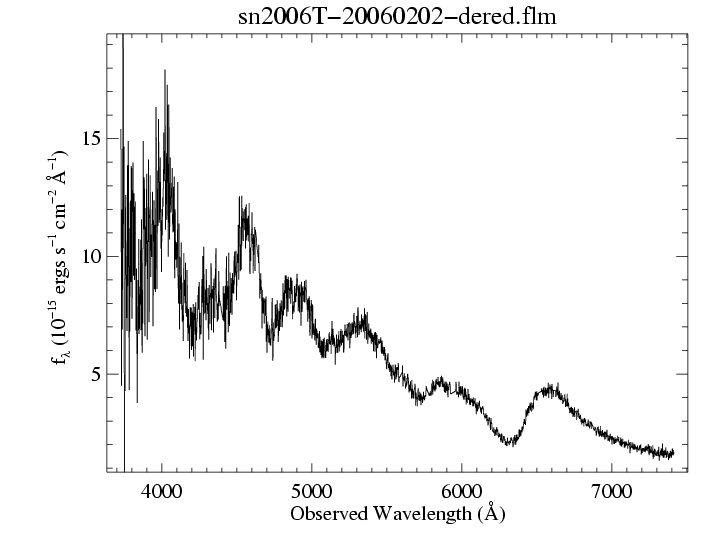
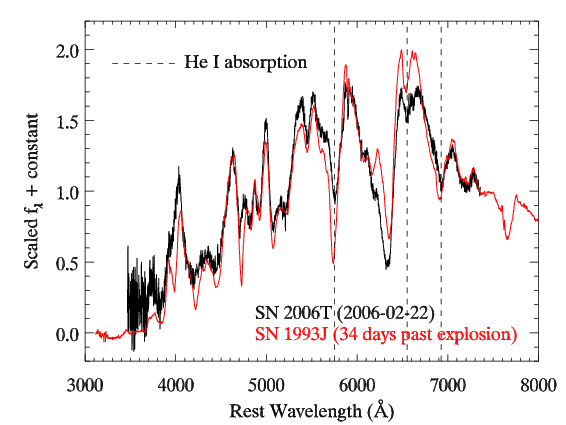
SN 2006T (NGC 3054) (IIb)
[CBET 425]
-
February 2, 2006 UT, FLWO 1.5m spectrum shows this young Type
II/IIb? Here is a
version of this spectrum dereddened by 1 mag.
A spectrum taken on February 22, 2006 UT reveals the appearance of He
I lines, thereby confirming the IIb type.
Here is a comparison with
the Type IIb SN 1993J at 34 days past explosion.
-
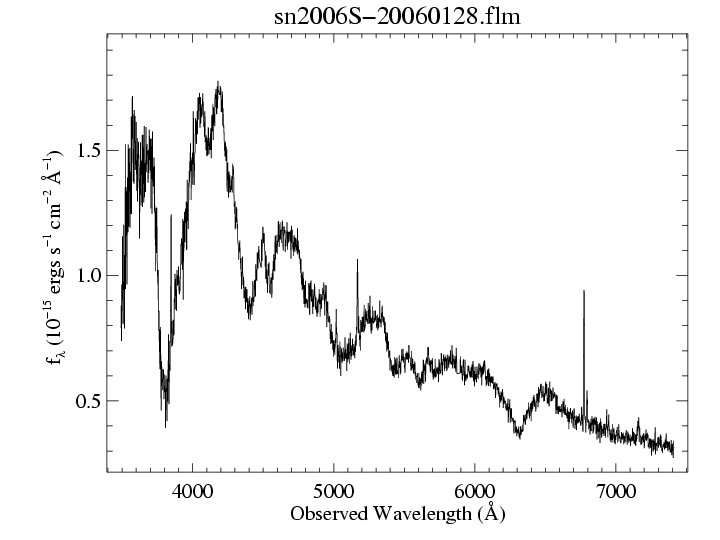
SN 2006S (UGC 7934) (Ia)
[CBET 382]
-
January 28, 2006 UT, FLWO 1.5m spectrum shows this young Type Ia.
-
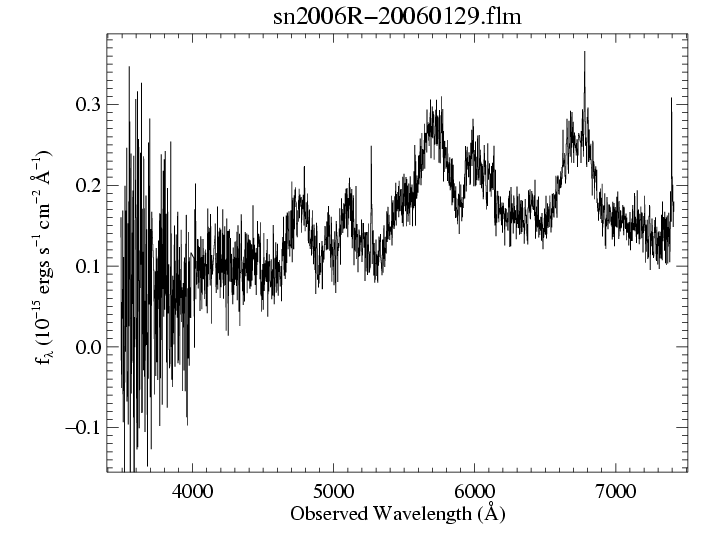
SN 2006R (NGC 6142) (Ia)
[CBET 383]
-
January 29, 2006 UT, FLWO 1.5m spectrum shows this Type Ia at three weeks past maximum light.
-
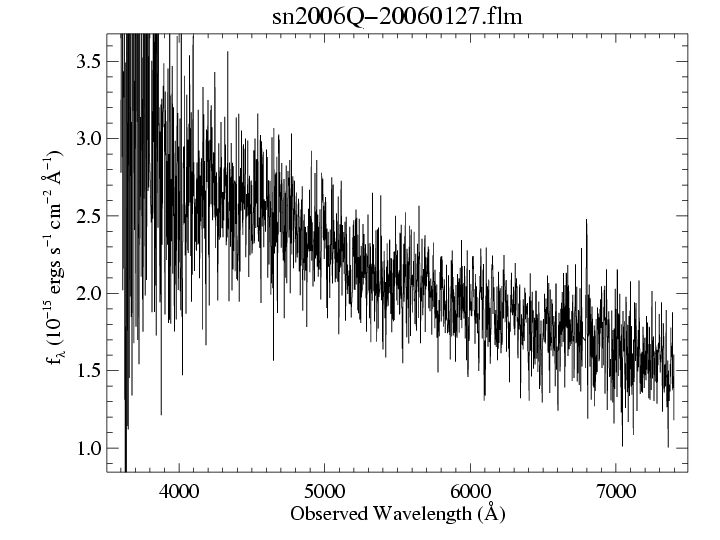
SN 2006Q (NGC 634) (II)
[CBET 381]
-
January 27, 2006 UT, FLWO 1.5m spectrum shows this young Type II.
-
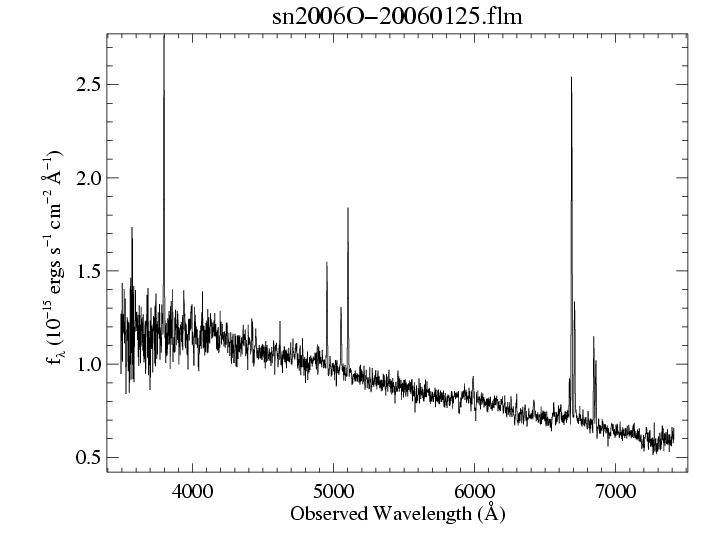
SN 2006O (UGC 633) (II)
[CBET 378]
-
January 25, 2006 UT, FLWO 1.5m spectrum shows this young Type II.
-
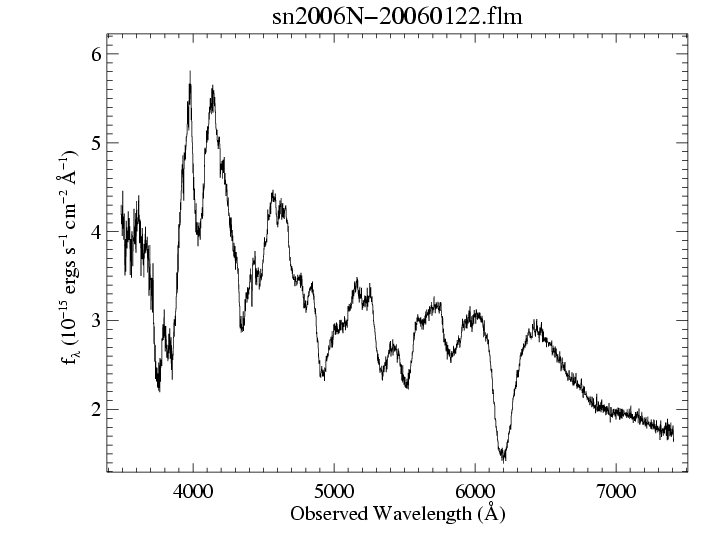
SN 2006N (MCG +11-8-12) (Ia)
[IAUC 8661]
-
January 22, 2006 UT, FLWO 1.5m spectrum shows this young Type Ia.
-
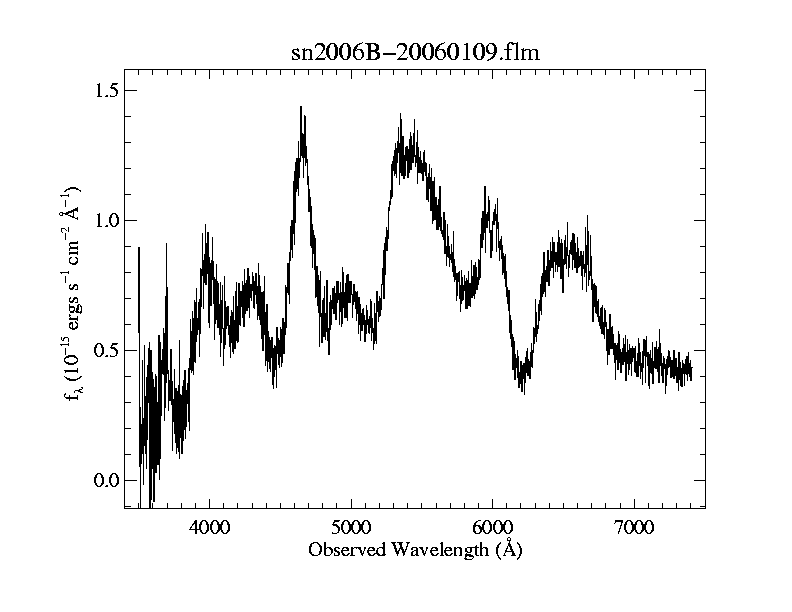
SN 2006B (UGC 12538) (Ia)
[CBET 360]
-
January 9 UT, 2006 UT FLWO 1.5m spectrum shows this Type Ia.
Back to top
SN 2005
-
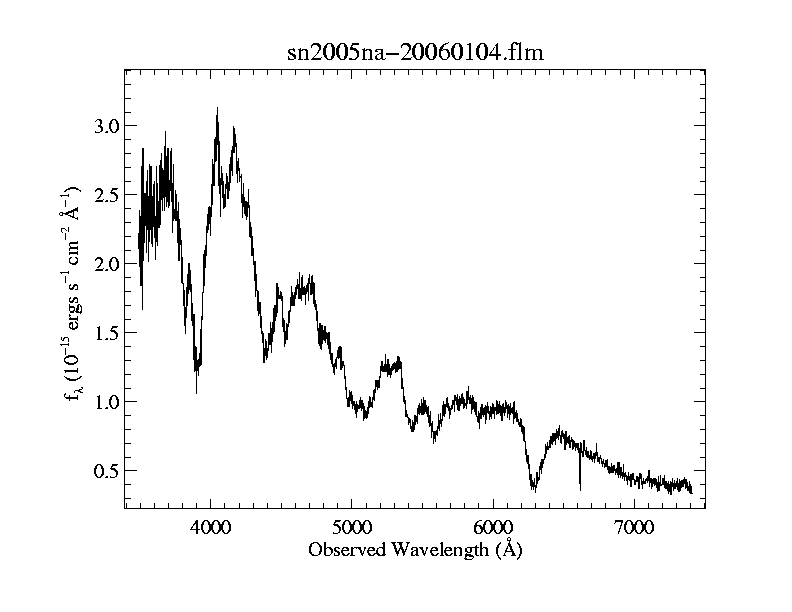
SN 2005na (NGC 1275) (Ia)
[CBET 351]
-
January 4 UT, 2005 UT FLWO 1.5m spectrum shows this young Type Ia.
-
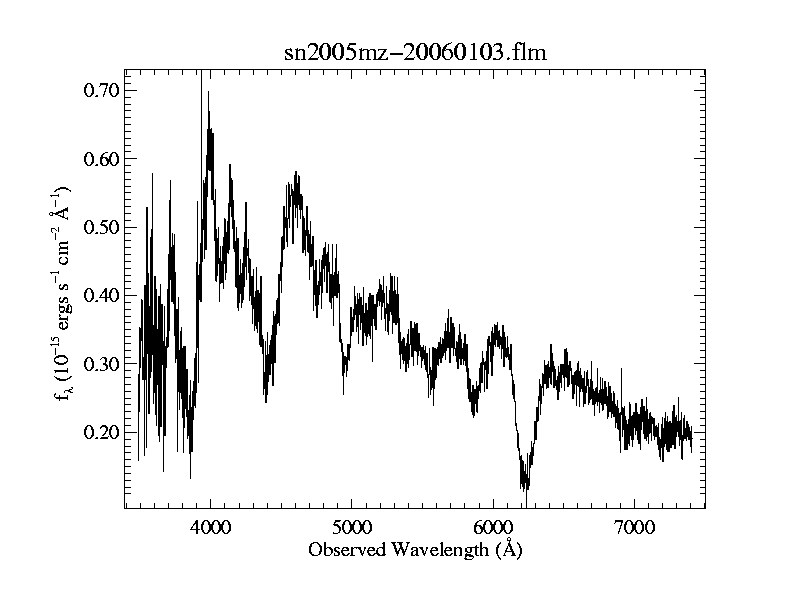
SN 2005mz (NGC 1275) (Ia)
[CBET 351]
-
January 3 UT, 2005 UT FLWO 1.5m spectrum shows this young Type Ia.
-
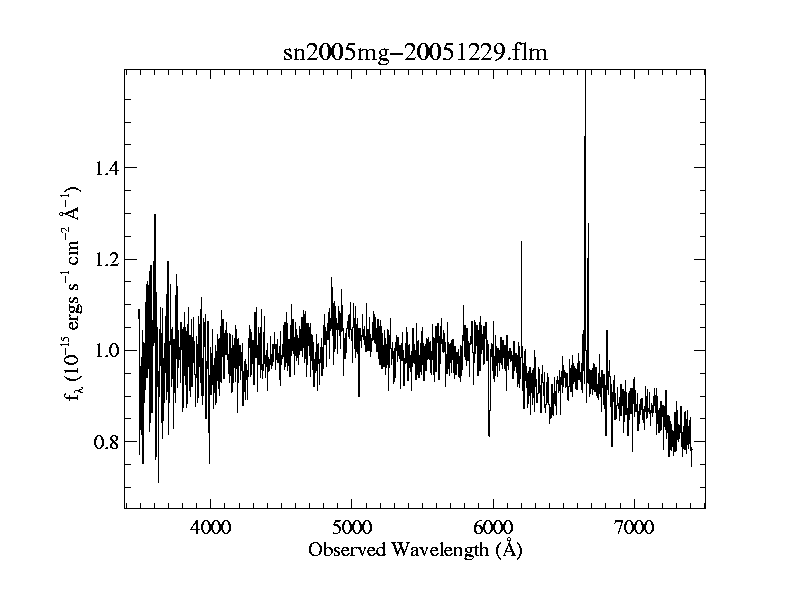
SN 2005mg (UGC 155) (II)
[CBET 342]
-
December 29, 2005 UT FLWO 1.5m spectrum shows this reddened SN II.
Here is the spectrum de-reddened by 2.65 mag.
-
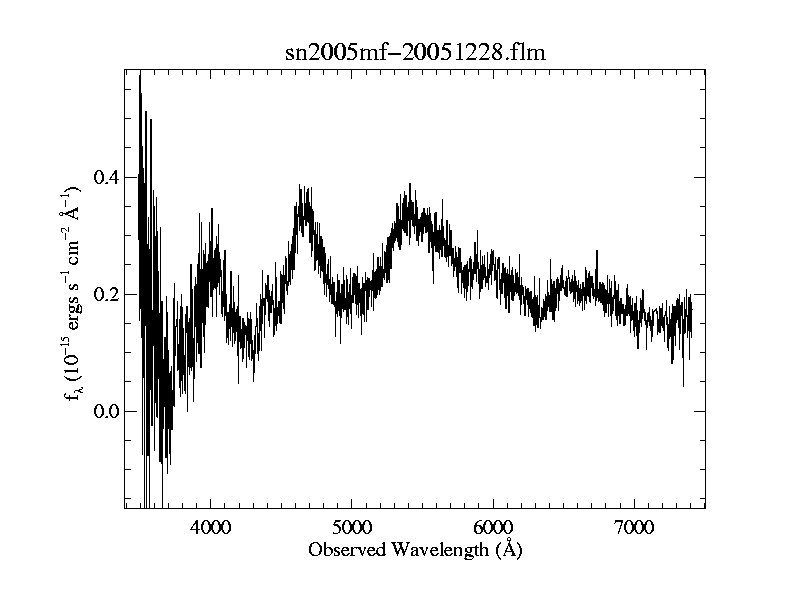
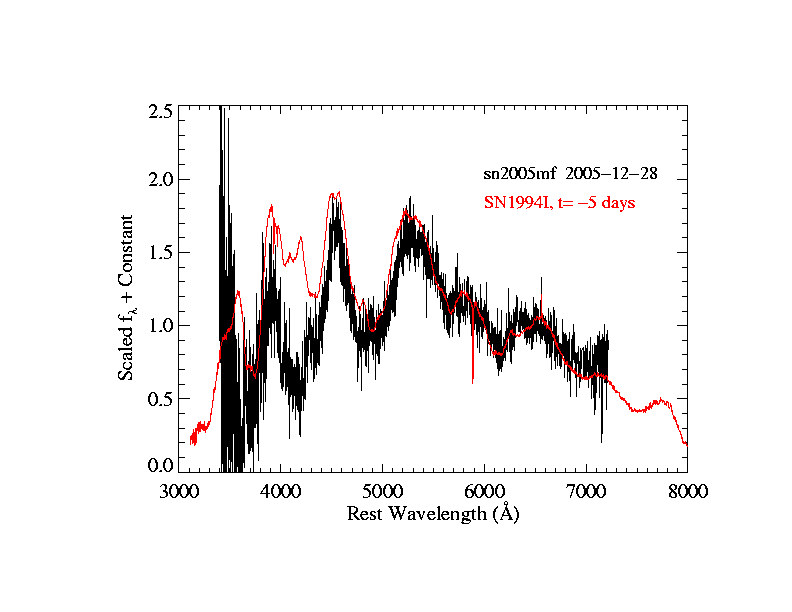
SN 2005mf (UGC 04798) (Ic)
[IAUC 8650]
-
December 28, 2005 UT FLWO 1.5m spectrum shows this young SN Ic.
Here is a comparison with 94I.
-
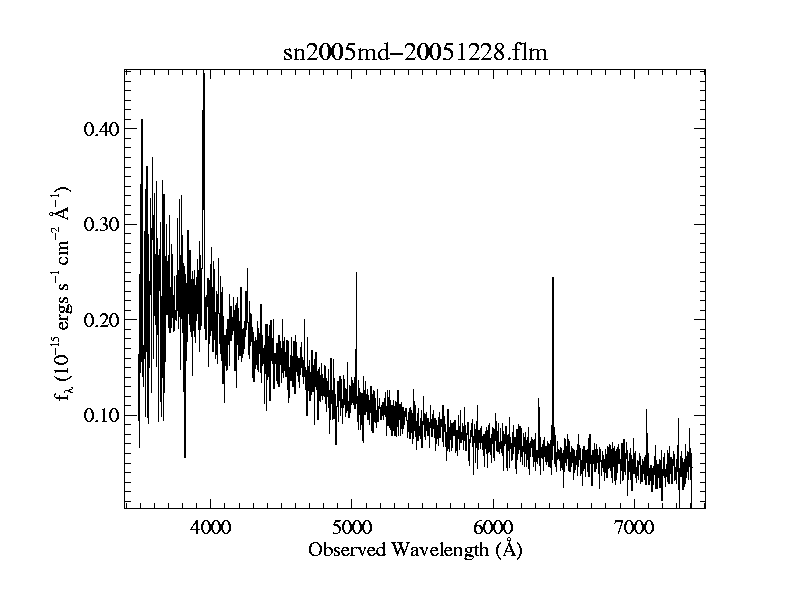
SN 2005md (NGC 2274) (II)
[IAUC 8650]
-
December 28, 2005 UT FLWO 1.5m spectrum shows this young SN II.
-
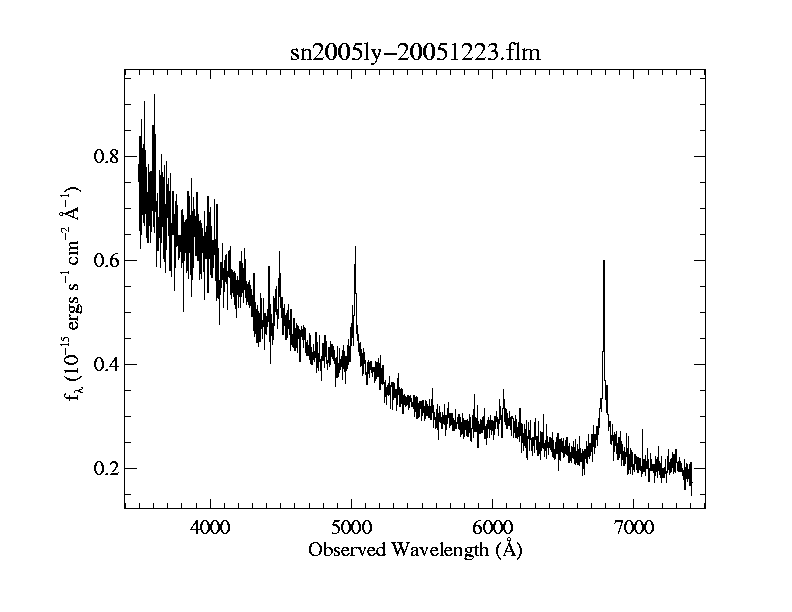
SN 2005ly (UGC 00934) (IIn)
[CBET 327]
-
December 23, 2005 UT FLWO 1.5m spectrum shows this SN II-n.
-
SN 2005lx (IC 221) (II)
[CBET 342]
-
December 29, 2005 UT FLWO 1.5m spectrum shows this young SN II.
-
SN 2005ls (MCG +07-07-001) (Ia)
[CBET 324]
-
December 21, 2005 UT FLWO 1.5m spectrum shows this SN Ia.
-
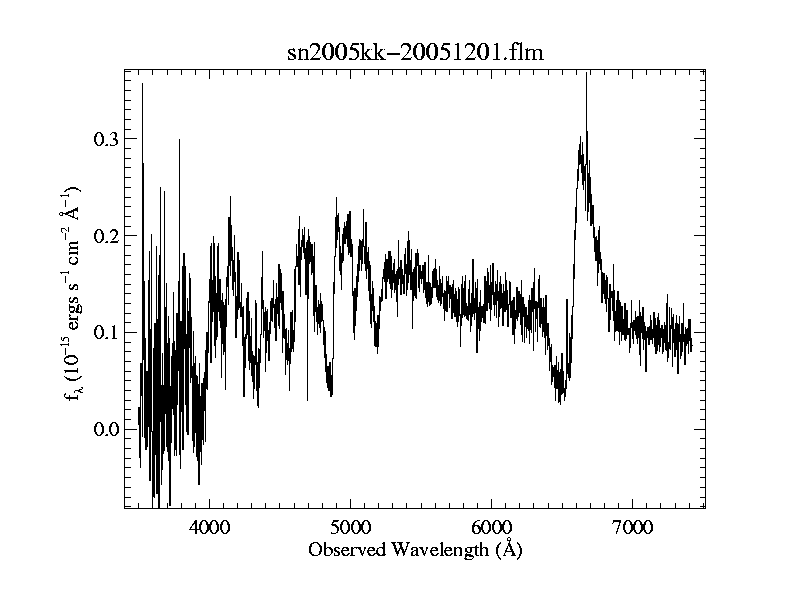
SN 2005kk (NGC 3323) (II)
[CBET 312]
-
December 01, 2005 UT FLWO 1.5m spectrum shows this SN II.
-
SN 2005ip (NGC 2906) (II)
[IAUC 8628]
-
November 06, 2005 UT FLWO 1.5m spectrum shows this young SN II.
-
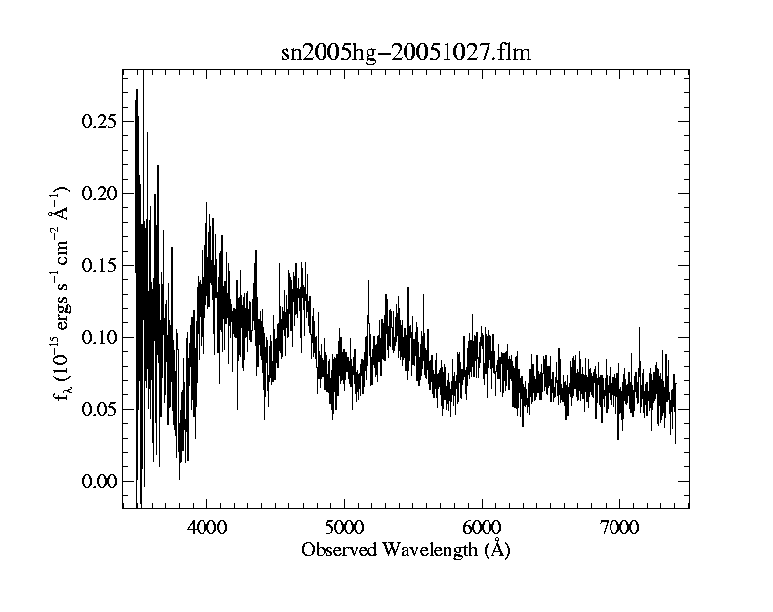
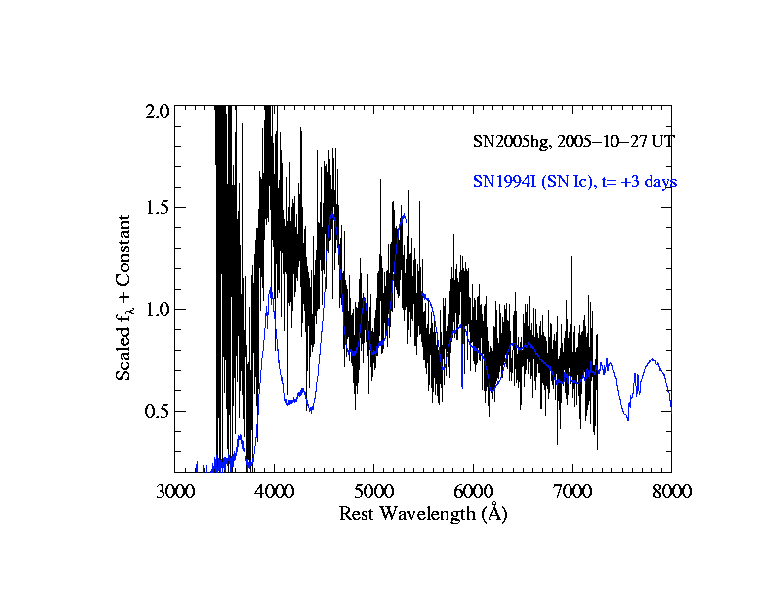
SN 2005hg (UGC 1394) (Ic)
[CBET 267,
CBET 271]
-
October 27, 2005 UT FLWO 1.5m spectrum shows this SN Ic around max.
Here is a comparison with 94I.
-
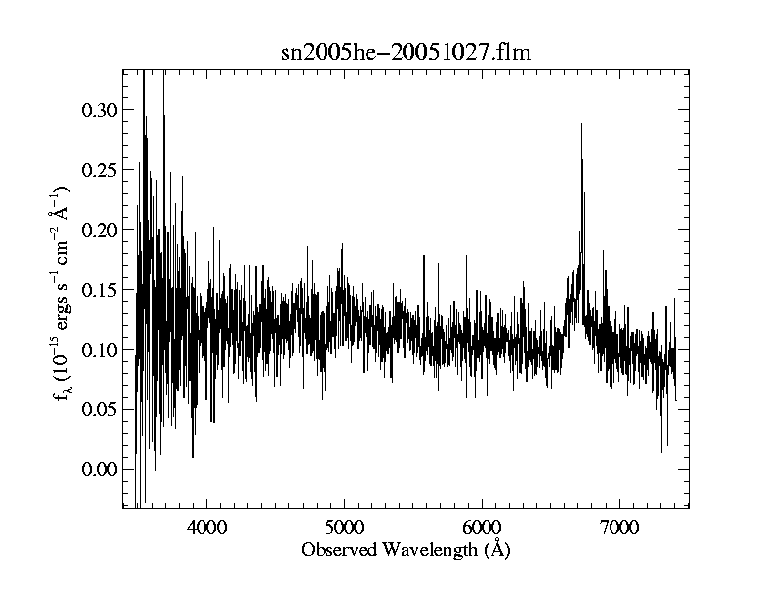
SN 2005he (MCG +06-49-68 ) (II)
[CBET 267]
-
October 27, 2005 UT FLWO 1.5m spectrum shows this SN II.
-
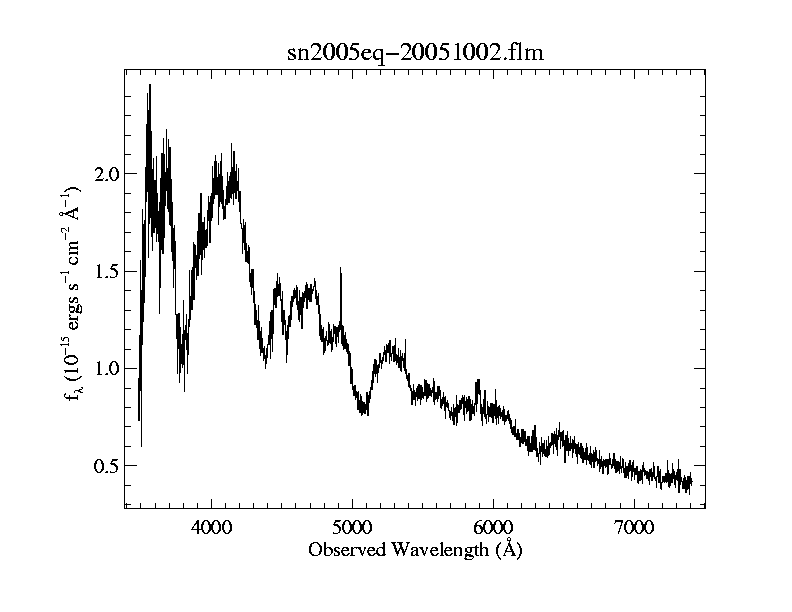
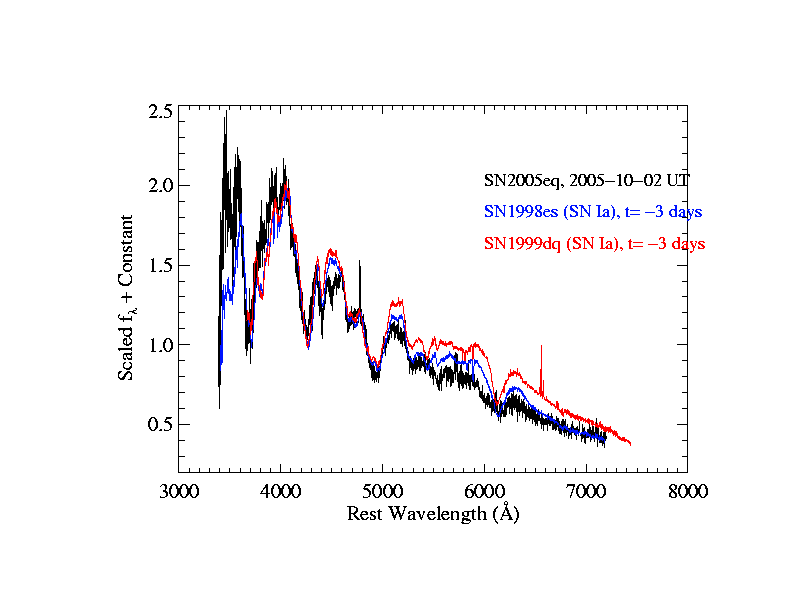
SN 2005eq (MCG -01-09-006 ) (Ia-pec)
[IAUC 8610]
-
October 02, 2005 UT FLWO 1.5m spectrum shows this peculiar Type Ia around maximum.
Here is a comparison with 98es and 99dq.
-
SN 2005eo(UGC 04132) (Ic)
[IAUC 8605]
-
September 29, 2005 UT FLWO 1.5m spectrum shows this Type Ic around maximum.
-
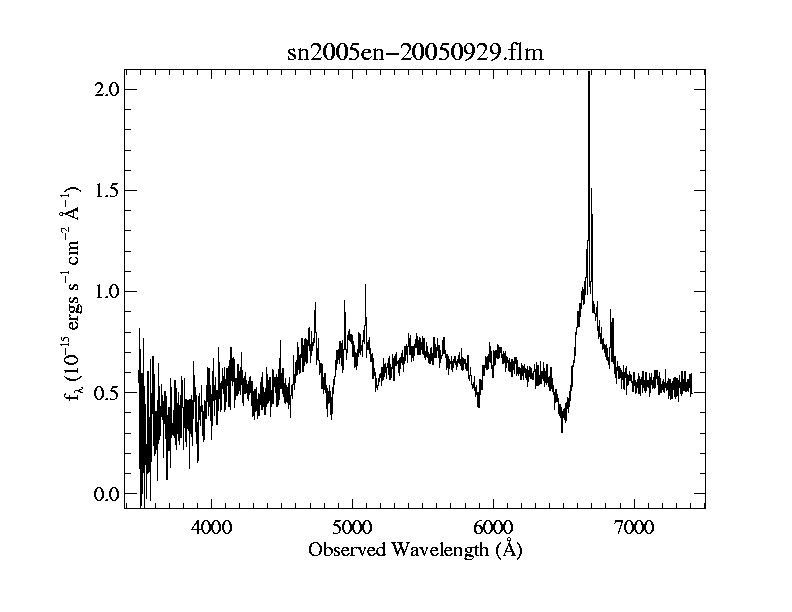
SN 2005en (UGC 04132) (II)
[IAUC 8605]
-
September 29, 2005 UT FLWO 1.5m spectrum shows this Type II.
-
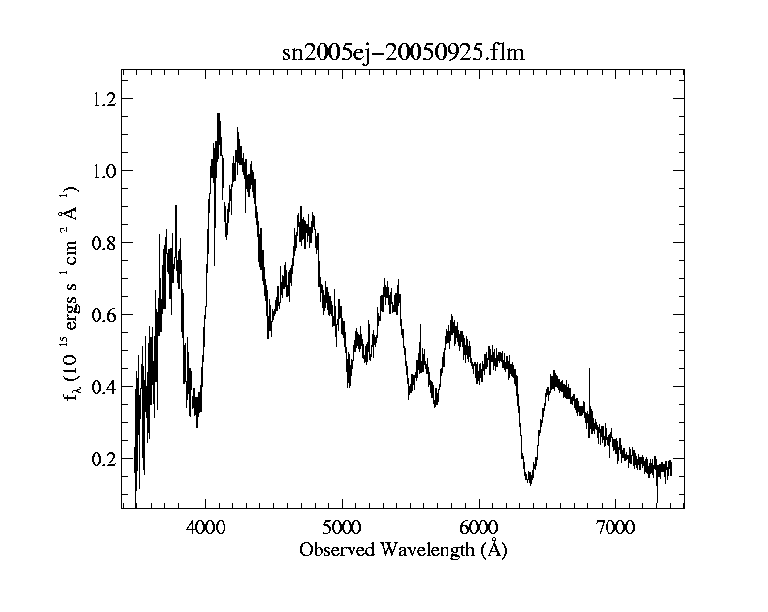
SN 2005ej (CGCG 323-004) (Ia)
[CBET 234]
-
September 25, 2005 UT FLWO 1.5m spectrum shows this Type Ia at t~4 days.
-
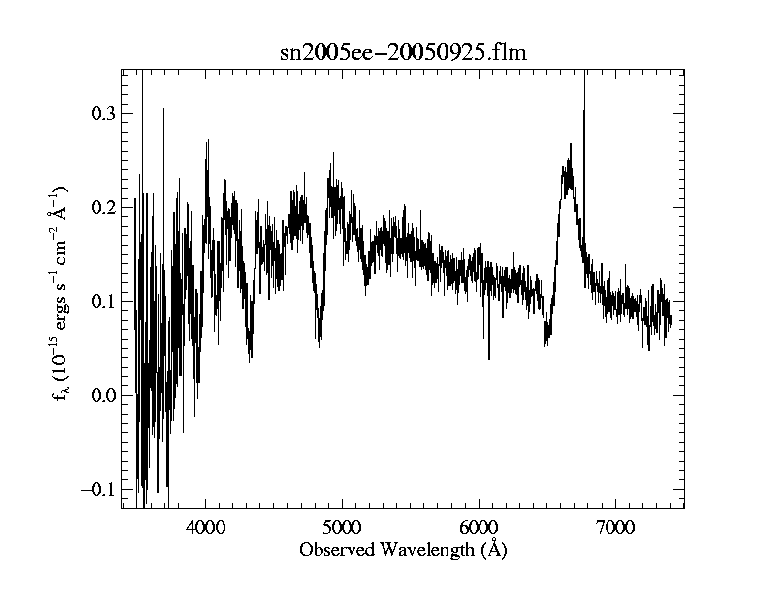
SN 2005ee (PGC 73054) (II)
[IAUC 8606]
-
September 25, 2005 UT FLWO 1.5m spectrum shows this Type II.
-
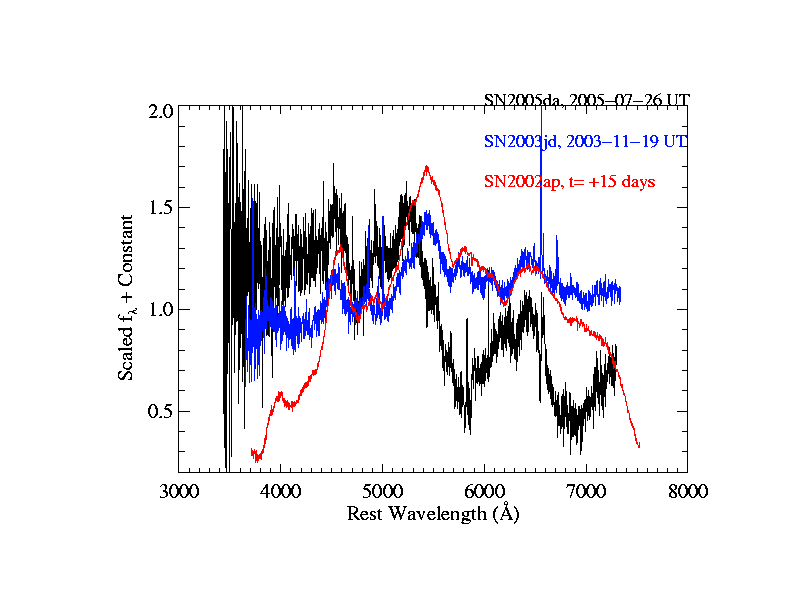
SN 2005da (UGC 11301) (Ic)
[IAUC 8575]
-
July 26, 2005 UT FLWO 1.5m spectrum shows this peculiar Ic.
Here is a comparison with sn2002ap and sn2003jd.
-
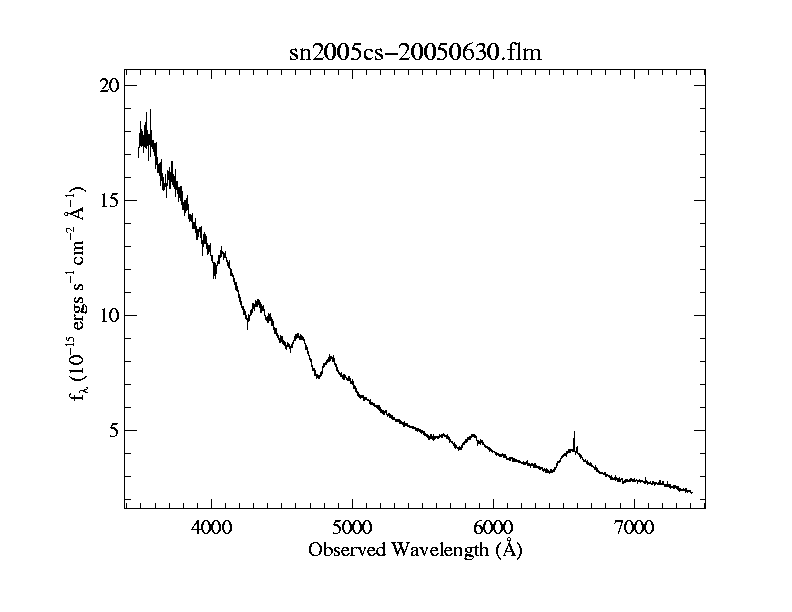
SN 2005cs (M51) (II)
[IAUC 8555]
-
June 30, 2005 UT FLWO 1.5m spectrum shows this young Type II in the nearby M 51.
-
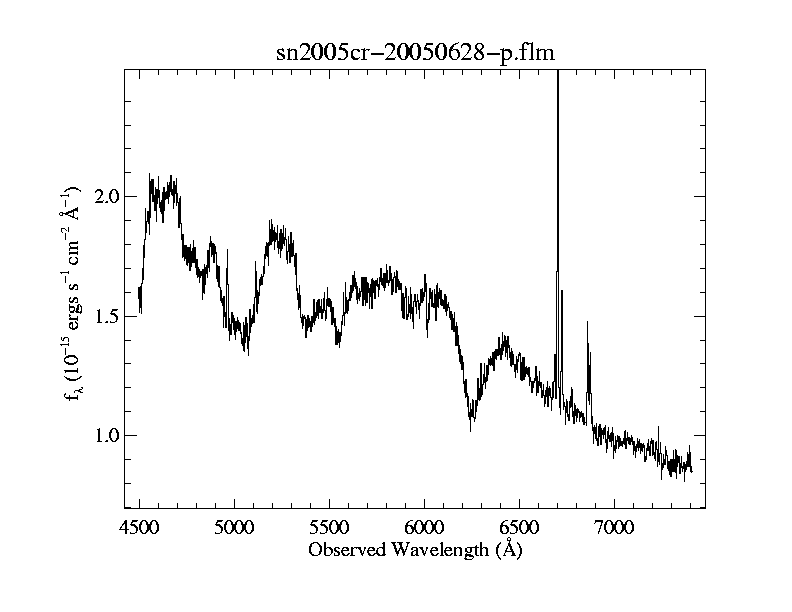
SN 2005cr (VPC 0198) (Ia)
[CBET 173]
-
June 28, 2005 UT FLWO 1.5m spectrum shows this young Type Ia.
-
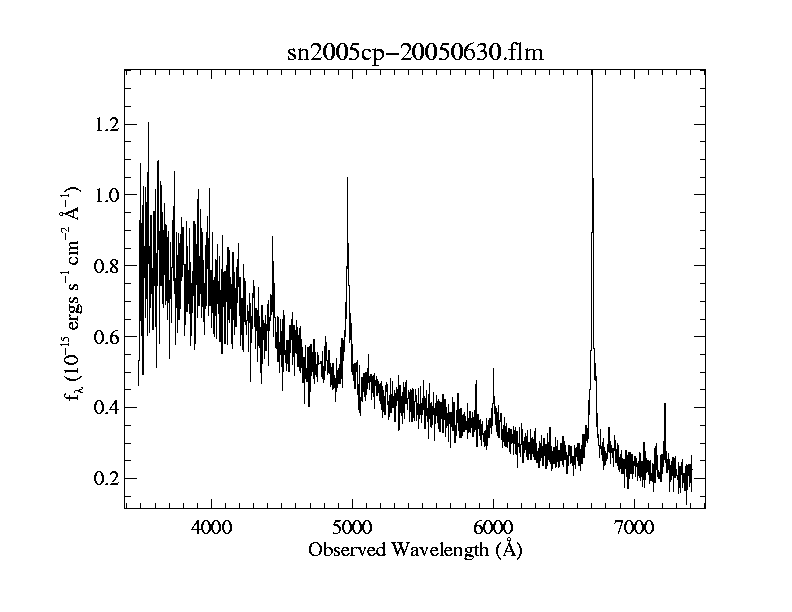
SN 2005cp (UGC 12886 ) (II-n)
[CBET 174]
-
June 30, 2005 UT FLWO 1.5m spectrum shows this young Type IIn.
-
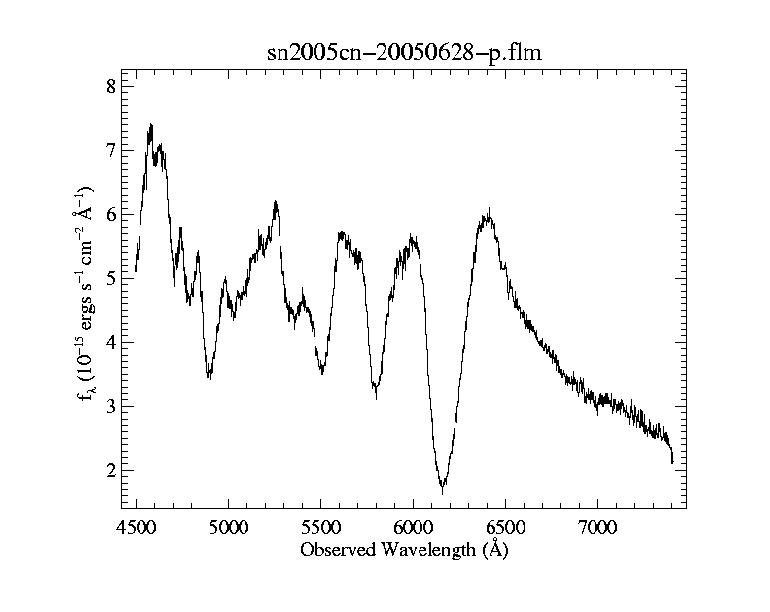
SN 2005cn (NGC 5061) (Ia)
[IAUC 8553]
-
June 28, 2005 UT FLWO 1.5m spectrum shows this young Type Ia.
-
SN 2005cl (MCG -01-53-020) (IIn)
[IAUC 8544]
-
June 12, 2005 UT FLWO 1.5m spectrum shows this young Type IIn.
-
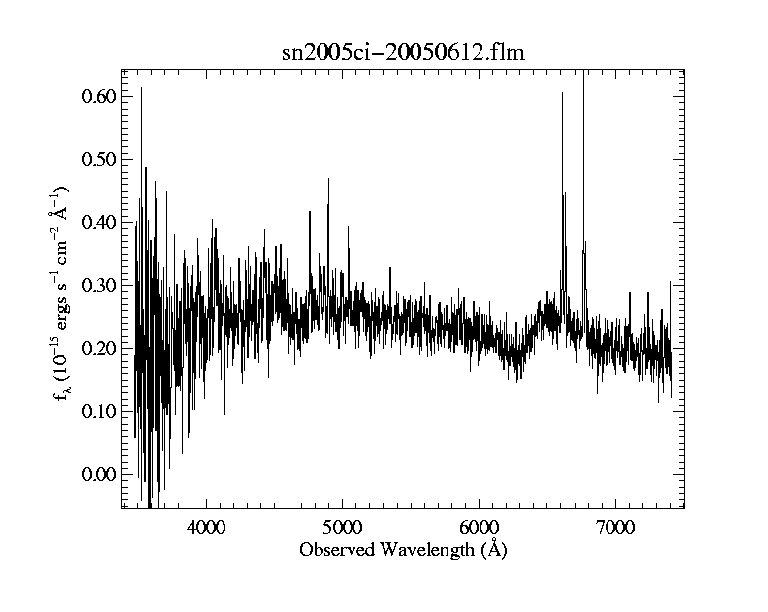
SN 2005ci (NGC 5682) (II)
[IAUC 8542]
-
June 12, 2005 UT FLWO 1.5m spectrum shows this Type II.
-
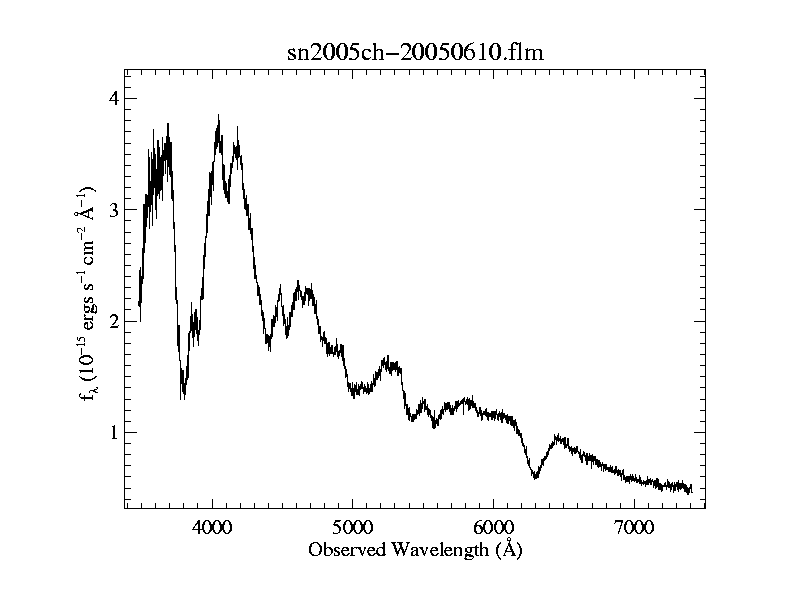
SN 2005ch (Anon. Galaxy) (Ia)
[IAUC 8541]
-
June 10, 2005 UT FLWO 1.5m spectrum shows this young Type Ia.
-
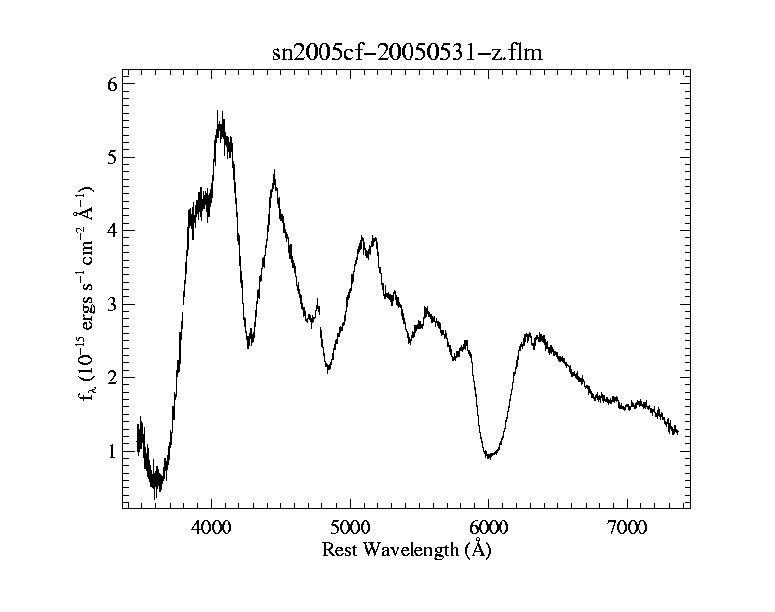
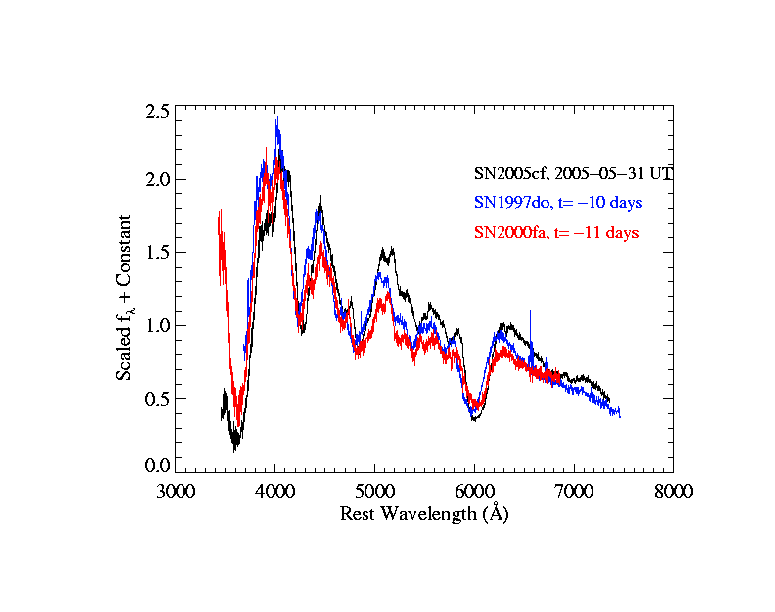
SN 2005cf (MCG -01-39-003) (Ia)
[IAUC 8534]
-
May 31, 2005 UT FLWO 1.5m spectrum shows this young Type Ia.
Here is a comparison with sn2000fa and sn1997do.
-
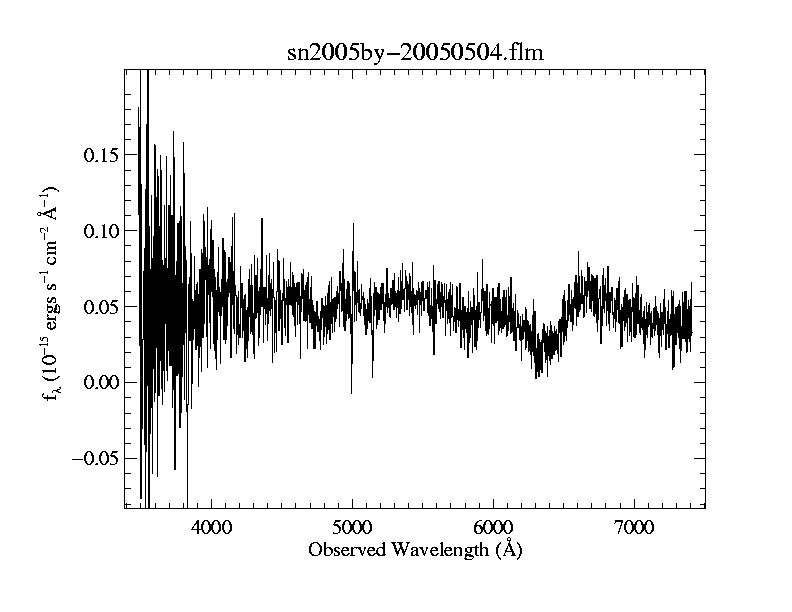
SN 2005by (UGC 08701) (II)
[IAUC 8523]
-
May 04, 2005 UT FLWO 1.5m spectrum shows this Type II.
-
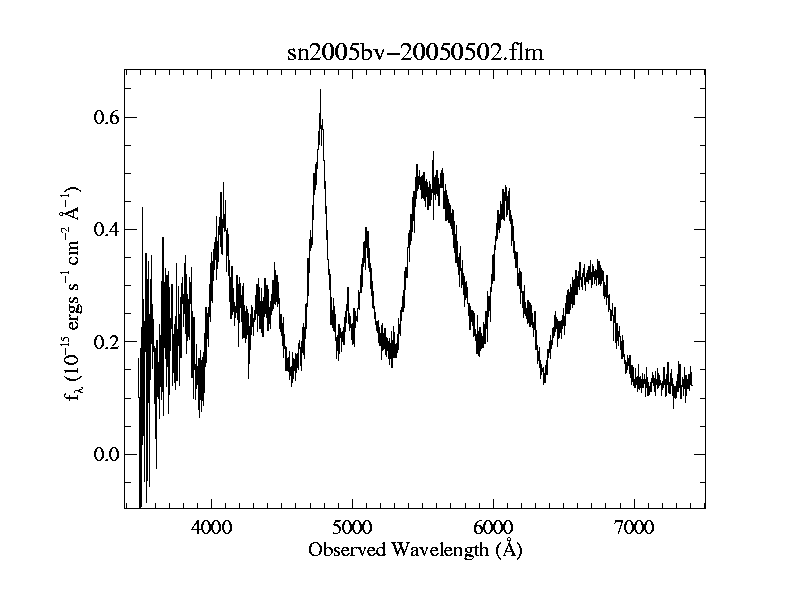
SN 2005bv (MAPS-NGP O_382_0019725) (Ia)
[IAUC 8522]
-
May 02, 2005 UT FLWO 1.5m spectrum shows this Type Ia.
The redshift as derived from H alpha emission from a HII region in the host galaxy is 10400 km/s.
-
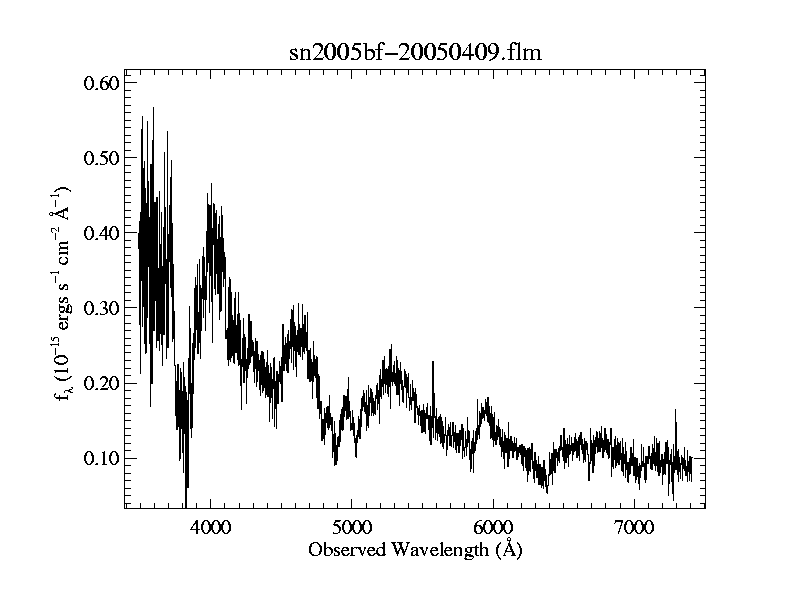
SN 2005bf (MCG +00-27-5) (Ic -> Ib)
[IAUC 8509,
IAUC 8522]
-
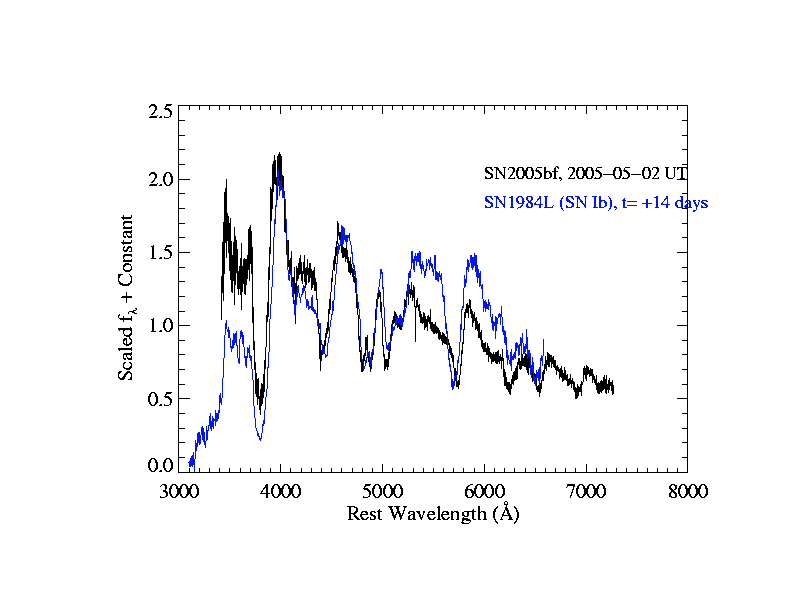
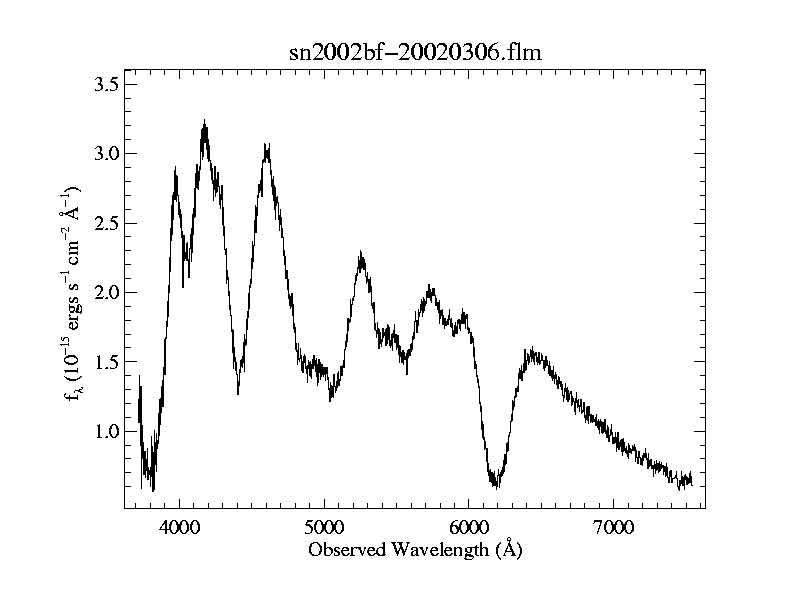
April 9, 2005 UT FLWO 1.5m spectrum shows this Type Ic.
However, over time, it developed strong He I lines: a comparison spectrum with SN1984L (SN Ib) can be viewed
here, taken May 02 UT.
-
SN 2005bd (MCG +09-11-2) (Ia)
[IAUC 8508]
-
April 9, 2005 UT FLWO 1.5m spectrum shows this Type Ia.
-
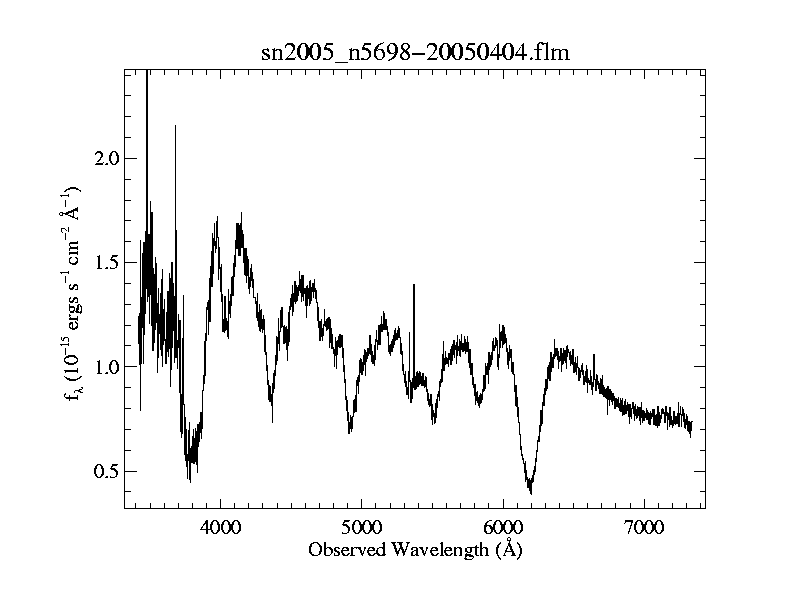
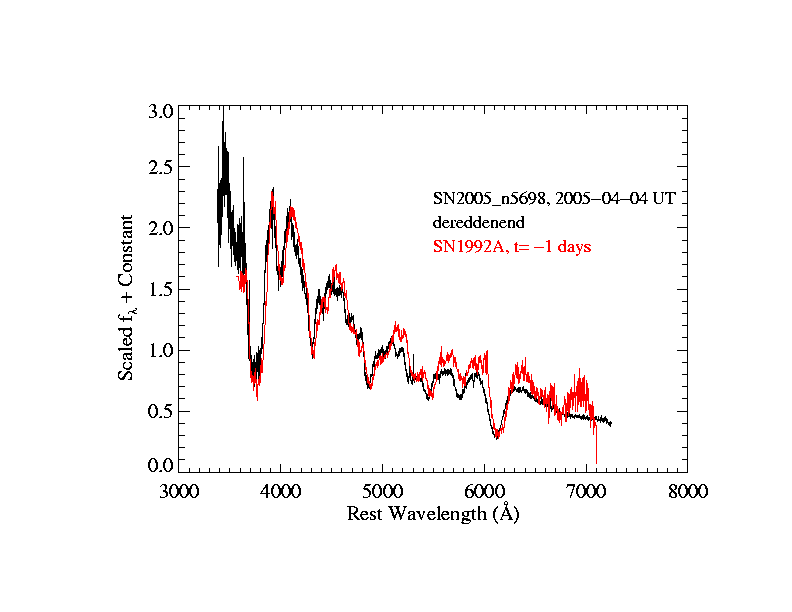
SN 2005bc (NGC 5698) (Ia)
[IAUC 8505]
-
April 4, 2005 UT FLWO 1.5m spectrum shows this young Type Ia.
Also, a comparison spectrum with SN1992A can be viewed
here.
-
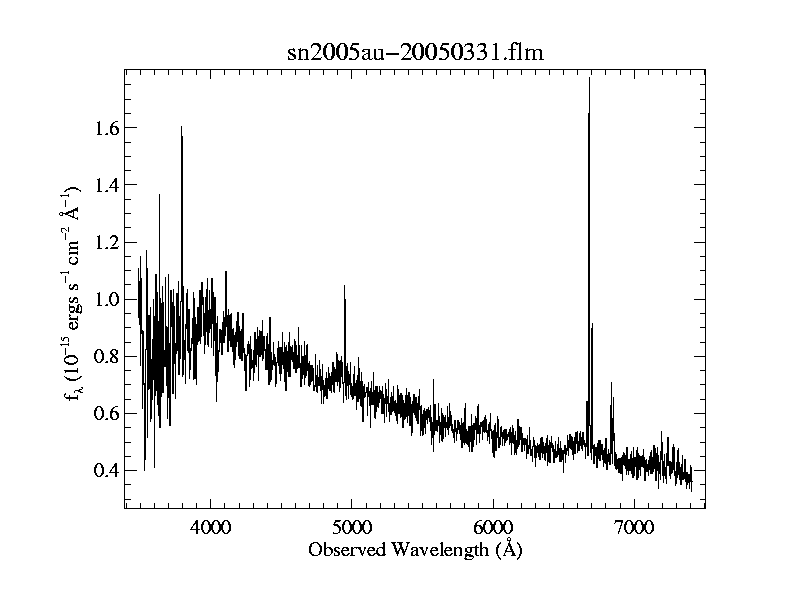
SN 2005au (NGC 5056) (II)
[IAUC 8503]
-
March 31, 2005 UT FLWO 1.5m spectrum shows this Type II.
-
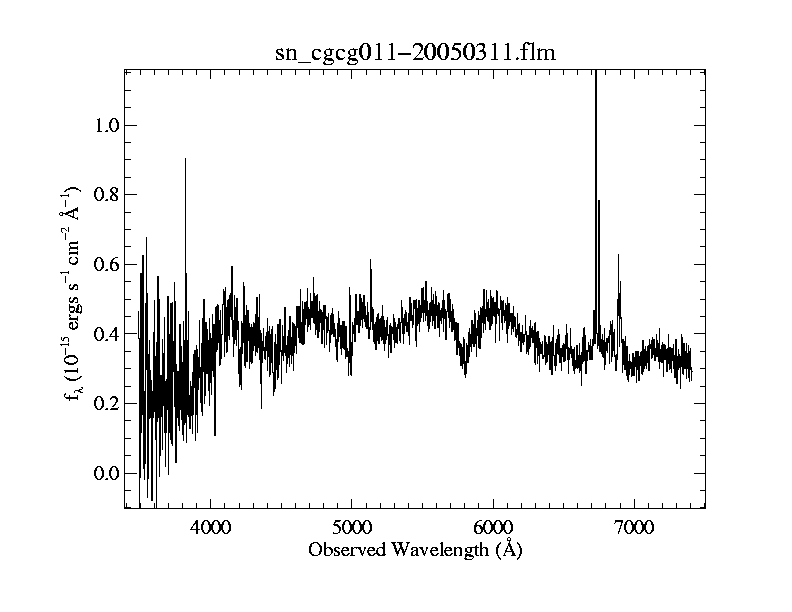
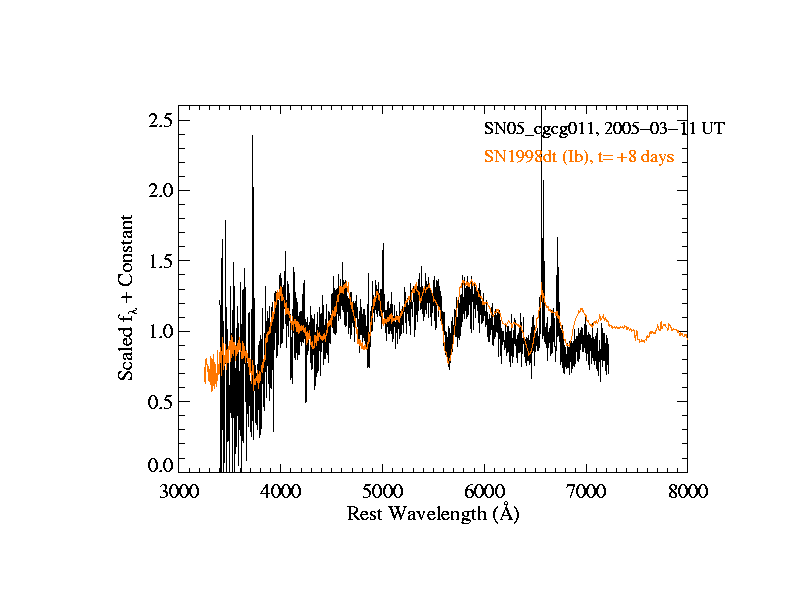
SN 2005ar (CGCG 011-033) (Ib)
[IAUC 8493]
-
March 11, 2005 UT FLWO 1.5m spectrum shows this Type Ib.
Also, a comparison spectrum with SN1998dt can be viewed
here,
where the spectrum of SN1998dt is scaled to match the He I 5876 line strength of SN 2005ar.
-
SN 2005aq (NGC 1599) (II)
[IAUC 8492]
-
March 08, 2005 UT FLWO 1.5m spectrum shows this Type IIn.
-
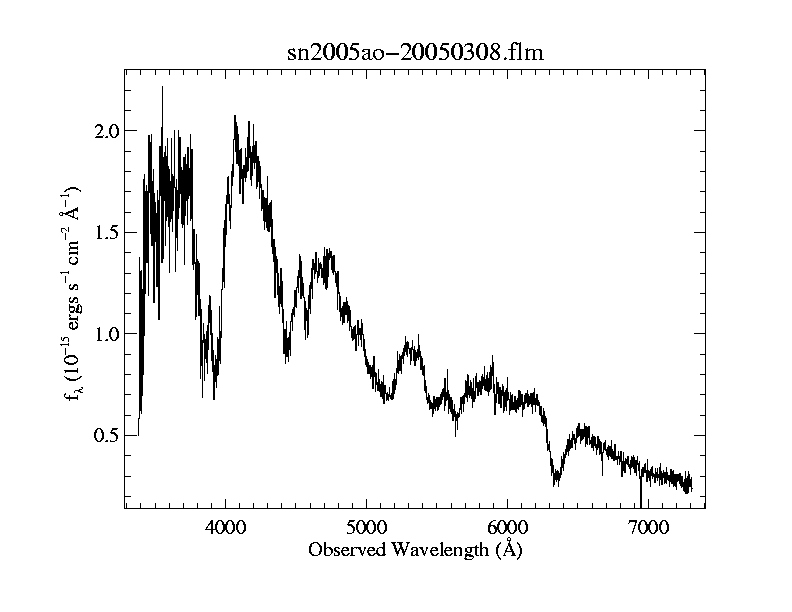
SN 2005ao (NGC 6462) (Ia)
[IAUC 8492]
-
March 08, 2005 UT FLWO 1.5m spectrum shows this young (t~-3 days) Type Ia.
-
SN 2005an (ESO 506-G011) (II)
[IAUC 8491]
-
March 04, 2005 UT FLWO 1.5m spectrum shows this young Type II.
-
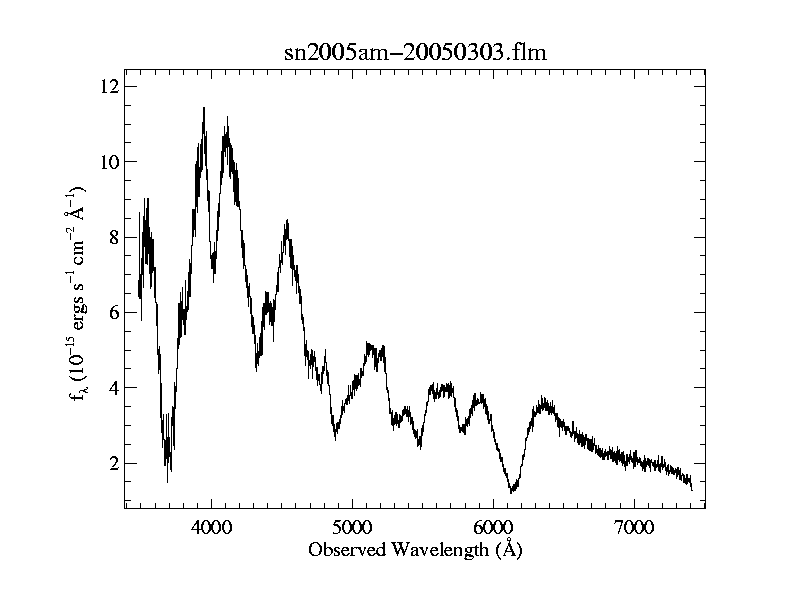
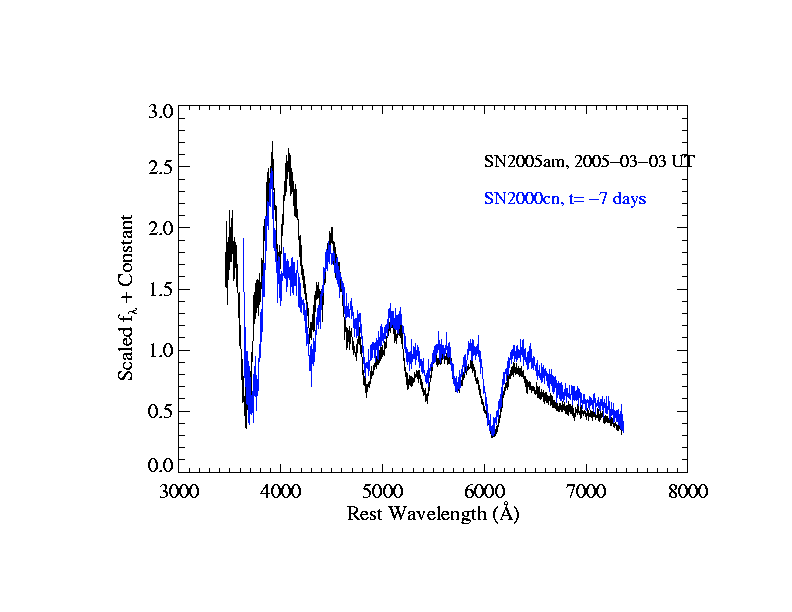
SN 2005am (NGC 2811) (Ia)
[IAUC 8491]
-
March 03, 2005 UT FLWO 1.5m spectrum shows this young Type Ia
supernova. Also, a comparison spectrum with SN2000cn can be viewed
here.
-
SN 2005U (Arp 299) (II)
[IAUC 8475]
-
February 01, 2005 UT FLWO 1.5m spectrum shows this Type II supernova.
-
SN 2005K (NGC 2923) (II)
[IAUC 8470]
-
January 19, 2005 UT FLWO 1.5m spectrum shows this Type II supernova.
-
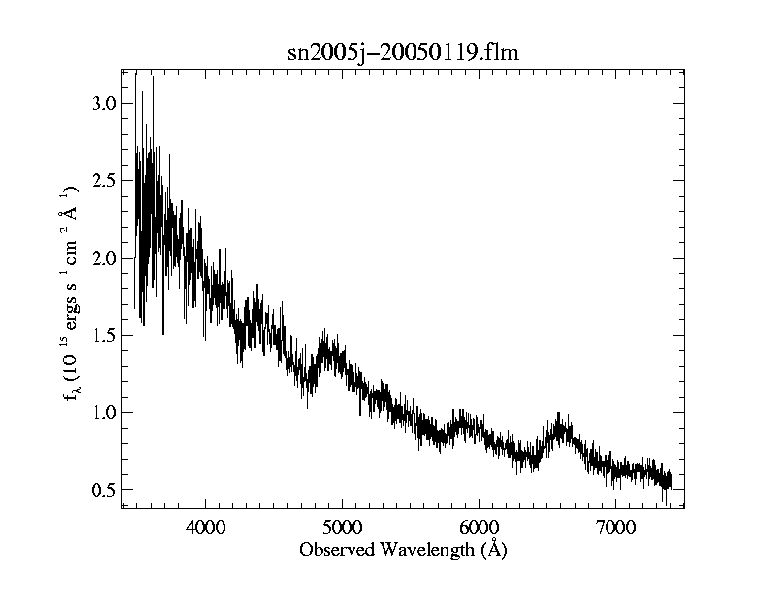
SN 2005J (NGC 4012) (II)
[IAUC 8470]
-
January 19, 2005 UT FLWO 1.5m spectrum shows this young Type II supernova.
-
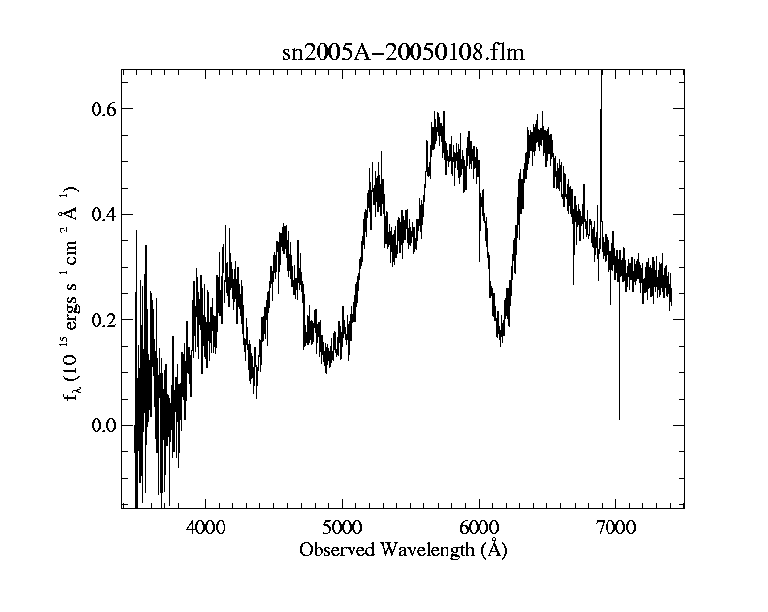
SN 2005A (NGC 0958) (Ia)
[IAUC 8461]
-
January 08, 2005 UT FLWO 1.5m spectrum shows this Type Ia supernova, ~ 2 weeks before max.
Back to top
SN 2004
-
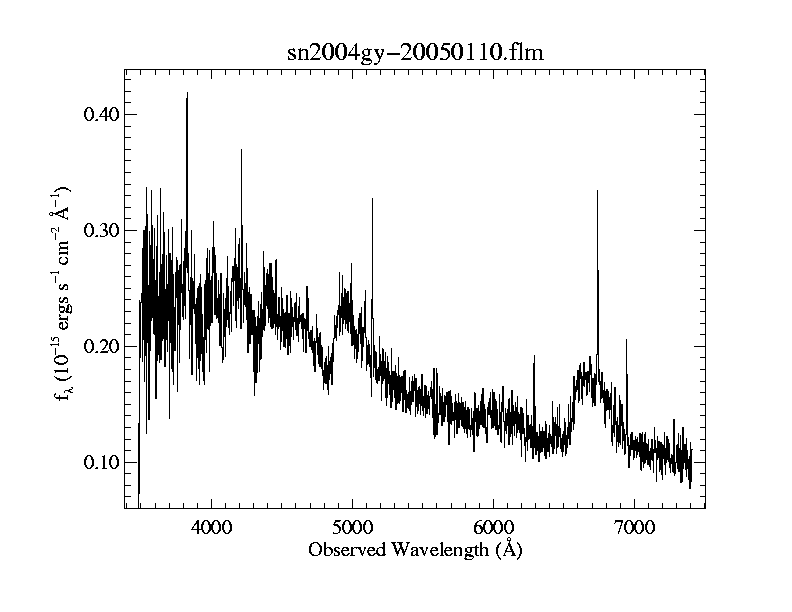
SN 2004gy (anon gal.) (II)
[IAUC 8443]
-
January 10, 2005 UT FLWO 1.5m spectrum shows this Type II supernova.
-
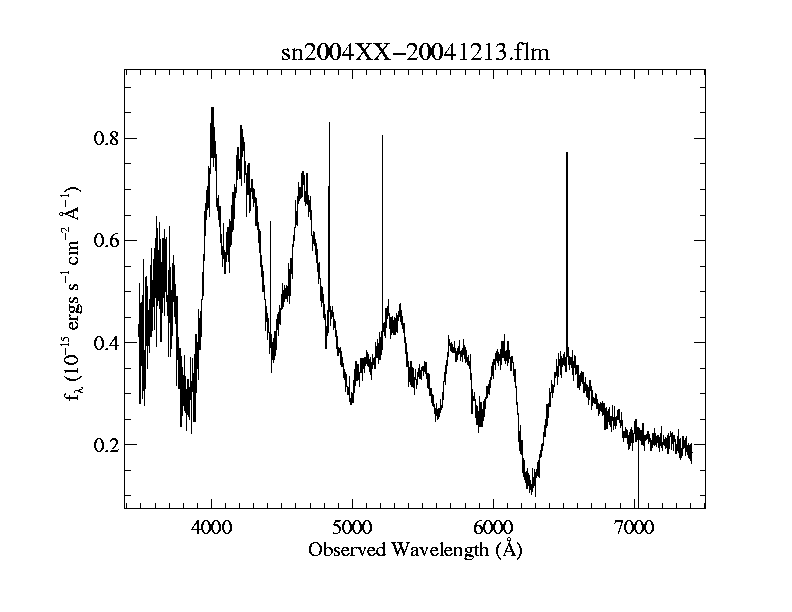
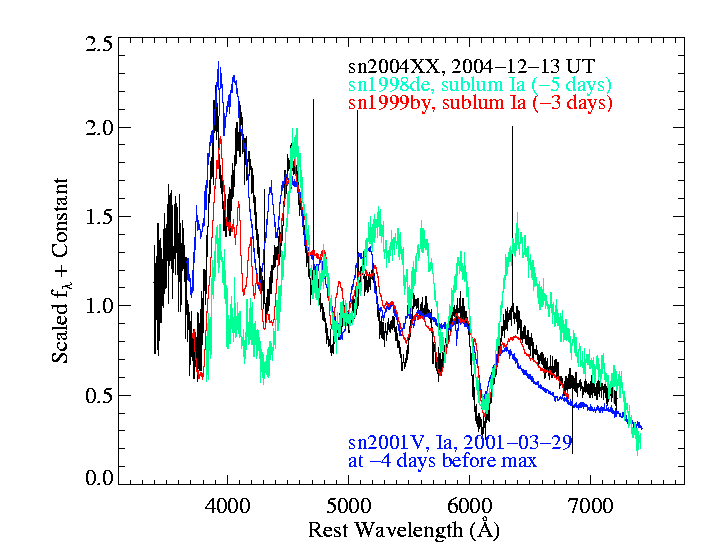
SN 2004gs (MCG +03-22-20) (Ia)
-
December 13, 2004 UT FLWO 1.5m spectrum shows this Type Ia
supernova. Also, a comparison spectrum with SN2001V can be viewed
here.
-
SN 2004gq (Ib)
[IAUC 8461]
-
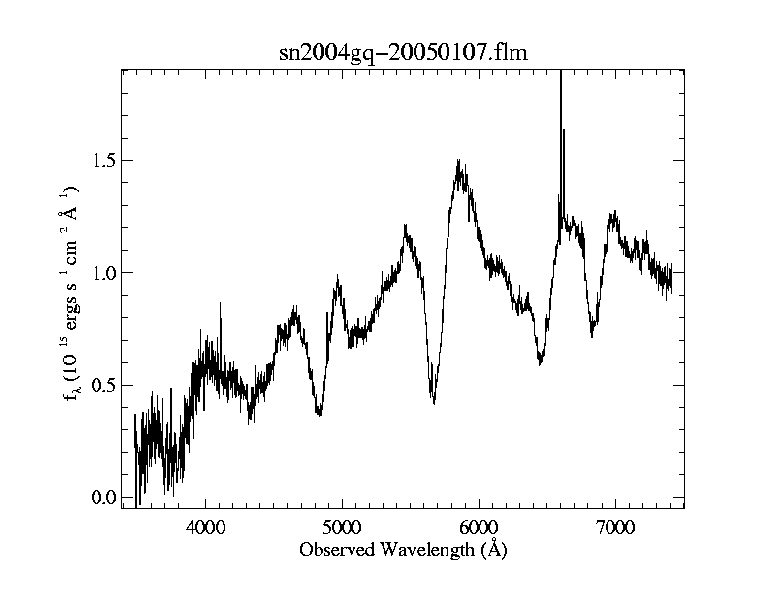
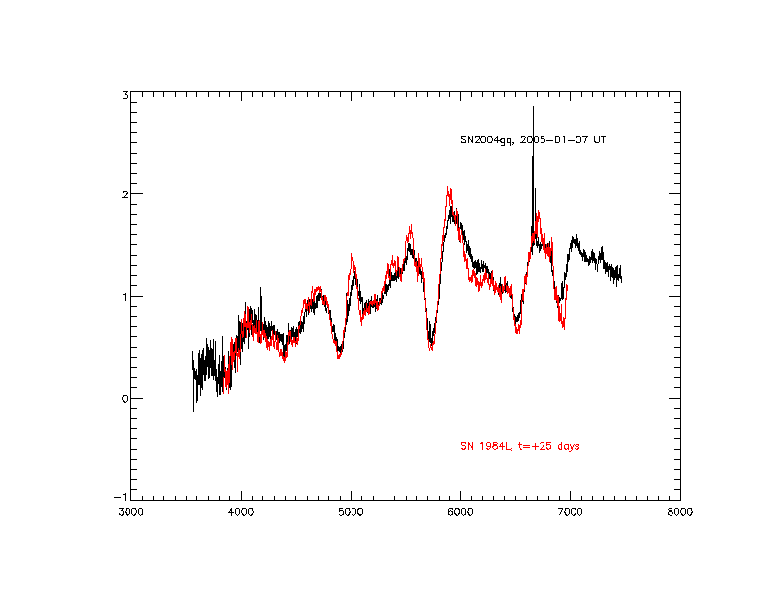
January 07, 2005 UT FLWO 1.5m spectrum shows this (now) Type Ib
supernova. Also, a comparison spectrum with SN1984L can be viewed
here.
This SN was previously classified as a SNIc.
-
SN 2004gm (MCG -02-33-080) (Ia)
[IAUC 8447]
-
December 1, 2004 UT IMACS Baade 6.5m spectrum shows this Type Ia supernova
several weeks after maximum.
-
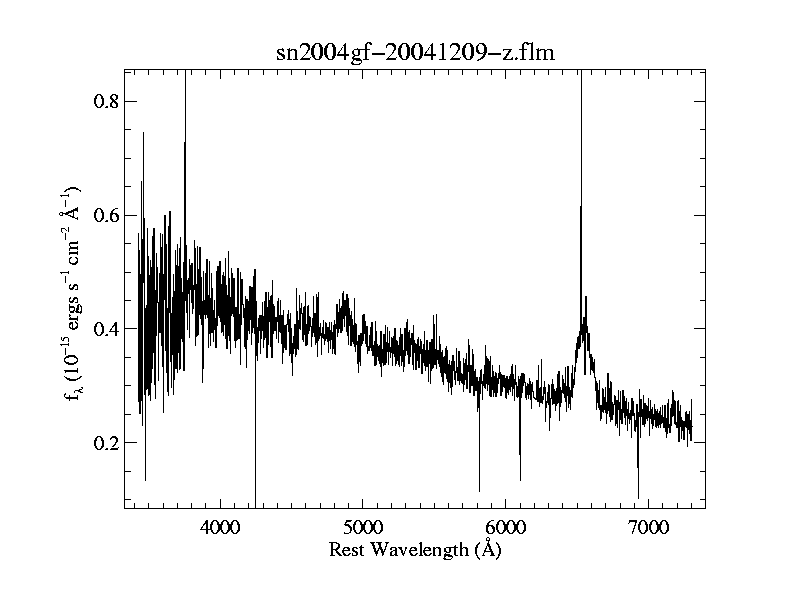
SN 2004gf (UGC 11864) (II)
-
December 9, 2004 UT FLWO 1.5m spectrum shows this Type II supernova.
-
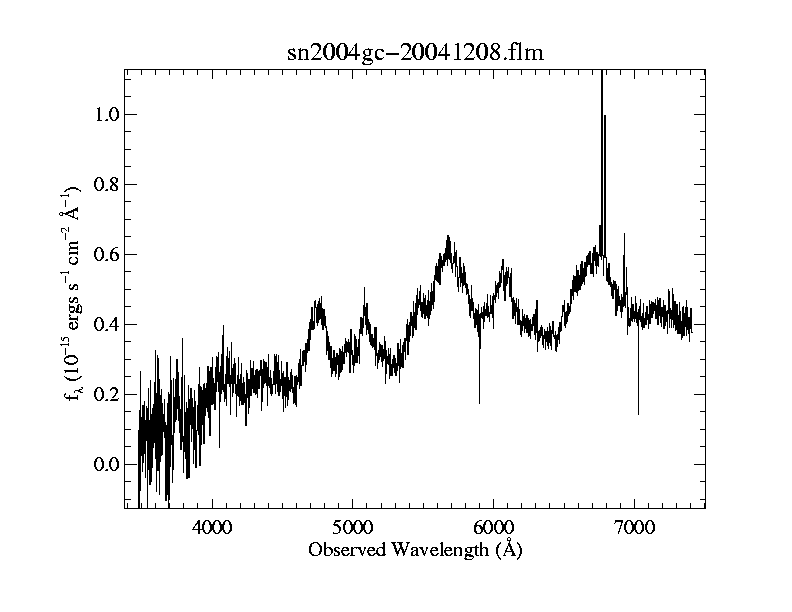
SN 2004gc (PGC 017176) (Ia)
[IAUC 8449]
-
December 8, 2004 UT FLWO 1.5m spectrum shows this Type Ia supernova
three weeks after maximum.
-
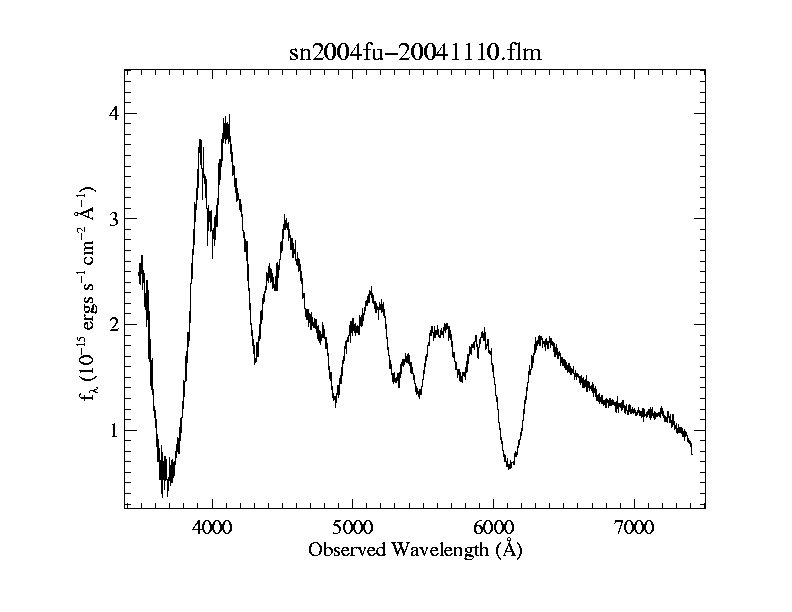
SN 2004fu (NGC 6949) (Ia)
[IAUC 8436]
-
November 10 2004 UT FLWO 1.5m spectrum shows this young Type Ia
supernova before maximum.
-
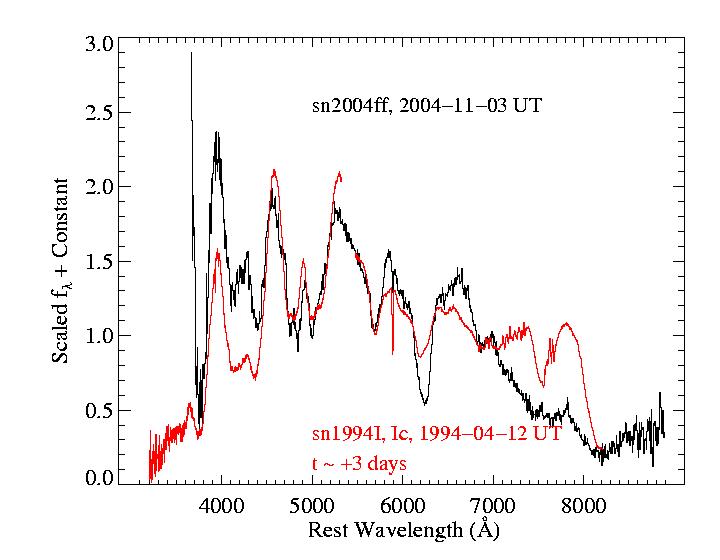
SN 2004ff (ESO 552-G40) (Ic)
[IAUC 8425]
-
November 03, 2004 UT Magellan 6.5m spectrum shows this Type Ic
supernova after maximum. Here is a
comparison with SN 1994I
(note that SN 1994I suffered from extinction in its host galaxy).
-
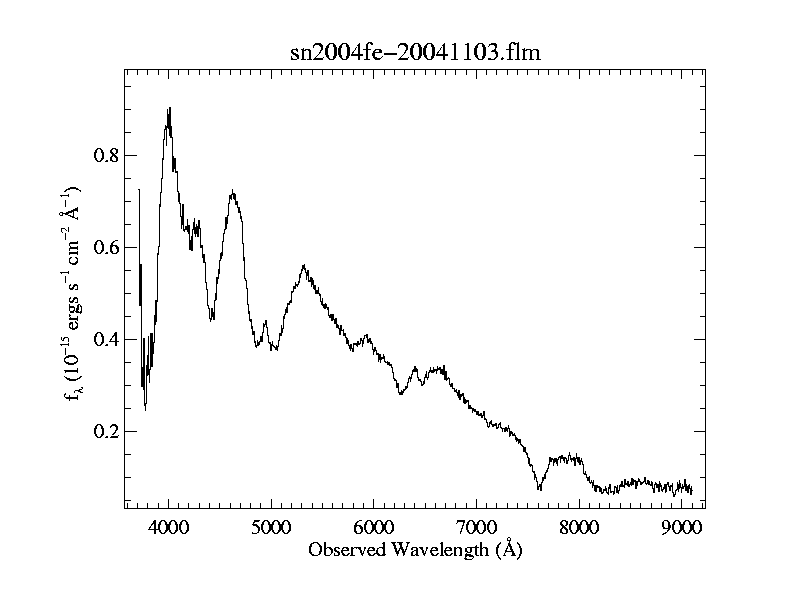
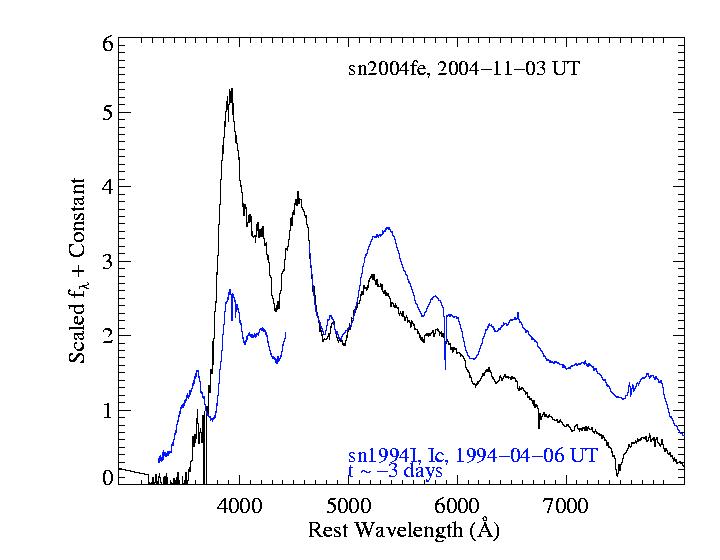
SN 2004fe (NGC 132) (Ic)
[IAUC 8426]
-
November 03, 2004 UT Magellan 6.5m spectrum shows this Type Ic
supernova before maximum. Here is a
comparison
with SN 1994I (note that SN 1994I suffered from extinction in its host galaxy).
-
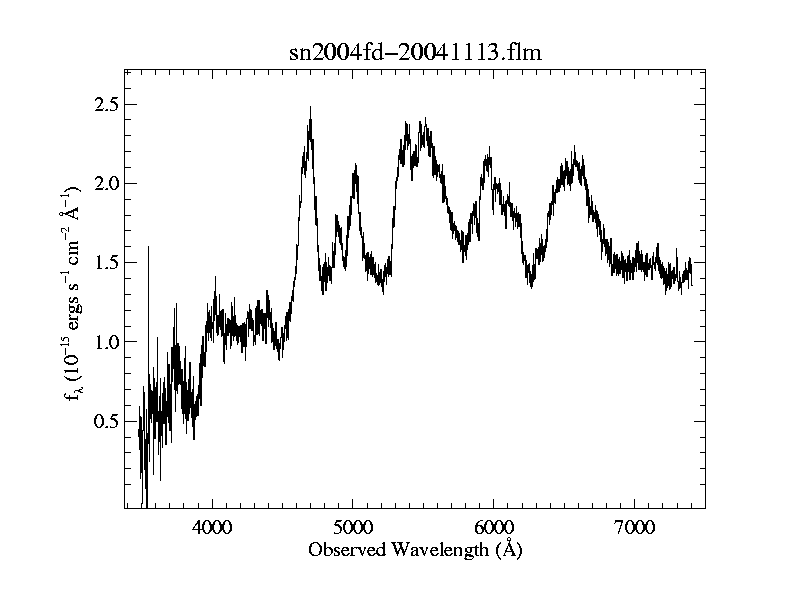
SN 2004fd (NGC 1060) (Ia)
[IAUC 8437]
-
November 12 2004 UT FLWO 1.5m spectrum shows this Type Ia
supernova 20 days after B max.
-
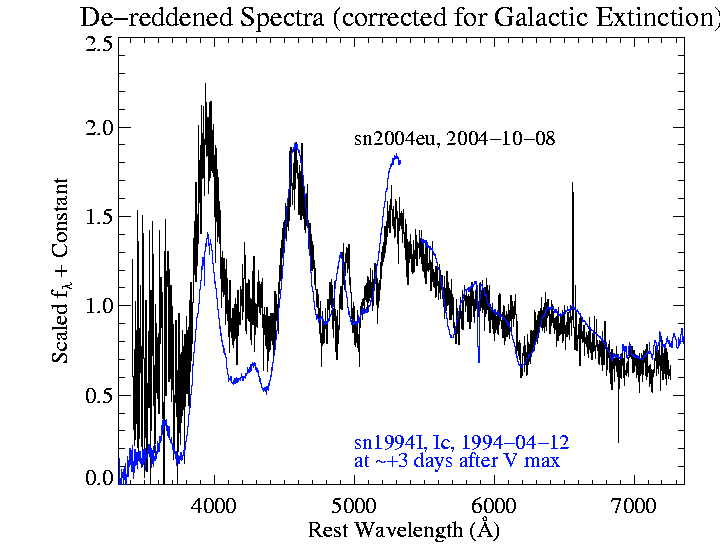
SN 2004eu (MCG +07-5-39) (Ic)
[IAUC 8418]
-
October 08, 2004 UT FLWO 1.5m spectrum shows this Type Ic
supernova. Here is a
comparison
with SN 1994I, where the effect of Galactic extinction has been taken out
(also, note that SN 1994I suffered from extinction in its host galaxy).
-
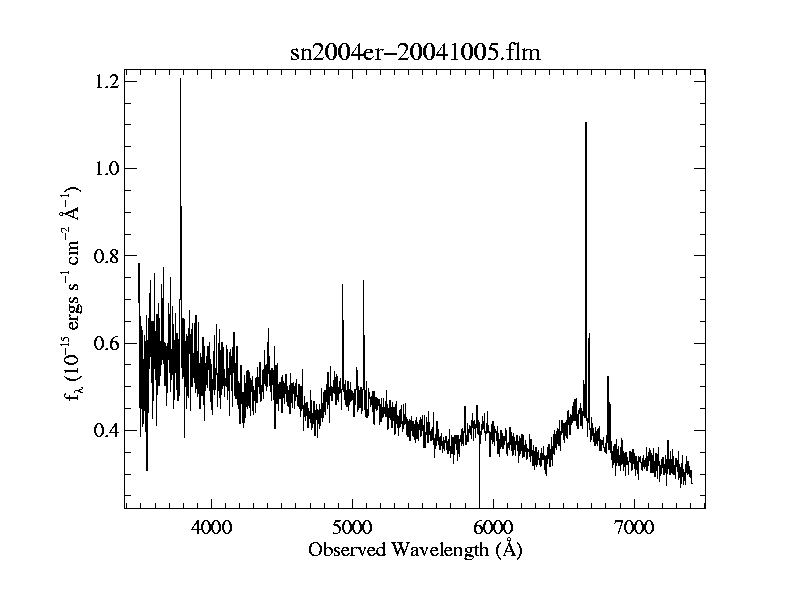
SN 2004er (MCG -01-7-24) (II)
[IAUC 8415]
-
October 05, 2004 UT FLWO 1.5m spectrum shows this young Type II supernova.
Note that the very narrow lines at the rest wavelength of the Balmer lines are due to HII regions.
-
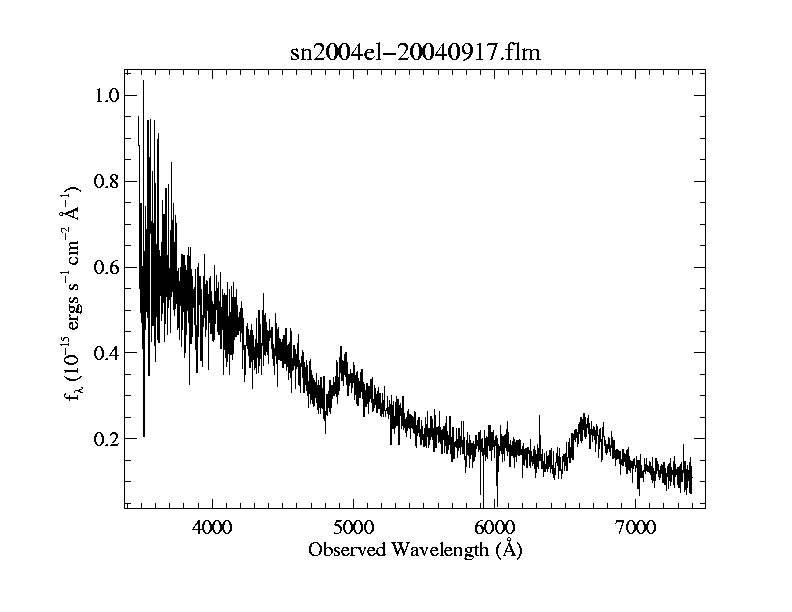
SN 2004el (MCG +09-25-004) (II)
[IAUC 8406]
-
September 17, 2004 UT FLWO 1.5m spectrum shows this young Type II supernova.
-
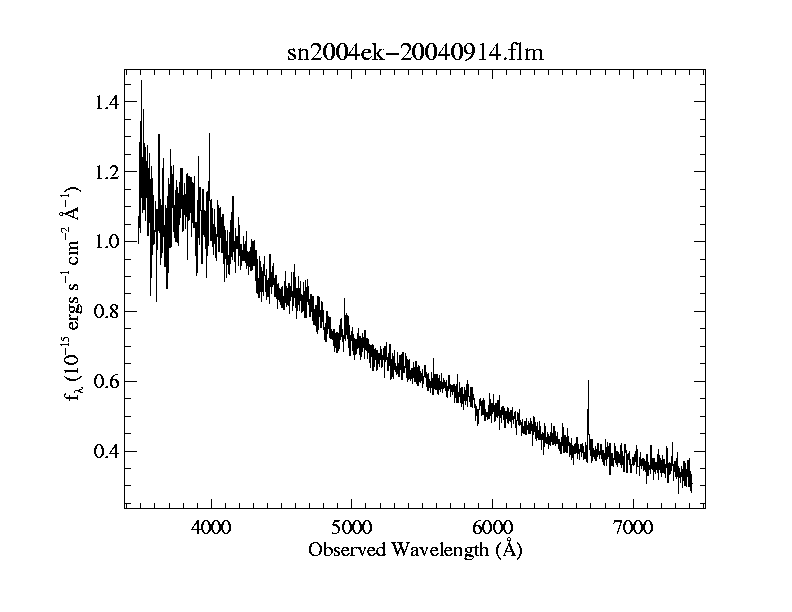
SN 2004ek (UGC 724) (II)
[CBET 86]
-
September 14, 2004 UT FLWO 1.5m spectrum shows this young Type II supernova.
-
SN 2004ei (UGC 2817) (II)
[IAUC 8408]
-
September 11, 2004 UT FLWO 1.5m spectrum shows this Type II
supernova. Note that it probably suffers from Galactic extinction.
-
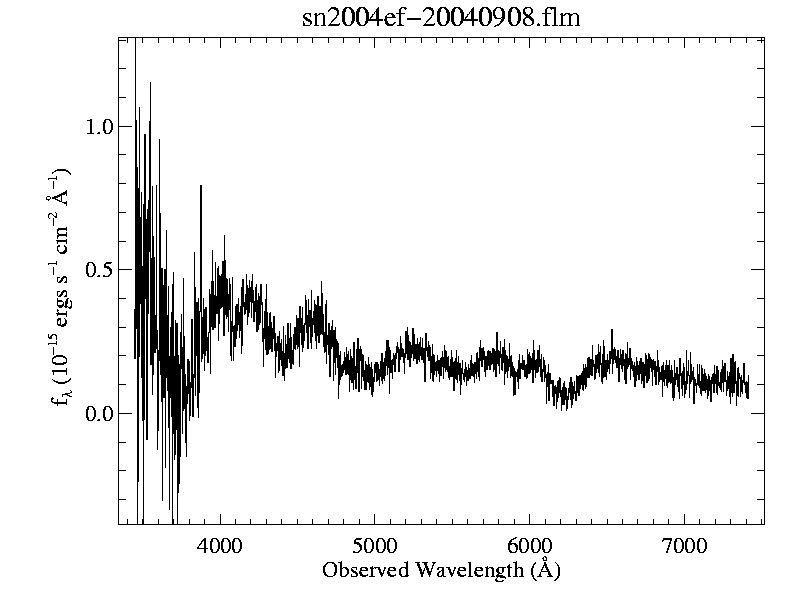
SN 2004ef (UGC 12158) (Ia)
-
September 7, 2004 UT FLWO 1.5m spectrum shows this Type Ia supernova
(the region at around 6000 Angstrom was blotched due to a cosmic ray hit).
-
September 8, 2004 UT FLWO 1.5m spectrum shows this Type Ia supernova.
-
SN 2004ed (NGC 6786) (II)
[CBET 79]
-
September 10, 2004 UT FLWO 1.5m spectrum shows this Type II supernova.
Note that the very narrow lines at the rest wavelength of Halpha and Hbeta are due to HII regions.
-
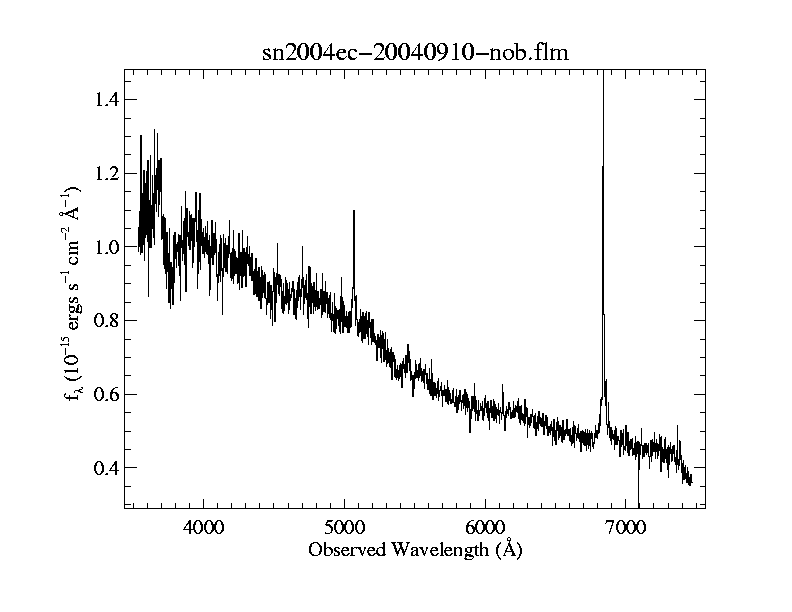
SN 2004ec (UGC 10717) (IIn)
[IAUC 8408]
-
September 10, 2004 UT FLWO 1.5m spectrum shows this young Type IIn supernova.
-
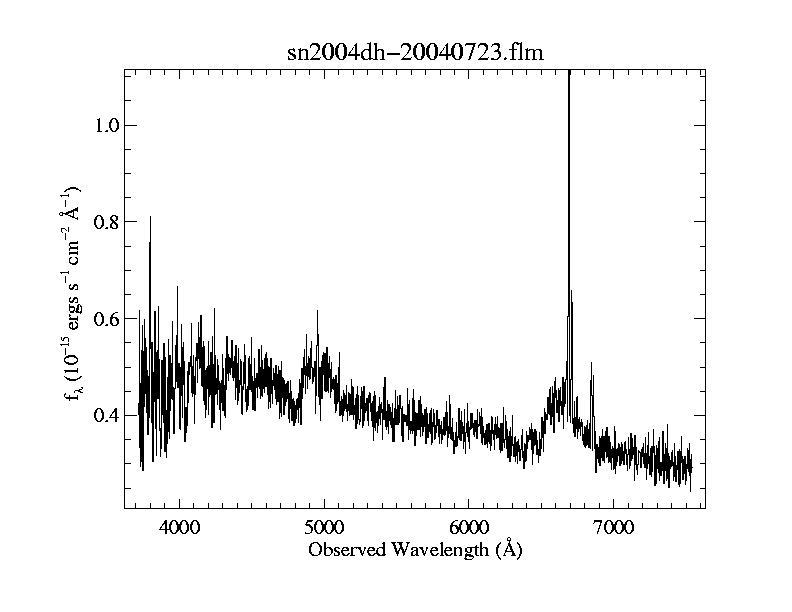
SN 2004dh (MCG +04-01-048) (II)
[IAUC 8376]
-
July 23, 2004 UT FLWO 1.5m spectrum shows this Type II supernova.
-
SN 2004dd (NGC 124) (II)
[IAUC 8375]
-
July 18, 2004 UT FLWO 1.5m spectrum shows this Type II supernova.
-
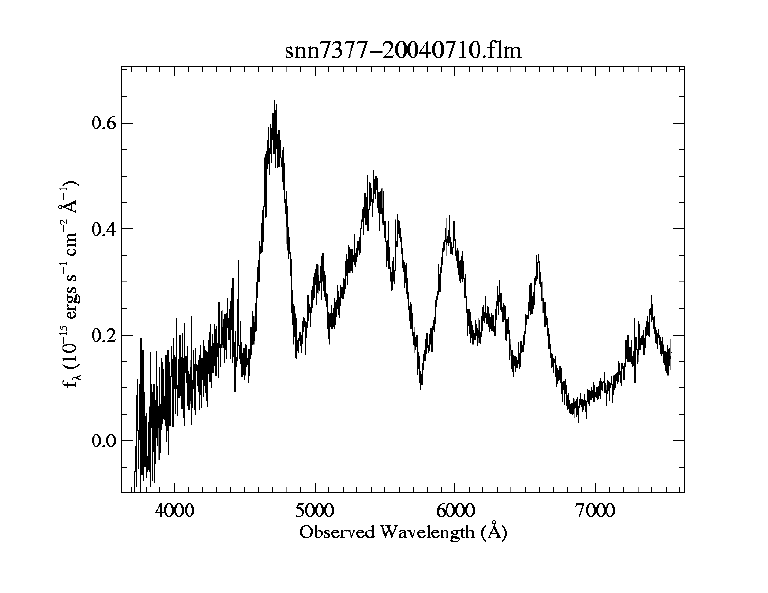
SN 2004db (NGC 7377) (Ia)
[IAUC 8372]
-
July 10, 2004 UT FLWO 1.5m spectrum shows this Type Ia supernova several weeks past maximum.
-
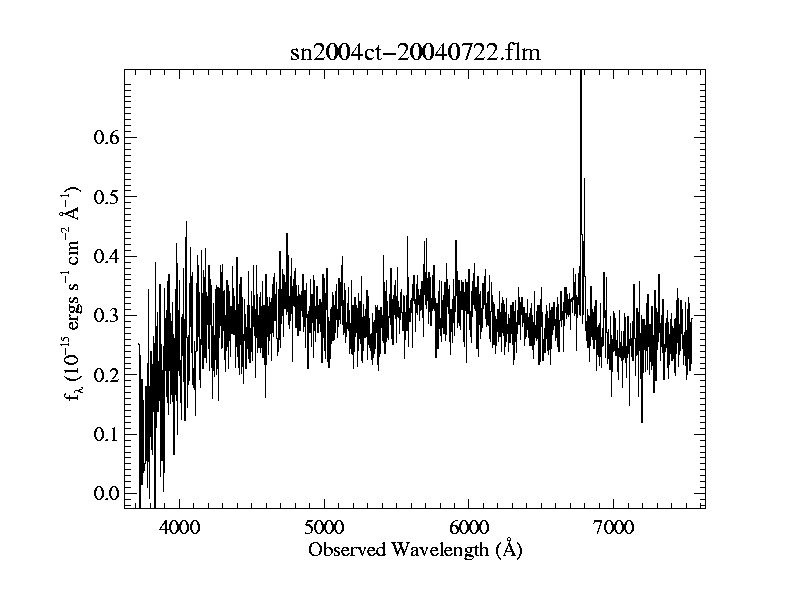
SN 2004ct (MCG +05-37-17) (Ia)
[IAUC 8376]
-
July 22, 2004 UT FLWO 1.5m spectrum shows this Type Ia
supernova several weeks past maximum (with a lot of galaxy
contamination).
-
SN 2004ci (NGC 5980) (II)
[IAUC 8360]
-
June 19, 2004 UT FLWO 1.5m spectrum shows this Type II supernova.
-
SN 2004cc (NGC 4568) (Ic)
[IAUC 8353]
-
June 12, 2004 UT FLWO 1.5m spectrum shows this unusual supernova.
-
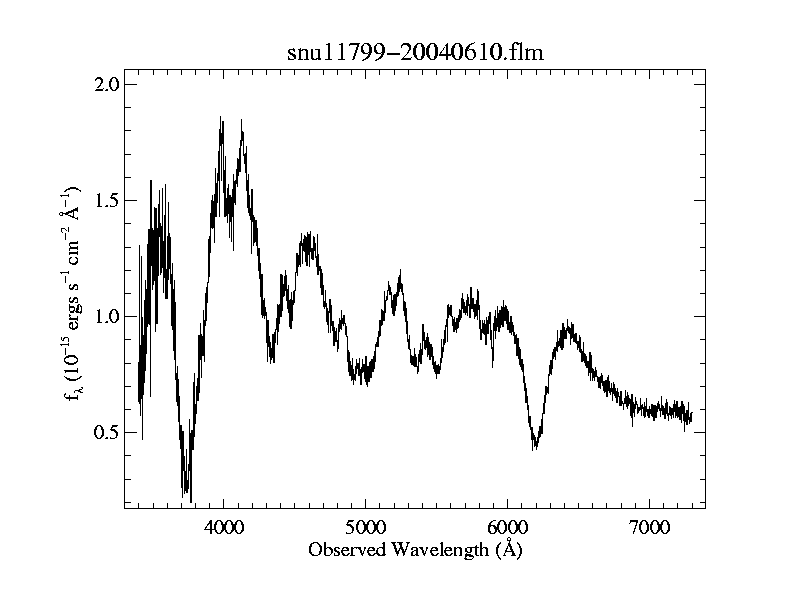
SN 2004ca (UGC 11799) (Ia)
[IAUC 8350]
-
June 10, 2004 UT FLWO 1.5m spectrum shows this type Ia supernova just before maximum.
-
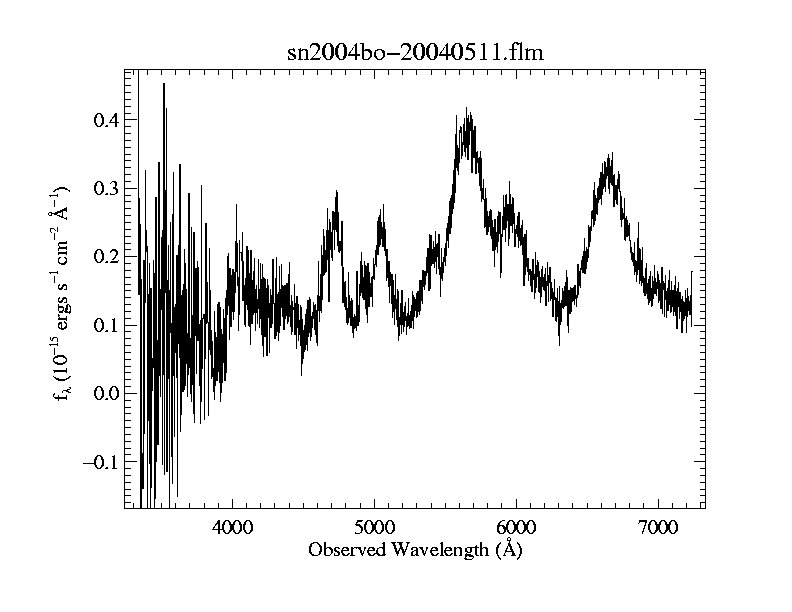
SN 2004bo (ESO 576-G54) (Ia)
[IAUC 8338]
-
May 11, 2004 UT FLWO 1.5m spectrum shows this type Ia supernova a few weeks past maximum.
-
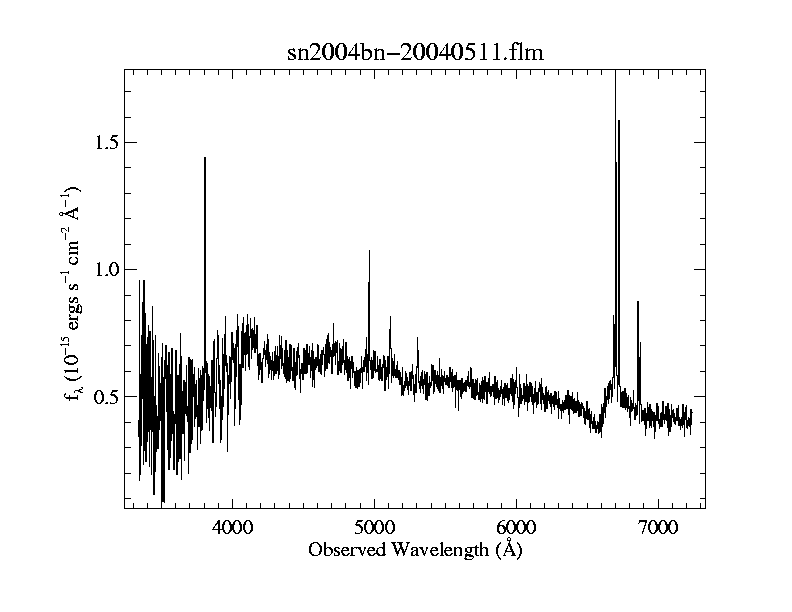
SN 2004bn (NGC 3441) (II)
[IAUC 8338]
-
May 11, 2004 UT FLWO 1.5m spectrum shows this type II supernova.
-
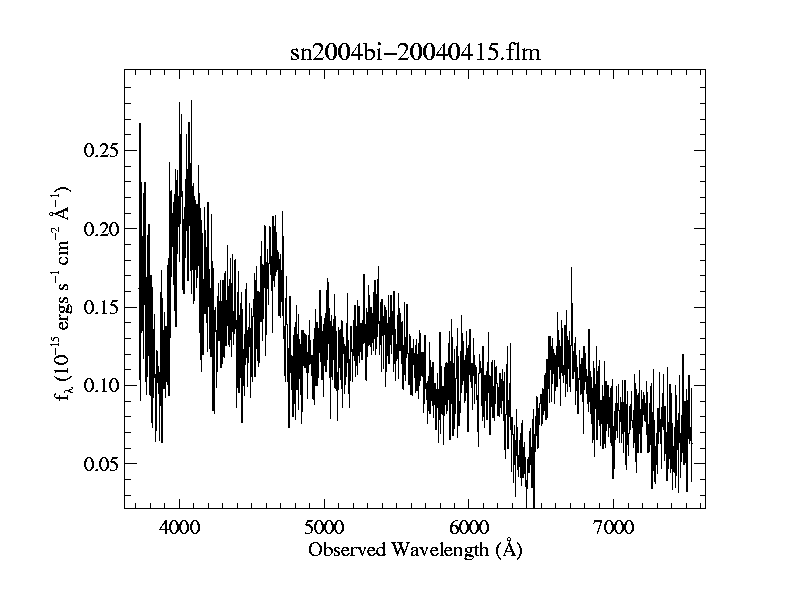
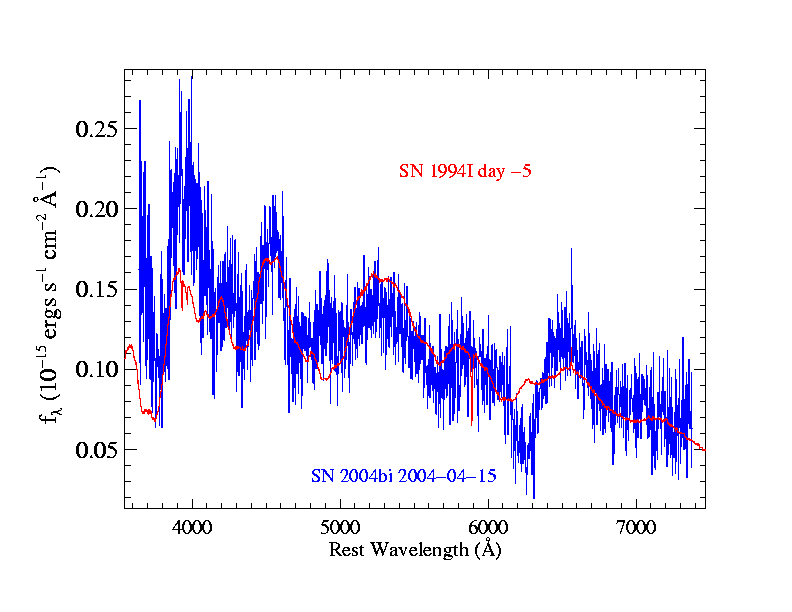
SN 2004bi (UGC 5894) (Ic)
[IAUC 8324]
-
April 15, 2004 UT FLWO 1.5m spectrum shows this type Ic
supernova. Here is a comparison
with SN 1994I (note that SN 1994I suffers from extinction).
-
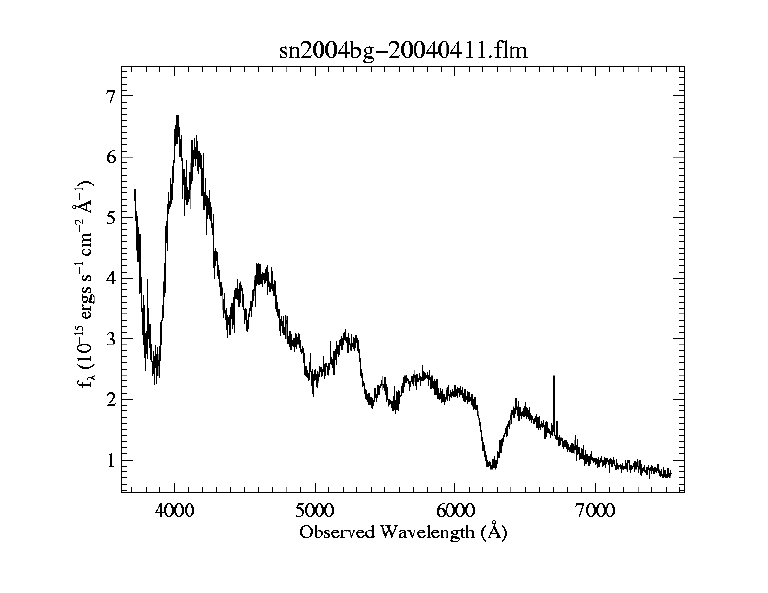
SN 2004bg (UGC 6363) (Ia)
[IAUC 8321]
-
April 11, 2004 UT FLWO 1.5m spectrum shows this type Ia supernova near maximum.
-
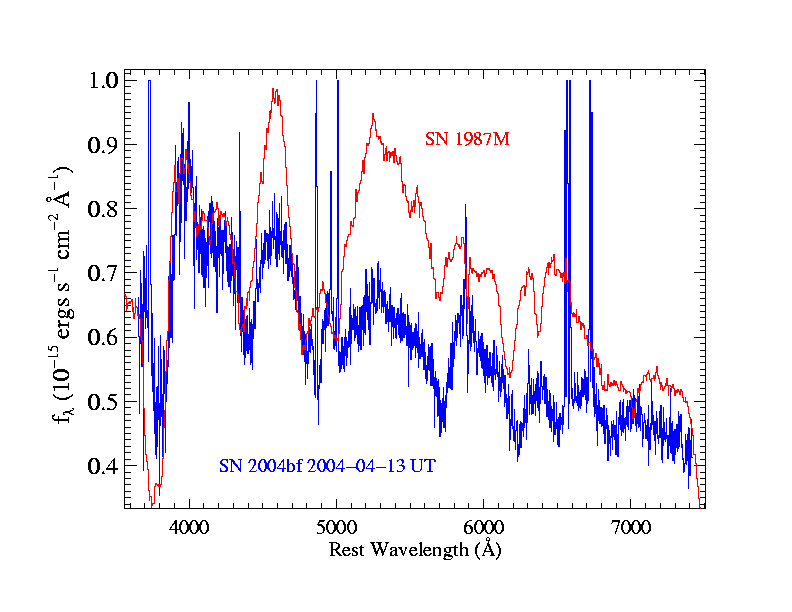
SN 2004bf (UGC 8739) (Ic)
[IAUC 8324]
-
April 11, 2004 UT FLWO 1.5m spectrum shows this type Ic
supernova. There is also a
comparison with SN 1987M (from Sept
28, 1987 UT). Note that SN 2004bf suffers from some reddening.
-
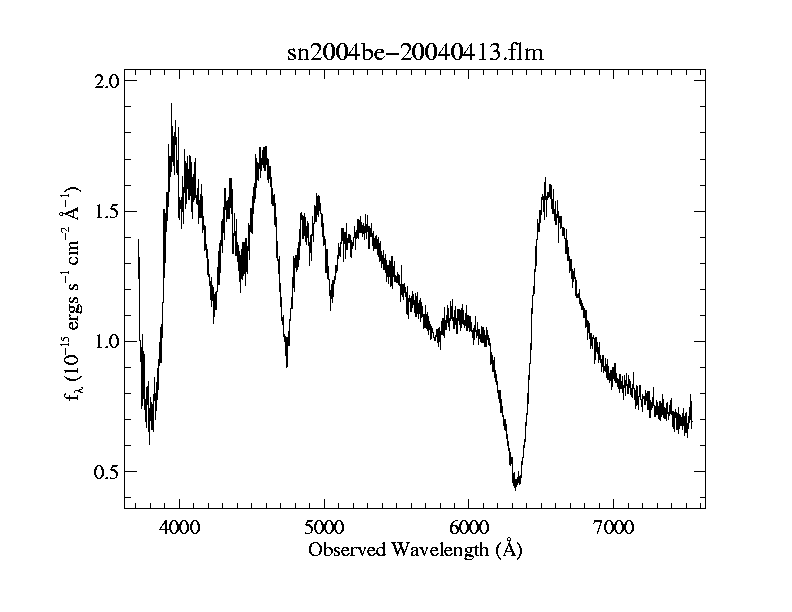
SN 2004be (ESO 499-G34) (II)
[IAUC 8322]
-
April 11, 2004 UT FLWO 1.5m spectrum shows this type II supernova.
-
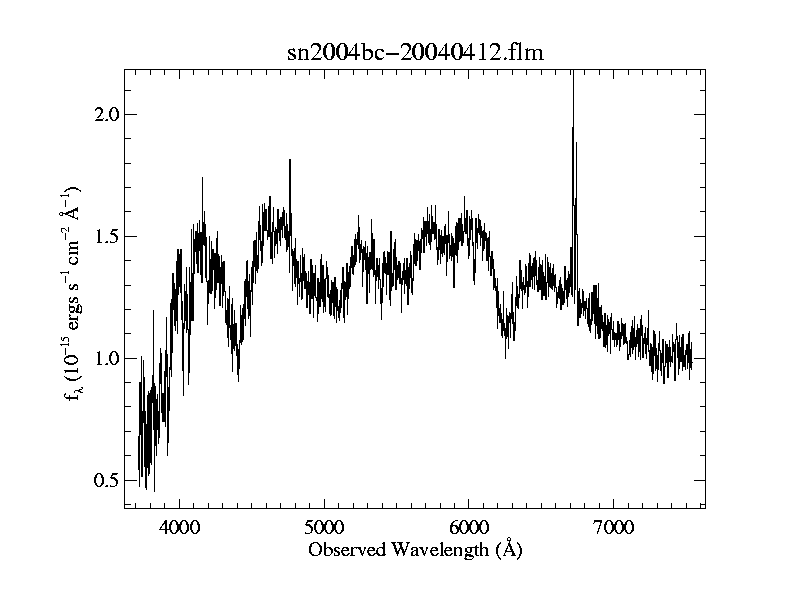
SN 2004bc (NGC 3465) (Ia)
[IAUC 8322]
-
April 12, 2004 UT FLWO 1.5m spectrum shows this type Ia
supernova a few days before maximum. The spectrum is reddened and
suffers from a lot of contamination by the host galaxy.
-
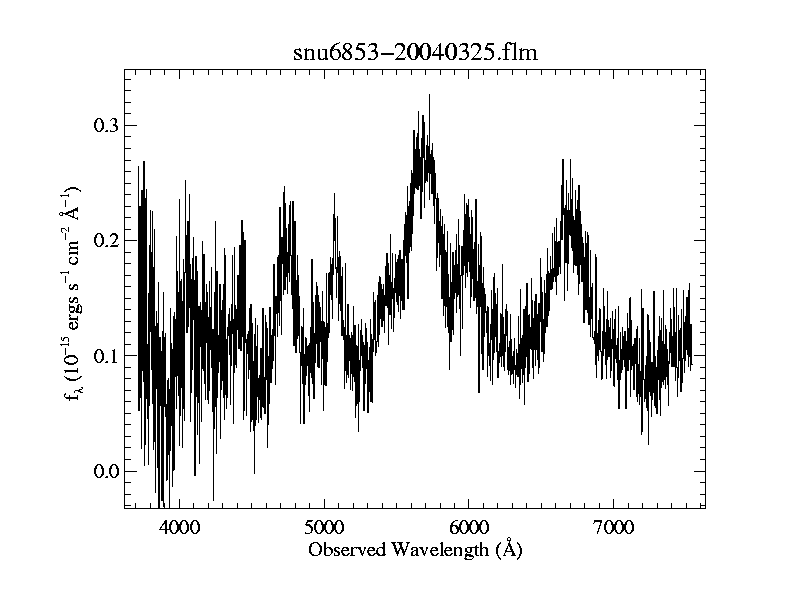
SN 2004az (UGC 6853) (Ia)
[IAUC 8312]
-
March 25, 2004 UT FLWO 1.5m spectrum shows this type Ia supernova several weeks past maximum.
-
SN 2004ay (UGC 11255) (IIn)
[IAUC 8312]
-
March 26, 2004 UT FLWO 1.5m spectrum shows this type IIn supernova.
-
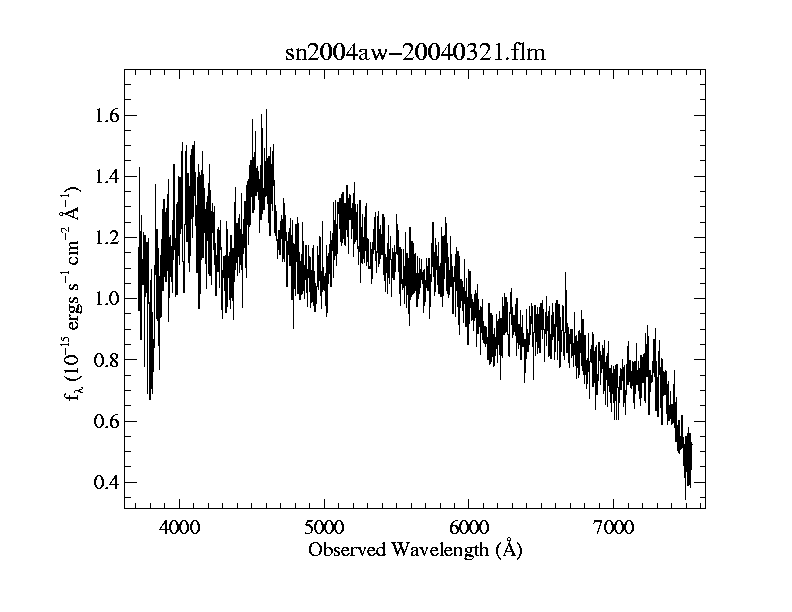
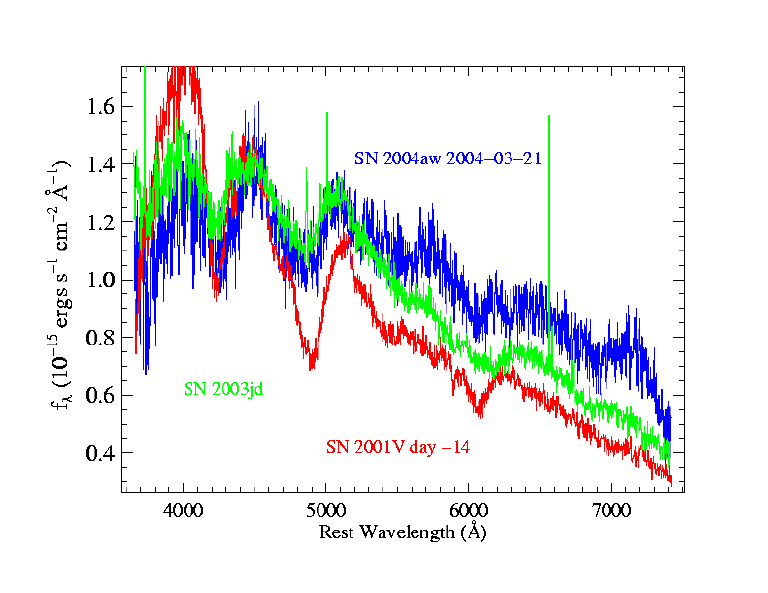
SN 2004aw (NGC 3997) (Ia/Ic???)
[IAUC 8311]
-
March 21, 2004 UT FLWO 1.5m spectrum shows this type I
supernova. A comparison with SN
2001V (a Type Ia at day -14 in red) and SN 2003jd (a peculiar Ic like SN
1998bw in green) shows that this is an unusual SN, either a very early Ia
or a peculiar Ic.
-
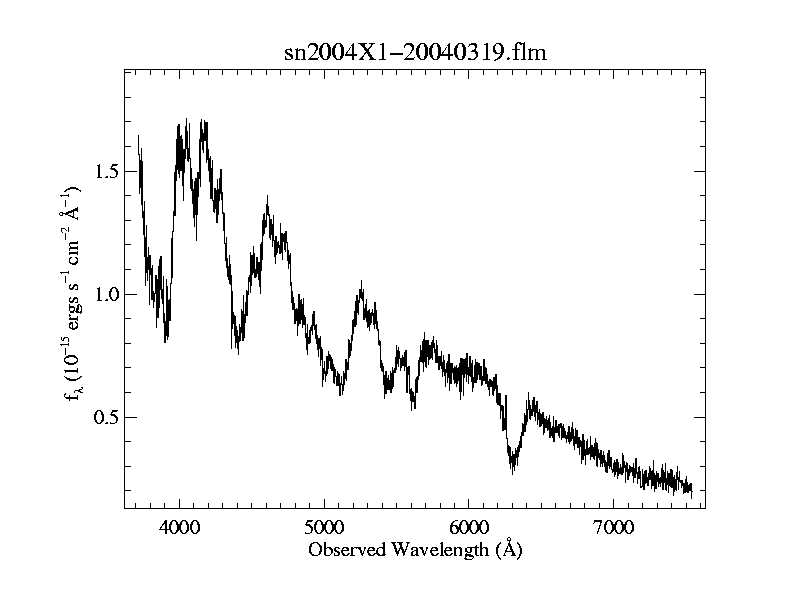
SN 2004av (ESO 571-G015) (Ia)
[IAUC 8307]
-
March 19, 2004 UT FLWO 1.5m spectrum shows this type Ia supernova a few days after maximum.
-
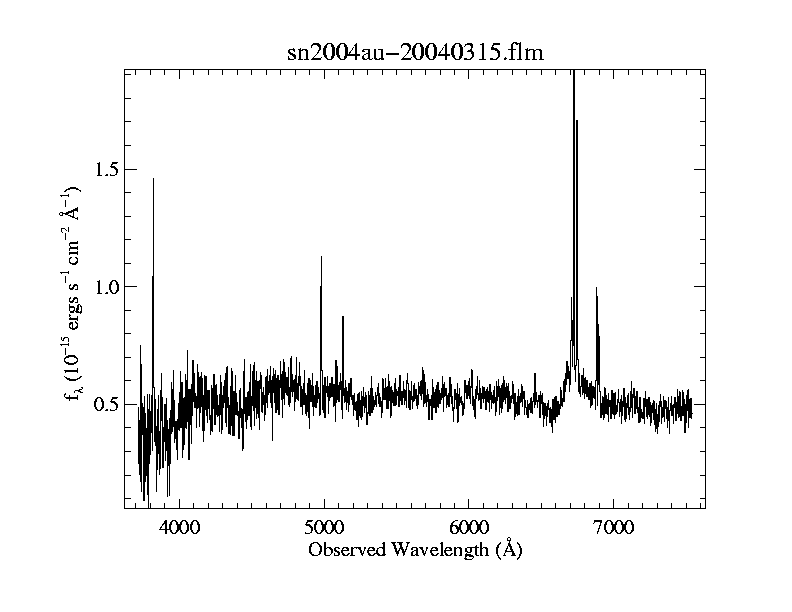
SN 2004au (MCG +04-42-2) (II)
[IAUC 8305]
-
March 15, 2004 UT FLWO 1.5m spectrum shows this type II supernova.
-
SN 2004at (MCG +10-16-37) (Ia)
[IAUC 8304]
-
March 19, 2004 UT FLWO 1.5m spectrum shows this type Ia supernova a few days before maximum.
-
SN 2004as (Anon.) (Ia)
[IAUC 8302]
-
March 13, 2004 UT FLWO 1.5m spectrum shows this type Ia supernova a few days before maximum.
-
SN 2004ap (Anon.) (Ia)
[IAUC 8303]
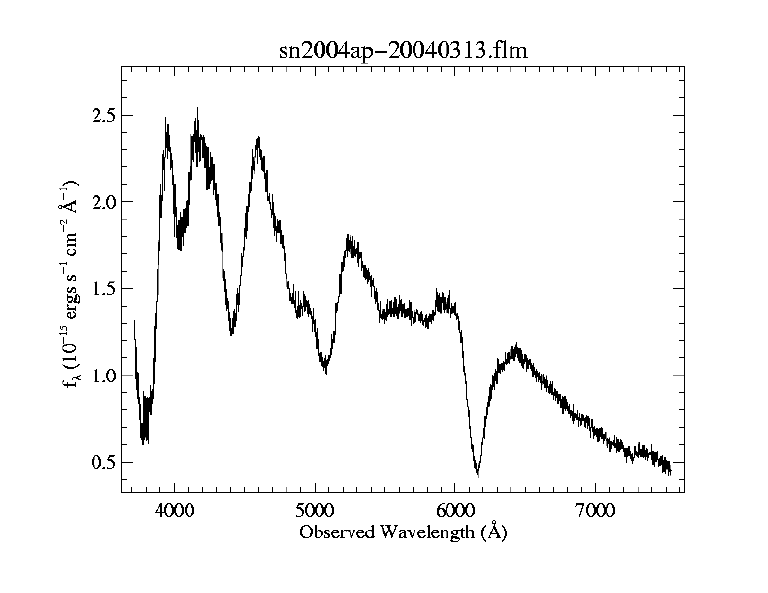
-
March 13, 2004 UT FLWO 1.5m spectrum shows this type Ia supernova about a week past maximum.
-
SN 2004ao (UGC 10862) (Ib)
[IAUC 8304]
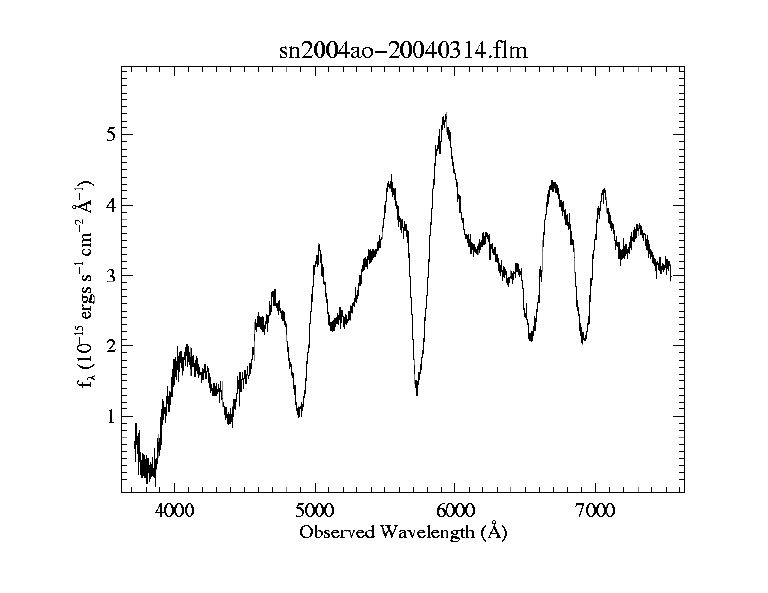
-
March 14, 2004 UT FLWO 1.5m spectrum shows this type Ib supernova.
-
SN 2004an (IC 4483) (II)
[IAUC 8304]
-
March 14, 2004 UT FLWO 1.5m spectrum shows this type II supernova.
-
SN 2004al (ESO 565-G25) (II)
[IAUC 8303]
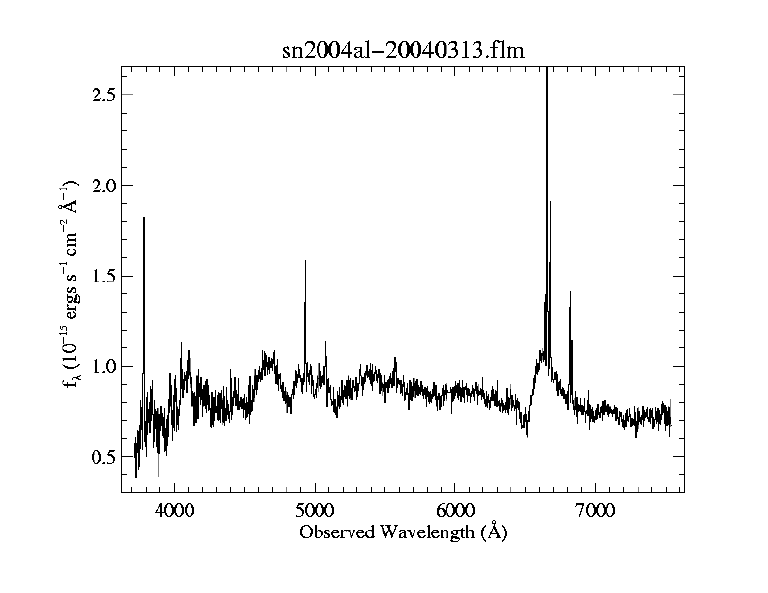
-
March 13, 2004 UT FLWO 1.5m spectrum shows this type II supernova.
-
SN 2004ak (UGC 4436) (II)
[IAUC 8303]
-
March 14, 2004 UT FLWO 1.5m spectrum shows this type II supernova.
-
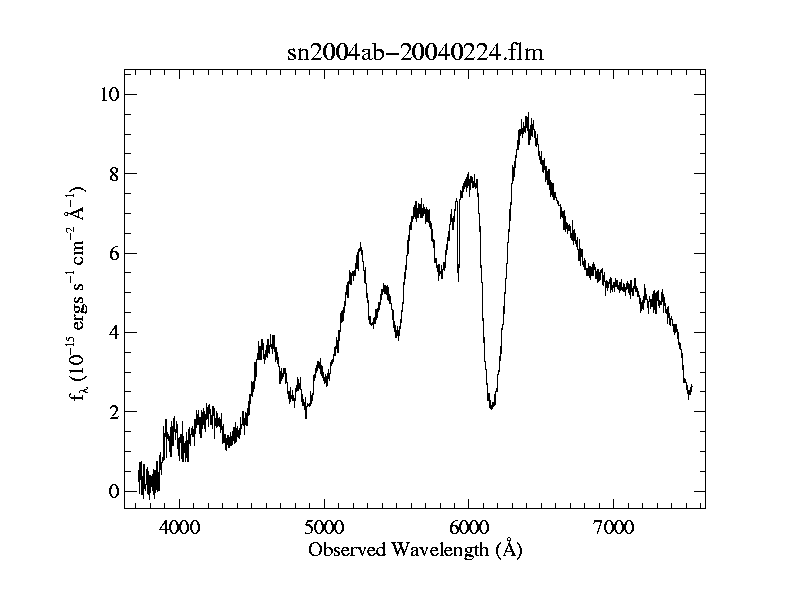
SN 2004ab (NGC 5054) (Ia)
[IAUC 8293]
-
February 24, 2004 UT FLWO 1.5m spectrum shows this highly reddened type Ia supernova.
-
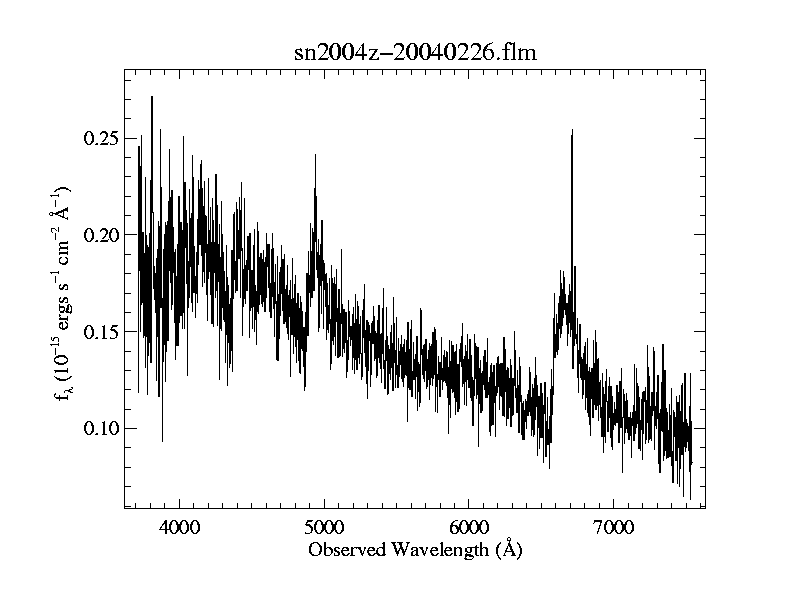
SN 2004Z (MCG +10-19-085) (II)
-
February 26, 2004 UT FLWO 1.5m spectrum shows this type II supernova.
-
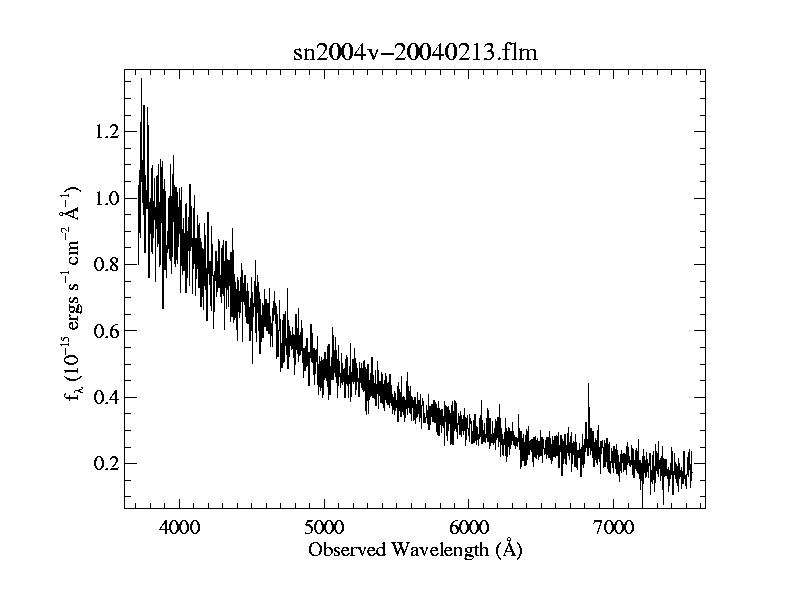
SN 2004V (Anon.) (II)
[IAUC 8287]
-
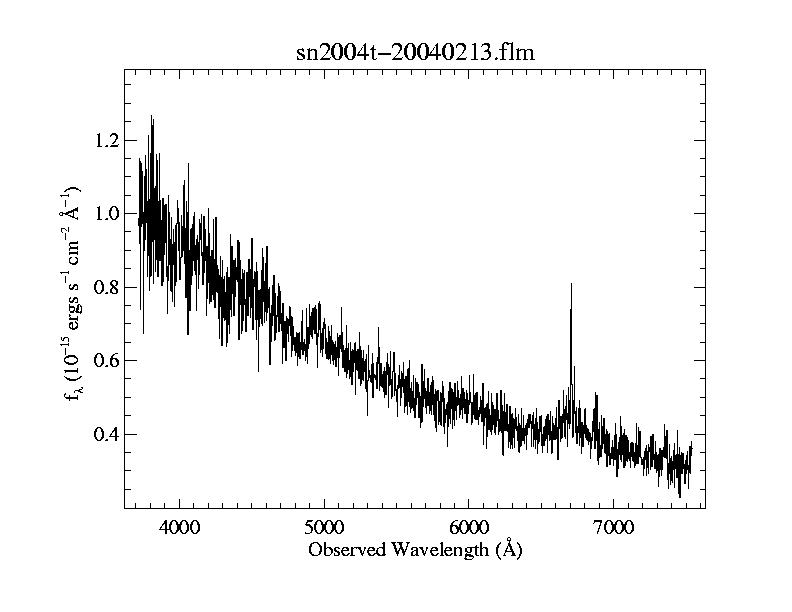
February 13, 2004 UT FLWO 1.5m spectrum shows this type II supernova.
-
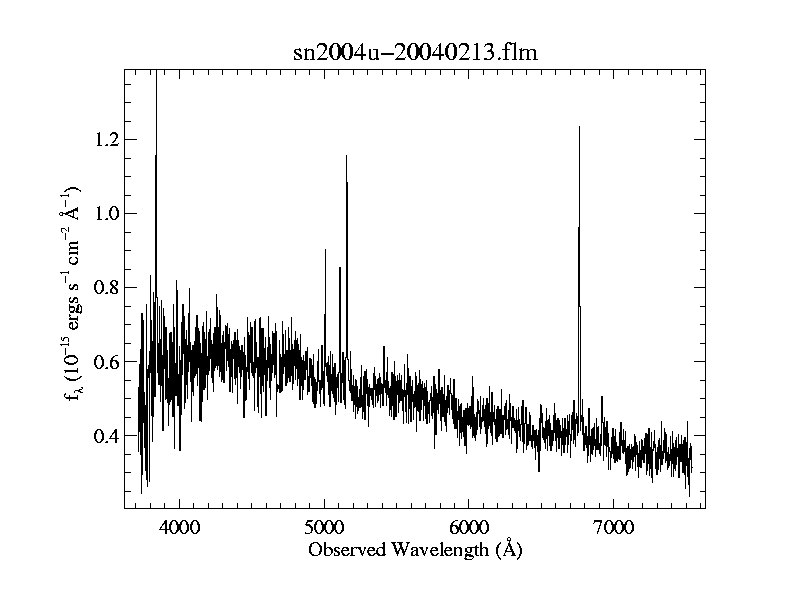
SN 2004U (Anon.) (II)
[IAUC 8287]
-
February 13, 2004 UT FLWO 1.5m spectrum shows this type II supernova.
-
SN 2004T (UGC 6038) (II)
[IAUC 8287]
-
February 13, 2004 UT FLWO 1.5m spectrum shows this type II supernova.
-
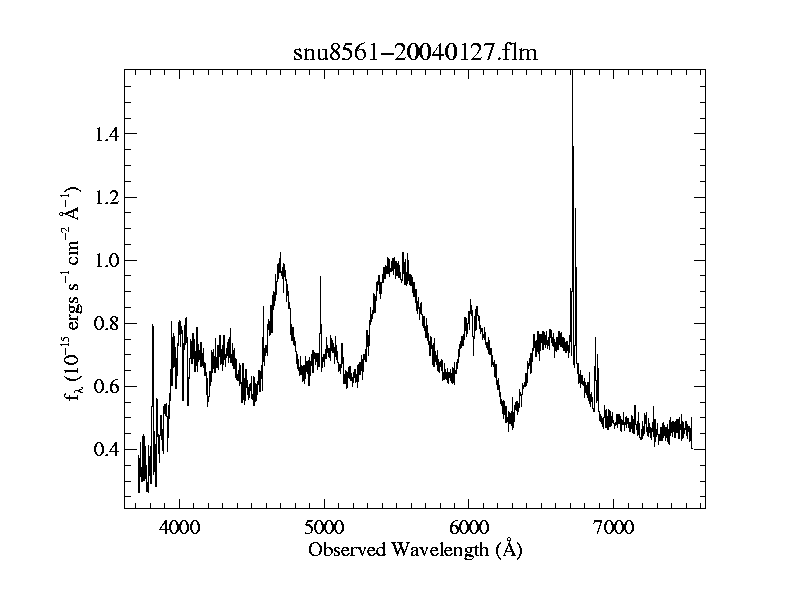
SN 2004P (UGC 8561) (Ia)
[IAUC 8277]
-
January 27, 2004 UT FLWO 1.5m spectrum shows this type Ia
supernova about three weeks past maximum (comparison
here).
-
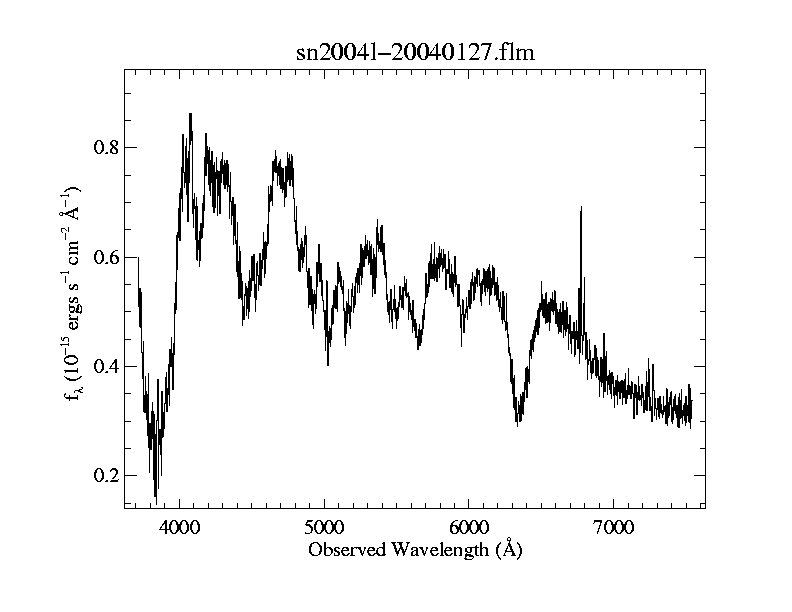
SN 2004L (MCG +03-27-38) (Ia)
[IAUC 8277]
-
January 27, 2004 UT FLWO 1.5m spectrum shows this type Ia supernova near maximum.
-
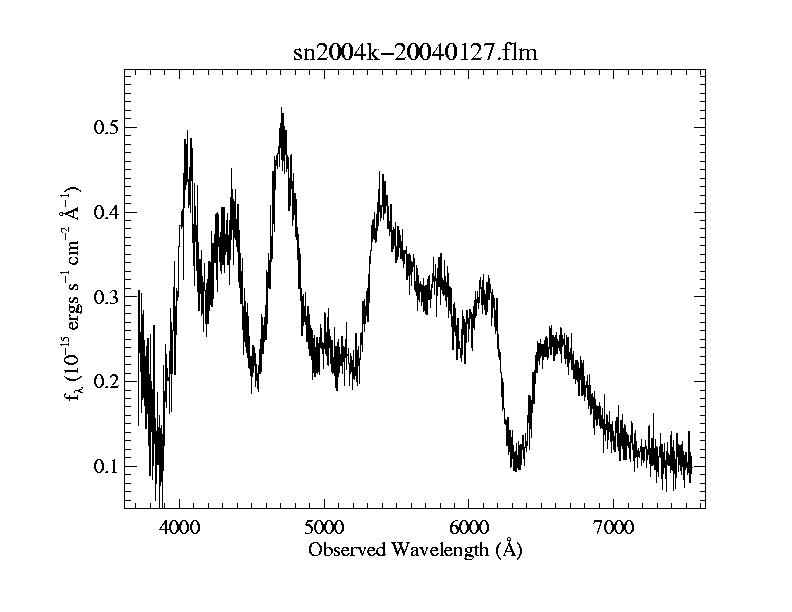
SN 2004K (ESO 579-G22) (Ia)
[IAUC 8277]
-
January 27, 2004 UT FLWO 1.5m spectrum shows this type Ia supernova about a week past maximum.
-
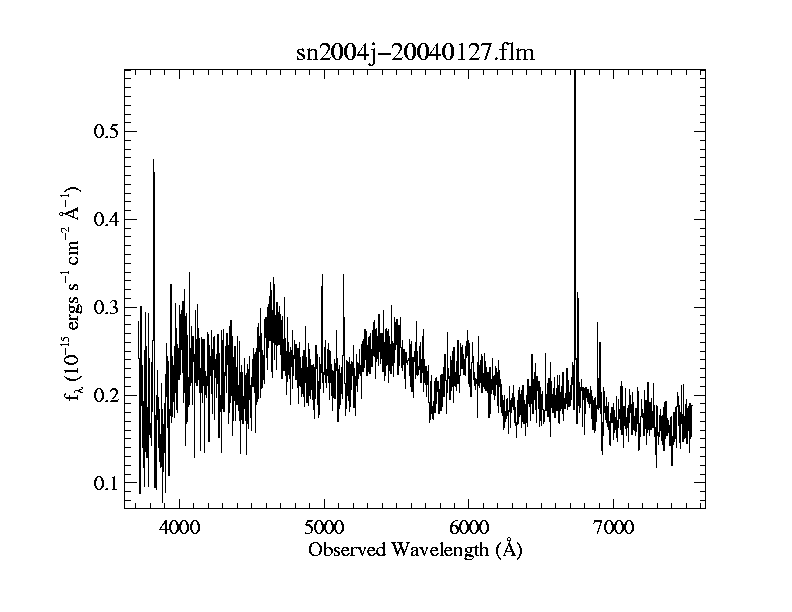
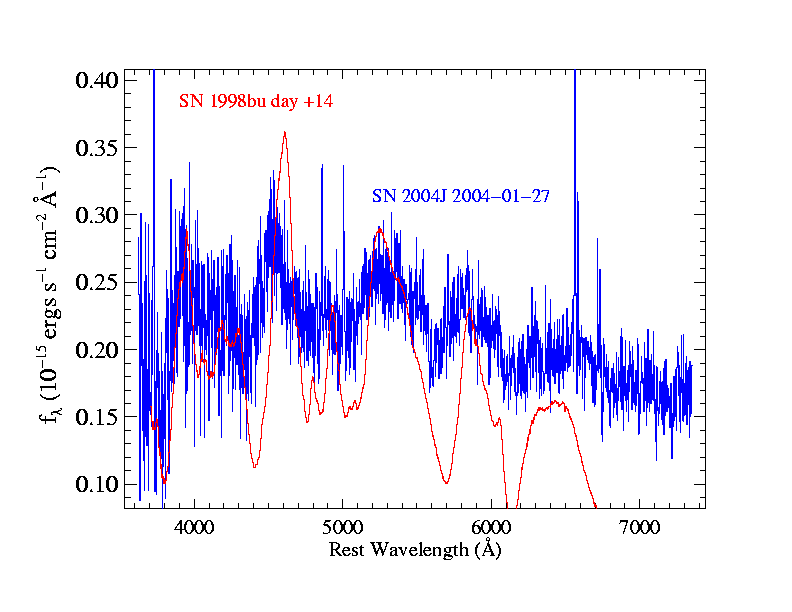
SN 2004J (ESO 554-G33) (Ia)
[IAUC 8277]
-
January 27, 2004 UT FLWO 1.5m spectrum shows this type Ia
supernova about two weeks past maximum (comparison
here with a lot of galaxy contamination).
-
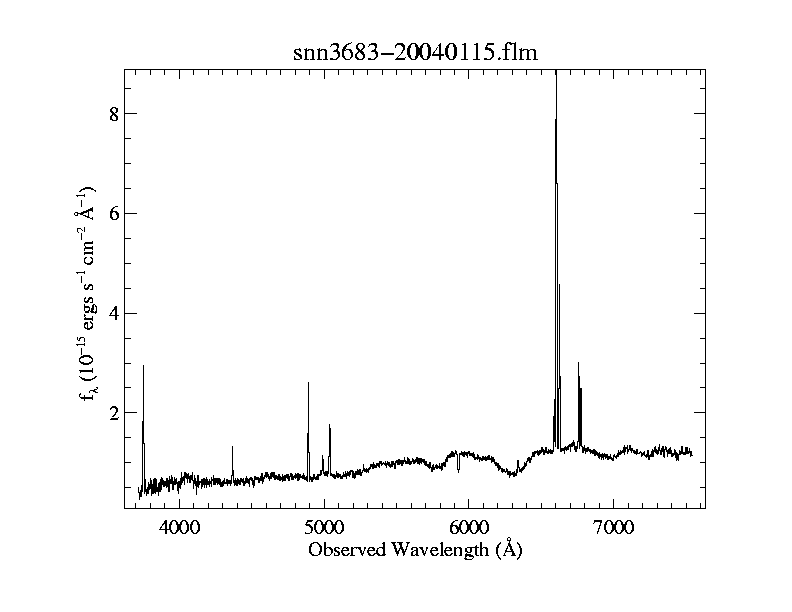
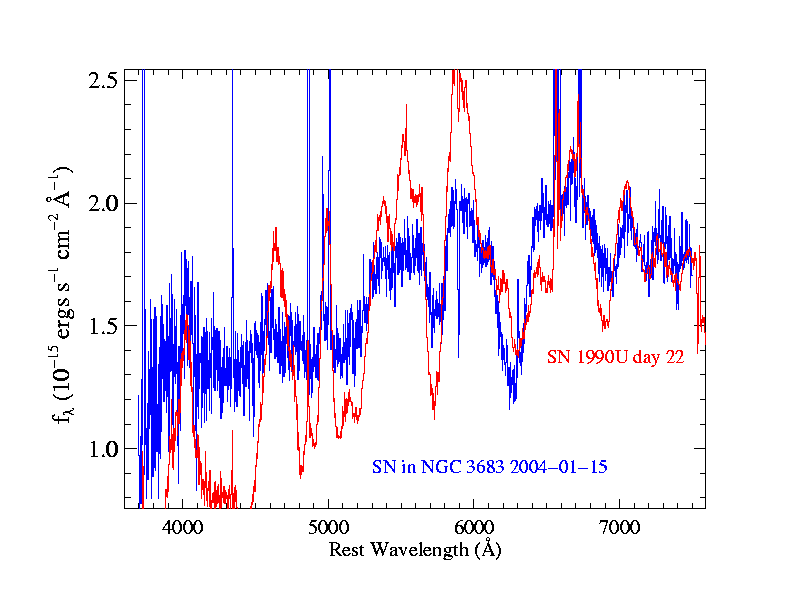
SN 2004C (NGC 3683) (Ic)
[IAUC 8269]
-
January 15, 2004 UT FLWO 1.5m spectrum shows this reddened Type Ic
supernova about three weeks past maximum. You can see a comparison with SN 1990U
here
(the spectrum of the new SN has been slightly dereddened).
-
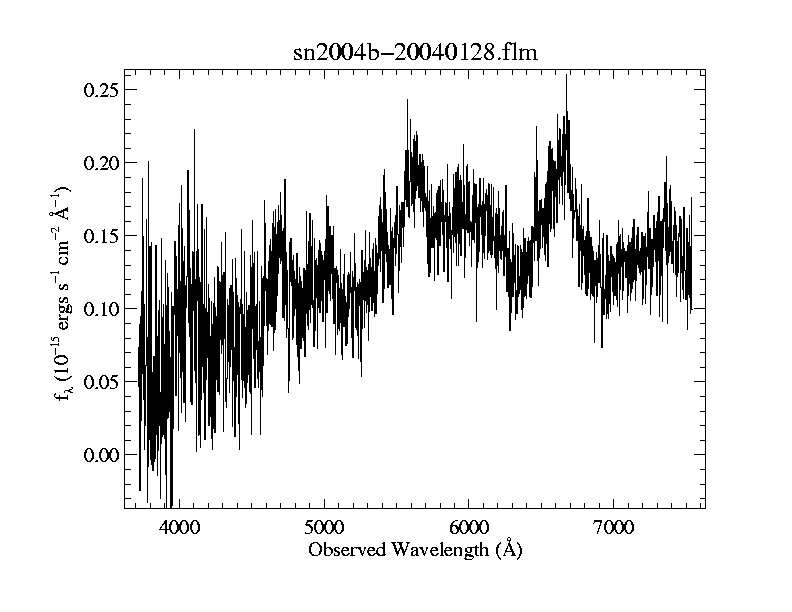
SN 2004B (IC 390) (Ia)
[IAUC 8278]
-
January 28, 2004 UT FLWO 1.5m spectrum shows this type Ia
supernova several weeks past maximum.
Back to top
SN 2003
-
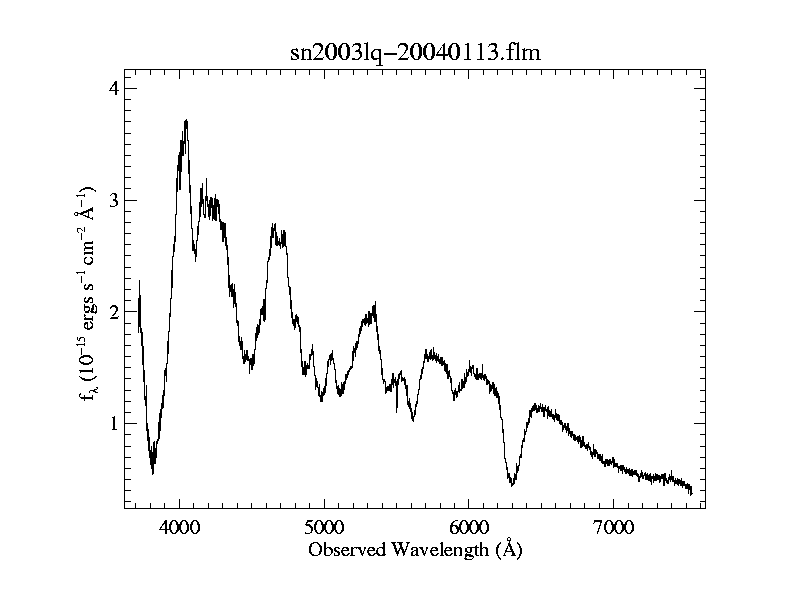
SN 2003lq (UGC 5) (Ia)
[IAUC 8268]
-
January 13, 2004 UT FLWO 1.5m spectrum shows this Type Ia
supernova about a week past maximum.
-
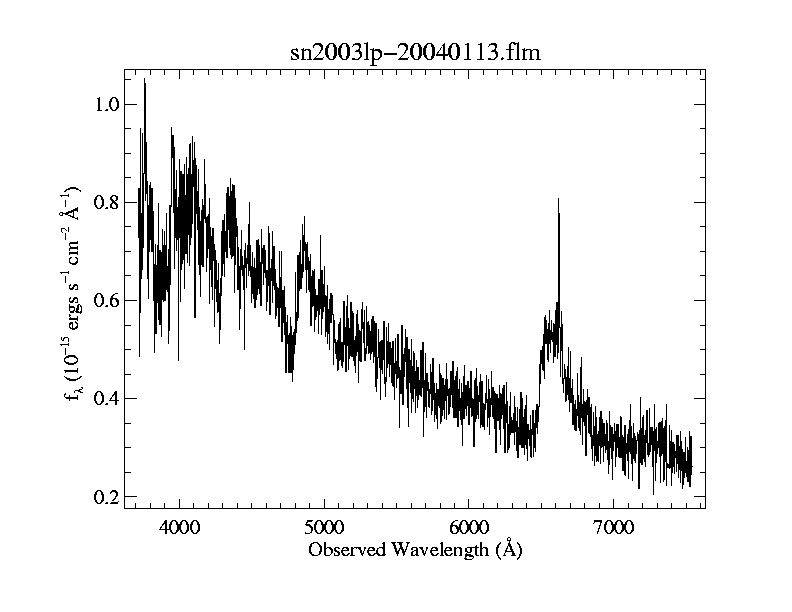
SN 2003lp (UGC 6711) (II)
[IAUC 8268]
-
January 13, 2004 UT FLWO 1.5m spectrum shows this Type II supernova.
-
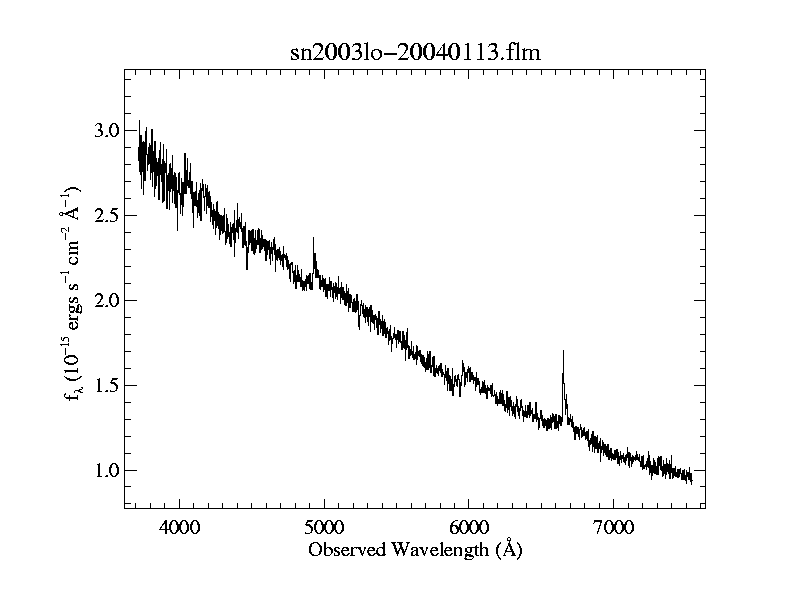
SN 2003lo (NGC 1376) (IIn)
[IAUC 8268]
-
January 13, 2004 UT FLWO 1.5m spectrum shows this Type IIn supernova.
-
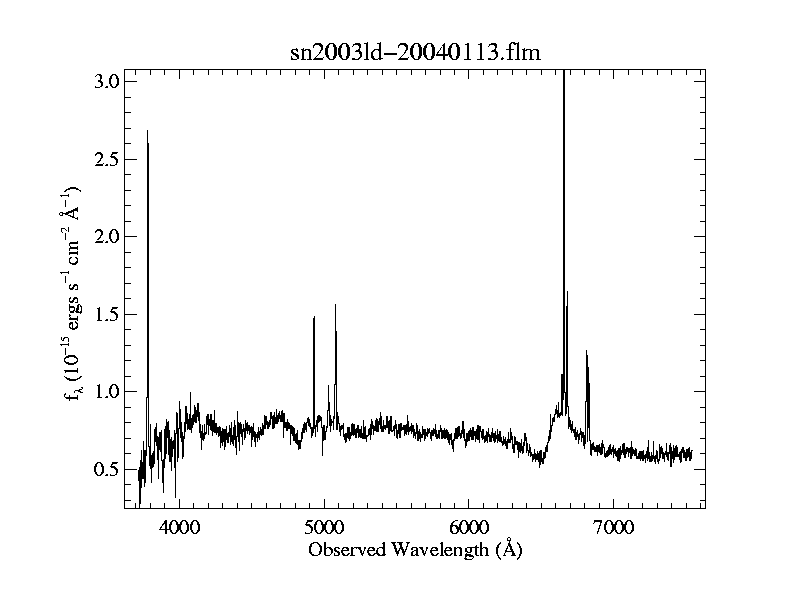
SN 2003ld (UGC 148) (II)
[IAUC 8268,
IAUC 8260]
-
January 13, 2004 UT FLWO 1.5m spectrum shows this Type II supernova.
-
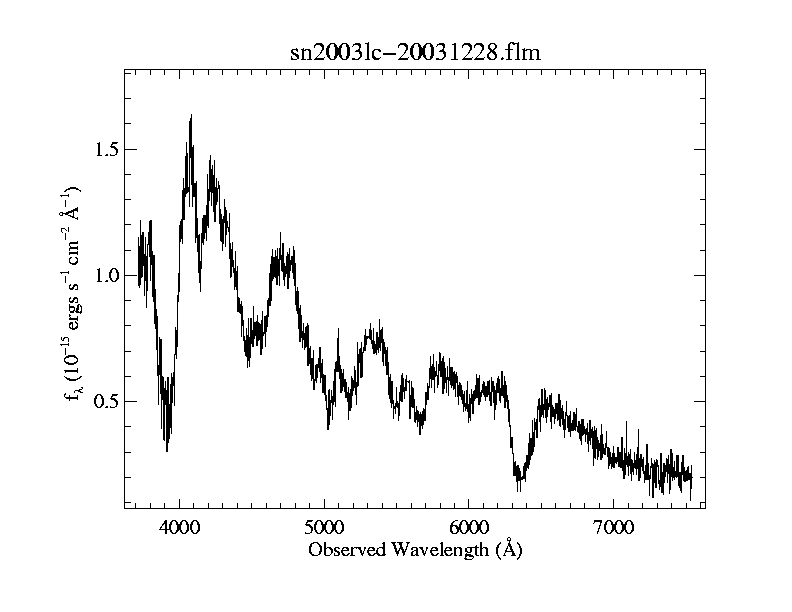
SN 2003lc (UGC 934) (Ia)
[IAUC 8260]
-
December 28, 2003 UT FLWO 1.5m spectrum shows this Type Ia supernova just past maximum.
-
SN 2003la (MCG +10-15-89) (II)
[IAUC 8259]
-
December 22, 2003 UT FLWO 1.5m spectrum shows this Type II supernova.
-
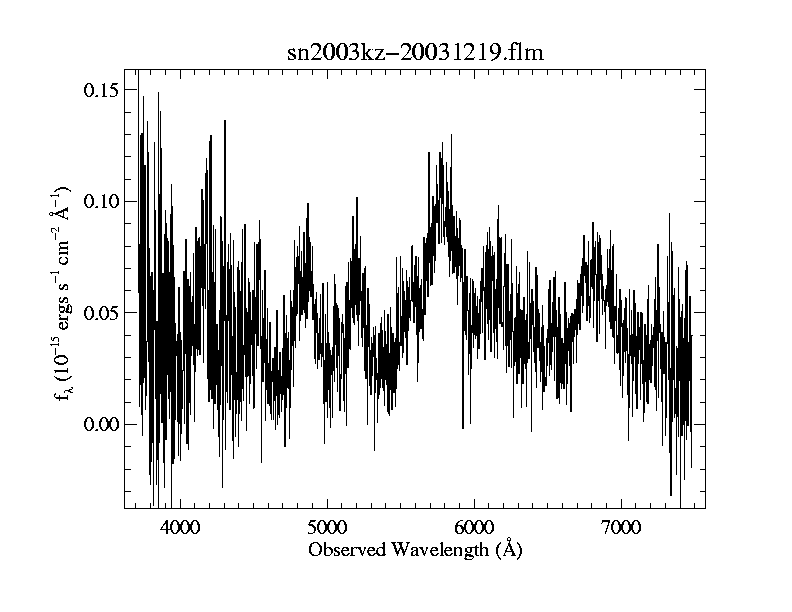
SN 2003kz (MCG +09-16-34) (Ia)
[IAUC 8259]
-
December 19, 2003 UT FLWO 1.5m spectrum shows this Type Ia
supernova a few weeks past maximum.
-
SN 2003ky (NGC 4001) (II)
[IAUC 8259]
-
December 18, 2003 UT FLWO 1.5m spectrum shows this Type II supernova.
-
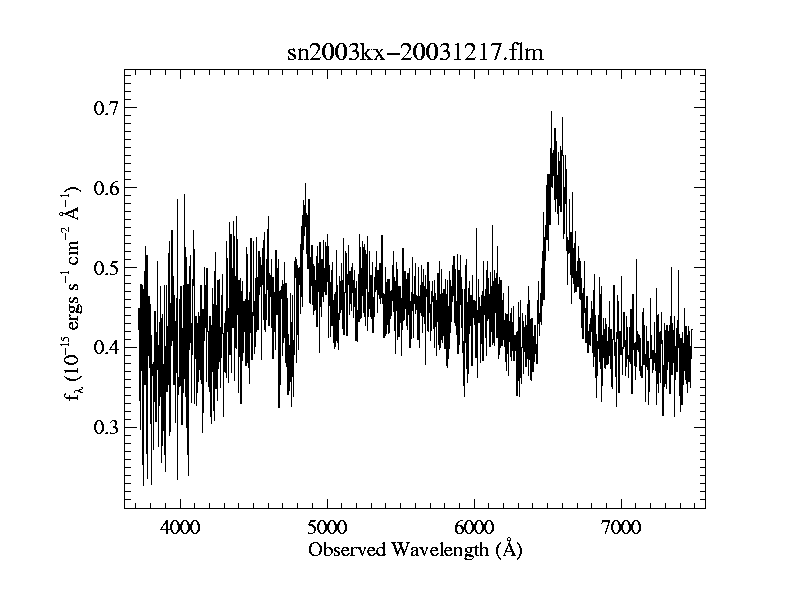
SN 2003kx (UGC 4078) (II)
[IAUC 8258]
-
December 17, 2003 UT FLWO 1.5m spectrum shows this Type II supernova.
-
SN 2003kw (UGC 6314) (II)
[IAUC 8258]
-
December 17, 2003 UT FLWO 1.5m spectrum shows this Type II supernova.
-
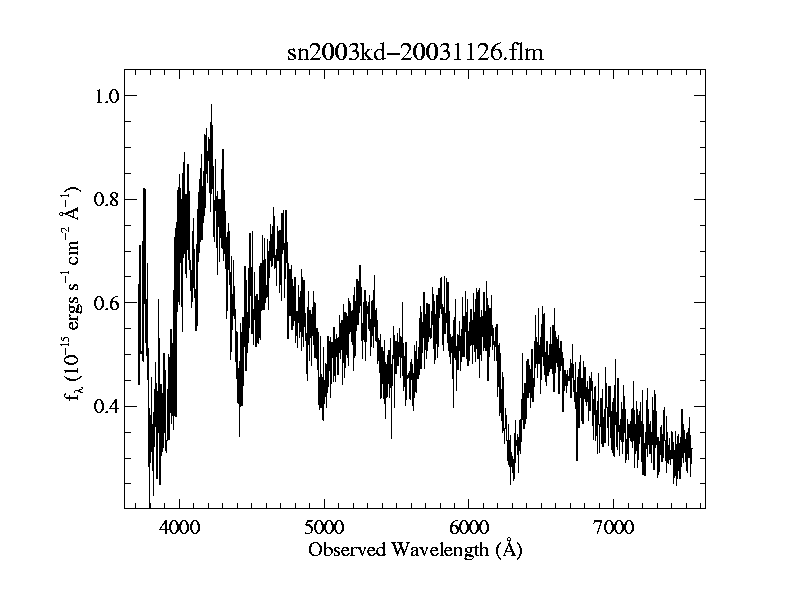
SN 2003kd (UGC 2468) (Ia)
[IAUC 8245]
-
November 26, 2003 UT FLWO 1.5m spectrum shows this Type Ia supernova near maximum.
-
SN 2003ka (MCG +06-50-20) (II)
[IAUC 8242]
-
November 20, 2003 UT FLWO 1.5m spectrum shows this Type II supernova.
-
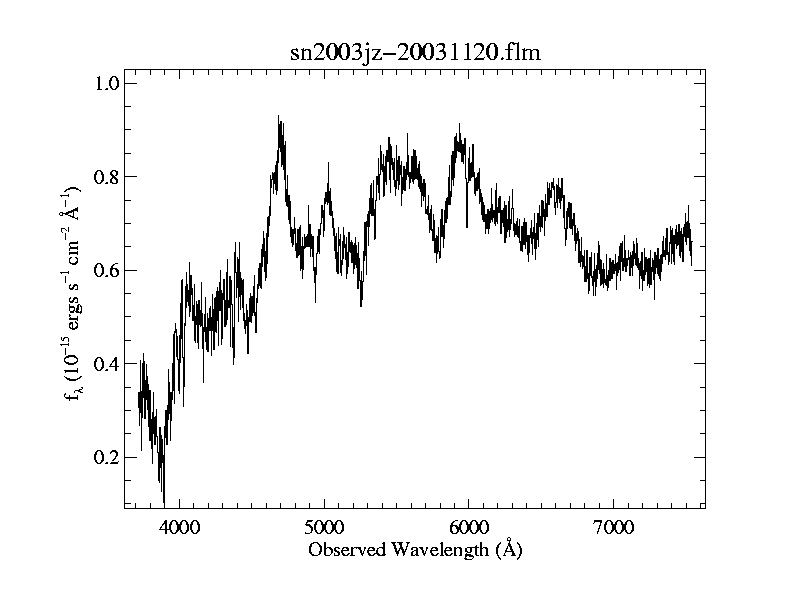
SN 2003jz (UGC 5225) (Ia)
[IAUC 8242]
-
November 20, 2003 UT FLWO 1.5m spectrum shows this old Type Ia SN
with a lot of galaxy contamination.
-
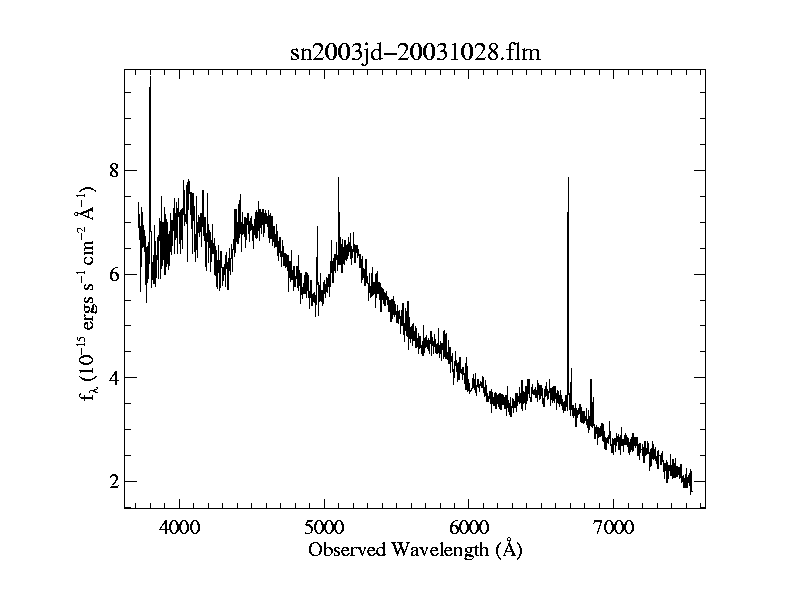
SN 2003jd (MCG -01-59-21) (Ic-pec)
[IAUC 8234]
-
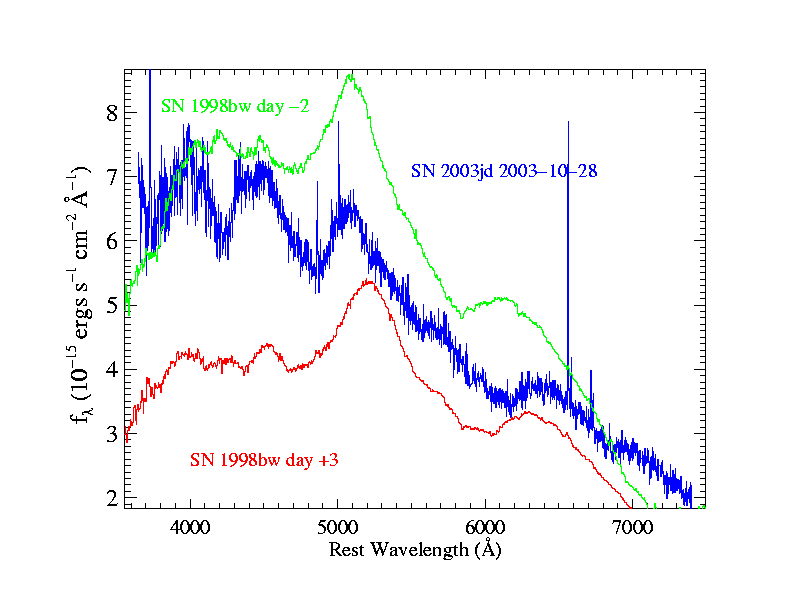
October 28, 2003 UT FLWO 1.5m spectrum shows this peculiar
Type Ic supernova similar to SN 1998bw. A comparison with SN
1998bw near maximum is
here.
-
SN 2003jc (MCG -1-58-18) (II)
[IAUC 8233]
-
October 26, 2003 UT FLWO 1.5m spectrum shows a blue,
featureless continuum with an apparent P-Cyg line of H-alpha,
implying that this is a Type II supernova.
-
SN 2003iz (UGC 635) (Ia)
[IAUC 8231]
-
October 23, 2003 UT FLWO 1.5m spectrum shows this Type Ia
supernova about a week past maximum.
-
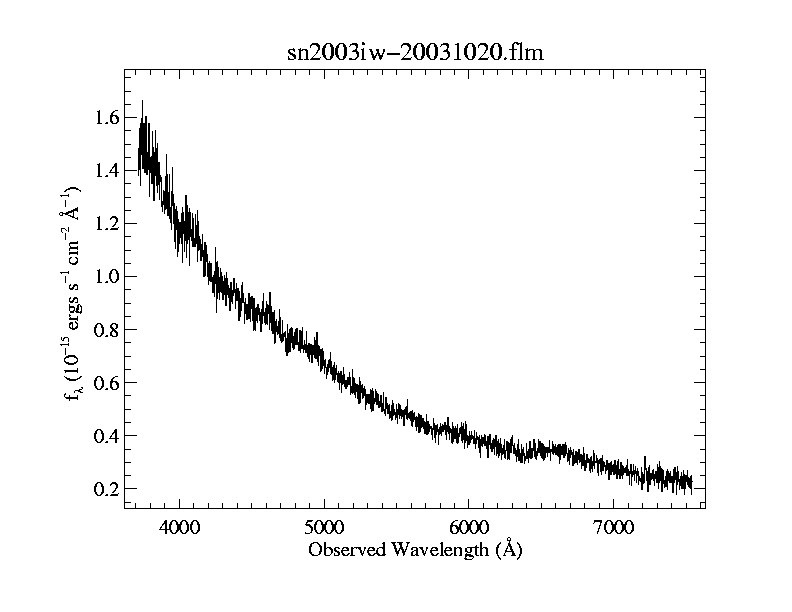
SN 2003iw (NGC 7102) (II)
[IAUC 8228]
-
October 20, 2003 UT FLWO 1.5m spectrum shows a blue,
featureless continuum with an apparent P-Cyg line of H-alpha,
implying that this is a Type II supernova.
-
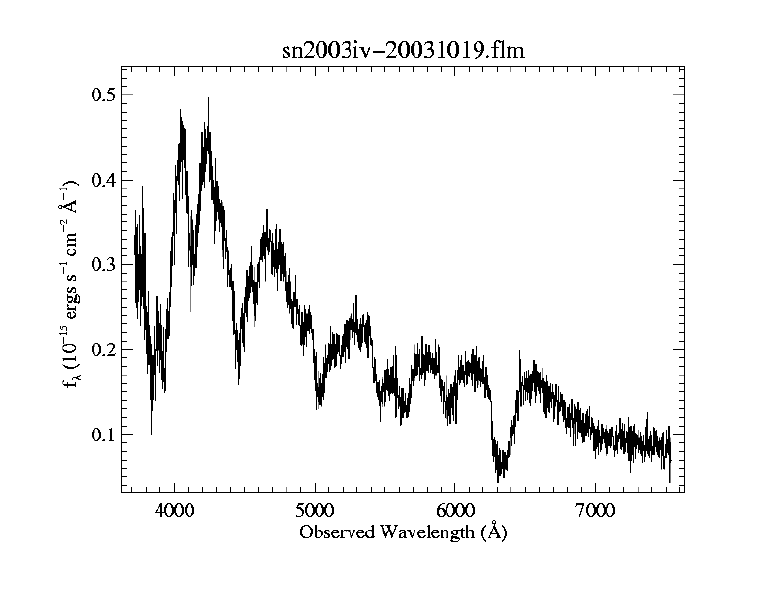
SN 2003iv (PGC 10738) (Ia)
[IAUC 8228]
-
October 19, 2003 UT FLWO 1.5m spectrum shows this Type Ia
supernova near maximum.
-
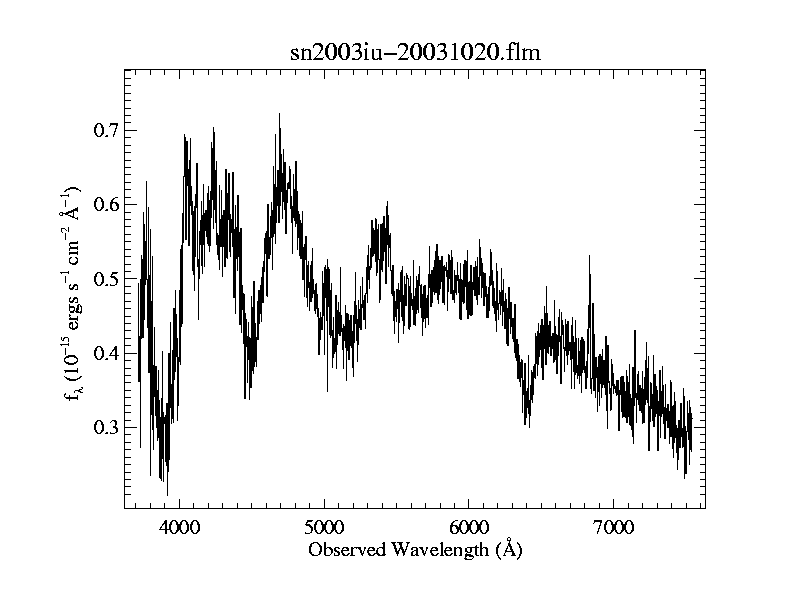
SN 2003iu (UGC 1393) (Ia)
[IAUC 8228]
-
October 20, 2003 UT FLWO 1.5m spectrum shows this Type Ia
supernova near maximum.
-
SN 2003it (UGC 40) (Ia)
[IAUC 8228]
-
October 19, 2003 UT FLWO 1.5m spectrum shows this Type Ia
supernova before maximum.
-
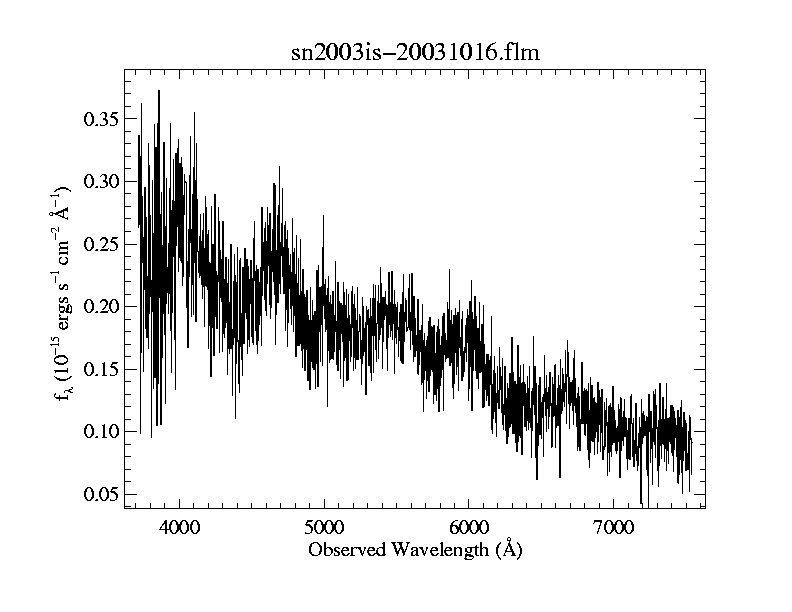
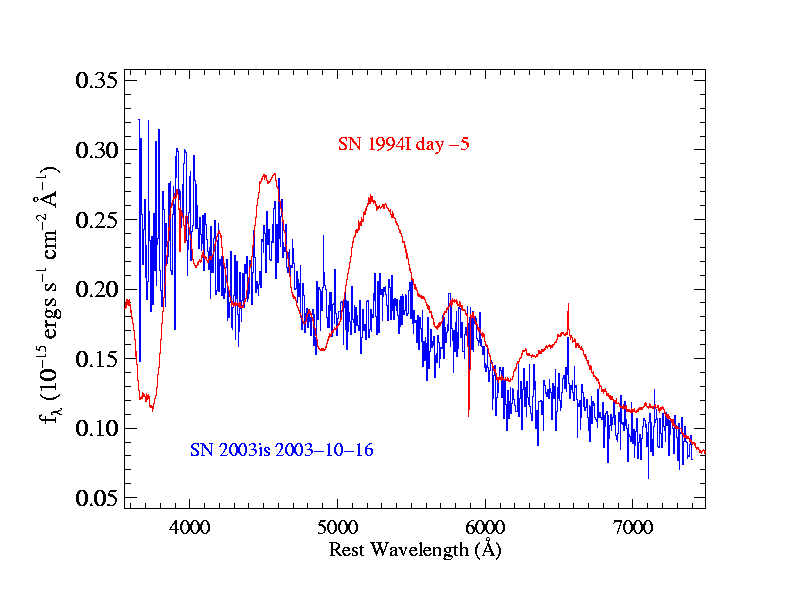
SN 2003is (MCG +07-40-3) (Ic)
[IAUC 8225]
-
October 16, 2003 UT FLWO 1.5m spectrum shows this early Type Ic
supernova. For a comparison with SN 1994I, look
here.
-
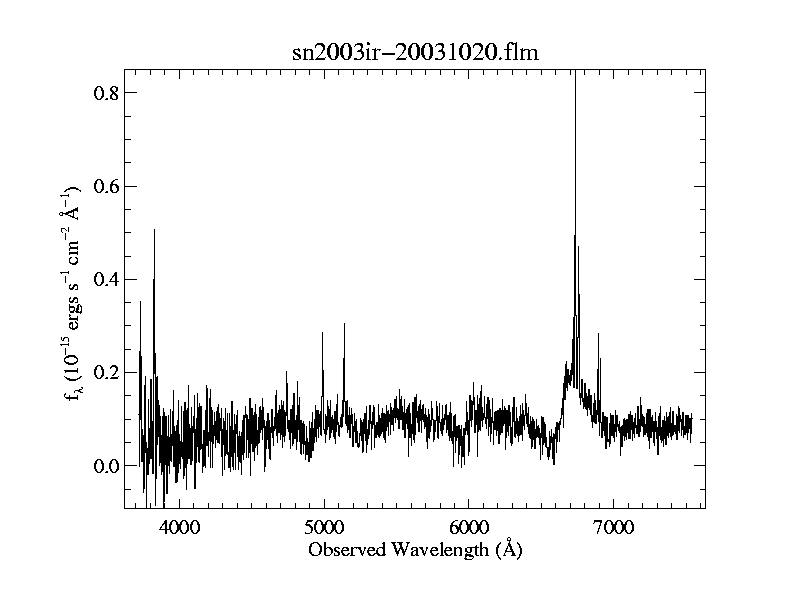
SN 2003ir (UGC 3726) (II)
[IAUC 8228]
-
October 20, 2003 UT FLWO 1.5m spectrum shows this Type II
supernova.
-
SN 2003iq (NGC 772) (II)
[IAUC 8225]
-
October 16, 2003 UT FLWO 1.5m spectrum shows this early Type II
supernova.
-
SN 2003io (UGC 1761) (II)
[IAUC 8225]
-
October 16, 2003 UT FLWO 1.5m spectrum shows this Type II
supernova.
-
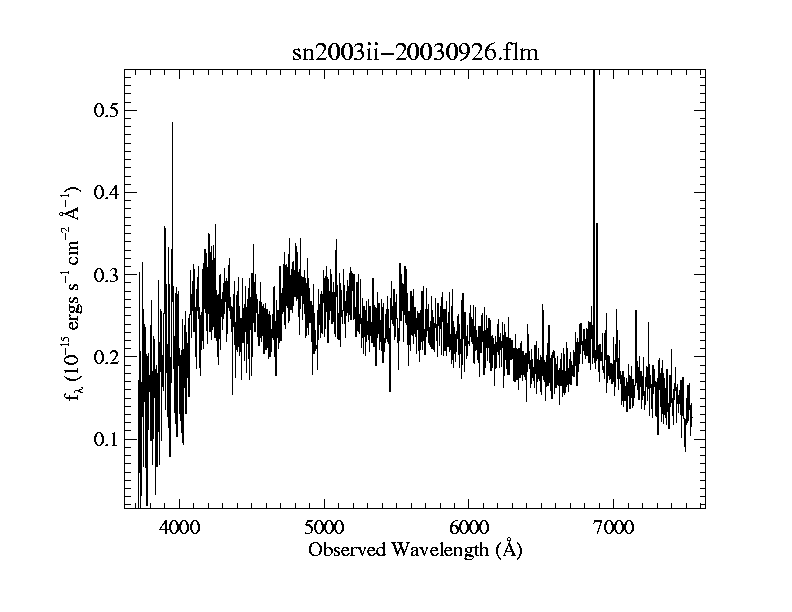
SN 2003ii (MCG +06-6-53) (II)
[IAUC 8210]
-
September 26, 2003 UT FLWO 1.5m spectrum shows this Type II
supernova.
-
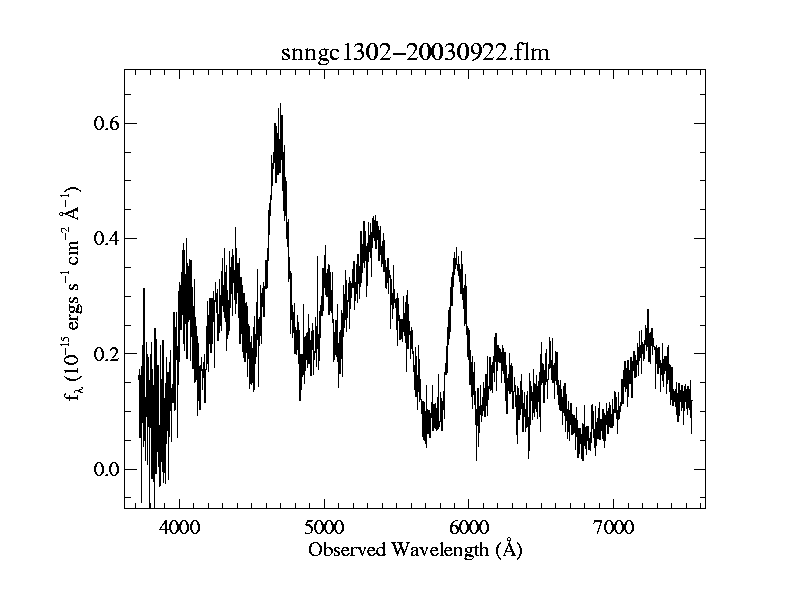
SN 2003if (NGC 1302) (Ia)
[IAUC 8206]
-
September 22, 2003 UT FLWO 1.5m spectrum shows this Type Ia
supernova about three weeks past maximum.
-
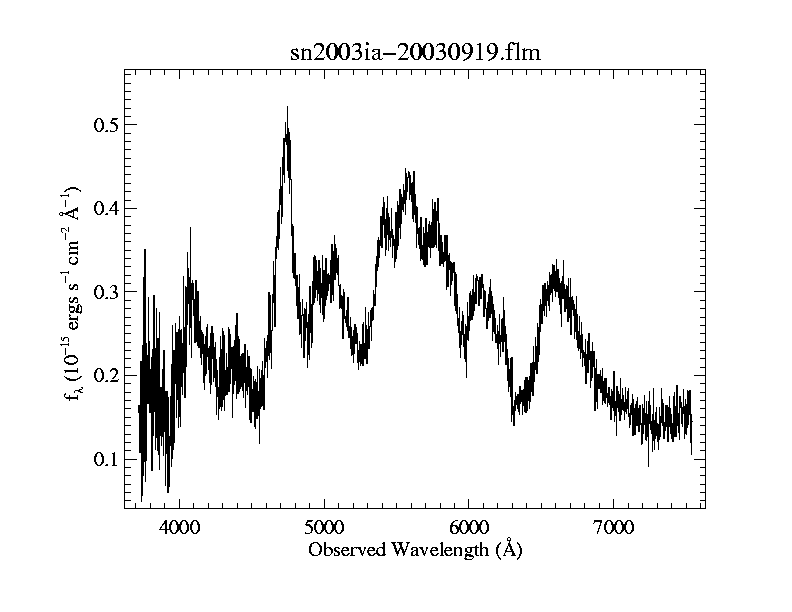
SN 2003ia (NGC 6109) (Ia)
[IAUC 8204]
-
September 19, 2003 UT FLWO 1.5m spectrum shows this Type Ia
supernova about two weeks past maximum.
-
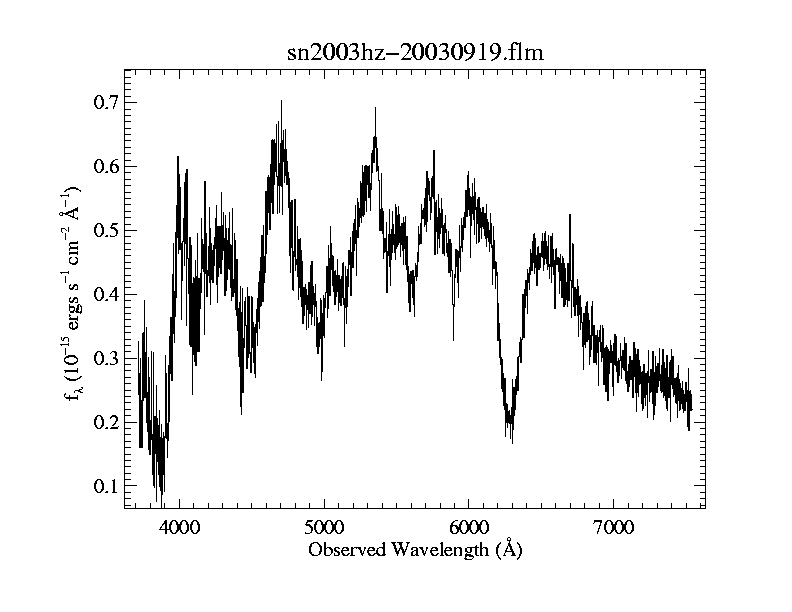
SN 2003hz (Anon) (Ia)
[IAUC 8205]
-
September 19, 2003 UT FLWO 1.5m spectrum shows this Type Ia
supernova about a week past maximum.
-
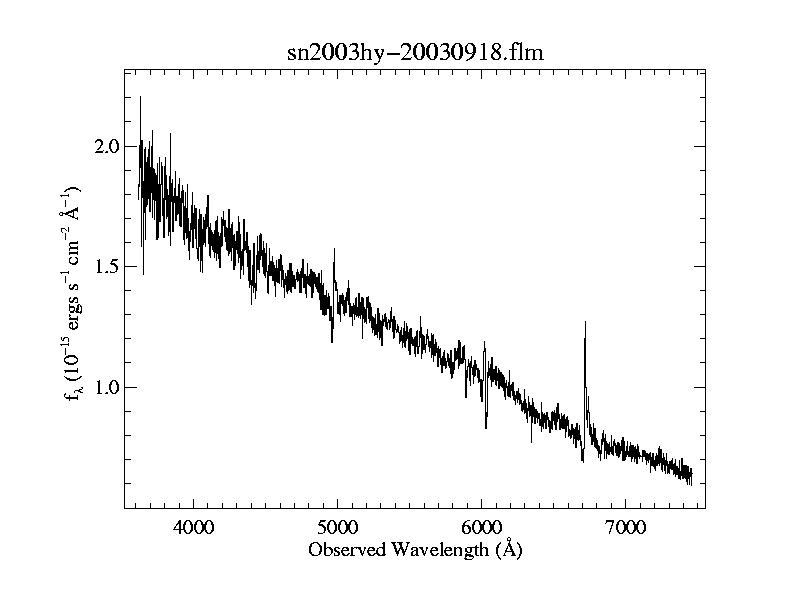
SN 2003hy (IC 5145) (IIn)
[IAUC 8203]
-
September 18, 2003 UT FLWO 1.5m spectrum shows this unusual Type IIn
supernova. The extremely narrow P-Cygni lines might indicate that
it is a super outburst of a luminous blue variable, but the
brightness of the SN at discovery implies that this is a legitmate supernova.
-
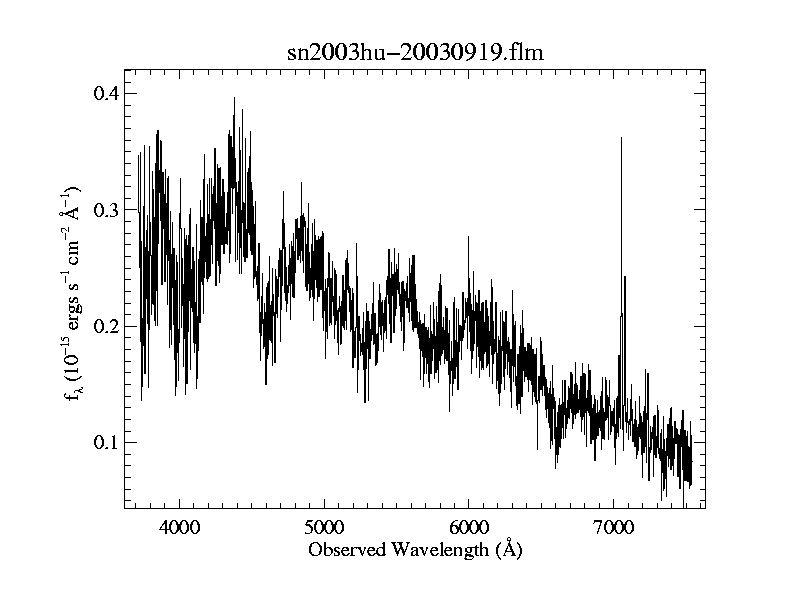
SN 2003hu (Anon) (Ia)
[IAUC 8205]
-
September 19, 2003 UT FLWO 1.5m spectrum shows this Type Ia
supernova near maximum.
-
SN 2003hm (UGC 2295) (Ia)
-
September 22, 2003 UT FLWO 1.5m spectrum shows this Type Ia
supernova about two weeks past maximum.
-
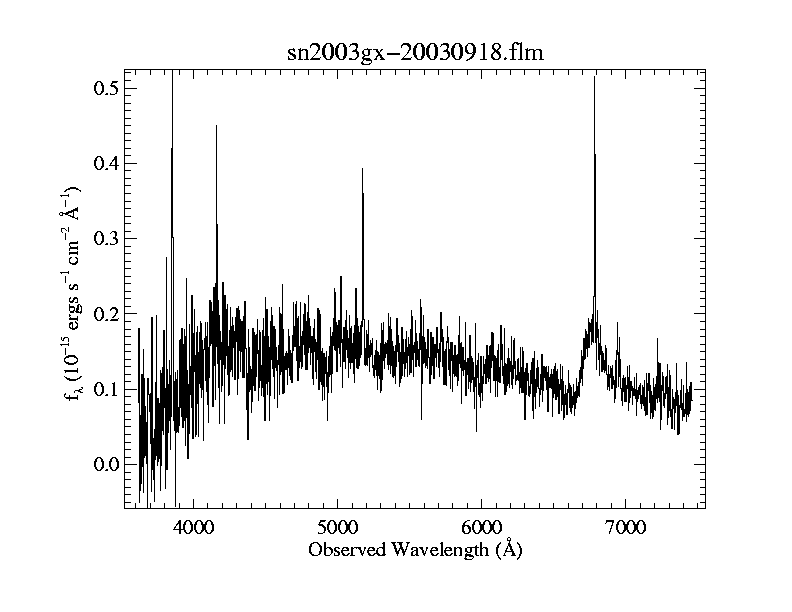
SN 2003gx (MCG +06-3-7) (II)
[IAUC 8203]
-
September 18, 2003 UT FLWO 1.5m spectrum shows this Type II
supernova.
-
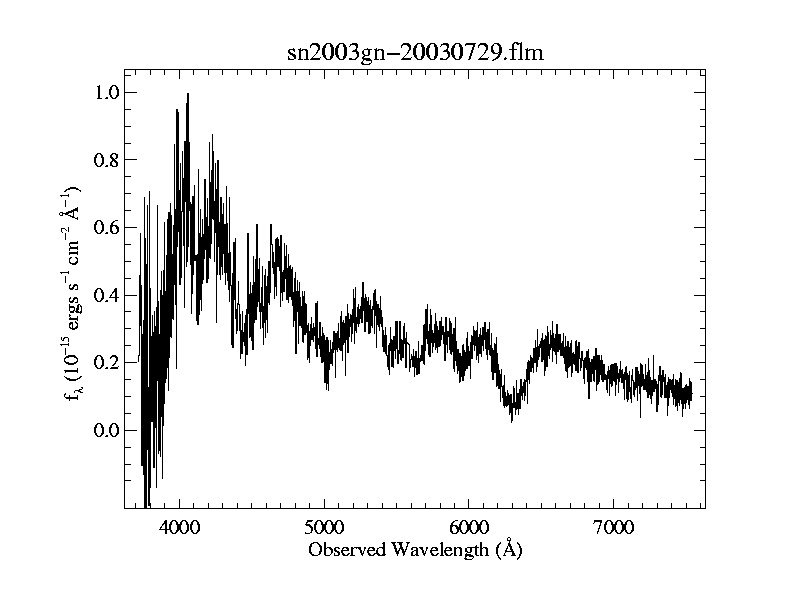
SN 2003gn (CGCG 452-024) (Ia)
[IAUC 8170]
-
July 29, 2003 UT FLWO 1.5m spectrum shows this Type Ia
supernova near maximum.
-
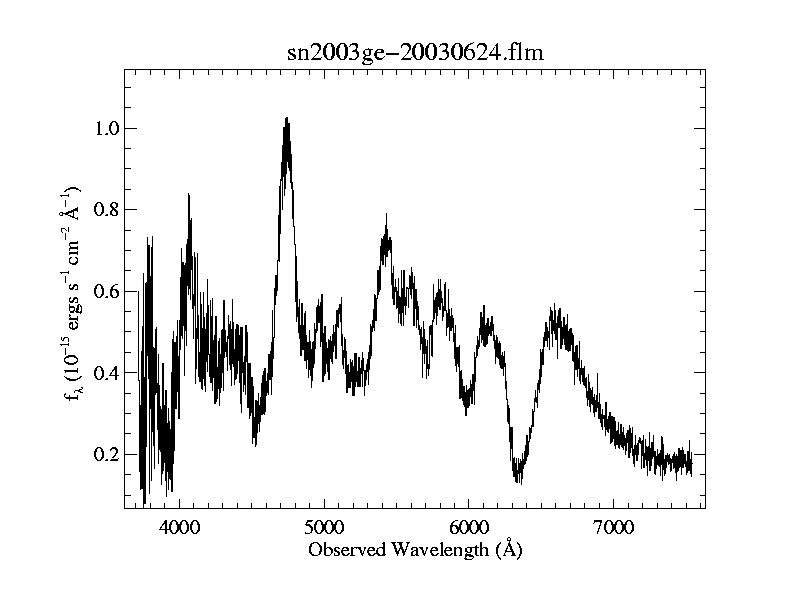
SN 2003ge (NGC 6122) (Ia)
[IAUC 8155]
-
June 24, 2003 UT FLWO 1.5m spectrum shows this Type Ia
supernova a couple of weeks past maximum.
-
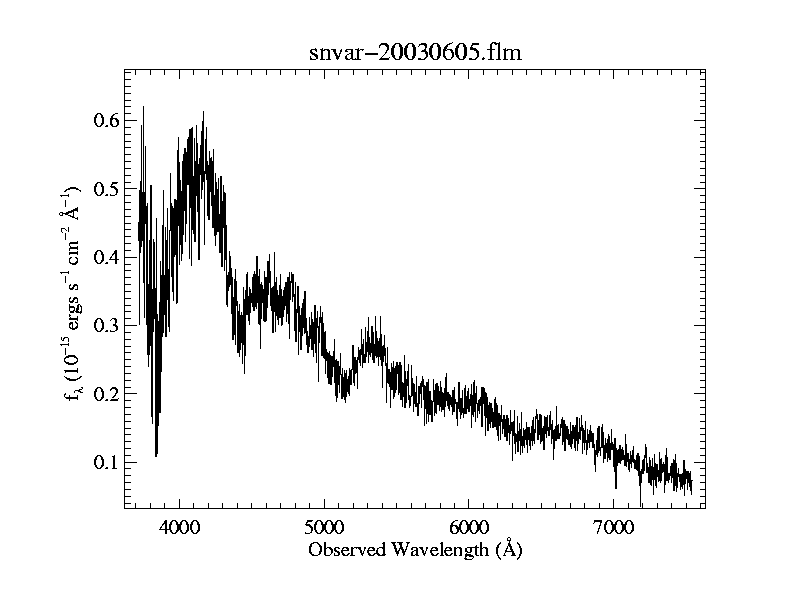
SN 2003fa (MCG +07-36-33) (Ia)
[IAUC 8142]
-
June 5, 2003 UT FLWO 1.5m spectrum shows that this variable
star near MCG +07-36-33 is, in fact, a Type
Ia supernova well before maximum.
-
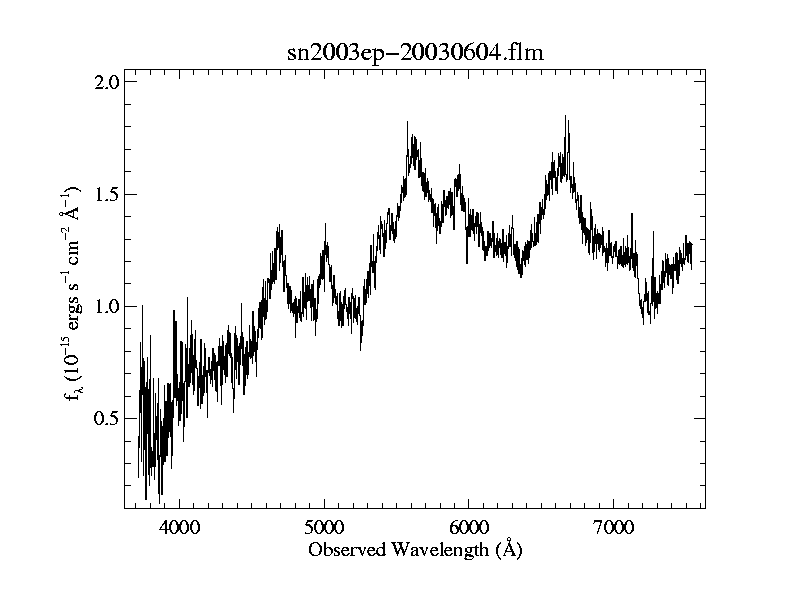
SN 2003ep (NGC 7053) (Ia)
[IAUC 8141]
-
June 4, 2003 UT FLWO 1.5m spectrum shows this Type
Ia supernova three to four weeks past maximum.
-
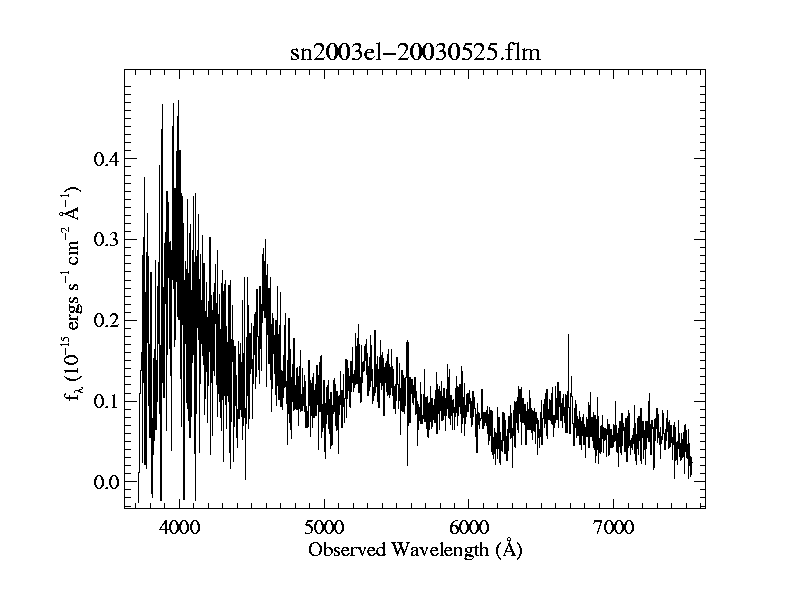
SN 2003el (NGC 5000) (Ic)
[IAUC 8136]
-
May 25, 2003 UT FLWO 1.5m spectrum shows this Type
Ic supernova near maximum.
-
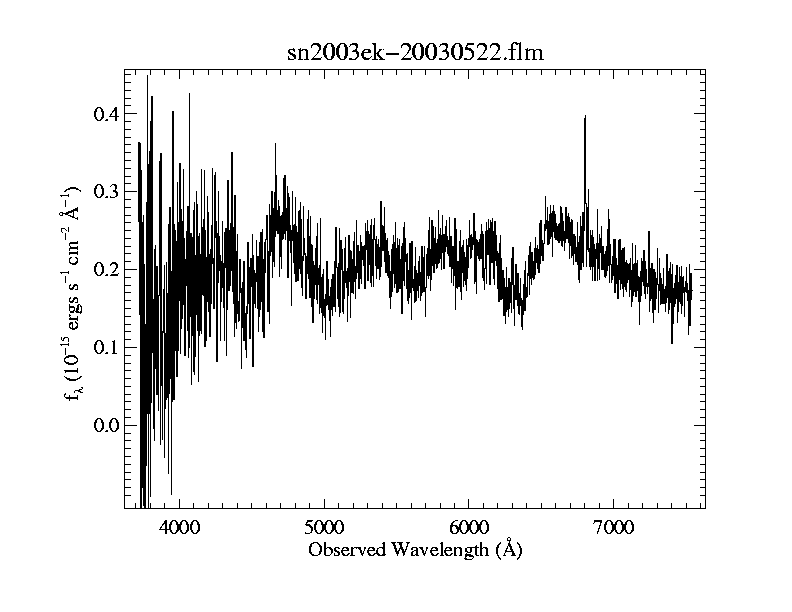
SN 2003ek (FGC 2126) (Ia)
[IAUC 8136]
-
May 22, 2003 UT FLWO 1.5m spectrum shows this Type
Ia supernova before maximum. There is some galaxy contamination
in the spectrum.
-
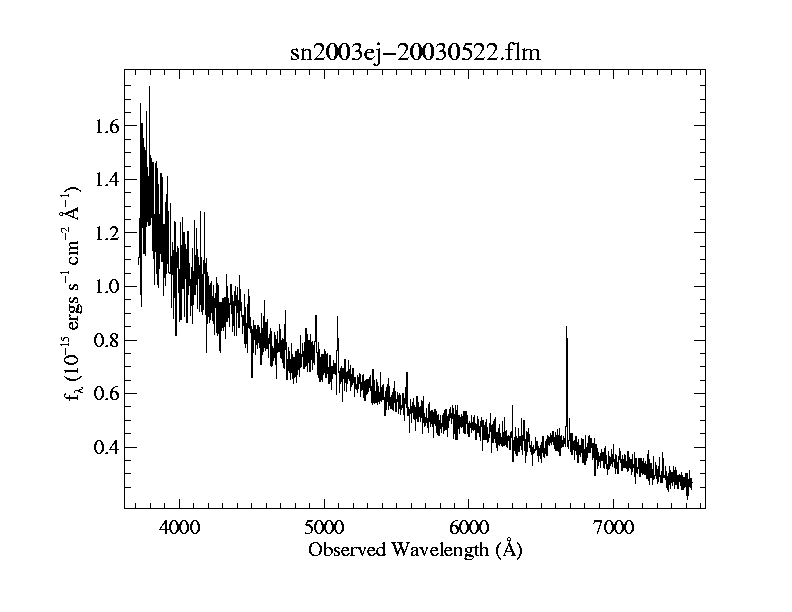
SN 2003ej (UGC 7820) (II)
[IAUC 8136]
-
May 22, 2003 UT FLWO 1.5m spectrum shows this Type
II supernova. The Halpha line shows an unusual profile,
reminiscent of SN 1993J. This may turn into a Type IIb.
-
SN 2003ei (UGC 10402) (IIn)
[IAUC 8134]
-
a href="spectra/sn2003ei-20030521.flm.gif">
May 21, 2003 UT FLWO 1.5m spectrum shows this Type
IIn supernova.
-
SN 2003eh (MCG +01-29-003) (Ia)
[IAUC 8134]
-
May 21, 2003 UT FLWO 1.5m spectrum shows this reddened Type Ia
supernova near maximum.
-
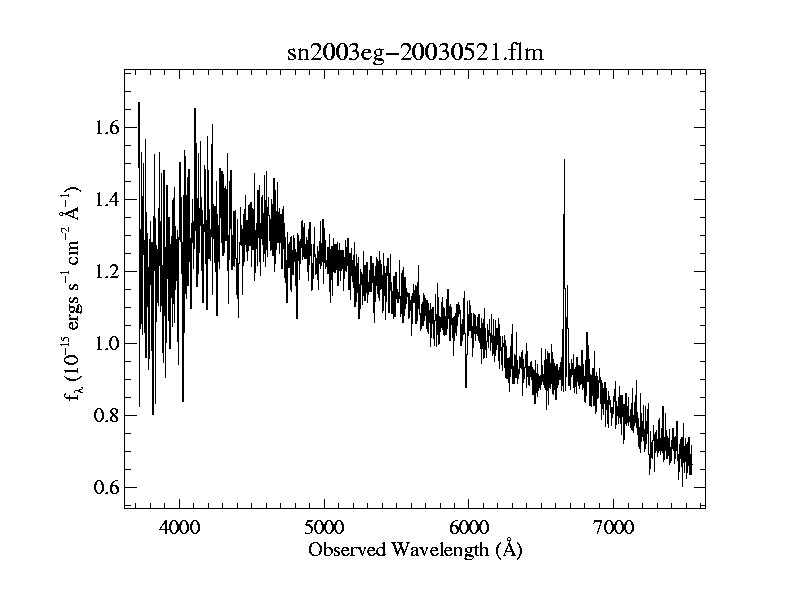
SN 2003eg (NGC 4727) (II)
[IAUC 8134]
-
May 21, 2003 UT FLWO 1.5m spectrum shows this II supernova
soon after explosion.
-
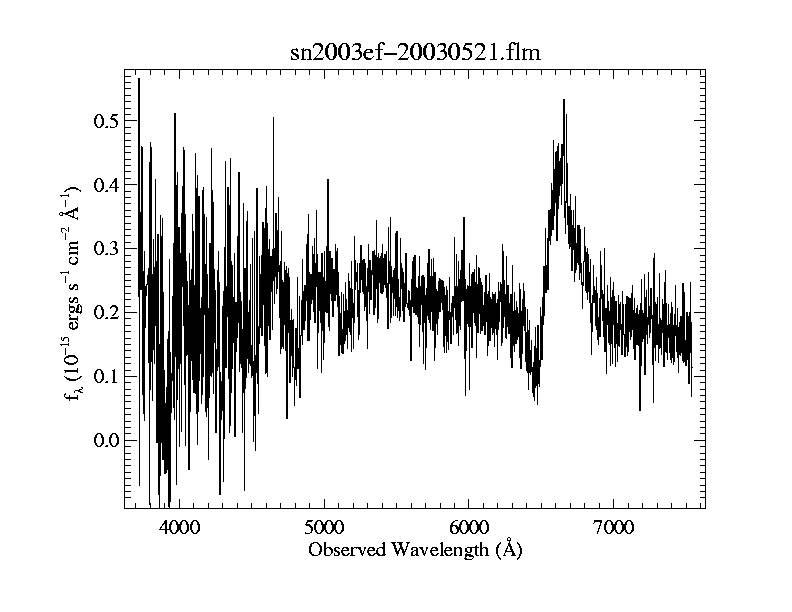
SN 2003ef (NGC 4708) (II)
[IAUC 8134]
-
May 21, 2003 UT FLWO 1.5m spectrum shows this II supernova
soon after explosion.
-
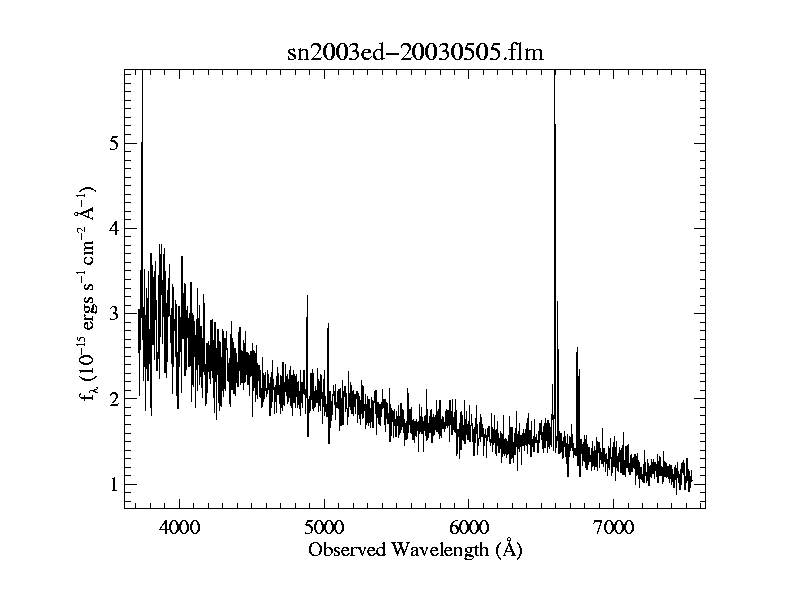
SN 2003ed (NGC 5303) (II)
[IAUC 8129]
-
May 5, 2003 UT FLWO 1.5m spectrum shows this II supernova
soon after explosion.
-
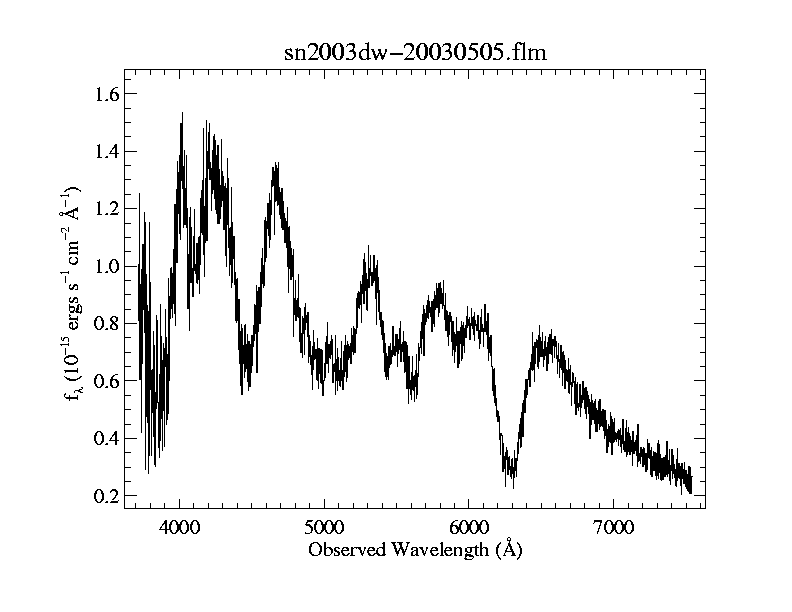
SN 2003dw (MCG +10-24-51) (Ia)
[IAUC 8129]
-
May 5, 2003 UT FLWO 1.5m spectrum shows this Ia supernova
near maximum.
-
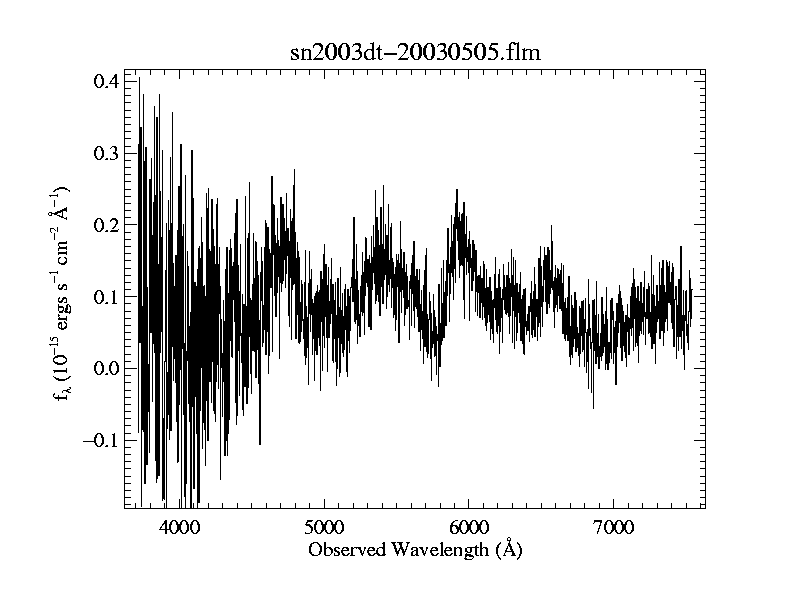
SN 2003dt (NGC 6962) (Ia)
[IAUC 8129]
-
May, 2003 UT FLWO 1.5m spectrum shows this Ia supernova
several weeks past maximum.
-
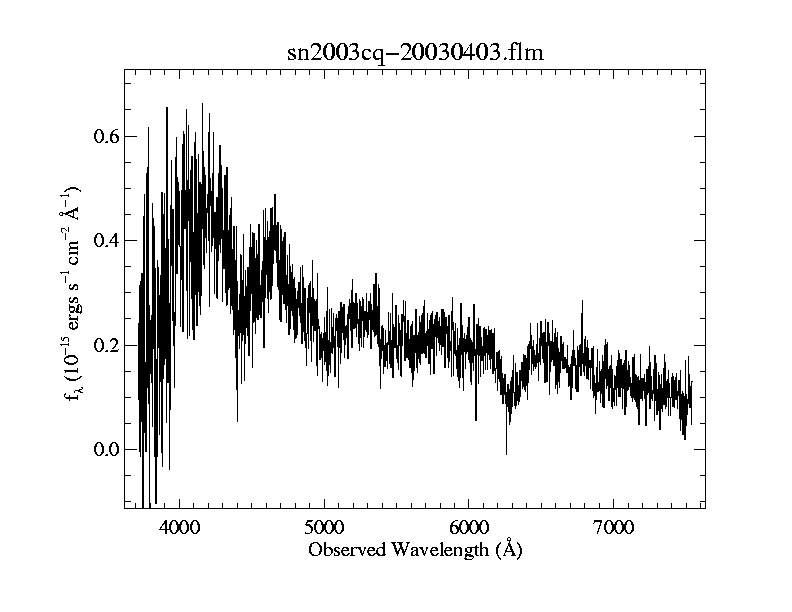
SN 2003cq (NGC 3978) (Ia)
[IAUC 8106]
-
April 3, 2003 UT FLWO 1.5m spectrum shows this Ia supernova
about a week before maximum.
-
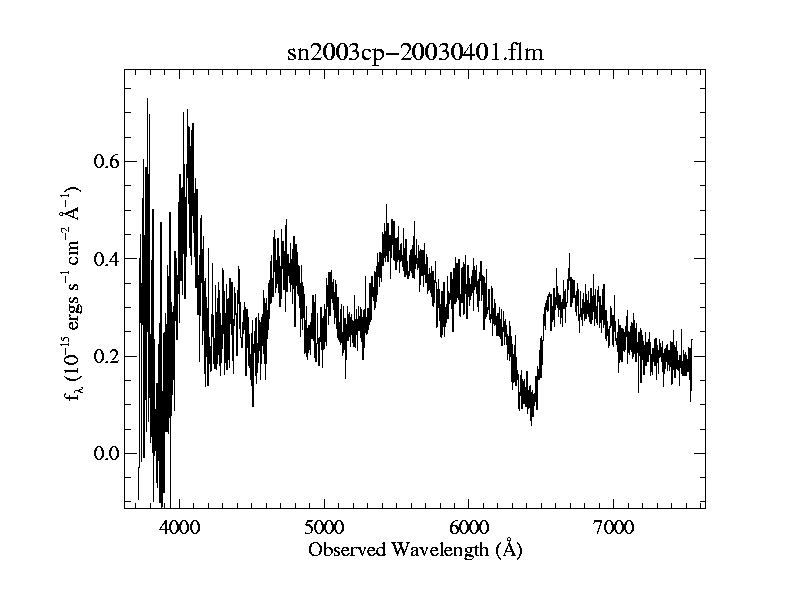
SN 2003cp (MCG +10-12-78) (Ia)
[IAUC 8105]
-
April 1, 2003 UT FLWO 1.5m spectrum shows this Ia supernova
about two to three weeks past maximum. Some line strengths appear
unusual.
-
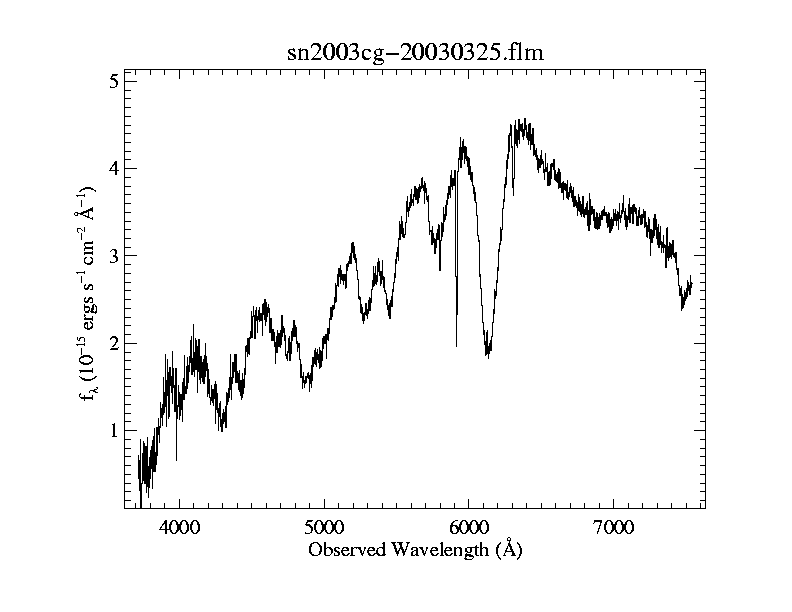
SN 2003cg (NGC 3169) (Ia)
[IAUC 8099]
-
March 25, 2003 UT FLWO 1.5m spectrum shows this highly
reddened, subluminous type Ia
supernova near maximum.
-
SN 2003bv (MCG +07-15-15) (II)
[IAUC 8106]
-
March 25, 2003 UT FLWO 1.5m spectrum shows this type II
supernova.
-
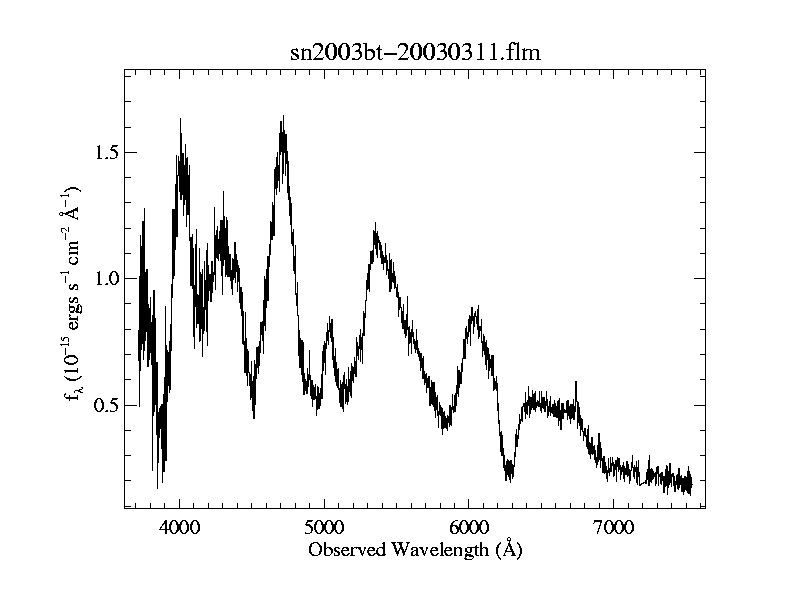
SN 2003bt (MCG -01-28-006) (Ia)
[IAUC 8091]
-
March 11, 2003 UT FLWO 1.5m spectrum shows this type Ia
supernova a couple of weeks past maximum.
-
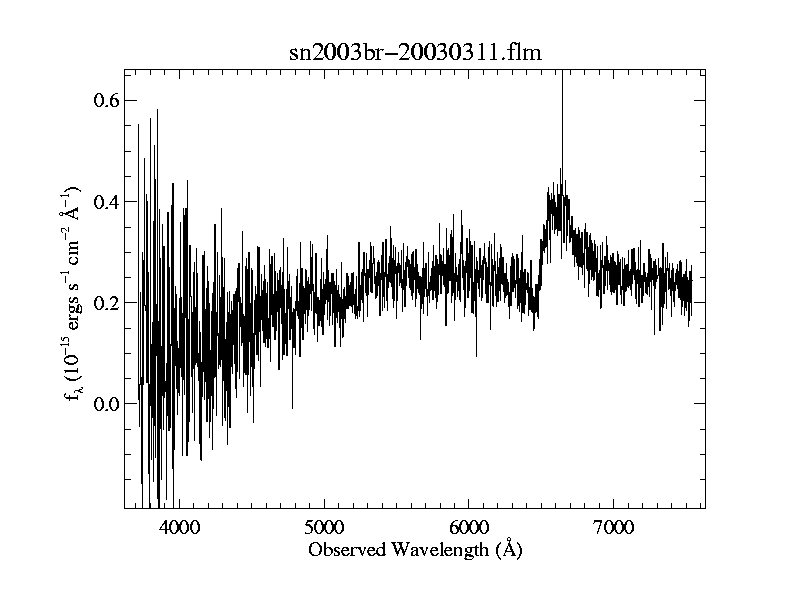
SN 2003br (MCG -05-34-18) (II)
[IAUC 8091]
-
March 11, 2003 UT FLWO 1.5m spectrum shows this type II
supernova.
-
SN 2003bp (NGC 2596) (Ib [Ic?])
[IAUC 8091]
-
March 10, 2003 UT FLWO 1.5m spectrum shows this type Ib
supernova. The helium features are weaker than normal, implying
that this may be a transitional object between Ib and Ic.
-
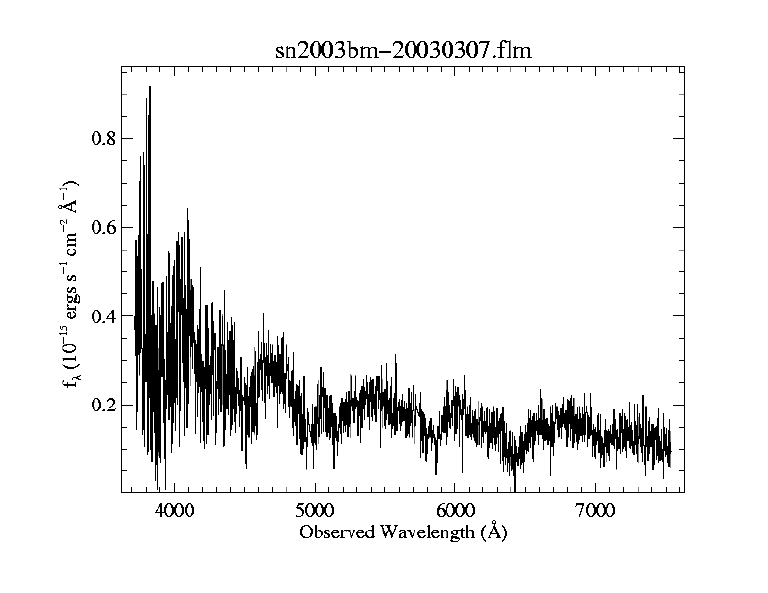
SN 2003bm (UGC 4226) (Ic)
[IAUC 8091]
-
March 7, 2003 UT FLWO 1.5m spectrum shows this type Ic
supernova.
-
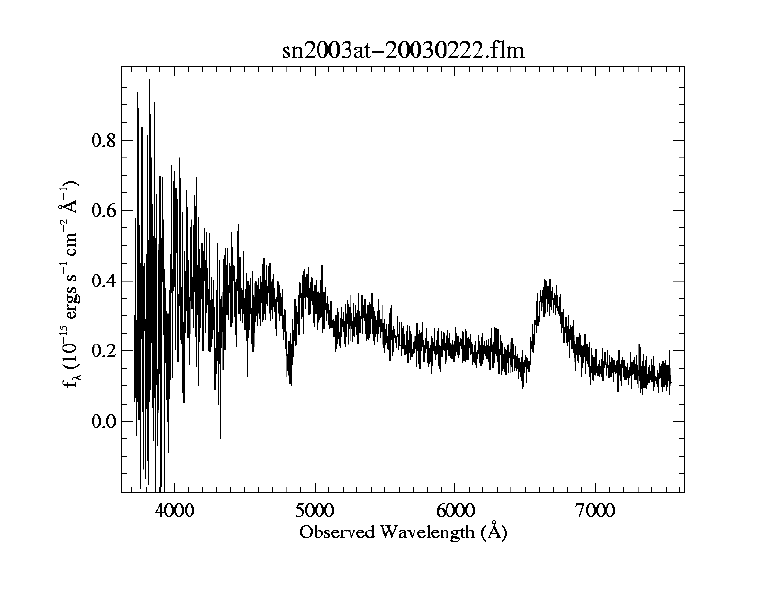
SN 2003at (MCG 11-20-23) (II)
[IAUC 8078]
-
February 22, 2003 UT FLWO 1.5m spectrum shows this type II
supernova.
-
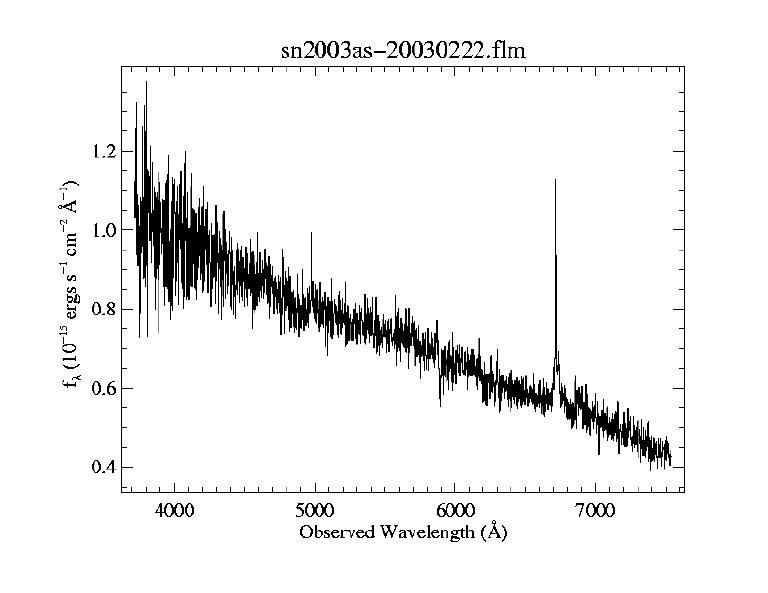
SN 2003as (MCG +08-10-7) (II)
[IAUC 8078]
-
February 22, 2003 UT FLWO 1.5m spectrum shows this type IIn
supernova.
-
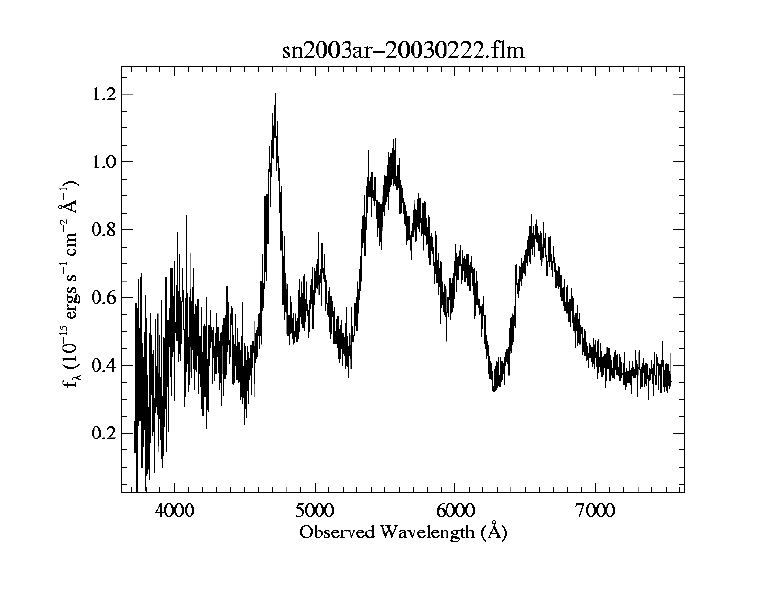
SN 2003ar (MCG +12-15-47) (Ia)
[IAUC 8078]
-
February 22, 2003 UT FLWO 1.5m spectrum shows this type Ia
supernova two to three weeks past maximum.
-
SN 2003ao (NGC 2993) (II)
[IAUC 8078]
-
February 22, 2003 UT FLWO 1.5m spectrum shows this type II
supernova.
-
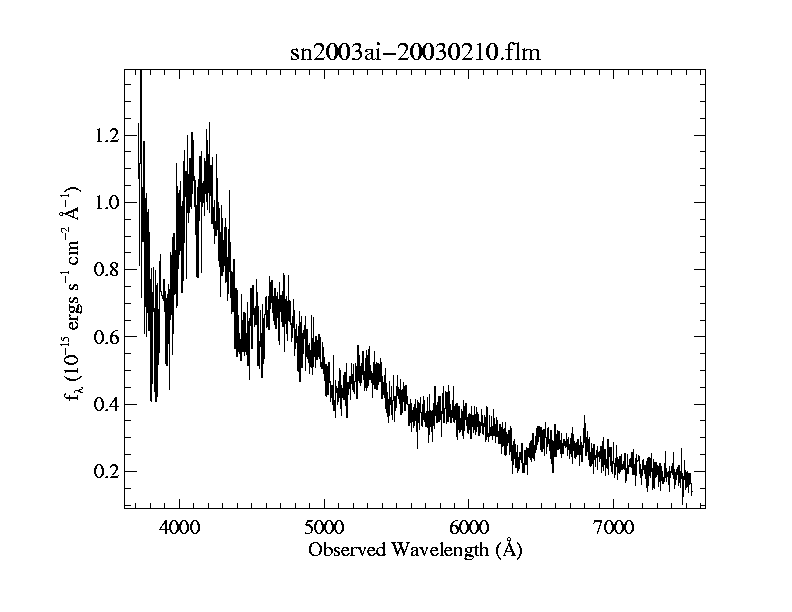
SN 2003ai (IC 4062) (Ia)
[IAUC 8174]
-
February 10, 2003 UT FLWO 1.5m spectrum shows this type Ia
supernova about a week before maximum.
-
SN 2003ag (UGC 6440) (Ia)
[IAUC 8071]
-
February 9, 2003 UT FLWO 1.5m spectrum shows this type Ia
supernova near maximum.
-
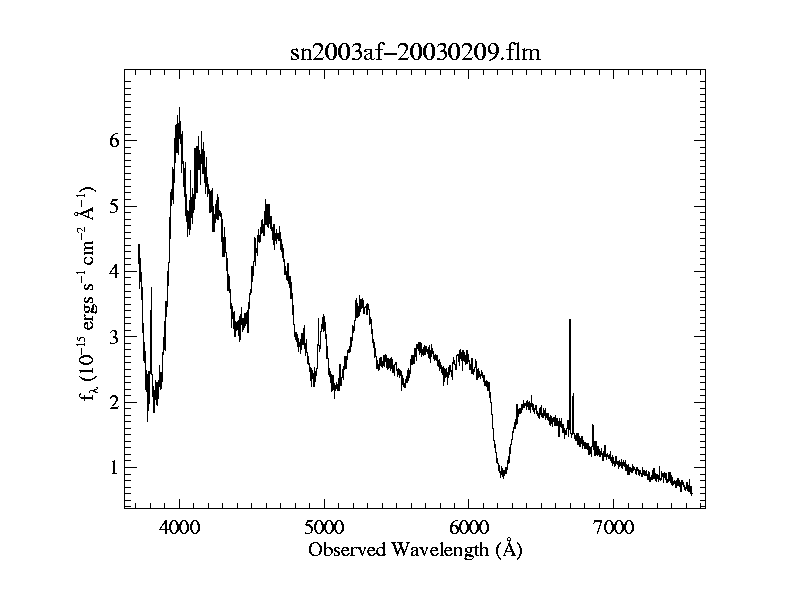
SN 2003af (Anon) (Ia)
[IAUC 8071]
-
February 9, 2003 UT FLWO 1.5m spectrum shows this type Ia
supernova near maximum.
-
SN 2003ae (Anon) (Ia)
[IAUC 8066]
-
February 6, 2003 UT FLWO 1.5m spectrum shows this type Ia
supernova about a week before maximum.
-
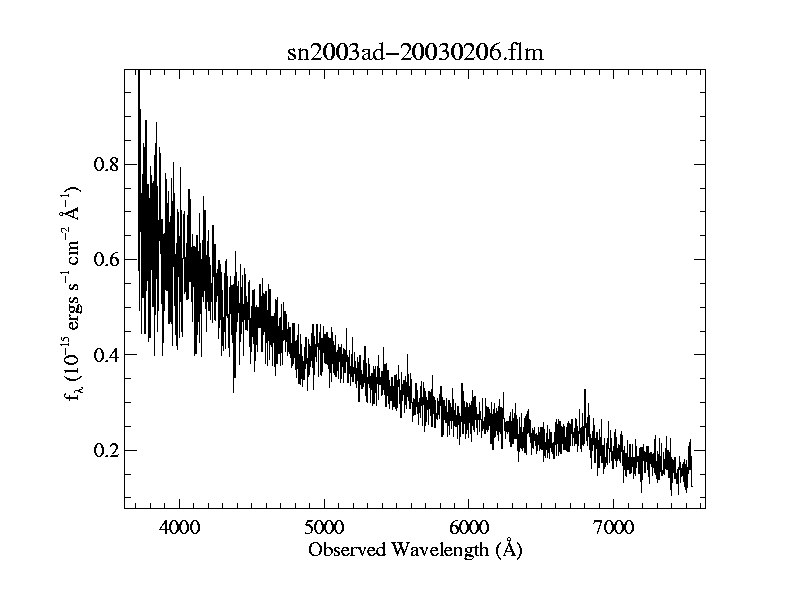
SN 2003ad (Anon) (II)
[IAUC 8067]
-
February 6, 2003 UT FLWO 1.5m spectrum shows this type II
supernova soon after explosion.
-
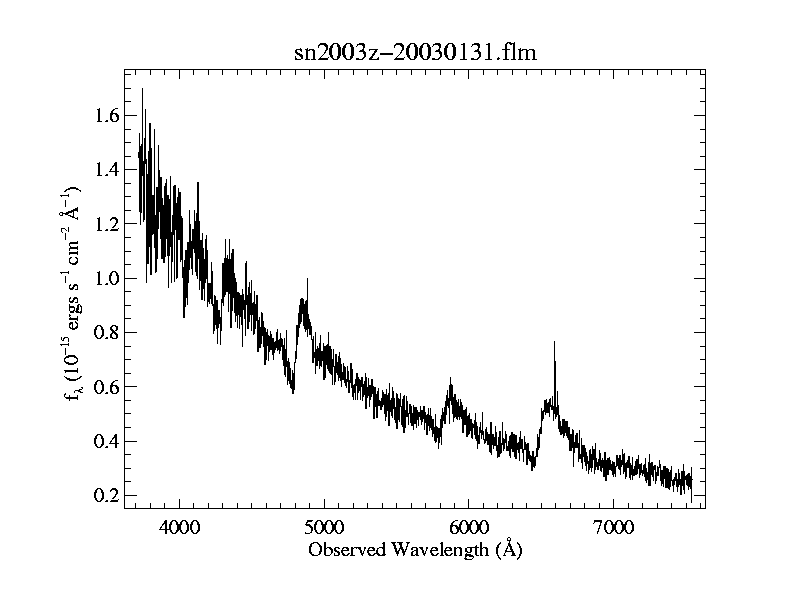
SN 2003Z (NGC 2742) (II)
[IAUC 8063]
-
January 31, 2003 UT FLWO 1.5m spectrum shows this type II
supernova.
-
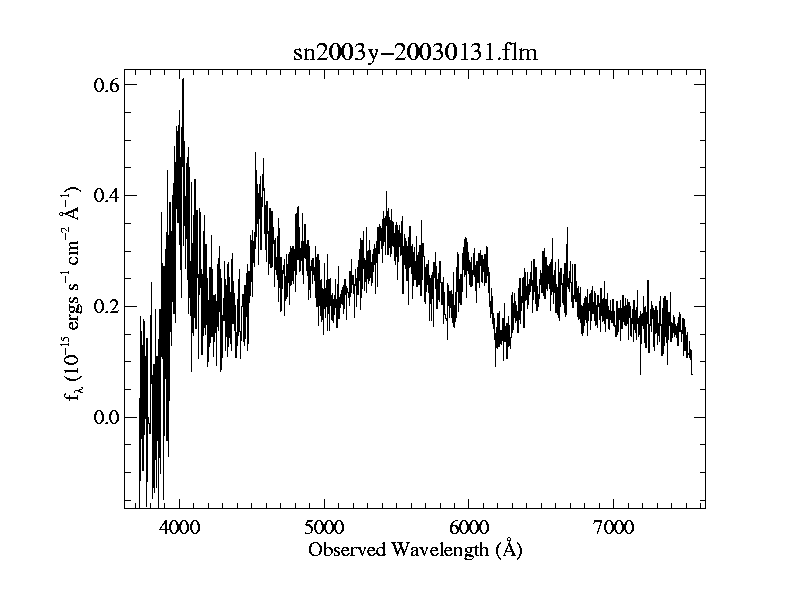
SN 2003Y (IC 522) (Ia)
[IAUC 8063]
-
January 31, 2003 UT FLWO 1.5m spectrum shows this possibly subluminous type Ia
supernova.
-
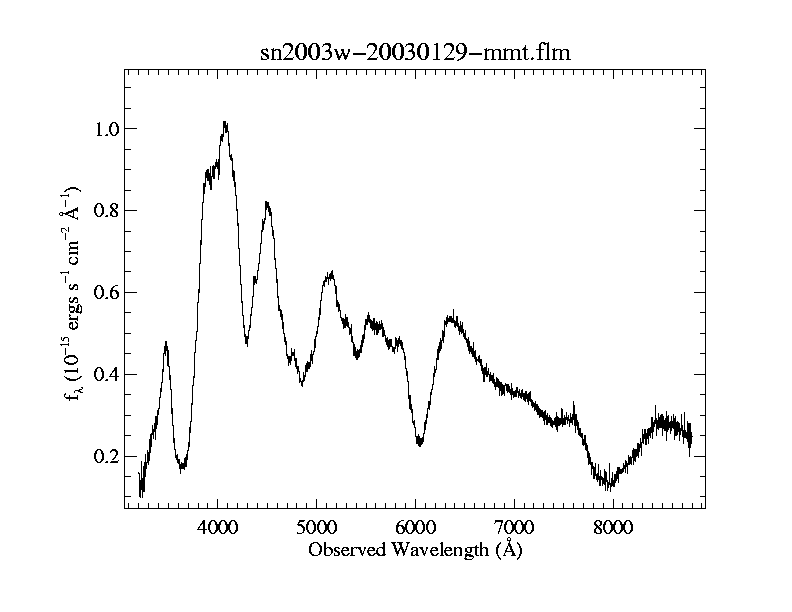
SN 2003W (UGC 5234) (Ia)
[IAUC 8061]
-
January 29, 2003 UT MMT 6.5m spectrum shows this type Ia
supernova well before maximum.
-
SN 2003U (NGC 6365) (Ia)
[IAUC 8061]
-
January 29, 2003 UT MMT 6.5m spectrum shows this type Ia
supernova a few days before maximum.
-
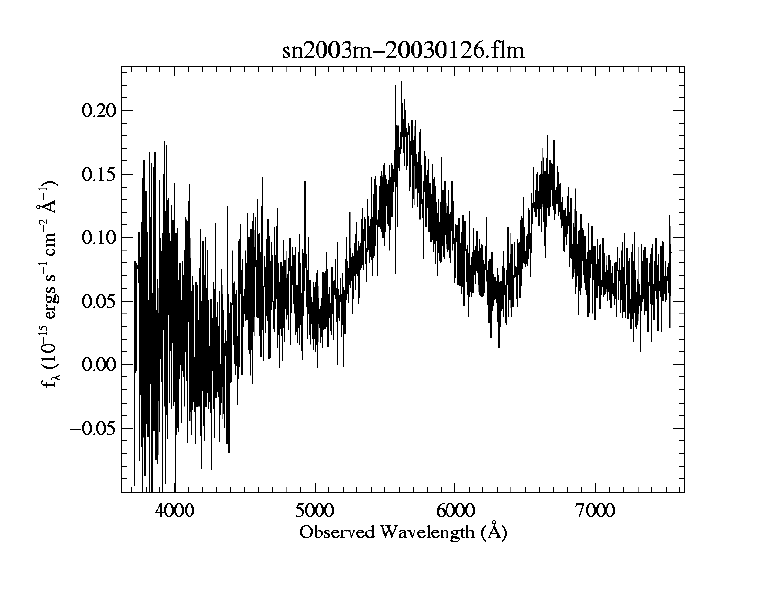
SN 2003M (UGC 7224) (Ia)
[IAUC 8057]
-
January 26, 2003 UT FLWO 1.5m spectrum shows this unusual type Ia
supernova.
-
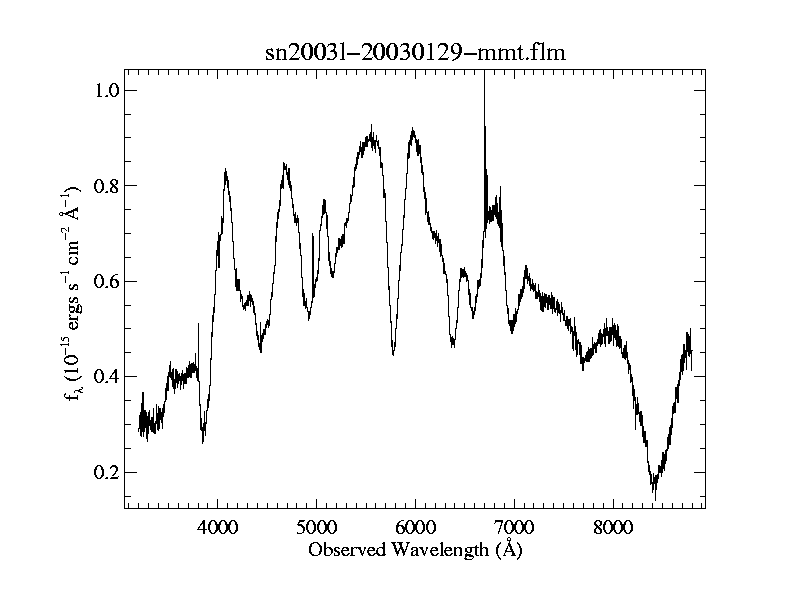
SN 2003L (NGC 3506) (Ic)
[IAUC 8057]
-
January 29, 2003 UT MMT 6.5m spectrum shows this type Ic
supernova.
-
SN 2003I (IC 2481) (Ib)
[IAUC 8049]
-
January 12, 2003 UT FLWO 1.5m spectrum shows this type Ib
supernova.
Back to top
SN 2002
-
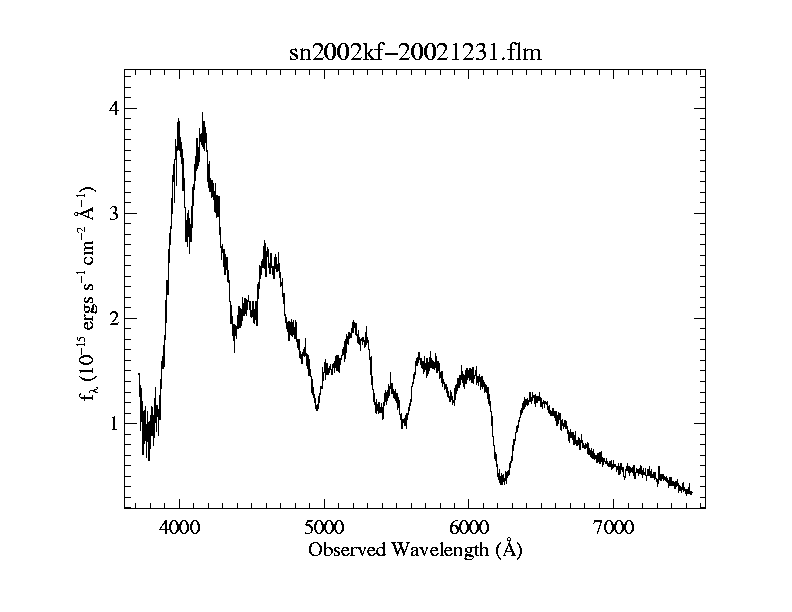
SN 2002kf (CGCG 233-023) (Ia)
[IAUC 8041]
-
December 31, 2002 UT FLWO 1.5m spectrum shows this type Ia
supernova near maximum.
-
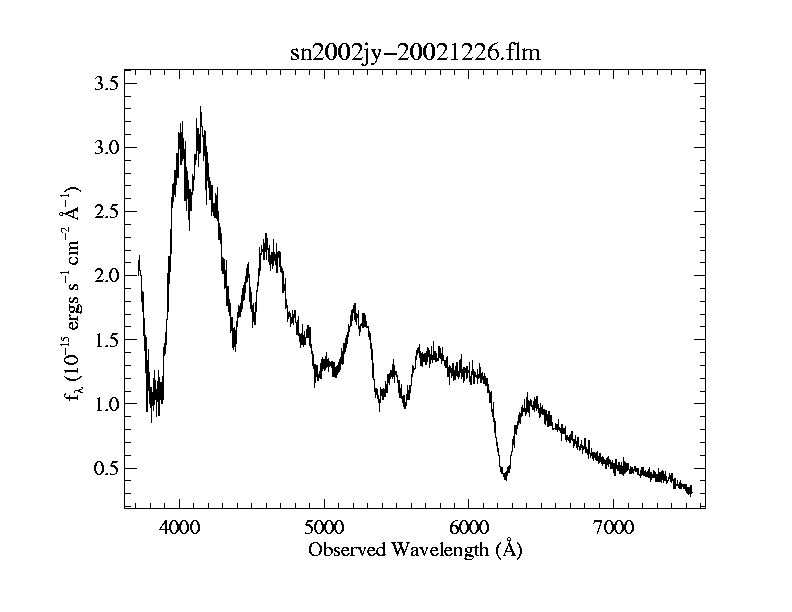
SN 2002jy (NGC 477) (Ia)
[IAUC 8037]
-
December 26, 2002 UT FLWO 1.5m spectrum shows this type Ia
supernova near maximum.
-
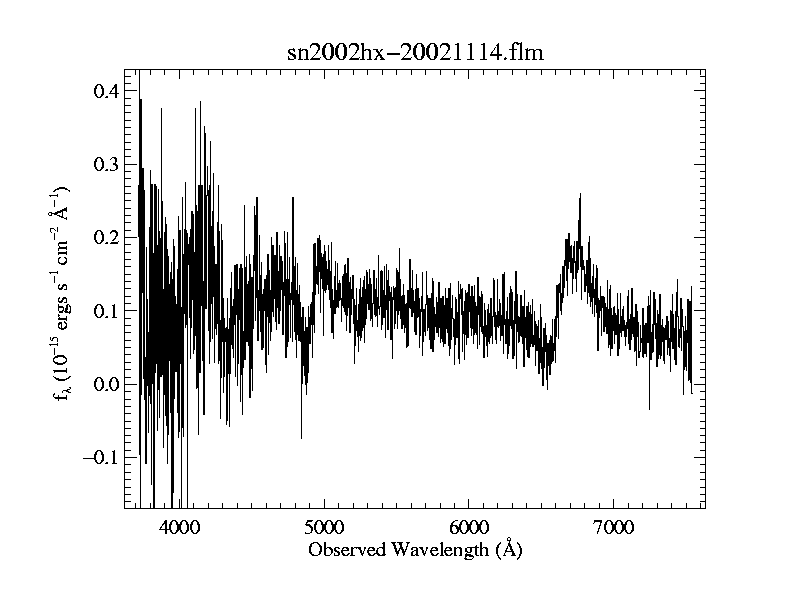
SN 2002hx (PGC 23727) (II)
[IAUC 8016]
-
November 14, 2002 UT FLWO 1.5m spectrum shows this type II supernova.
-
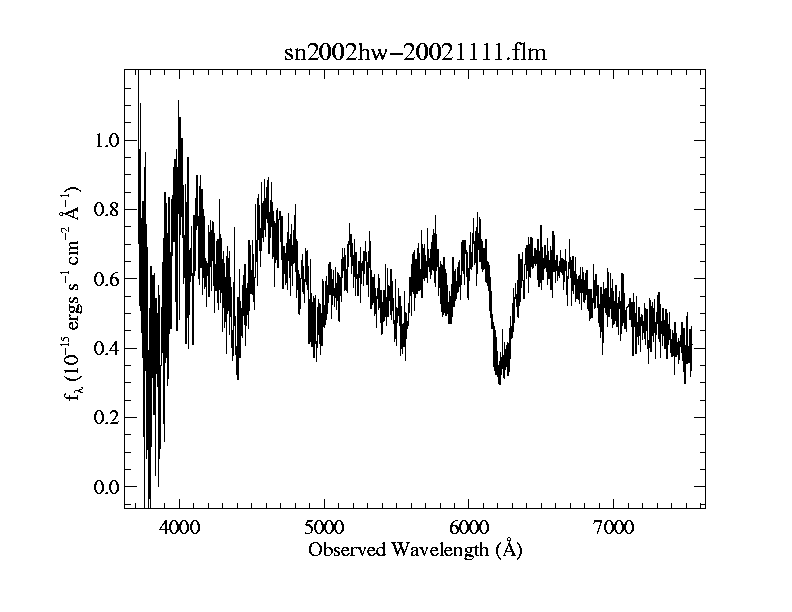
SN 2002hw (UGC 52) (Ia)
[IAUC 8015]
-
November 11, 2002 UT FLWO 1.5m spectrum shows this reddened type Ia
supernova before maximum.
-
SN 2002hv (UGC 4974) (Ia)
[IAUC 8013]
-
November 9, 2002 UT FLWO 1.5m spectrum shows this type Ia
supernova a few weeks past maximum.
-
SN 2002hu (MCG +06-6-12) (Ia)
[IAUC 8013]
-
November 8, 2002 UT FLWO 1.5m spectrum shows this type Ia
supernova before maximum.
-
SN 2002he (UGC 4322) (Ia)
[IAUC 8004]
-
October 30, 2002 UT FLWO 1.5m spectrum shows this possibly
peculiar type Ia supernova near maximum. Look at this
comparison with SN 2000dk 4 days before maximum.
-
SN 2002eu (Anon) (Ia)
[IAUC 7965]
-
September 3, 2002 UT FLWO 1.5m spectrum shows this type Ia
supernova several days past maximum.
-
SN 2002es (UGC 2708) (Ia-pec)
[IAUC 7965]
-
September 3, 2002 UT FLWO 1.5m spectrum shows this peculiar type Ia
supernova near maximum. Look at this
comparison with SN 1991bg at maximum.
-
SN 2002ef (NGC 7761) (Ia)
[IAUC 7945]
-
August 1, 2002 UT FLWO 1.5m spectrum shows this type Ia
supernova near maximum.
-
SN 2002dq (NGC 7051) (II)
[IAUC 7927]
-
June 20, 2002 UT FLWO 1.5m spectrum shows this type II
supernova.
-
SN 2002dp (NGC 7678) (Ia)
[IAUC 7927]
-
June 20, 2002 UT FLWO 1.5m spectrum shows this type Ia
supernova near maximum.
-
SN 2002do (MCG +07-41-1) (Ia)
[IAUC 7927]
-
June 19, 2002 UT FLWO 1.5m spectrum shows this type Ia
supernova near maximum.
-
SN 2002dl (UGC 11994) (Ia-pec?)
[IAUC 7923]
-
June 18, 2002 UT FLWO 1.5m spectrum shows this possibly peculiar
type Ia supernova. The spectral features are similar to SN 1999by.
-
SN 2002dk (NGC 6616) (Ia-pec?)
-
June 15, 2002 UT FLWO 1.5m spectrum shows this possibly
peculiar type Ia supernova.
The spectral features are similar to SN 1999by. Here is a
comparison with the day +4 spectrum
of SN 1999by.
-
SN 2002dj (NGC 5018) (Ia-pec?)
-
June 14, 2002 UT FLWO 1.5m spectrum shows this possibly
peculiar type Ia supernova (with a lot of galaxy contamination).
The spectral features are similar to SN 2002bo and SN 1999by. After
some dereddening and galaxy subtraction, here is a
comparison with SN 2002bo.
-
SN 2002dh (Anon.) (II)
[IAUC 7917]
-
June 10, 2002 UT FLWO 1.5m spectrum shows this type II supernova.
-
SN 2002df (MCG -01-53-006) (Ia)
[IAUC 7916]
-
June 04, 2002 UT FLWO 1.5m spectrum shows this type
Ia supernova about a week past maximum.
-
SN 2002de (NGC 6104) (Ia)
[IAUC 7915]
-
June 02, 2002 UT FLWO 1.5m spectrum shows this type
Ia supernova before maximum.
-
SN 2002db (NGC 5683) (Ia)
[IAUC 7915]
-
June 01, 2002 UT FLWO 1.5m spectrum shows this type
Ia supernova before maximum.
-
SN 2002cx (CGCG 044-035) (Ia)
[IAUC 7903]
-
May 17, 2002 UT FLWO 1.5m spectrum shows this peculiar type
Ia supernova before maximum. Note that the usual Si II and Ca II
lines are absent, but absorption features of Fe III are present,
just as in the over-luminous SN 1991T. Here is a
paper on SN 1991T.
-
SN 2002cv (NGC 3190) (Ia)
[IAUC 7901]
-
May 16, 2002 UT MMT 6.5 I-band image (courtesy of K. Stanek) shows SN
2002cv and(!) SN 2002bo in NGC 3190.
May 17, 2002 UT FLWO 1.5m spectrum shows this supernova has a
nearly featureless, reddened continuum, consistent with a
core-collapse event--but it turns out that it is of Type Ia, see
this or
this.
-
SN 2002cu (NGC 6575) (Ia)
[IAUC 7898]
-
May 13, 2002 UT FLWO 1.5m spectrum shows this type
Ia supernova near maximum.
-
SN 2002cs (NGC 6702) (Ia)
[IAUC 7894]
-
May 7, 2002 UT FLWO 1.5m spectrum shows this type
Ia supernova near maximum.
-
SN 2002cr (NGC 5468) (Ia)
[IAUC 7891]
-
May 3, 2002 UT FLWO 1.5m spectrum shows this type
Ia supernova a few days before maximum.
-
SN 2002cp (NGC 3074) (Ib/c)
[IAUC 7894]
-
May 3, 2002 UT FLWO 1.5m spectrum shows this type
Ib or Ic supernova before maximum.
-
SN 2002ck (UGC 10030) (Ia)
[IAUC 7894]
-
May 2, 2002 UT FLWO 1.5m spectrum shows this type
Ia supernova near maximum.
-
SN 2002cj (ESO 582-G5) (Ic)
[IAUC 7894]
-
May 2, 2002 UT FLWO 1.5m spectrum shows this type
Ic supernova. It appears similar
to SN 2002cg (see below).
-
SN 2002cg (UGC 10415) (Ia)
[IAUC 7881]
-
April 15, 2002 UT FLWO 1.5m spectrum shows this type
Ic supernova (with a lot of galaxy contamination). It appears similar
to SN 2002ap.
-
SN 2002cf (NGC 4786) (Ia)
[IAUC 7878]
-
April 15, 2002 UT FLWO 1.5m spectrum shows this (possibly subluminous)
type Ia supernova near maximum.
-
SN 2002ce (NGC 2604) (II)
[IAUC 7875]
-
April 12, 2002 UT FLWO 1.5m spectrum shows this type II supernova near maximum.
-
SN 2002cd (NGC 6916) (Ia)
[IAUC 7873]
-
April 10, 2002 UT FLWO 1.5m
spectrum shows this heavily reddened type Ia supernova
about a week before maximum.
-
SN 2002cc (Anon.) (Ia)
[IAUC 7877]
-
April 10, 2002 UT FLWO 1.5m spectrum shows this type Ia supernova
about a week after maximum.
-
SN 2002cb (MCG +8-24-24) (II)
-
April 8, 2002 UT FLWO 1.5m spectrum shows this type II supernova
before maximum.
-
SN 2002ca (UGC 8521) (II)
[IAUC 7875]
-
April 5, 2002 UT FLWO 1.5m spectrum shows this type II supernova
before maximum.
-
SN 2002bz (MCG +05-34-33) (Ia)
[IAUC 7874]
-
April 5, 2002 UT FLWO 1.5m spectrum shows this type Ia supernova
about three days before maximum.
-
SN 2002bx (IC 2461) (II)
[IAUC 7868]
-
April 3, 2002 UT FLWO 1.5m spectrum shows this type II supernova
well before maximum.
-
SN 2002bw (PGC 59990) (Ia)
[IAUC 7872]
-
April 4, 2002 UT FLWO 1.5m spectrum shows this type Ia supernova
about three weeks after maximum.
-
SN 2002bv (NGC 4242) (IIn)
[IAUC 7868]
-
April 3, 2002 UT FLWO 1.5m spectrum shows this type IIn supernova.
-
SN 2002bu (NGC 4242) (IIn)
-
April 3, 2002 UT FLWO 1.5m spectrum shows this type IIn supernova.
-
SN 2002bt (UGC 8584) (Ia)
[IAUC 7871]
-
April 3, 2002 UT FLWO 1.5m spectrum shows this type Ia supernova
about two weeks past maximum.
-
SN 2002bs (IC 4221) (Ia)
[IAUC 7868]
-
April 3, 2002 UT FLWO 1.5m spectrum shows this type Ia supernova
about a week past maximum.
-
SN 2002br (MCG +03-27-61) (Ia)
[IAUC 7867]
-
March 15, 2002 UT FLWO 1.5m spectrum shows this type Ia supernova
about a week past maximum.
-
SN 2002bo (NGC 3190) (Ia-pec)
[IAUC 7849]
-
March 10, 2002 UT FLWO 1.5m spectrum shows this type peculiar Ia supernova
well before maximum. This
comparison shows a dereddened 2002bo plotted with a spectrum of the
subluminous SN 1999by shifted in velocity to match.
-
SN 2002bn (UGC 6527) (Ia)
[IAUC 7851]
-
March 9, 2002 UT FLWO 1.5m spectrum shows this type Ia supernova
several weeks past maximum.
-
SN 2002bm (MCG -01-32-19) (Ic)
[IAUC 7848]
-
March 9, 2002 UT FLWO 1.5m spectrum shows this type Ic supernova.
-
SN 2002bj (NGC 1821) (IIn)
[IAUC 7844]
-
March 6, 2002 UT FLWO 1.5m spectrum shows this unusual type II
supernova. Compare with a
spectrum of the Type IIn SN 1998S (from
Leonard et al. 2000, ApJ, 536, 239).
-
SN 2002bi (UGC 8527) (IIb?)
[IAUC 7846]
-
March 6, 2002 UT FLWO 1.5m spectrum shows this unusual
supernova. Compare with a
spectrum of the Type IIb SN 1998fa (from \
Matheson et al. 2001, AJ, 121, 1648).
-
SN 2002bh (UGC 5286) (II)
[IAUC 7844]
-
March 6, 2002 UT FLWO 1.5m spectrum shows this type II supernova.
-
SN 2002bg (MCG +02-38-31) (Ia)
[IAUC 7844]
-
March 6, 2002 UT FLWO 1.5m spectrum shows this type Ia
supernova two weeks after maximum.
-
SN 2002bf (CGCG 266-031) (Ia)
[IAUC 7846]
-
March 6, 2002 UT FLWO 1.5m spectrum shows this type Ia
supernova near maximum.
-
SN 2002aw (Anon) (Ia)
[IAUC 7834]
-
February 18, 2002 UT FLWO 1.5m spectrum shows this type Ia
supernova near maximum.
-
SN 2002ap (NGC 628 = M 74) (Ib/c pec?)
-
February 1, 2002 UT FLWO 1.2m image shows the position of SN
2002ap in NGC 628 in comparison with a pre-explosion image from
the Digitized Sky Survey. A postscript version is available
here.
-
SN 2002H (MCG ) (Ia)
[IAUC 7826]
-
January 22, 2002 UT FLWO 1.5m spectrum shows this type Ia
supernova about three weeks past maximum.
-
SN 2002I (IC 4229) (Ia)
[IAUC 7817]
-
January 22, 2002 UT FLWO 1.5m spectrum shows this type Ia
supernova several weeks past maximum.
-
SN 2002G (CGCG 189-024) (Ia)
[IAUC 7802]
-
January 20, 2002 UT FLWO 1.5m spectrum shows this type Ia
supernova about a week before maximum.
- January 21, 2002 UT FLWO 1.2m image
shows the position of SN 2002G in CGCG 189-024.
-
SN 2002F (UGC 2885) (II)
[IAUC 7801]
-
January 21, 2002 UT FLWO 1.5m spectrum shows this type II supernova.
-
SN 2002E (NGC 4129) (II)
[IAUC 7800
-
January 19, 2002 UT FLWO 1.5m spectrum shows this (possibly
unusual) type II supernova. There is a significant amount of
contamination from the host galaxy and nearby H II regions.
-
SN 2002D (NGC 594) (II)
[IAUC 7802]
-
January 21, 2002 UT FLWO 1.5m spectrum shows this type II supernova.
-
SN 2002C (IC 3376) (II)
[IAUC 7800]
-
January 19, 2002 UT FLWO 1.5m spectrum shows this type II supernova.
Back to top
SN 2001
-
SN 2001ir (MCG -02-22-22) (IIn)
[IAUC 7784]
-
December 24, 2001 UT FLWO 1.5m spectrum shows this type IIn supernova.
-
SN 2001iq (Anon.) (Ia)
[IAUC 7784]
-
December 23, 2001 UT FLWO 1.5m spectrum shows this highly reddened Type Ia supernova near maximum.
-
SN 2001ig (NGC 7424) (II)
[IAUC 7772]
-
December 12, 2001 UT CTIO 1.5m image shows the location of SN
2001ig in NGC 7424. postscript version
-
SN 2001if (MCG +06-6-43) (Ia)
-
December 14, 2001 UT FLWO 1.5m spectrum shows this Type
Ia supernova a week after maximum.
-
SN 2001ie (UGC 5542) (Ia)
[IAUC 7774]
-
December 12, 2001 UT FLWO 1.5m spectrum shows this Type
Ia supernova a few days after maximum.
-
SN 2001ic (NGC 7503) (Ia)
[IAUC 7783]
-
December 14, 2001 UT FLWO 1.5m spectrum shows this Type
Ia supernova a week after maximum.
-
SN 2001ib (NGC 7242) (Ia)
[IAUC 7773]
-
December 10, 2001 UT FLWO 1.5m spectrum shows this subluminous
(similar to SN 1999by) Type Ia supernova near maximum.
-
SN 2001hg (NGC 4162) (II)
[IAUC 7770]
-
December 7, 2001 UT FLWO 1.5m spectrum shows this Type
II supernova before maximum.
-
SN 2001hh (MCG -02-57-22) (II)
[IAUC 7770]
-
December 7, 2001 UT Baade 6.5m spectrum shows this Type II supernova after maximum.
-
December 06, 2001 UT Baade 6.5m image shows the position of SN 2001hh in MCG -02-57-22.
-
SN 2001hf (MCG -03-23-17) (II)
[IAUC 7768]
-
December 6, 2001 UT FLWO 1.5m spectrum shows this Type II supernova near maximum.
-
December 05, 2001 UT Baade 6.5m image shows the position of SN 2001hf in MCG -03-23-17.
With the excellent seeing (0.4 arcsec) at Las Campanas, the bright foreground star in front of the galaxy
becomes apparent, as does the double-lobed nature of the nucleus of the galaxy.
-
SN 2001gd (NGC 5033) (IIb)
[IAUC 7765]
-
December 04, 2001 UT FLWO 1.5m spectrum shows this Type
IIb supernova well after maximum. Compare with the day 93
spectrum of SN 1993J (from
Matheson et al. 2000, AJ, 120, 1487).
-
SN 2001gc (UGC 3375) (Ia)
[IAUC 7761]
-
November 22, 2001 UT FLWO 1.5m spectrum shows this Type Ia supernova well before (~two weeks) maximum.
-
SN 2001gb (IC 582) (Ia)
[IAUC 7761]
-
November 22, 2001 UT FLWO 1.5m spectrum shows this Type Ia supernova at maximum.
-
SN 2001fv (NGC 3512) (II)
[IAUC 7756]
-
November 14, 2001 UT FLWO 1.5m spectrum shows this Type II supernova a few weeks past maximum in the plateau phase.
-
SN 2001fu (MCG -03-23-11) (Ia)
[IAUC 7748]
-
November 7, 2001 UT FLWO 1.5m spectrum shows this Type Ia supernova a few weeks past maximum.
-
SN 2001fh (PGC 66592) (Ia)
[IAUC 7748]
-
November 7, 2001 UT FLWO 1.5m spectrum shows this reddened Type Ia supernova near maximum.
- November 7, 2001 UT FLWO 1.2m image shows the
position of SN 2001fh in PGC 66592.
-
SN 2001ff (UGC 4658) (II)
[IAUC 7752]
-
November 14, 2001 UT FLWO 1.5m spectrum shows this Type II supernova past maximum.
-
SN 2001fe (UGC 5129) (Ia)
[IAUC 7752]
-
November 14, 2001 UT FLWO 1.5m spectrum shows this Type Ia supernova near maximum.
-
November 20, 2001 UT FLWO 1.2m image shows the position of SN 2001fe in UGC 5129.
-
SN 2001fa (NGC 673) (IIn)
-
October 20, 2001 UT FLWO 1.5m spectrum shows this Type IIn
supernova with Wolf-Rayet features (the N III/C III line at 4640
A--note also He II at 4686 A). It is similar to SN 1998S. See a
spectrum of SN 1998S, an
IAU circular on SN 1998S, or a
paper on SN 1998S.
-
SN 2001ez (PGC 17642) (II)
[IAUC 7737]
-
October 19, 2001 UT FLWO 1.5m spectrum shows this Type II supernova.
-
SN 2001ey (MCG -01-57-10) (IIn)
[IAUC 7736]
-
October 18, 2001 UT FLWO 1.5m spectrum shows this Type IIn supernova.
-
SN 2001ex (UGC 3595) (Ia)
[IAUC 7736]
-
October 18, 2001 UT FLWO 1.5m spectrum shows this Type Ia
supernova near maximum.
-
SN 2001ev (UGC 2653) (II)
[IAUC 7736]
-
October 17, 2001 UT FLWO 1.5m spectrum shows this Type II supernova.
-
SN 2001et (MCG -03-51-9) (II)
[IAUC 7734]
-
October 14, 2001 UT FLWO 1.5m spectrum shows this Type II supernova.
-
SN 2001ep (NGC 1699) (Ia)
[IAUC 7731]
-
October 10, 2001 UT FLWO 1.5m spectrum shows this Type Ia supernova
near maximum brightness.
-
October 6, 2001 UT FLWO 1.2m image shows the position of SN 2001ep in NGC 1699.
-
Light curve of SN 2001ep and SN 2001en from the
KAIT)
telescope, courtesy of Weidong Li and Alex Filippenko. Note
that these magnitudes are VERY preliminary, and should be
used only as a rough guide.
-
SN 2001eo (UGC 3963) (Ia)
[IAUC 7734]
-
October 13, 2001 UT FLWO 1.5m spectrum shows this Type Ia supernova
about a week past maximum brightness.
-
SN 2001en (NGC 523) (Ia)
[IAUC 7732]
-
October 11, 2001 UT FLWO 1.5m spectrum shows this Type Ia supernova
at maximum brightness.
-
SN 2001ej (UGC 3829) (Ib)
[IAUC 7721]
-
October 10, 2001 UT FLWO 1.2m image shows the location of SN 2001ej in UGC 3829.
-
SN 2001eh (UGC 1162) (Ia)
-
September 12, 2001 UT FLWO 1.5m spectrum shows this Type Ia supernova
before maximum brightness.
-
September 17, 2001 UT FLWO 1.2m image shows the position of SN 2001eh in UGC 1162.
-
SN 2001ef (IC 381) (Ia)
[IAUC 7714]
-
September 11, 2001 UT FLWO 1.5m spectrum shows this Type Ia supernova at maximum brightness.
-
SN 2001ed (NGC 706) (Ia)
[IAUC 7714]
-
September 11, 2001 UT FLWO 1.5m spectrum shows this Type Ia supernova
several weeks after maximum brightness.
-
SN 2001eb (NGC 1589) (Ia)
[IAUC 7714]
-
September 11, 2001 UT FLWO 1.5m spectrum shows this Type Ia supernova
several weeks after maximum brightness.
-
SN 2001dg (CGCG 513-10) (II)
[IAUC 7670]
-
July 24, 2001 UT FLWO 1.5m spectrum shows this Type II supernova
near maximum brightness.
-
SN 2001de (UGC 12089) (Ia)
[IAUC 7671]
-
July 24, 2001 UT FLWO 1.5m spectrum shows this Type Ia supernova
about a week after maximum brightness.
-
July 24, 2001 UT FLWO 1.2m image shows the position of SN 2001de in UGC 12089.
-
SN 2001cp (UGC 10738) (Ia)
[IAUC 7649]
-
June 21, 2001 UT FLWO 1.5m spectrum shows this Type Ia supernova
about a week before maximum brightness.
-
June 24, 2001 UT FLWO 1.2m image shows the position of SN 2001cp in UGC 10738.
-
SN 2001cm (NGC 5965) (II)
[IAUC 7667]
-
June 17, 2001 UT FLWO 1.5m spectrum shows this Type II supernova
before maximum brightness.
-
SN 2001ck (UGC 9425) (Ia)
[IAUC 7645]
-
June 17, 2001 UT FLWO 1.5m spectrum shows this Type Ia supernova
near maximum brightness.
-
SN 2001cj (UGC 8399) (Ia)
-
June 19, 2001 UT MMT 6.5m spectrum shows this Type Ia supernova
past maximum brightness.
-
SN 2001bs (UGC 10018) (Ia)
-
May 24, 2001 UT FLWO 1.5m spectrum shows this (possibly reddened)
Type Ia supernova just past maximum brightness.
-
SN 2001br (UGC 11260) (Ia)
[IAUC 7629]
-
May 21, 2001 UT FLWO 1.5m spectrum shows this Type Ia supernova
near maximum brightness.
-
SN 2001bq (NGC 5534) (II)
[IAUC 7630]
-
May 20, 2001 UT FLWO 1.5m spectrum shows this Type II supernova
near maximum brightness.
-
SN 2001bp (Anon.) (Ia)
-
May 17, 2001 UT FLWO 1.5m spectrum shows this Type Ia supernova
near maximum brightness.
-
SN 2001bg (NGC 2608) (Ia)
[IAUC 7626]
-
May 15, 2001 UT FLWO 1.5m spectrum shows this Type Ia supernova
after maximum brightness.
-
SN 2001bf (MCG +04-42-22) (Ia)
-
May 17, 2001 UT FLWO 1.5m spectrum shows this Type Ia supernova
near maximum brightness.
-
June 15, 2001 UT FLWO 1.2m image shows the position of SN 2001bf in MCG +04-42-22.
-
SN 2001bb (IC 4319) (Ic)
[IAUC 7619]
-
May 2, 2001 UT FLWO 1.5m spectrum shows this Type Ic supernova near maximum brightness.
-
Spectra of SNe 2001bb and 1994I. This image shows a version of the -4 day spectrum of SN 1994I from Figure 1 of
Filippenko et al. 1995, Ap.J. 450, L11 compared with the spectrum of SN 2001bb.
-
SN 2001az (UGC 10483) (Ia)
[IAUC 7615]
-
April 30, 2001 UT FLWO 1.5m spectrum shows this Type Ia supernova before maximum brightness.
-
SN 2001ay (IC 4423) (Ia)
[IAUC 7612]
-
April 21, 2001 UT FLWO 1.5m spectrum shows this Type Ia supernova near maximum brightness.
-
April 27, 2001 UT FLWO 1.2m image shows the position of SN 2001ay in IC 4423.
-
SN 2001ai (NGC 5278) (Ic)
[IAUC 7605]
-
March 29, 2001 UT FLWO 1.5m spectrum shows this Type Ic
supernova before maximum. Narrow emission lines from the
underlying H II region have been clipped for clarity.
Contamination from young stars associated with this very bright H II
region may be responsible for the blue continuum of the spectrum. The spectrum itself is
similar to the that of SN 1994I 5 days before maximum (see Figure 1 of
Filippenko et al. 1995, Ap.J. 450, L11).
-
SN 2001ah (UGC 6211) (Ia pec)
[IAUC 7604]
-
March 28, 2001 UT FLWO 1.5m spectrum shows this peculiar Type Ia
supernova before maximum. The presence of Fe III 4300 and 5000 A
lines and the lack of the Si II 6355 A feature show that this SN
is similar to SN 1991T. There is, however, Ca II H and K
absorption that was not seen in SN 1991T. This object is more like
SN 1998ab,
SN 1998es, and
SN 1999aa.
-
SN 2001ag (MCG +8-18-9) (II)
[IAUC 7603]
-
March 28, 2001 UT FLWO 1.5m spectrum shows this Type II
supernova near maximum.
-
SN 2001af (MCG -04-24-001) (II)
[IAUC 7602]
-
March 23, 2001 UT FLWO 1.5m spectrum shows this Type II
supernova near maximum.
-
March 25, 2001 UT FLWO 1.2m image shows the position of SN 2001af in MCG -04-24-001.
-
SN 2001ae (IC 4229) (II)
[IAUC 7599]
-
March 17, 2001 UT FLWO 1.5m spectrum shows this Type II
supernova near maximum.
-
SN 2001ad (NGC 6373) (II)
[IAUC 7597]
-
March 15, 2001 UT FLWO 1.5m spectrum shows this Type II
supernova near maximum.
-
SN 2001ac (NGC 3504) (IIn?)
[IAUC 7597]
-
March 14, 2001 UT FLWO 1.5m spectrum shows this object with
fairly narrow (FWHM ~900 km/s) Balmer lines. Type IIn supernovae
often have Balmer lines with narrow components, but there is
typically a broader feature as well, and that is not apparent in SN 2001ac.
It may be an outburst of a luminous blue variable rather than a true supernova.
See our spectrum of SN 1999bw or SN 1997bs (
Van Dyk et al. 2000, PASP, 112, 1532) for similar objects.
-
SN 2001ab (NGC 6130) (II)
[IAUC 7597]
-
March 14, 2001 UT FLWO 1.5m spectrum shows this Type II supernova near maximum.
-
SN 2001V (NGC 3987) (Ia)
[IAUC 7585]
-
February 19, 2001 UT FLWO 1.5m spectrum shows this Type Ia
supernova several days before maximum brightness. This
supernova was discovered by Perry Berlind observing on the FLWO 1.5m.
-
February 20, 2001 UT FLWO 1.5m spectrum covers a broader
wavelength range, showing the extremely high velocity of the
calcium H&K absorption feature.
-
February 19, 2001 UT FLWO 1.2m image shows the
position of SN 2001V in NGC 3987.
-
SN 2001T (MCG -02-37-6) (II)
[IAUC 7585]
-
February 19, 2001 UT FLWO 1.5m spectrum shows this Type II
supernova near maximum.
-
SN 2001S (UGC 5491) (II)
[IAUC 7583]
-
February 16, 2001 UT FLWO 1.5m spectrum shows this Type II
supernova near maximum.
-
SN 2001R (NGC 5172) (II)
[IAUC 7583]
-
February 16, 2001 UT FLWO 1.5m spectrum shows this Type II
supernova past maximum in the plateau phase.
-
SN 2001Q (UGC 6429) (II)
-
February 2, 2001 UT FLWO 1.5m spectrum shows this Type II
supernova near maximum.
-
SN 2001P (NGC 3947) (Ia)
-
February 2, 2001 UT FLWO 1.5m spectrum shows this possibly
subluminous Type Ia supernova past maximum.
-
SN 2001N (NGC 3327) (Ia)
[IAUC 7569]
-
January 22, 2001 UT FLWO 1.5m spectrum shows this Type Ia
supernova several days before maximum brightness.
-
January 24, 2001 UT FLWO 1.2m image shows the
position of SN 2001N in NGC 3327.
-
SN 2001M (NGC 3240) (Ic)
-
January 25, 2001 UT FLWO 1.5m spectrum shows this Type Ic supernova.
-
SN 2001L (MCG -01-30-11) (Ia)
[IAUC 7566]
-
January 19, 2001 UT FLWO 1.5m spectrum shows this Type Ia
supernova about one week past maximum brightness.
-
SN 2001K (IC 677) (II)
[IAUC 7575]
-
January 24, 2001 UT FLWO 1.5m spectrum shows this Type II
supernova before maximum brightness.
-
January 24, 2001 UT FLWO 1.2m image shows the position of SN 2001K in IC 677.
-
SN 2001J (UGC 4729) (II)
[IAUC 7566]
-
January 19, 2001 UT FLWO 1.5m spectrum shows this Type II supernova past maximum brightness.
-
January 24, 2001 UT FLWO 1.2m image shows the position of SN 2001J in UGC 4729.
-
SN 2001H (MCG -01-10-19) (II)
[IAUC 7563]
-
January 14, 2001 UT FLWO 1.5m spectrum shows this Type II supernova before maximum brightness.
-
SN 2001G (MCG +08-17-43) (Ia)
[IAUC 7564]
-
January 15, 2001 UT FLWO 1.5m spectrum shows this Type Ia
supernova near maximum brightness.
-
January 24, 2001 UT FLWO 1.2m image shows the position of SN 2001G in MCG +08-17-43
(a south-east extension of the nucleus).
-
SN 2001F (IC 867) (Ia)
[IAUC 7563]
-
January 14, 2001 UT FLWO 1.5m spectrum shows this Type Ia
supernova several weeks past maximum brightness.
-
SN 2001E (NGC 3905) (Ia)
[IAUC 7566]
-
January 19, 2001 UT FLWO 1.5m spectrum shows this Type Ia
supernova at maximum brightness.
-
January 24, 2001 UT FLWO 1.2m image shows the position of SN 2001E in NGC 3905.
-
SN 2001D (IC 728) (II)
[IAUC 7566]
-
January 19, 2001 UT FLWO 1.5m spectrum shows this Type II
supernova near maximum brightness.
-
January 24, 2001 UT FLWO 1.2m image shows the position of SN 2001D in IC 728.
-
SN 2001C (PGC 19975) (Ia)
[IAUC 7563]
-
January 14, 2001 UT FLWO 1.5m spectrum shows this Type Ia
supernova about two weeks past maximum brightness.
-
January 24, 2001 UT FLWO 1.2m image shows the position of SN 2001C in PGC 19975.
-
SN 2001B (IC 391) (Ib)
[IAUC 7563]
-
January 14, 2001 UT FLWO 1.5m spectrum shows this Type Ib
supernova near maximum brightness.
-
January 24, 2001 UT FLWO 1.2m image shows the position of SN 2001B in IC 391.
Back to top
SN 2000
-
SN 2000fo (Anon.) (Ia)
[IAUC 7557]
-
December 29, 2000 UT FLWO 1.5m spectrum shows this Type Ia
supernova a few days before maximum brightness. It is possibly reddened.
-
SN 2000fm (NGC 1612) (II)
-
December 16, 2000 UT FLWO 1.5m spectrum shows this Type II
supernova before maximum brightness.
-
SN 2000fe (UGC 4870) (II)
[IAUC 7545]
-
December 15, 2000 UT FLWO 1.5m spectrum shows this Type II
supernova before maximum brightness.
-
SN 2000fd (UGC 291) (Ia)
[IAUC 7544]
-
December 15, 2000 UT FLWO 1.5m spectrum shows this Type Ia
supernova several weeks past maximum brightness.
-
SN 2000fa (UGC 3770) (Ia)
[IAUC 7535]
-
December 3, 2000 UT MMT 6.5m spectrum shows this Type Ia
supernova well before maximum. The extremely blue continuum and
very blue-shifted absorption lines indicate that this SN was
caught early, perhaps as much as two weeks before maximum.
-
December 15, 2000 UT FLWO 1.5m spectrum shows this Type Ia supernova at maximum.
-
December 3, 2000 UT FLWO 1.2m image shows the position of SN 2000fa in UGC 3770.
-
SN 2000ez (NGC 3995) (II)
[IAUC 7535]
-
December 3, 2000 UT MMT 6.5m spectrum shows this Type II
supernova past maximum brightness.
-
December 3, 2000 UT FLWO 1.2m image shows the position of SN 2000ez in NGC 3995.
-
SN 2000ey (IC 1481) (Ia)
-
December 1, 2000 UT FLWO 1.5m spectrum shows this Type Ia
supernova past maximum brightness.
-
December 1, 2000 UT FLWO 1.2m image shows the position of SN 2000ey in IC 1481.
-
SN 2000ex (MCG -05-9-22) (II)
[IAUC 7530]
-
November 28, 2000 UT FLWO 1.5m spectrum shows this Type II
supernova past maximum brightness.
-
November 29, 2000 UT FLWO 1.2m image shows the position of SN 2000ex in MCG -05-9-22.
-
SN 2000ew (NGC 3810) (Ia)
-
December 1, 2000 UT FLWO 1.5m spectrum shows this Type Ia
supernova several days after maximum.
-
SN 2000ev (UGC 3500) (IIn)
[IAUC 7532]
-
November 28, 2000 UT FLWO 1.2m image shows the position of SN 2000ev in UGC 3500.
-
SN 2000eo (MCG -02-9-03) (IIn)
-
November 27, 2000 UT FLWO 1.5m spectrum shows this Type IIn
supernova with a very blue continuum, similar to SN 1998S (see below).
-
November 29, 2000 UT FLWO 1.2m image shows the position of SN 2000eo in MCG -02-9-03.
-
SN 2000el (NGC 7290) (II)
[IAUC 7533]
-
November 25, 2000 UT FLWO 1.5m spectrum shows this normal Type II supernova.
-
SN 2000du (UGC 3920) (II)
-
October 29, 2000 UT FLWO 1.5m spectrum shows this Type II supernova past maximum brightness.
-
SN 2000dt (UGC 3411) (Ib)
-
October 26, 2000 UT FLWO 1.5m spectrum shows this Type Ib supernova past maximum brightness.
-
SN 2000dq (MCG +00-6-43) (II)
[IAUC 7504]
-
October 4-5, 2000 UT FLWO 1.5m spectrum (combined exposure from two days) shows this Type II
supernova a few days past maximum brightness.
-
October 6, 2000 UT FLWO 1.2m image shows the position of SN 2000dq in MCG +00-6-43.
-
SN 2000dp (NGC 1139) (Ia)
[IAUC 7505]
-
October 4, 2000 UT FLWO 1.5m spectrum shows this Type Ia supernova near maximum brightness.
-
October 4, 2000 UT FLWO 1.2m image shows the position of SN 2000dp in NGC 1139.
-
SN 2000dn (IC 1468) (Ia)
[IAUC 7499]
-
October 6, 2000 UT FLWO 1.5m spectrum shows this Type Ia supernova several days past maximum brightness.
-
September 30, 2000 UT FLWO 1.2m image shows the position of SN 2000dn in IC 1468.
-
SN 2000dm (UGC 11198) (Ia)
[IAUC 7497]
-
October 6, 2000 UT FLWO 1.2m image shows the position of SN 2000dm in UGC 11198.
-
SN 2000dk (NGC 382) (Ia)
[IAUC 7494]
-
October 5, 2000 UT FLWO 1.5m spectrum shows this Type Ia supernova about two weeks past maximum brightness.
-
October 1, 2000 UT FLWO 1.2m image shows the position of SN 2000dk in NGC 382.
-
SN 2000cx (NGC 524) (Ia)
-
October 3, 2000 UT FLWO 1.5m spectrum shows this peculiar Type Ia supernova several weeks past maximum brightness.
-
October 2, 2000 UT FLWO 1.2m image shows the position of SN 2000cx in NGC 524.
-
SN 2000cs (MCG +07-34-015) (II)
[IAUC 7448]
-
July 1-4, 2000 FLWO 1.5m
combined spectrum shows an unsual type II supernova with broad Balmer and He lines.
-
SN 2000cr (NGC 5395) (Ic)
[IAUC 7443]
-
June 25, 2000 FLWO 1.5m
spectrum shows a an unusual spectrum, with what appears to
be H-alpha emission and a very broad absorption at 490 nm.
-
SN 2000cn (UGC 11064) (Ia)
[IAUC 7437]
-
June 2, 2000 FLWO 1.5m
spectrum shows a type-Ia supernova 7 to 10 days before maximum light.
-
SN 2000bs (UGC 10710) (Ia)
[IAUC 7408]
-
April 4, 2000 FLWO 1.5m
spectrum shows a type-II supernova at an early epoch.
-
SN 2000P (NGC 4965) (IIn)
[IAUC 7381]
-
March 13, 2000 FLWO 1.5m
spectrum shows the unusual combination of broad absorption and narrow emission.
- March 09, 2000 FLWO 1.5m spectrum
-
SN 2000H (IC 454) (Ic)
[IAUC 7366]
-
Here is a comparison of SN 2000H with SN 1994I
Back to top
SN 1999
-
SN 1999gp (UGC 1993) (Ia)
[IAUC 7341]
-
January 2, 2000 FLWO 1.5m spectrum shows a possibly overluminous type Ia supernova.
-
SN 1999gk (NGC 4653) (II)
[IAUC 7332]
-
December 15, 1999 FLWO 1.5m spectrum shows a
type II supernova with a peculiar double Halpha absorption. The
supernova was discovered by Perry Berlind observing on the FLWO
1.5m.
-
December 15, 1999 FLWO 1.2m image shows the
position of the SN in NGC 4653. The stars surrounding the
galaxy are Landolt photometric standards in the SA104 field.
-
SN 1999gh (NGC 2986) (Ia)
-
December 15, 1999 FLWO 1.5m spectrum shows a
subluminous type Ia supernova past maximum.
-
SN 1999gi (NGC 3184) (II)
[IAUC 7329]
-
December 9, 1999 FLWO 1.5m spectrum shows an early type II supernova.
-
December 9, 1999 FLWO 1.2m image showing SN 1999gi in NGC 3184
-
SN 1999ev (NGC 4274) (II)
[IAUC 7306]
-
November 10, 1999 FLWO 1.5m spectrum shows a normal type II supernova past maximum light.
-
SN 1999eu (NGC 1097) (II pec)
[IAUC 7304]
-
November 8, 1999 FLWO 1.5m spectrum shows the peculiar
type II supernova with many narrow P-Cygni features which
include Ba and Sc lines. The spectrum is similar to the
subluminous SN 1997D which is believed to have ejected
a small amount of 56Ni.
-
SN 1999em (II)
[IAUC 7296]
-
November 3, 1999 FLWO 1.5m spectrum shows the type-II SN 1999em with
Hydrogen lines becoming more prominent.
-
October 29, 1999 FLWO 1.5m spectrum shows the type-II SN 1999em with
prominent broad P-Cygni lines of Hydrogen and Helium. The continuum is
very blue suggesting that it is in a early phase.
-
October 30, 1999 FLWO 1.2m image shows SN 1999em with
north up, east to the left and a 5' field of view.
-
SN 1999eh (Ib)
[IAUC 7282]
-
October 14, 1999 FLWO 1.5m spectrum shows the type-Ib SN 1999eh with
prominent broad helium absorption features as well as emission lines from
oxygen, indicating this supernova is beginning a transition to the nebular
phase.
-
SN 1999eg (II)
[IAUC 7280]
-
October 12, 1999 FLWO 1.5m spectrum shows SN 1999eg with a blue continuum
and broad hydrogen Balmer lines.
-
SN 1999eb (IIn)
[IAUC 7268]
-
October 4, 1999 FLWO 1.5m spectrum shows SN 1999eb with narrow hydrogen
and helium lines, with a peculiar absorption blue-shifted 900 km/s from the
peaks.
- October 4, 1999 image
of 1999eb taken with the FLWO 1.2m telescope.
-
SN 1999dq (Ia)
[IAUC 7250]
-
September 4, 1999 FLWO 1.5m spectrum shows that SN 1999dq in NGC 976
is a type-Ia supernova about 10 days before maximum light, and is likely
to be overluminous.
-
September 12, 1999 FLWO 1.2m image shows the supernova 4" W
and 6" S of the nucleus of NGC 976. North is up and east
left and the field is 5'x5'.
-
SN 1999cp (Ia)
[IAUC 7206]
-
June 19, 1999 FLWO 1.5m spectrum shows that SN 1999cp in NGC 5468
is a type-Ia supernova well before maximum light.
-
SN 1999cl (Ia)
[IAUC 7198]
-
June 5, 1999 FLWO 1.2m image shows SN 1999cl in NGC 4501 (M88).
-
June 4, 1999 FLWO 1.5m spectrum shows SN 1999cl in NGC 4501 (M88).
The spectrum is red and the strong NaI narrow absorption implies
a large amount of dust extinction.
-
June 4, 1999 FLWO 1.5m spectrum is compared to SN 1998aq at maximum
and shows the color difference and the high velocities seen
in 1999cl.
-
SN 1999bz (Ic)
[IAUC 7162]
-
May 8, 1999 FLWO 1.5m spectrum shows SN 1999bz in UGC 8959.
-
SN 1999by (Ia pec)
[IAUC 7159]
- late time finder of 99by (ps)
- late time finder of 99by (gif)
-
May 8, 1999 FLWO 1.5m spectrum shows the supernova over a wider wavelength range.
-
May 6, 1999 FLWO 1.5m spectrum shows a peculiar type Ia
supernova before maximum. The 5800A feature is very deep relative to the
6150A line and the blue 4000-4300A region is broken up by
TiII absorption. This is a fast-delining, subluminous event like SN
1991bg and 1998de.
-
May 6, 1999 FLWO 1.2m image of SN 1999by in NGC 2841.
-
Nova Sgr 1999 (Classical Nova)
-
April 27, 1999 McDonald Obs. 82" telescope spectrum taken by
Ellen Howell and Alicia Soderberg. Shows a Galactic nova near
maximum with narrow P-Cygni profiles of Hydrogen and OI and
absorption from NaI and FeII.
-
Possible SN in NGC 3198
-
April 21, 1999 FLWO 1.5m spectrum shows this object is likely
not a supernova, but it's unclear what it actually is.
-
SN 1999bv (Ib/c)
[IAUC 7150]
-
April 21, 1999 FLWO 1.5m spectrum shows this object is probably a
type Ib/c supernova several weeks after maximum brightness. The spectrum
resembles a spectrum of SN 1988L (Filippenko 1988, AJ, 96, 1941).
-
April 21, 1999 FLWO 1.2m image shows SN 1999bv in MCG +10-25-14 at V = 18.6.
-
SN 1999bt (Ia)
[IAUC 7142]
-
April 14, 1999 FLWO 1.5m spectrum shows this to be a Type Ia
supernova about 2 weeks after maximum.
-
SN 1999br (II)
[IAUC 7143]
-
April 15, 1999 FLWO 1.5m spectrum shows this to be a Type II
supernova caught very early. At V=17 in a nearby galaxy (NGC 4900)
it appears to be subluminous.
-
SN 1999aa (Ia peculiar)
-
Feb 12, 1999 FLWO 1.5m spectrum shows this to be a peculiar type Ia SN similar to SN 1991T.
-
Feb 12, 1999 FLWO 1.2m image of NGC 2595 with the supernova marked.
-
SN 1999E (IIn peculiar)
[IAUC 7090]
-
Jan 19, 1999 FLWO 1.5m spectrum shows this type
IIn SN, probably reddened with an unidentified broad absorption at 597nm.
-
Feb 14, 1999 FLWO 1.2m image shows the position of
the supernova in an anonymous galaxy. North is up, east left.
-
SN 1999D (II)
[IAUC 7089]
-
Jan 18, 1999 FLWO 1.5m spectrum shows 99D as a young, blue type II supernova.
-
Jan 18, 1999 FLWO 1.2m image shows SN 1999D in NGC 3690.
Back to top
SN 1998
-
SN 1998ey (Peculiar Type Ic)
[IAUC 7066]
-
Dec 11, 1998 FLWO 1.5m spectrum compares 98ey with the peculiar
Ic SN 1997ef (taken about 3 weeks after discovery).
-
Dec. 12 FLWO 1.2m V image showing the supernova in NGC 7080.
-
SN 1998es (Peculiar Type Ia)
[IAUC 7054]
-
Nov. 14, 1998 FLWO 1.5m spectrum shows this to be a peculiar Type Ia similar to SN 1991T.
-
Nov. 15 FLWO 1.2m R image showing the supernova 11 arcsec north of the
center of NGC 632.
-
SN 1998eg (Type Ia)
[IAUC 7037]
-
October 23 FLWO 1.5m spectrum shows this to be a normal Type Ia supernova at maximum.
-
SN 1998ef (Type Ia)
-
October 23 FLWO 1.5m spectrum shows this to be a normal Type Ia supernova at maximum.
-
SN 1998di (not a supernova)
[IAUC 6983]
-
August 4, 1998 FLWO 1.5m spectrum shows this to be a rare
hydrogen-deficient dwarf nova in the Milky Way, with a blue continuum
and He I absorprtion features.
-
SN 1998dh (Ia)
[IAUC 6980]
-
July 26, 1998 FLWO 1.2m image with NGC 7541 and NGC 7537 to the south west.
-
July 26, 1998 FLWO spectrum showing features of a normal Type Ia before maximum.
-
SN 1998de (Ia-pec)
[IAUC 6980]
-
Preliminary light curve showing that SN 1998de is indeed a fast decliner similar to 91bg.
Photometry from FLWO and DAO (Dave Balam).
-
July 26, 1998 FLWO 1.2m image with NGC 252.
-
July 25, 1998 FLWO spectrum showing a strong SiII 5800 A
and TiII absorption near 4100 A as seen in fast-declining, sub-luminous
Type-Ia supernovae SN 1991bg and SN 1986G.
-
SN 1998co (Ia)
[IAUC 6950]
-
June 22, 1998 FLWO spectrum showing the features of a normal Type Ia near maximum.
-
June 22, 1998 FLWO 1.2m image with NGC 7131.
-
SN 1998bu (Ia)
-
June 2-7, 1998 MDM color composite image using data obtained by E. Grebel
-
May 14, 1998 FLWO 1.2m IRCAM image H-band This reddened supernova is in M96 and is expected to reach V=11.3.
- May 15, 1998 FLWO 1.2m 4shooter image V-band
- May 15, 1998 FLWO 1.5m FAST spectrum showing a type-Ia this supernova near
maximum
-
Mar 29, 2000 KPNO 2.1m image shows SN 1998bu at late time
-
Mar 29, 2000 KPNO 2.1m image shows SN 1998bu at late time with HST data
-
SN 1998bp (Ia)
[IAUC 6891]
-
April 30, 1998 FLWO spectrum showing the features of a fast-declining Type Ia near maximum.
-
May 1, 1998 FLWO 1.2m image with NGC 6495.
-
SN 1998aq (Ia)
[IAUC 6880]
-
FLWO Light curve compared with standard V type Ia light curve.
-
April 17, 1998 FLWO 1.2m image with NGC 3982. North is up,
east is left and the field is 7' on a side.
-
April 18, 1998 FLWO spectrum showing a spectrum similar
to SN 1990N well before maximum.
-
SN 1998ab (Ia pec)
[IAUC 6858]
-
April 3, 1998 FLWO spectrum showing the features of a peculiar Type Ia before maximum, similar to SN 1991T.
-
April 17, 1998 FLWO 1.2m image with NGC 4704.
-
SN 1998V (Ia)
[IAUC 6844]
-
March 19, 1998 FLWO spectrum showing the features of a normal Type Ia near maximum.
-
March 21, 1998 FLWO 1.2m image with NGC 6627.
-
SN 1998S (IIn+WR)
[IAUC 6845]
-
Nov. 14, 1998 FLWO 1.5m spectrum showing an intense, broad
H-alpha emission line with major components.
-
Light Curve from observations at the Fred Whipple Obs.,
KPNO and IAU Circulars (x).
-
March 16, 1998 STIS/HST + FLWO spectrum showing UV
absorption spectrum and odd P-Cygni profiles
-
March 20, 1998 FLWO medium resolution spectrum (taken by K. Dendy
and N. Caldwell) showing the "double" P-Cygni profile in H-beta and the H+K CaII narrow
interstellar absorption.
-
March 5, 1998 FLWO 1.5m spectrum showing broad and narrow emission
lines and a conspicuous HeII 4686 + NIII/CIII 4640 blend characteristic
of a Wolf-Rayet star.
-
March 5, 1998 FLWO 1.5m spectrum normalized to better show
the Wolf-Rayet features
-
March 1998 FLWO 1.2m image (north up, east left, 5'field).
Back to top
SN 1997
-
SN 1997eg (IIn)
-
December 1997 FLWO 1.5m spectrum showing broad and narrow emission lines and a conspicuous HeI 587.5 nm.
-
December 1997 FLWO 1.2m image
-
SN 1997ef in UGC 4107 (Ib/c peculiar)
[IAUC 6798]
-
January 1998 spectrum with the FLWO 1.5m shows a strong HeI 5875 feature.
-
December 1997 comparison of Dec 24 FLWO spectrum of 1997ef and SN 1994I (Ib/c)
spectrum with MMT (April 1994). The 97ef spectrum now appears to
be similar to a Type Ib/c but with a broad Halpha peak.
-
December 1997 comparison of MDM (Dec 17, taken by J. Thorstensen (Dartmouth)) spectrum with MMT (Dec 5)
-
December 1997 V light curve from FLWO 1.2m, DAO 1.8m (D. Balam) and MDM 2.4m
(J. Thorstensen)
-
December 1997 MMT spectrum
-
November 1997 FLWO 1.5m spectral series shows an unusual supernova.
The lack of Hydrogen lines means this is some sort of Type I supernova.
-
November 1997 FLWO 1.5m average of 5 spectra
-
November 1997 FLWO 1.2m image.
-
SN 1997dt (Ia)
-
November 1997 FLWO 1.5m spectrum shows a Type Ia near maximum. The
NaI narrow absorption indicates significant dust extinction. The strong
SiII 5800 suggests that this is a slighly fast decliner.
-
SN 1997ds (II)
-
November 1997 FLWO 1.5m spectrum shows a Type II near maximum.
-
SN 1997dn (II)
[IAUC 6763]
-
October 1997 FLWO 1.5m spectrum shows a Type II after maximum.
-
SN 1997dg (Ia)
[IAUC 6749]
-
September 1997 FLWO 1.2m image. This is a typical type-Ia at maximum.
-
SN 1997dd (IIb?)
[IAUC 6742]
-
August 1997 FLWO 1.2m image. This object may be an unusual
type IIb object, like SN 1993J and SN 1996cb.
-
SN 1997cx (II)
[IAUC 6700]
-
July 1997 FLWO 1.5m spectrum showing a normal type II soon after maximum.
-
July 1997 FLWO 1.2m image
-
SN 1997cw (Ia pec)
[IAUC 6700]
-
July 1997 FLWO spectrum showing that this is a peculiar
type Ia about two weeks past maximum. Note the weak SiII (615nm)
feature.
-
July 1997 FLWO 1.2m image
-
SN 1997cn (Ia pec)
-
June 1997, FLWO 1.2m image shows a finder for SN 1997cn
in NGC 5490. This is a very unusual sub-luminous Type Ia
supernova, similar to SN 1991bg.
-
SN 1997bs (II pec)
-
May 1997 MMT spectrum shows this to be a peculiar Type II
with strong, narrow hydrogen emission lines and many blended Fe
lines.
-
SN 1997br (Ia pec)
-
April 1997, FLWO 1.2m image. Shows a finder for SN 1997br in ESO576-40.
-
April 1997 FLWO 1.5m spectrum shows this to be a peculiar Type Ia
similar to 1991T before maximum. It does not appear to be highly reddened.
This is a very unusual event and needs followup photometry and spectra!
-
SN 1997bq (Ia)
[IAUC 6623]
-
April 1997, FLWO 1.2m image. Shows a finder for SN 1997bq in NGC 3147.
-
April 1997 MMT spectrum shows this to be a Type Ia with a strong
SiII 5800 line, suggesting that this is a fast-declining, sub-luminous SN.
-
SN 1997bp (Ia)
[IAUC 6611]
-
April 1997, FLWO 1.2m image. Shows a finder for SN 1997bp in NGC 4680.
-
April 1997 MMT spectrum shows this to be a Type Ia at maximum.
-
SN 1997Y (Ia)
[IAUC 6557]
-
February 1997, FLWO 1.2m image. Shows a finder for SN 1997Y in NGC 4675.
Note that the supernova is only 4" west and 2" north of the host nucleus.
-
February 1997 FLWO 1.5m spectrum shows this to be a typical Type Ia
at maximum.
-
SN 1997X (Ic)
[IAUC 6552]
-
February 1997, FLWO 1.2m image. Shows a finder for SN 1997X in NGC 4691.
-
February 1997 FLWO 1.5m spectrum shows this to probably be a Type Ib/c soon
after maximum.
-
SN 1997W (II)
[IAUC 6551]
-
February 1997, FLWO 1.2m color image. Shows both SN 1996bw (north image)
and SN 1997W (south image, blue) within 3" of each other!.
-
SN 1997E (Ia)
[IAUC 6538]
-
January 1997, FLWO 1.2m image. Shows a finder for SN 1997E in NGC 2258.
-
January 1997, FLWO 1.2m image. Shows a real color image of SN 1997E in NGC 2258.
-
January 1997 FLWO 1.5m spectrum shows this to be a Type Ia at
maximum. The deep SiII line at 5800 Ang. implies that this is a slightly
sub-luminous SN Ia and it should have a fast declining light curve.
Back to top
SN before 1997
-
SN 1996cb (II)
[IAUC 6529]
-
December 1996, FLWO 1.2m image. Shows a finder for SN 1996cb in NGC 3510.
The SN is a Type II.
-
January 20, 1997, Light curve of 1996cb. The light curve, like the spectrum,
is very similar to that of SN 1993J. The valley between the two maxima appears
deeper in 1996cb.
-
January 8, 1997 FLWO 1.5m spectrum shows that the continuum
has cooled and is now close to that of 1993J in late April 1993. The
Halpha absorption has become weaker while the HeI lines remain strong.
-
January 2, 1997 FLWO 1.5m spectrum shows a notch has formed in the
Halpha emission peak. This is probably HeI 6678 and is similar to the
development of 1993J.
-
December 1996 FLWO 1.5m spectrum shows extremely broad P-Cygni
profiles in the Balmer lines.
-
SN 1996ca (Ia)
[IAUC 6523]
-
December 1996, FLWO 1.2m image. Shows a finder for SN 1996ca in NGC 7300.
This is the first supernova to reach 'c'.
-
December 1996 FLWO 1.5m spectrum shows this to be a Type Ia near
maximum.
-
SN 1996by (Ia)
-
December 1996, FLWO 1.2m image. Shows a finder for SN 1996by in UGC 3379.
-
December 1996 FLWO 1.5m spectrum shows a normal Type Ia near maximum.
-
SN 1996bw (II)
[IAUC 6551]
-
December 1996, FLWO 1.2m image. Shows a finder for SN 1996bw in NGC 664, V=17.0.
The SN is a Type II.
-
SN 1996bu (IIn)
[IAUC 6505]
-
November 1996, FLWO 1.2m image. Shows a finder for SN 1996bu in NGC 3631, V=17.6.
The SN is a peculiar Type II with narrow Balmer emission.
-
November 1996, MMT redchannel spectrum. A very odd supernova.
-
SN 1996bl (Ia)
[IAUC 6492]
-
October 1996, FLWO 1.5m spectrum. Shows the Type-Ia supernova was discovered
near maximum.
-
SN 1996bk (Ia)
[IAUC 6491]
-
October 1996, FLWO 1.5m spectrum. Shows the Type-Ia was discovered
about a week after maximum.
-
SN 1996ai (Ia)
[IAUC 6422]
-
June 20, 1996, MMT spectrum showing a very red continuum for 1996ai
when compared to 1996X at a similar phase. The relative slopes
imply a E(B-V)>1.0 for 1996ai.
-
SN 1996ae (IIn)
-
June 1996, 1.5m Tillinghast telescope spectrum showing a mixture of narrow
and broad emission lines. Balmer lines and HeI 587.5nm are seen as well as
NaI 589.3nm absorption from interstellar gas.
-
SN 1996ab (Ia)
[IAUC 6405]
-
June 1996, FLWO 1.2m image. The supernova is at a z=0.13 while the
bright galaxy to the SE is in the Abell Cluster 2065 at a z=0.06.
-
SN 1996X (Ia)
[IAUC 6381]
-
April 17, 1996 (1.2m V Image)
-
April 14-25, 1996 1.5m FLWO Spectra shown as a series with time increasing
downward.
-
SN 1996C (Ia)
[IAUC 6317]
-
Feb. 23, 1996 (spectrum)
-
Feb. 18, 1996 (1.2m B Image)
-
SN 1995bd (Ia pec)
[IAUC 6278]
-
Dec 28, 1995 (image)
-
December 23, 1995 FLWO 1.5m Spectrum shows this peculiar Ia.
-
SN 1995bb (Ic)
[IAUC 6271]
-
Dec 3, 1995 (spectrum).
-
SN 1995N (IIn)
[IAUC 6274]
-
March, 1996 MMT Spectrum showing a variety of emission lines from [OI]
to [FeX].
-
March, 1996 R band image from the FLWO 1.2m.
-
SN 1994Y (IIn)
[IAUC 6314]
-
January, 1996, composite R,J,K color image from the ARC 3.5m. SN1994Y
is the very red object to the right of the NGC 5371. The field is 3'x3'
with north up, east to the left.
-
SN 1991T (Ia)
[IAUC 5239]
-
1996 HST/FOC image (deconvolved) showing the resolved light echo
is cresent shaped. Diameter is about 0.2".
Back to top
|