|
|
|
|
|
| Lunar University Network for Astrophysics Research (LUNAR) | Featured Topic | |||
|
The Lunar University Network for Astrophysics Research (LUNAR) team is part of the NASA Lunar Science Institute. LUNAR is lead by team leader Prof. Jack Burns, Department of Astrophysical and Planetary Sciences, University of Colorado (CU) in Boulder. The LUNAR team is interested in science that can be conducted from the moon. We have four projects. The first project is low frequency astrophysics and cosmology using a large radio array on the far side of the moon. The second project is a small radio array on the near side of the moon that would be used to study heliophysics radio emission (mainly solar and from the solar wind) and to act as a precursor to the larger far side array. I lead the radio heliophysics key project with my colleague Dr. Robert MacDowall (GSFC). The third project is lunar laser ranging. Our final project is to identify any other compelling science that could be performed using the moon as a platform. You can learn more about the LUNAR team by reading our web site here . To learn more about the NASA Lunar Science Institute visit the NLSI web site here. Members of the LUNAR radio heliophysics key project at SAO include Justin Kasper, Lincoln Greenhill, Jonathan Weintroub, and Peter Cheimets. Other members of the team are Robert MacDowall (NASA/GSFC), Stuart Bale (UC Berkeley), Tim Bastian (NRAO), and John Grunsfeld (NASA/JSC). We are also working closely with Joseph Lazio (NRL), Jackie Hewitt (MIT), and Chris Carilli (NRAO), who are working on the LUNAR low frequency astrophysics and cosmology key project.Our goal over the four year period of the LUNAR project is to refine the design of a lunar solar radio telescope that could be deployed on the near side of the moon by astronauts on a sortie mission or by a robot. Our current design is called the Radio Observatory for Lunar Sortie Science (ROLSS). We are improving this design by analyzing existing low frequency radio observations to quantify the solar, lunar, terrestrial, and transient sources of radiation at these frequencies. We are also working on the antenna design, simulations of the response of the instrument to the Sun and the low frequency sky, and on methods for deploying antennas on the lunar surface. |
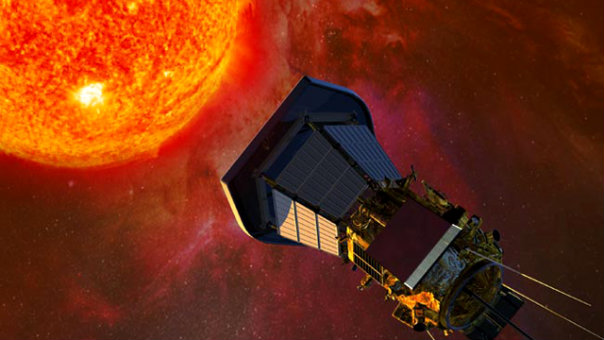
On the Radio: The Breathtaking Power And Beauty Of The Sun The science, destruction, and beauty of the solar storm that's been blasting earth - from the breathtaking Aurora Borealis to future exploration of the sun itself. I was a guest for a one hour episode of WBUR talk show On Point with Tom Ashbrook. Stream the show and read background material on the Sun here. --- NASA Science News: Solar Wind Energy Source Discovered NASA wrote a news story based on a recent paper we published in Physical Review Letters on heating of the solar corona and solar wind. Click here for the NASA article. | ||